Reload Spec
Reload the API specification to update your application with the latest version of your spec. This keeps your endpoints, configurations, and tests aligned with your current API. You can reload the specification in three ways: File Upload, URL, or API Gateway.
Reload Spec with File
-
Open your browser and visit: https://<your-tenant>.apisecapps.com
-
Click on Application

-
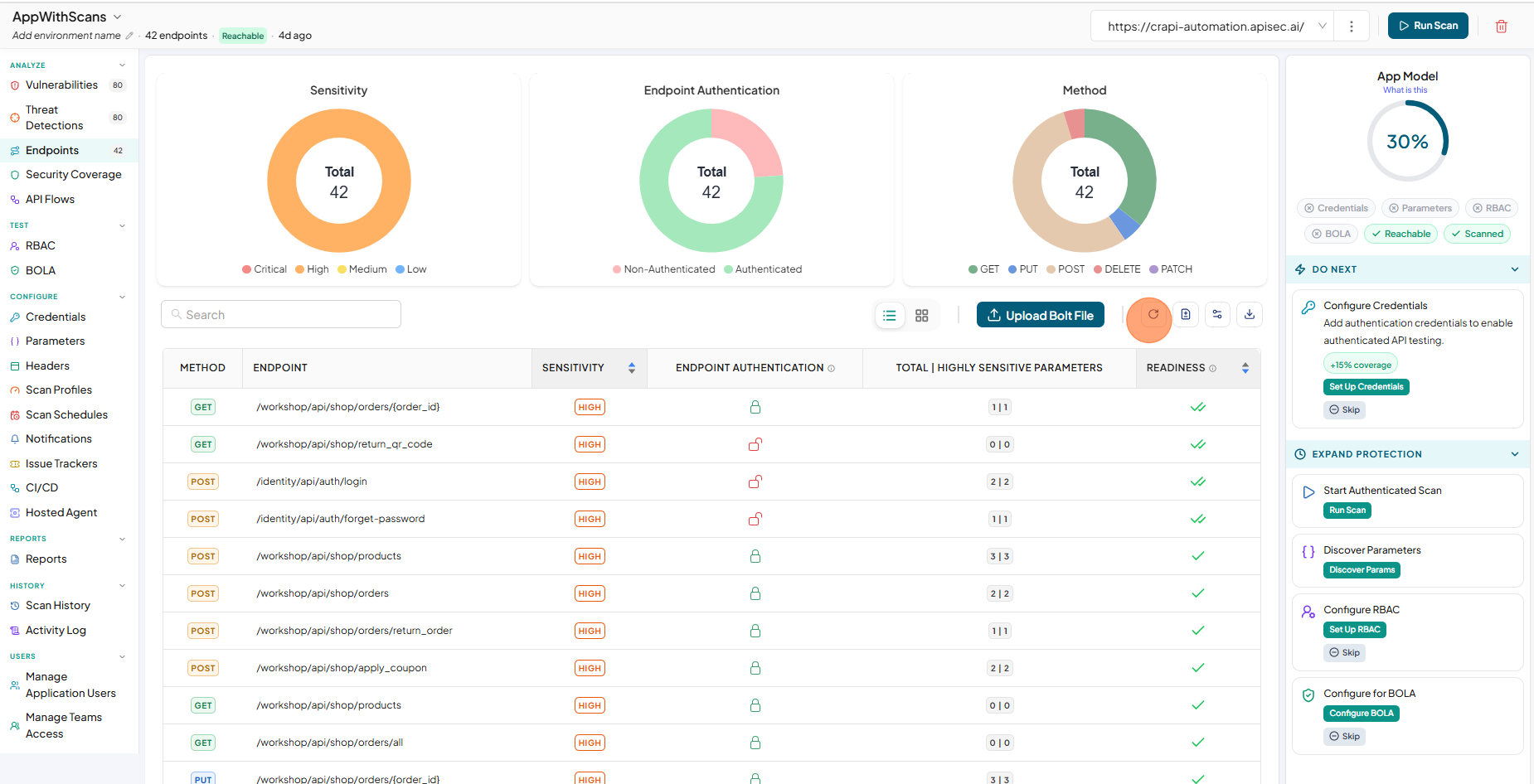
Select the Endpoints tab if not selected

-
Now click on the Reload Spec
-
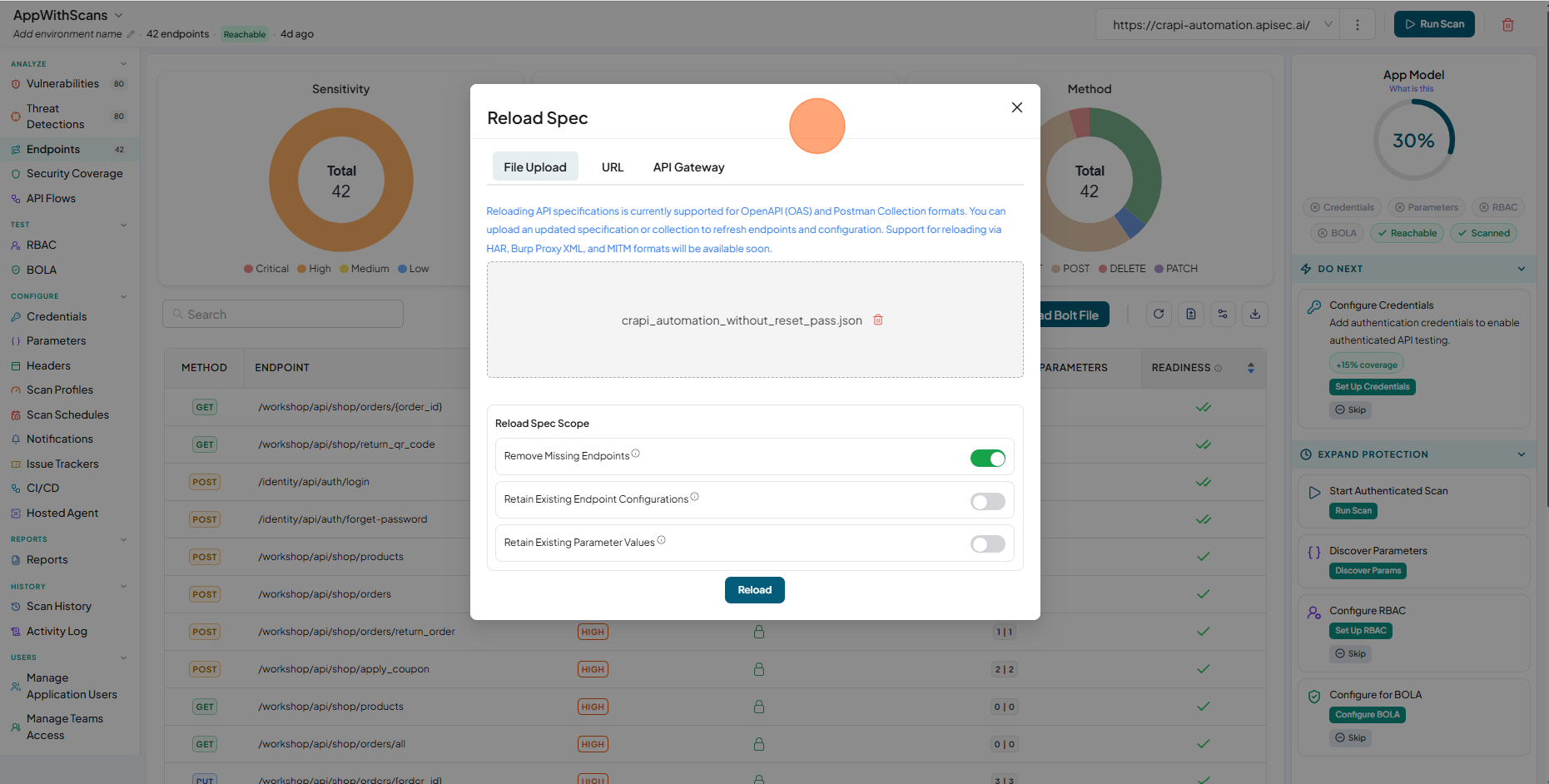
You will see the Reload Spec form with different options.
-
The Browse Files option allows you to upload your API specification directly from your local system.
-
Reload Spec Scope
-
Remove Missing Endpoints - Automatically clean up your application by deleting any endpoints that no longer exist in the updated specification, ensuring your application stays accurate and up to date. Disable the toggle button if you want to keep the existing endpoints.
-
Retain Existing Endpoint Configurations - Preserve custom endpoint settings such as authorization, parameters, headers, data types, and example values. When disabled, the system will override these settings and apply updates from the new specification.
-
Retain Existing Parameter Values - By default, manually entered parameter values at the instance or endpoint level are preserved when reloading the specification. You can disable this option to overwrite them with values from the updated specification.
-
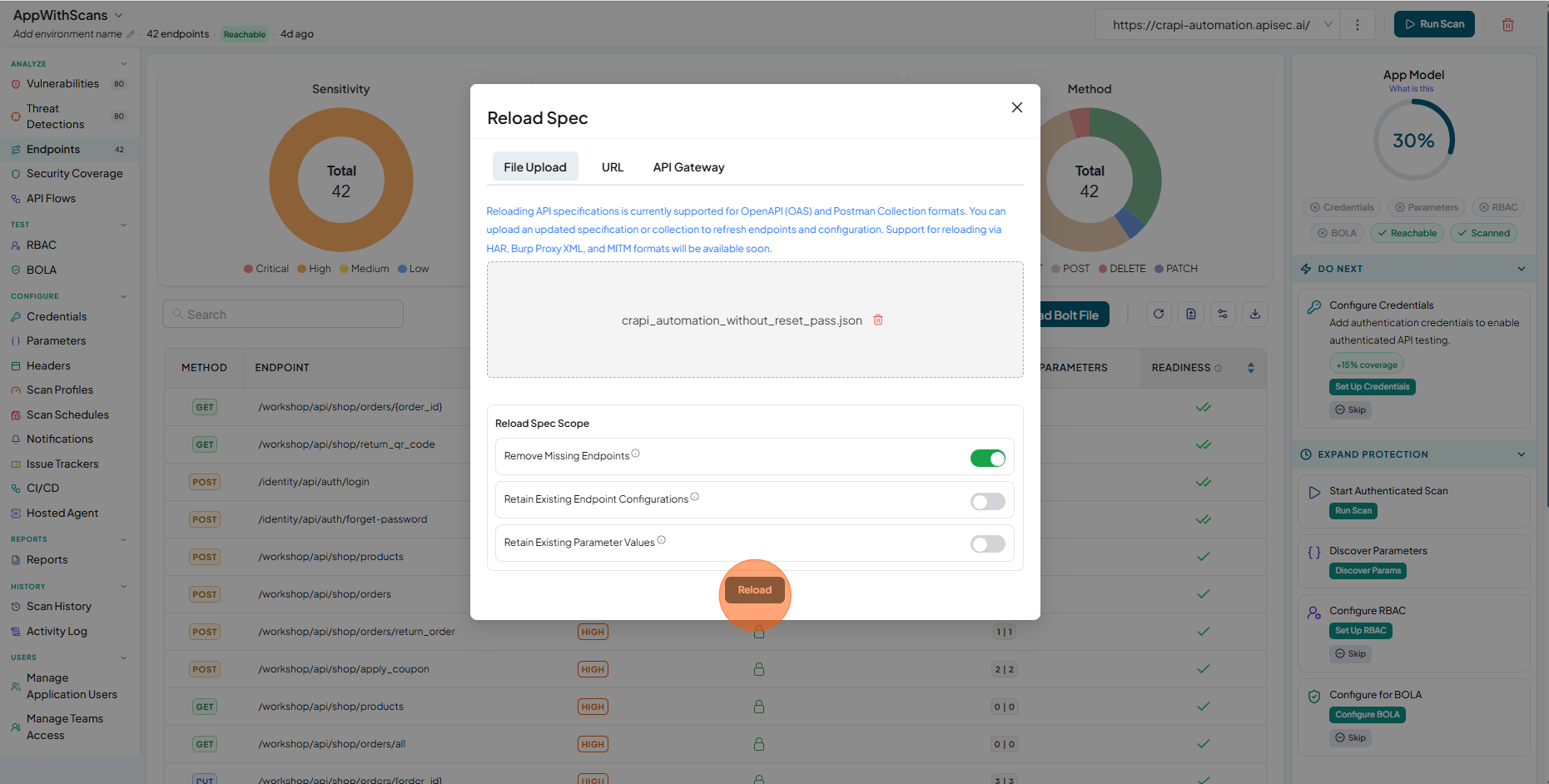
Select the required options and click on the Reload button.
-
-
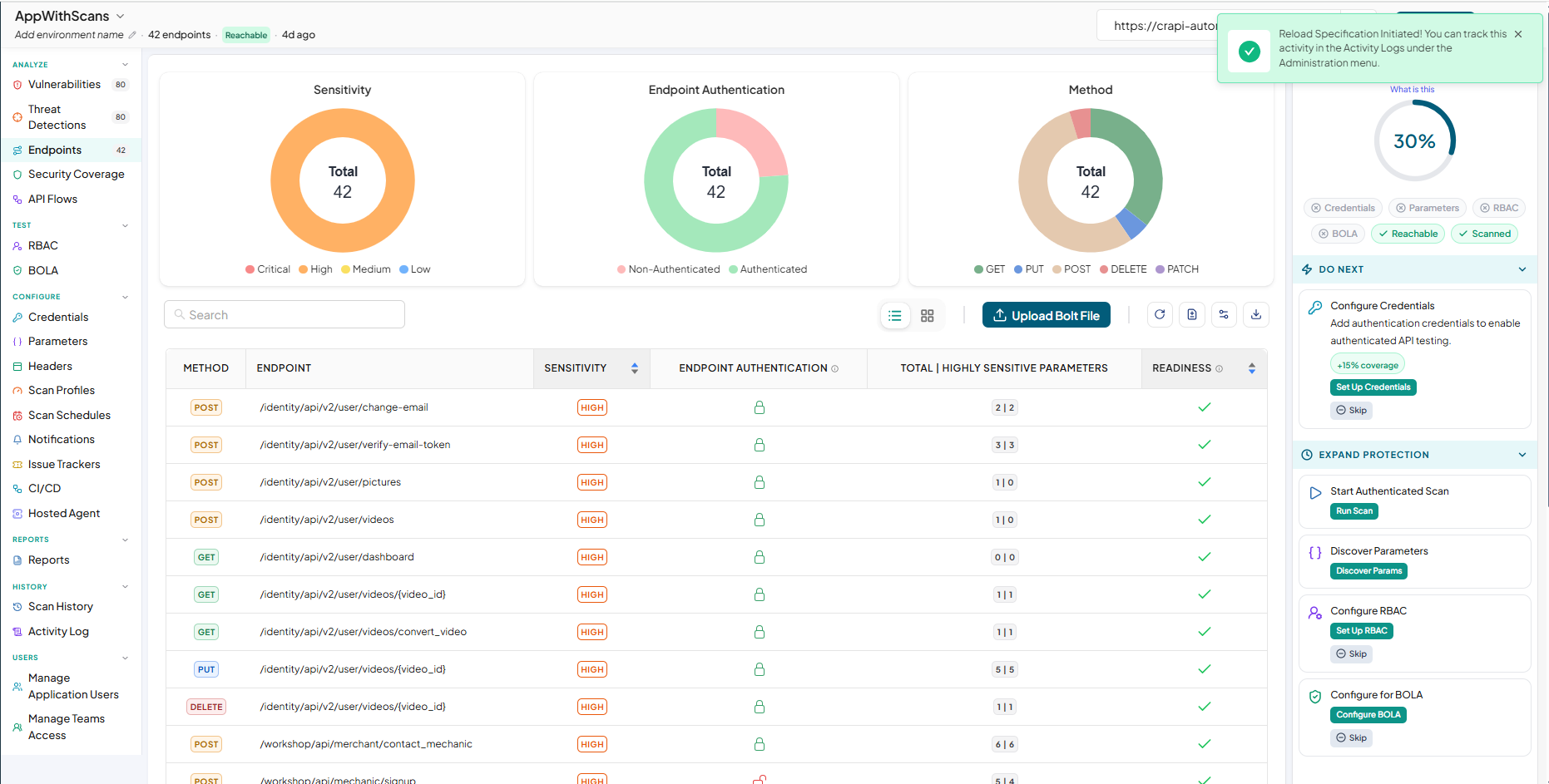
Reload task submitted successfully. You can track the progress in Activity logs.
Users with View permissions cannot reload the specification in a shared application.
Reload Spec with Url
-
Open your browser and visit: https://<your-tenant>.apisecapps.com
-
Click on Application
-
Select the Endpoints tab if not selected
-
Now click on the Reload Spec
-
You will see the Reload Spec form with different options.
-
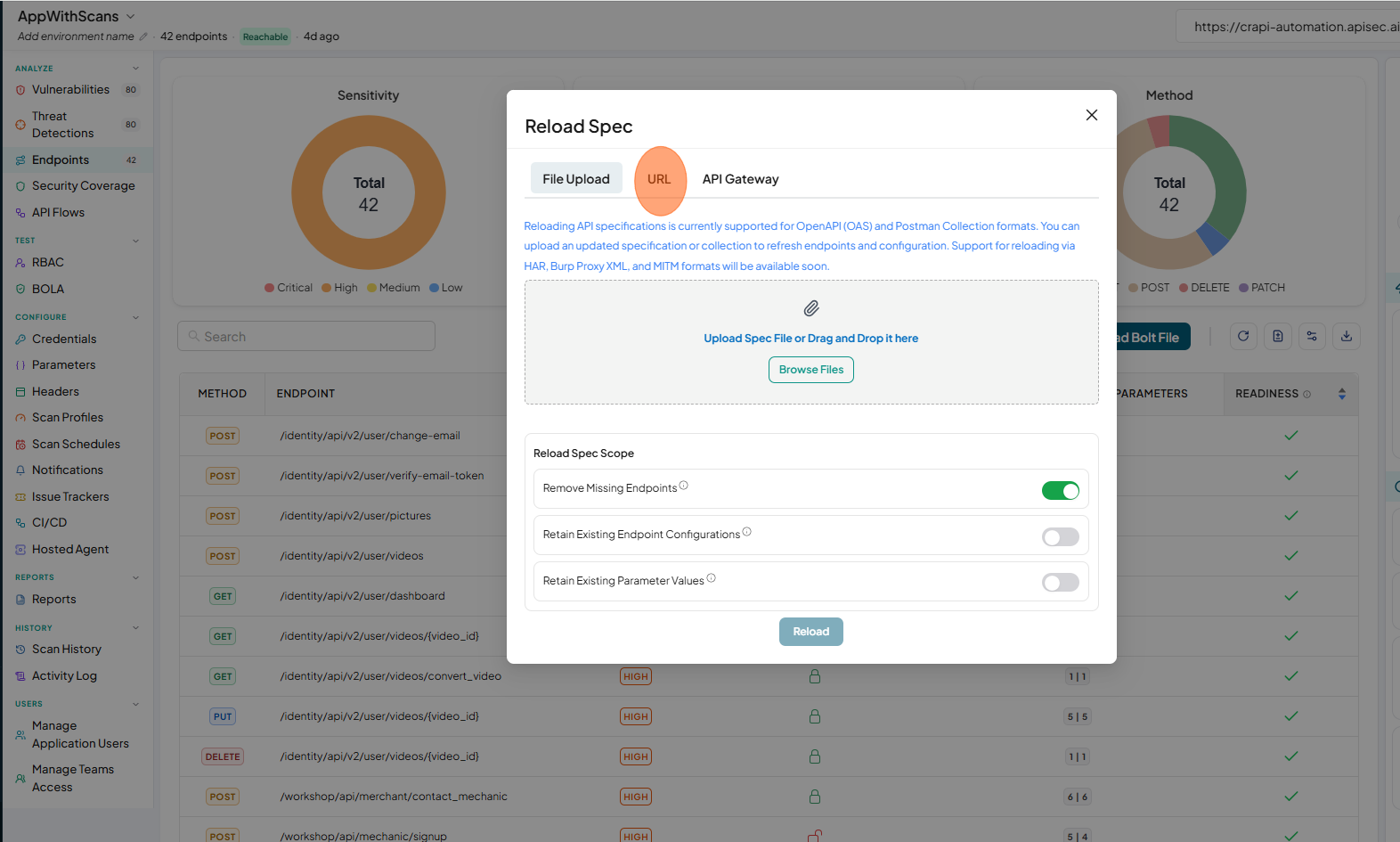
Click on the Url tab
-
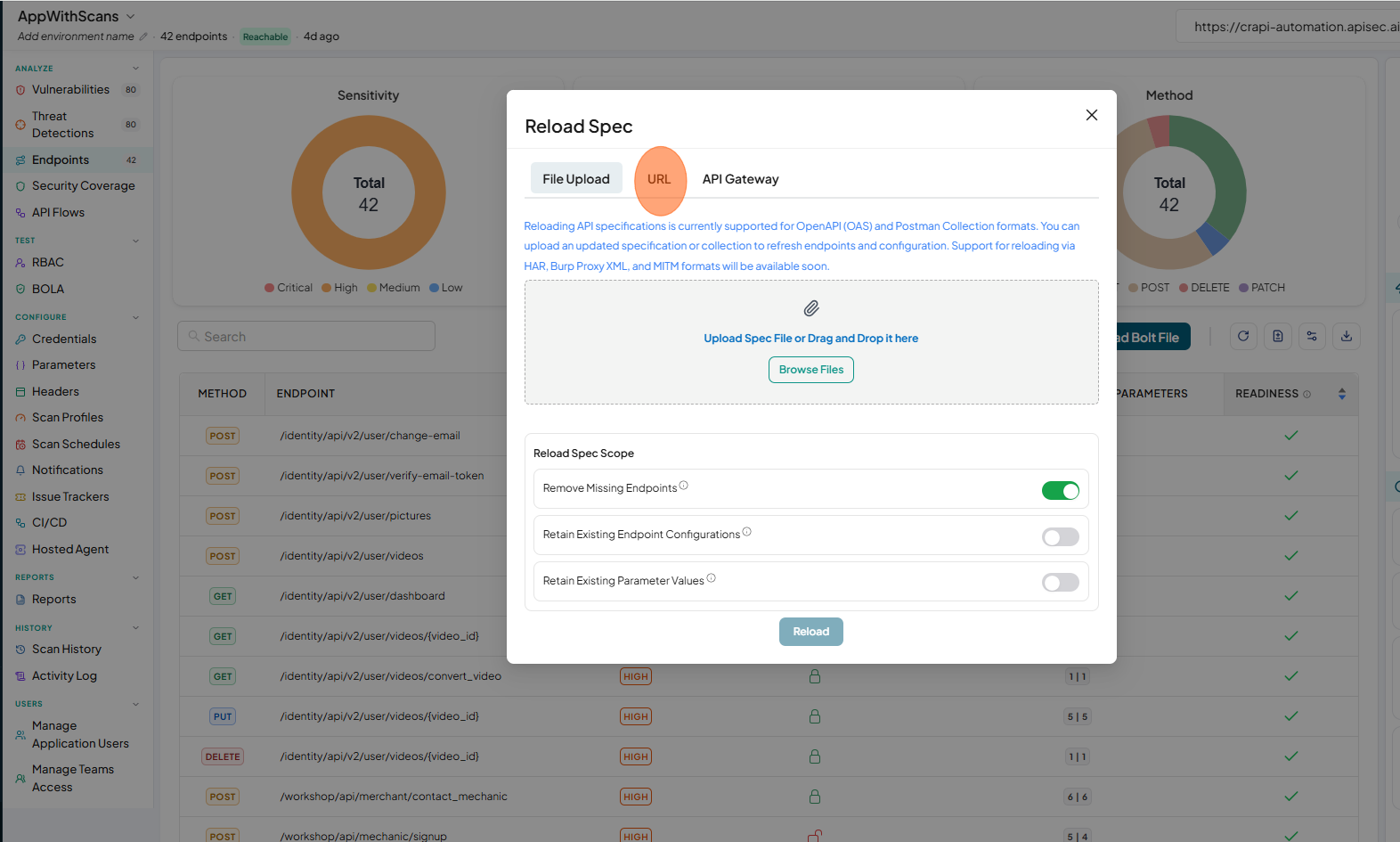
Now you will see a form with different options.
-
Enter the URL from which the application will fetch the API specification.
-
Reload Spec Scope
-
Remove Missing Endpoints - Automatically clean up your application by deleting any endpoints that no longer exist in the updated specification, ensuring your application stays accurate and up to date. Disable the toggle button if you want to keep the existing endpoints.
-
Retain Existing Endpoint Configurations - Preserve custom endpoint settings such as authorization, parameters, headers, data types, and example values. When disabled, the system will override these settings and apply updates from the new specification.
-
Retain Existing Parameter Values - By default, manually entered parameter values at the instance or endpoint level are preserved when reloading the specification. You can disable this option to overwrite them with values from the updated specification.
-
Select the required options and click on the Reload button.

-
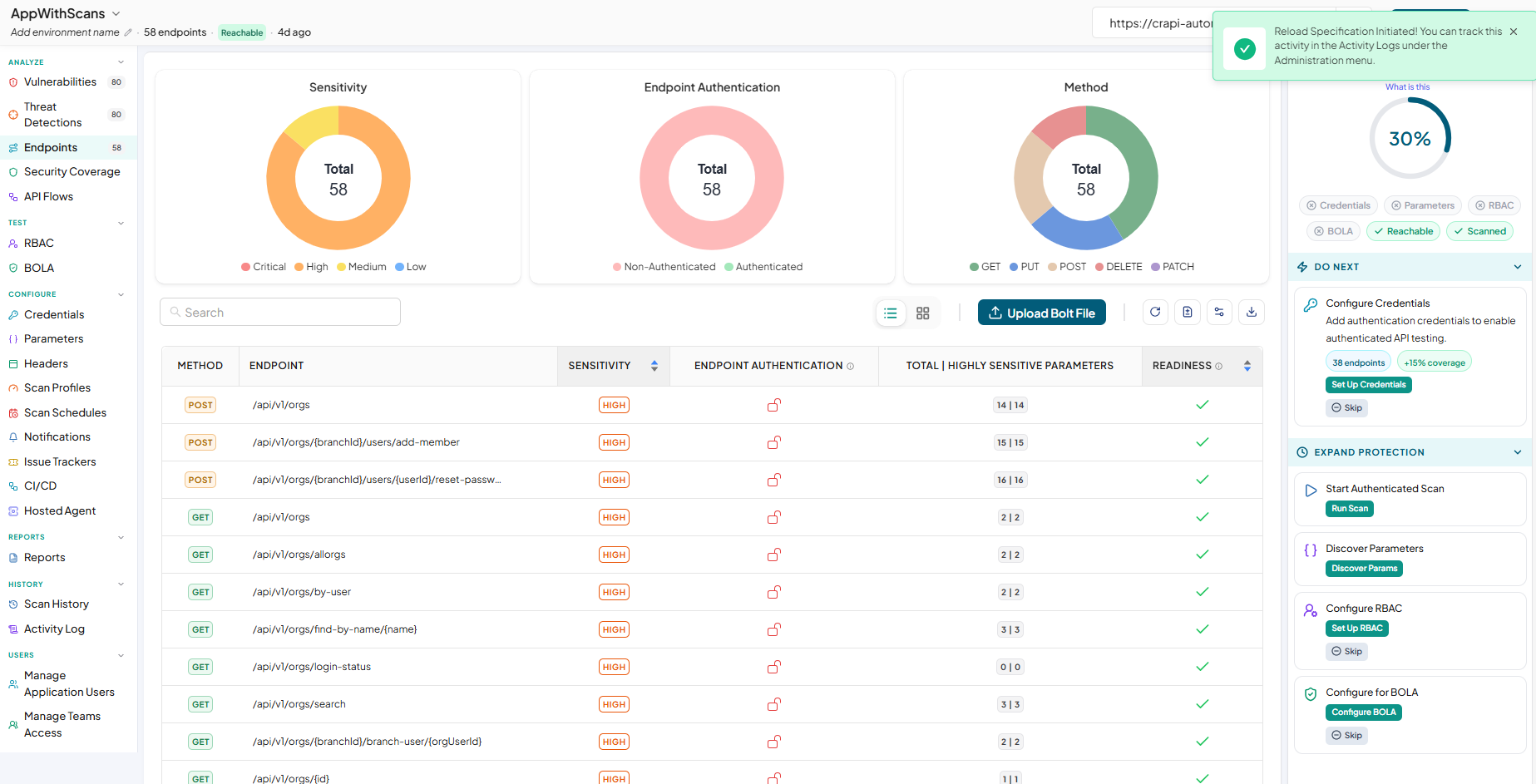
Reload task submitted successfully. You can track the progress in Activity logs.
 note
Users with View permissions cannot reload the specification using a URL in a shared application.
-
Reload Spec with API Gateway
-
Open your browser and visit: https://<your-tenant>.apisecapps.com
-
Click on Application

-
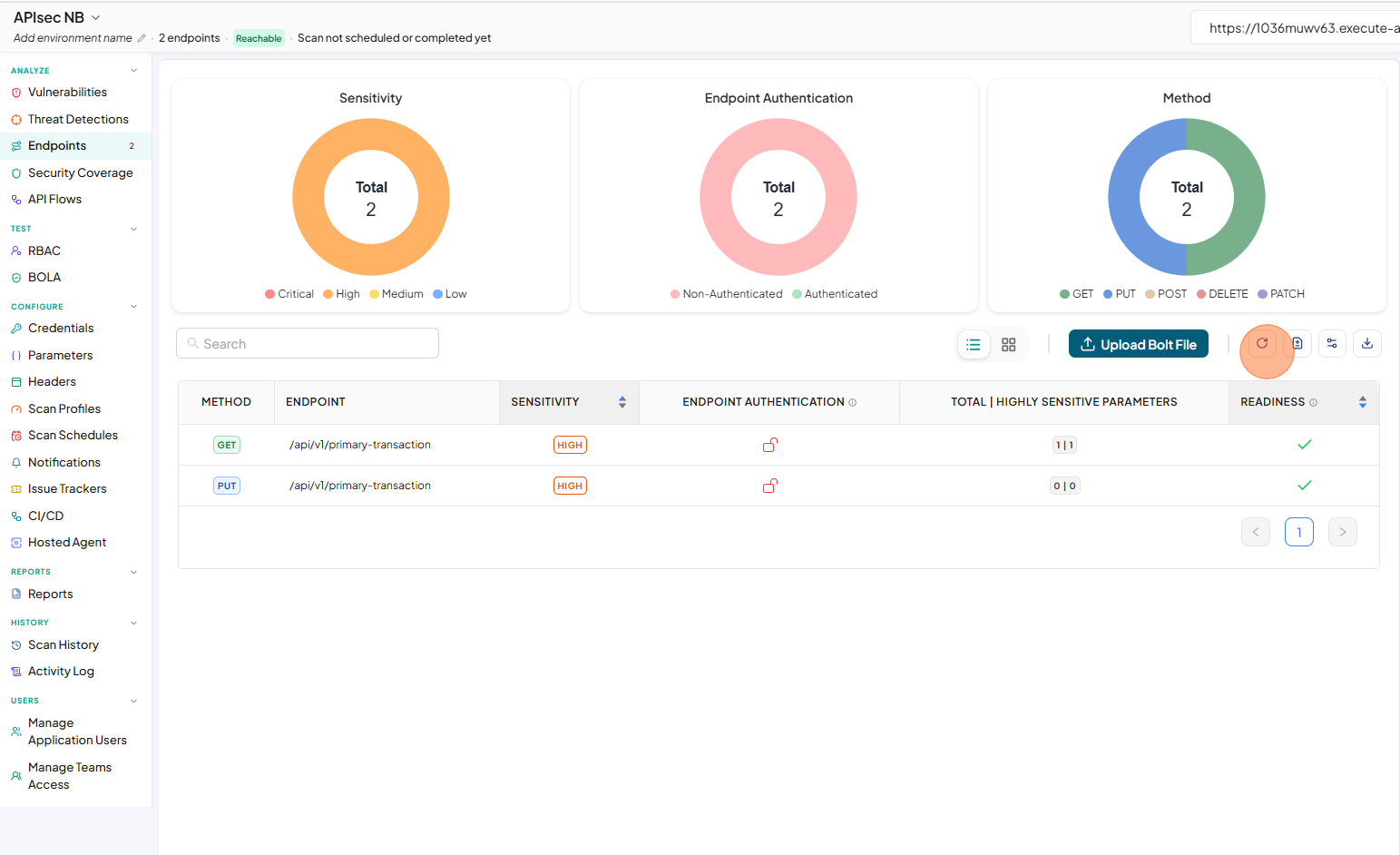
Now click on the Reload Spec
-
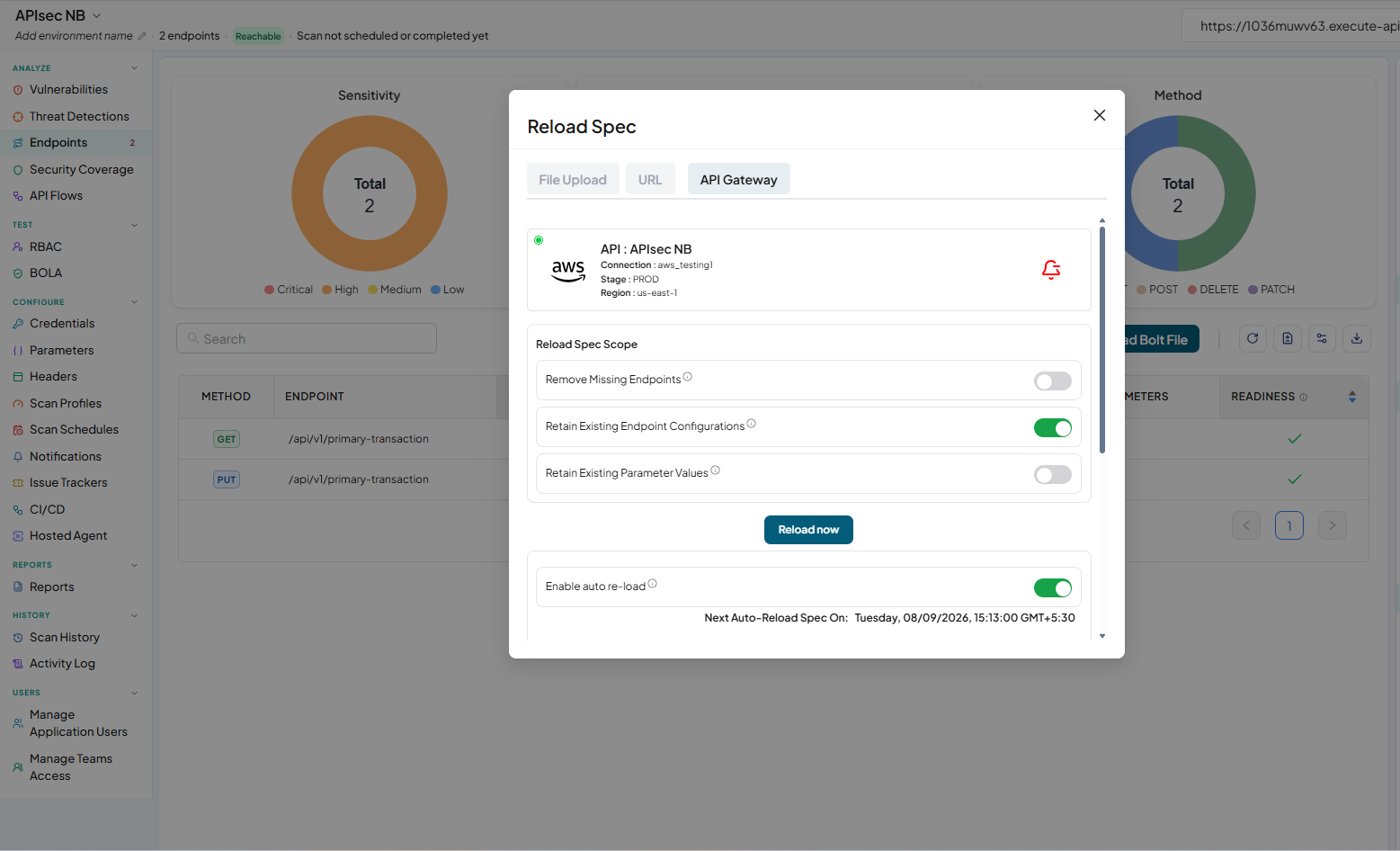
If you created the application with Gateway, then you will see the API Gateway (spec reload supports AWS API Gateway, Azure APIM, MuleSoft, SwaggerHub, and Postman) tab selected with linked connection.
-
Here, if you want you can change the existing connection and use new connection and change the Spec.
-
Steps to unlink the connection and reload with new spec from Gateway
-
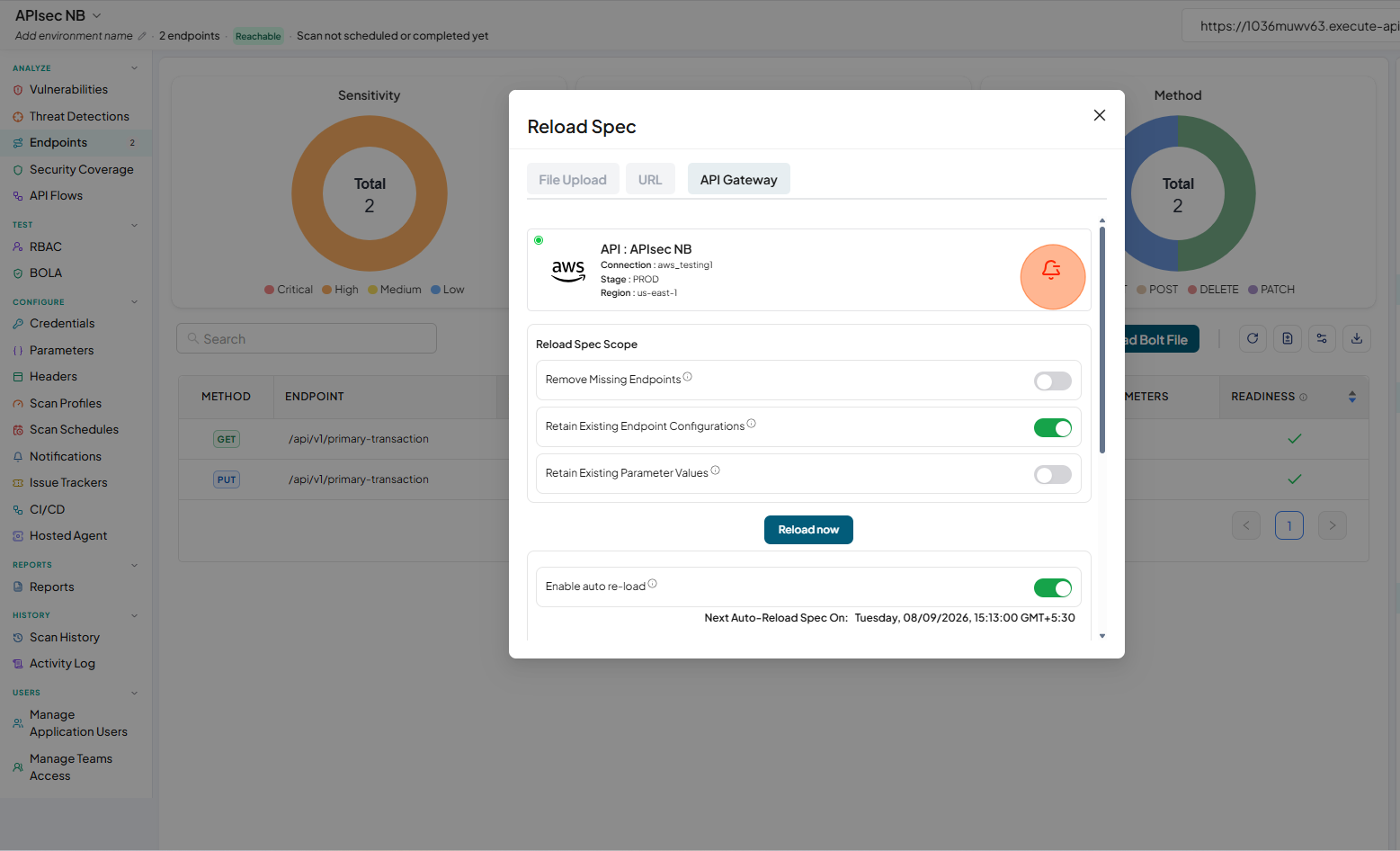
Click on the Remove spec to unlink the connection.
-
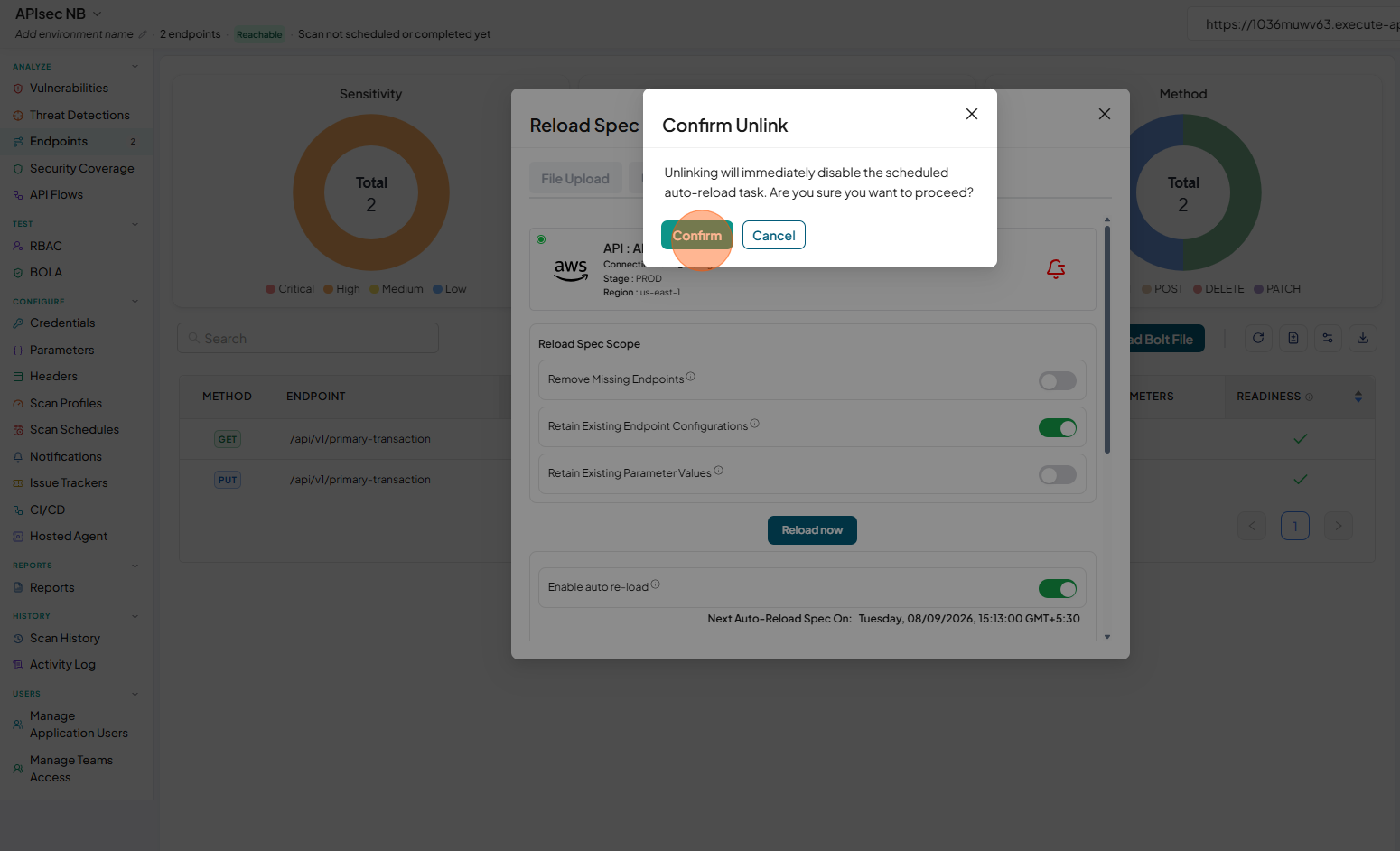
Click on the "Confirm"
-
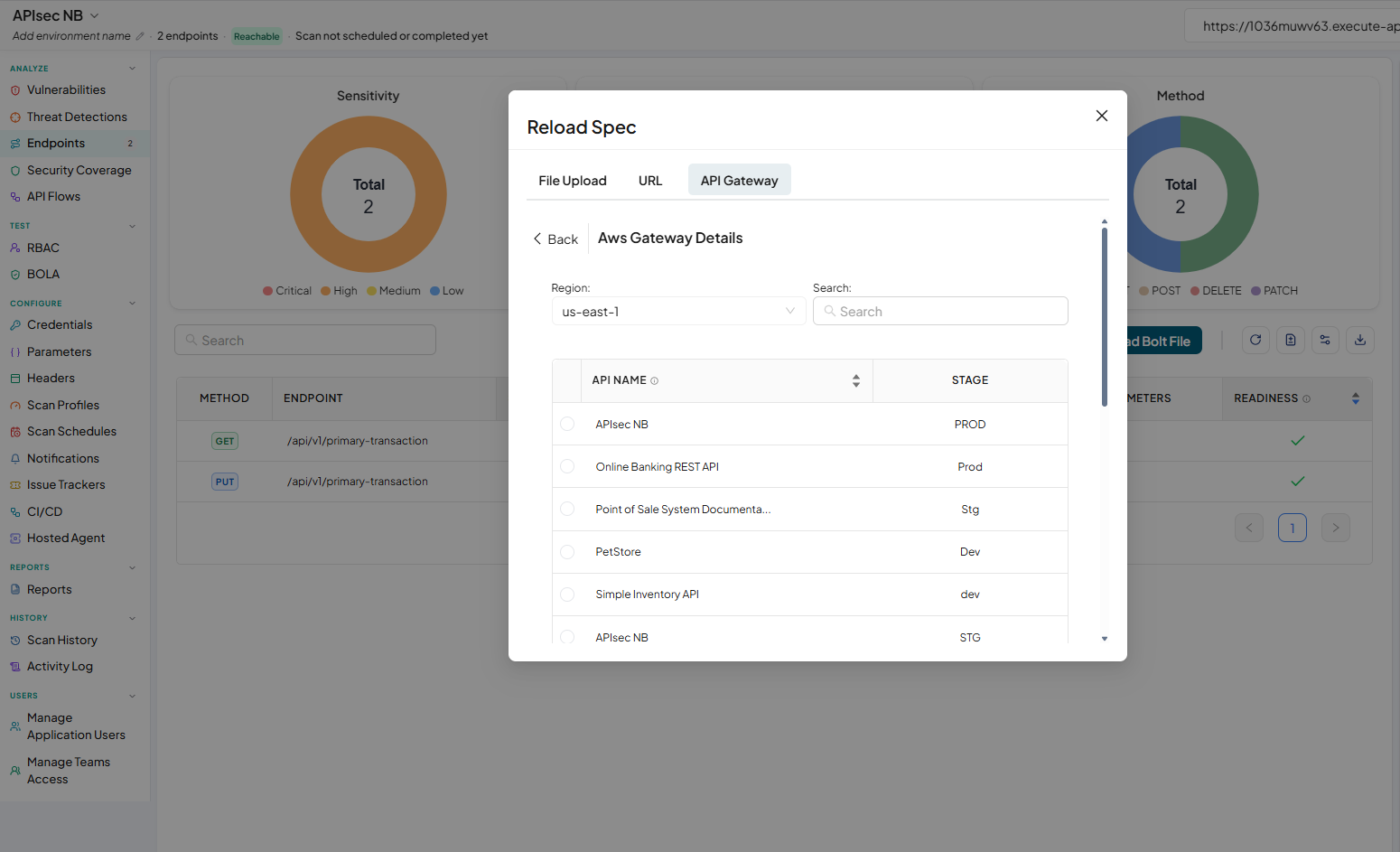
Now you will see the available APIs from the gateway.
-
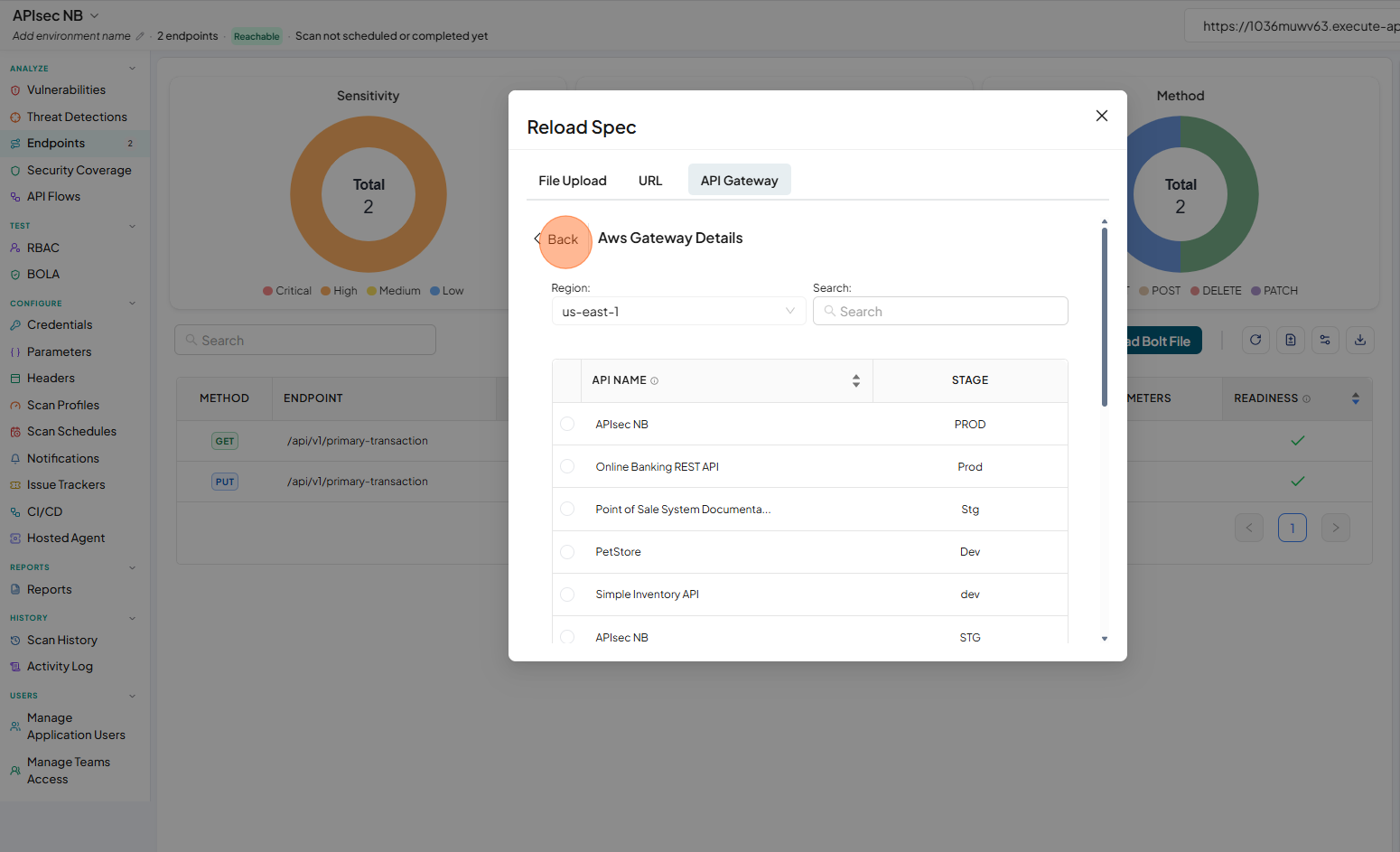
If you want to change the connection or want to create a new connection then click on the "Back" button
-
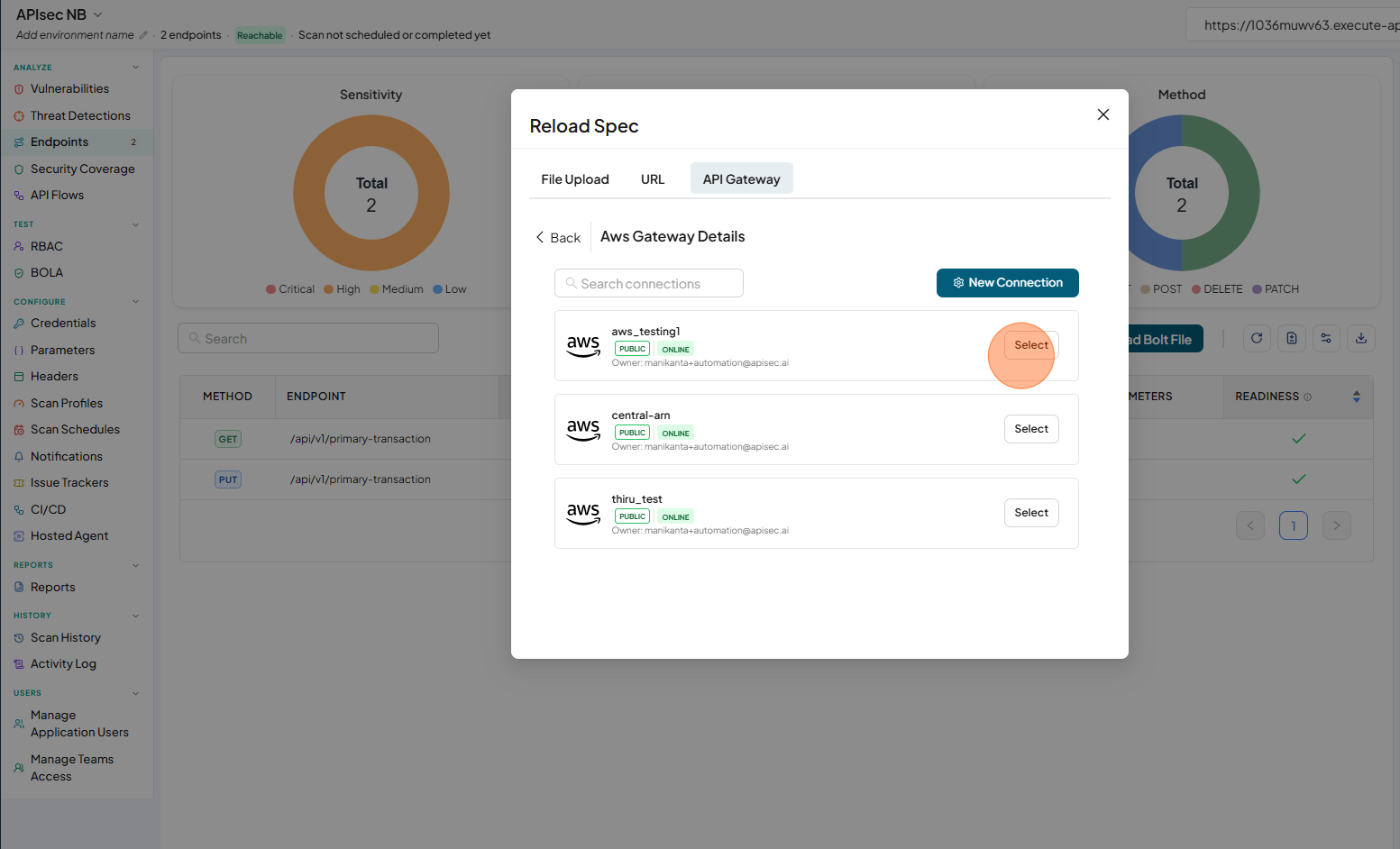
Click the Select button next to the desired gateway connection to use an existing connection, or click New Connection to create a new one.
-
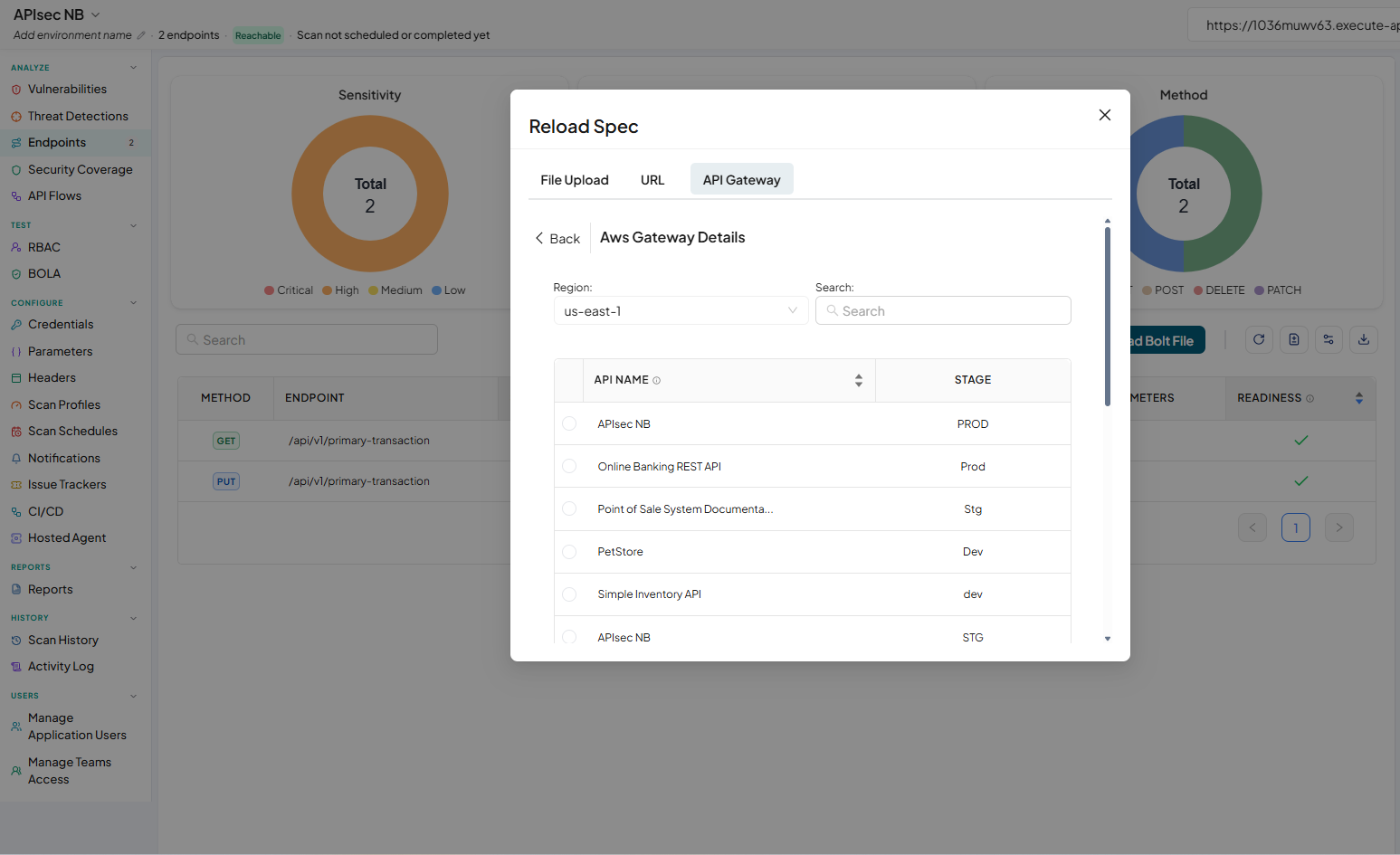
You will see a list of the available APIs from the gateway and select the required API from the list.
-
-
-
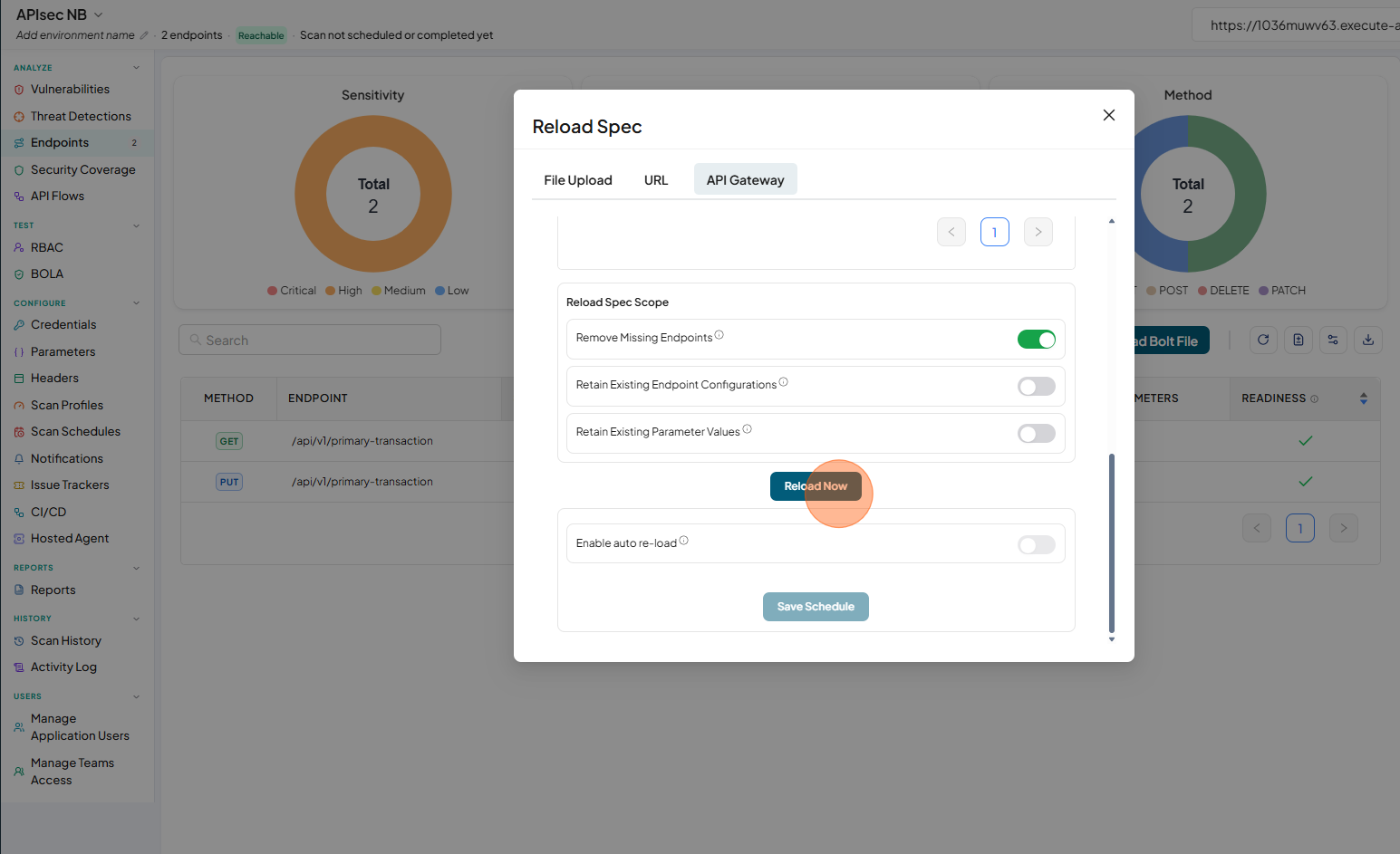
Now specify the Reload Spec Scope
- Remove Missing Endpoints - Automatically clean up your application by deleting any endpoints that no longer exist in the updated specification, ensuring your application stays accurate and up to date. Disable the toggle button if you want to keep the existing endpoints.
- Retain Existing Endpoint Configurations - Preserve custom endpoint settings such as authorization, parameters, headers, data types, and example values. When disabled, the system will override these settings and apply updates from the new specification.
- Retain Existing Parameter Values - By default, manually entered parameter values at the instance or endpoint level are preserved when reloading the specification. You can disable this option to overwrite them with values from the updated specification.
-
Otherwise, click the Reload Now button to fetch the latest specification immediately.
-
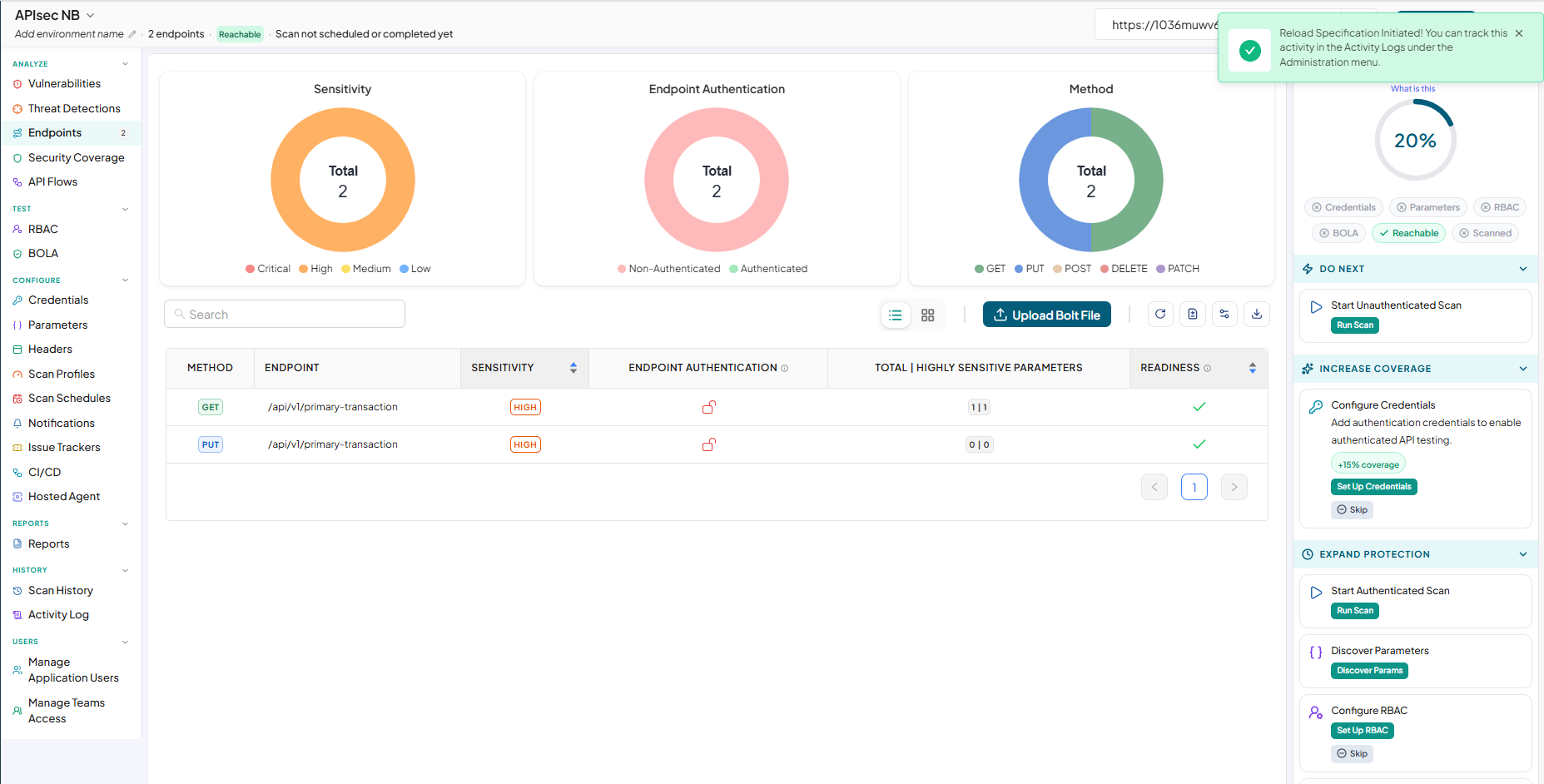
Reload task submitted successfully. You can track the progress in Activity logs.
Users with View permissions cannot reload the specification using API Gateway in a shared application.
Auto-Reload Spec with API Gateway
Auto-Reload Spec via API Gateway feature enables users to automatically fetch and update API specifications directly from their connected API Gateway, ensuring that the most up-to-date API definitions are used for testing.
Spec reload supports AWS API Gateway, Azure APIM, MuleSoft, SwaggerHub, and Postman. These are a subset of the onboarding sources — an API onboarded from a source that is not in this list cannot be reloaded from its gateway.
Instead of manually uploading a file or specifying a URL, users can now select an existing gateway connection and choose the specific API to be reloaded. This reduces manual effort, minimizes errors, and ensures API specifications stay aligned with production and staging deployments.
Enable Auto-Reload
-
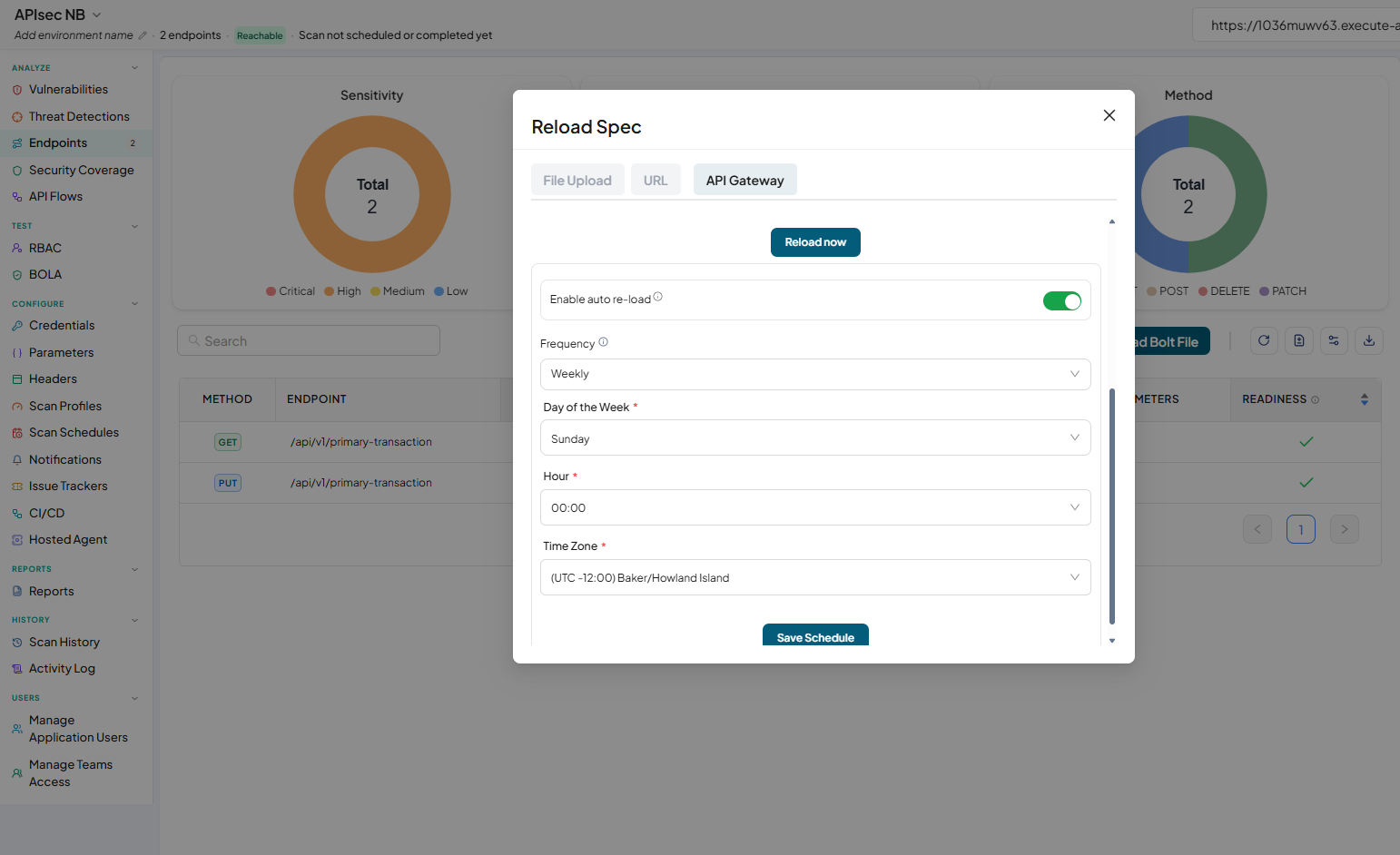
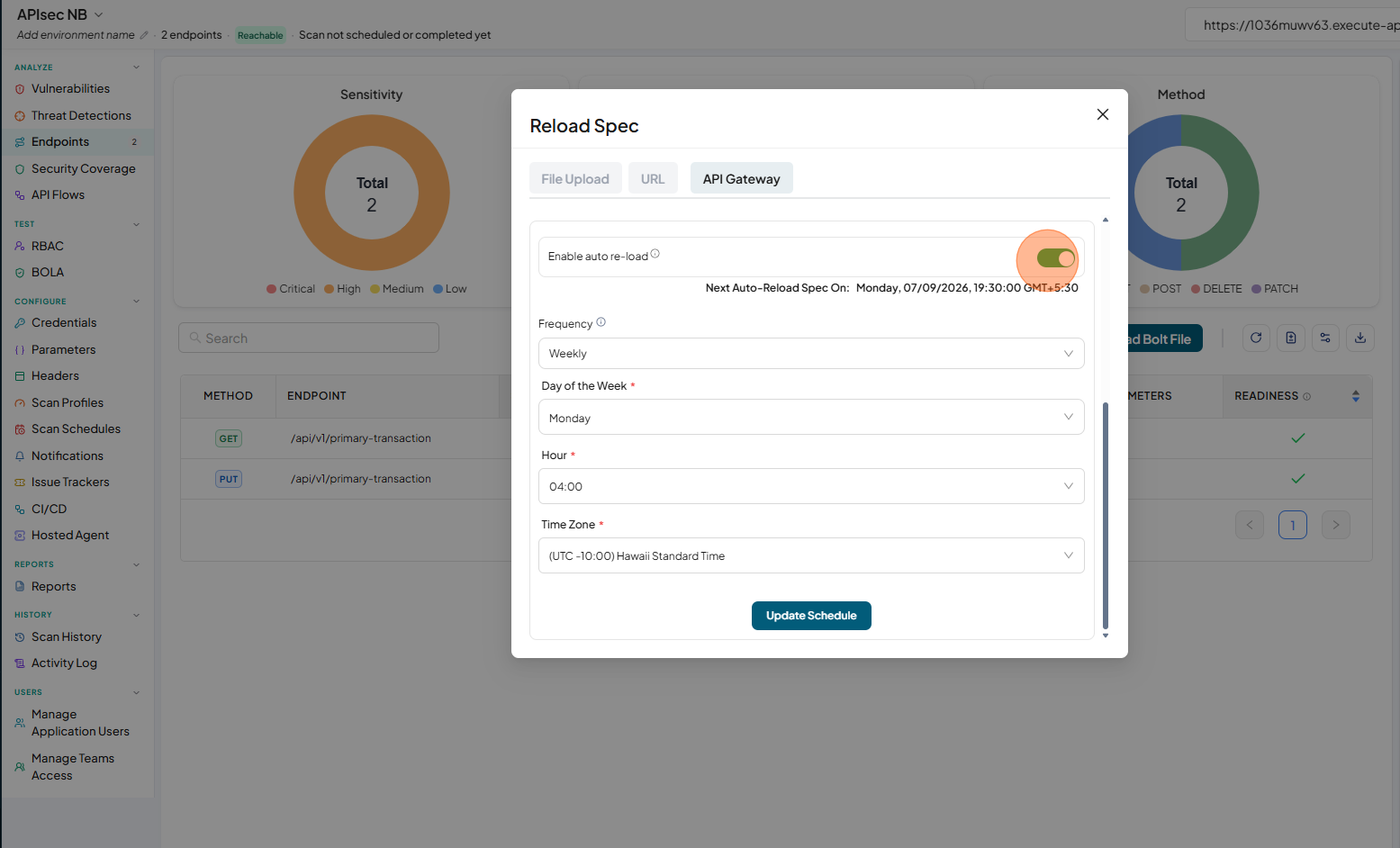
You can schedule the reload spec by enabling "Enable auto re-load" for linked connections.
-
Enable auto re-load - When enabled, the application will automatically check for unregistered APIs and onboard them in batches of 50, based on the frequency (currently weekly). Any remaining unregistered APIs will be included in the next batch.
-
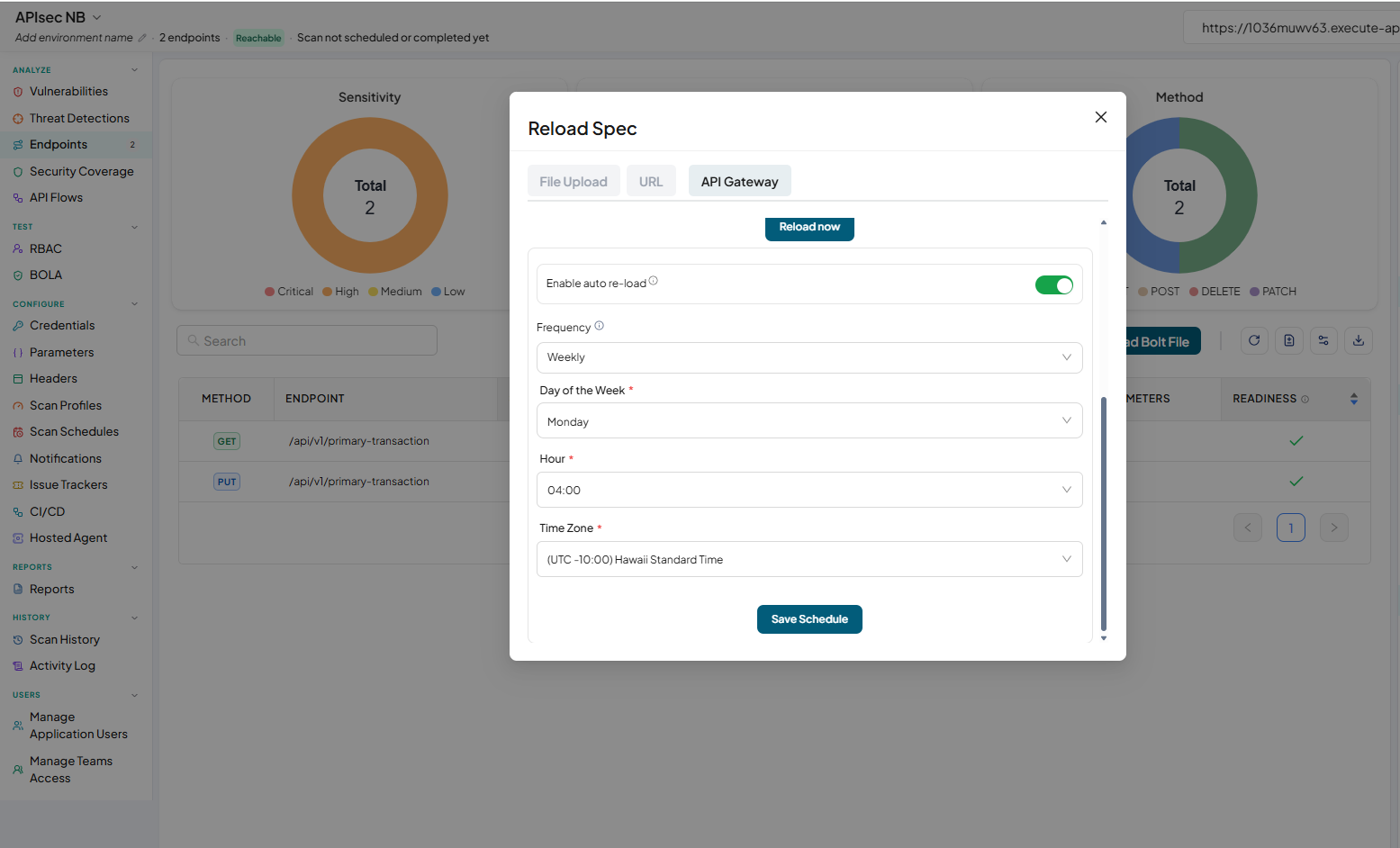
After selecting the fields, click on the "Save Schedule" button.
-
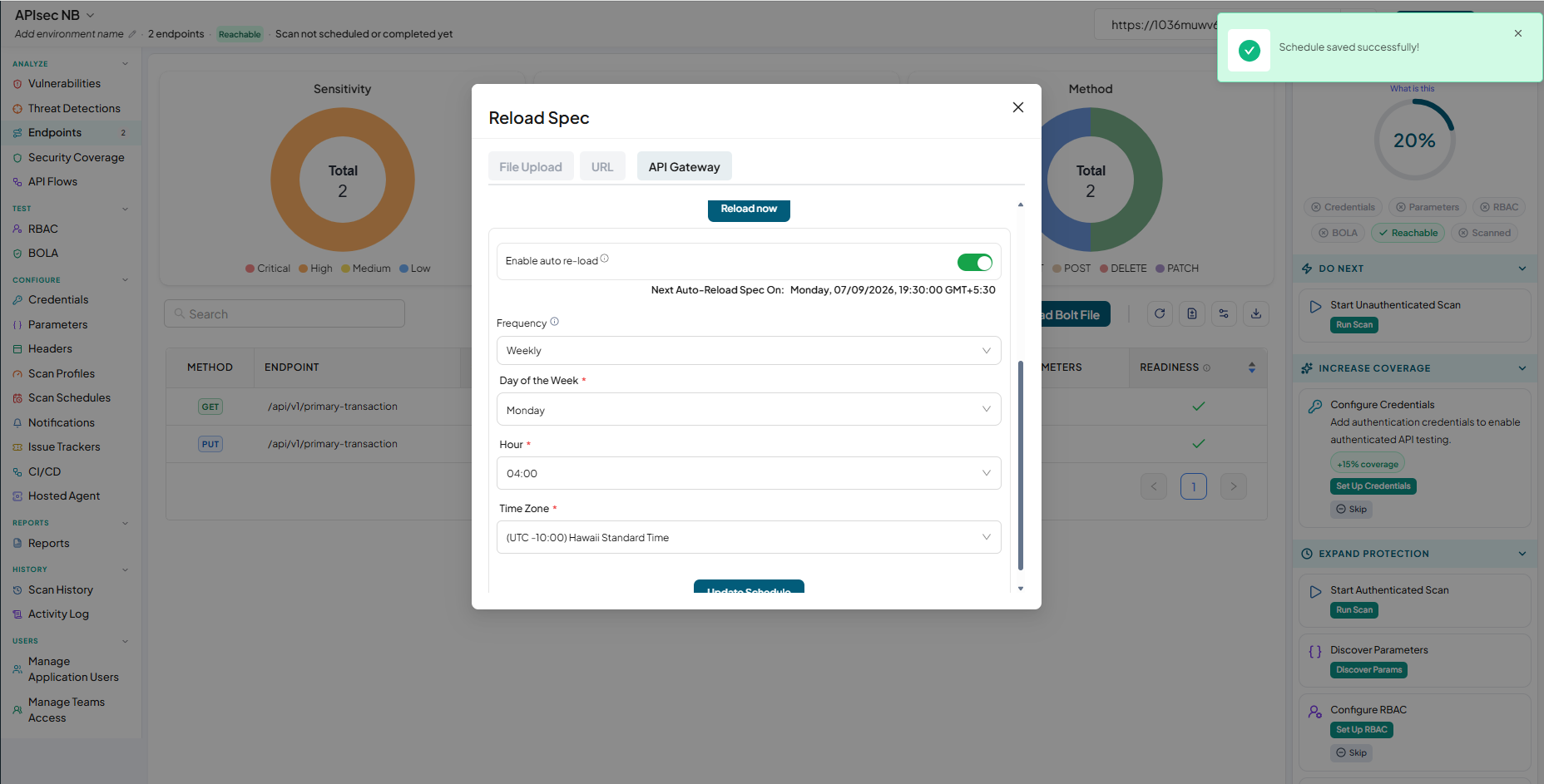
Schedule saved. The specification will auto-reload according to the selected schedule.
noteUsers with View permissions cannot schedule the reload specification in a shared application for linked connections.
-
Disable Auto-Reload
-
Open your browser and visit: https://<your-tenant>.apisecapps.com
-
Click on Application
-
Now click on the Reload Spec
-
Disable the Enable auto-reload toggle
-
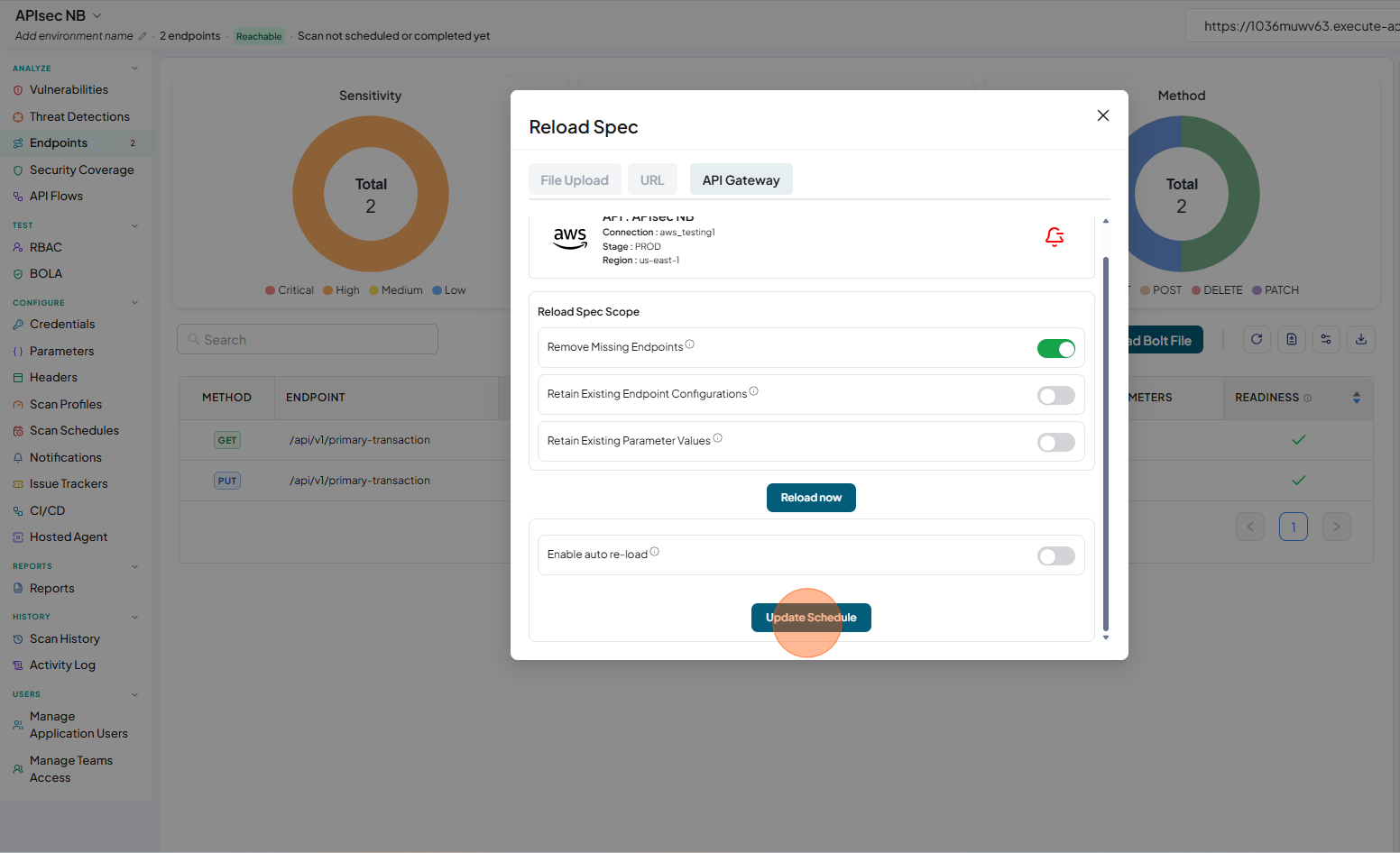
Click Update Schedule
-
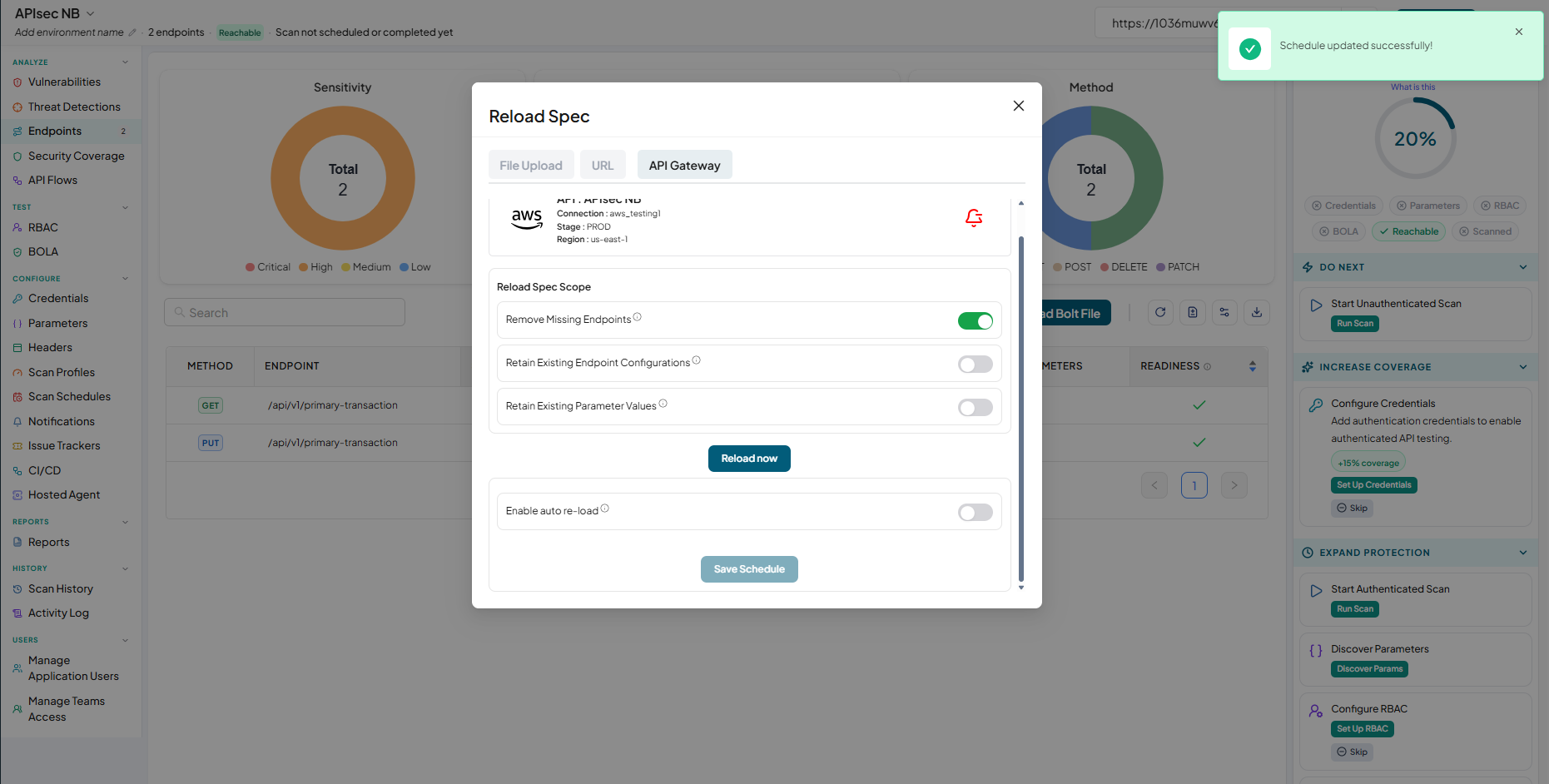
Schedule updated successfully
View the reload diff
When you reload a specification into an existing application, the reload diff shows exactly what changed between the previous specification and the new one. Use it to confirm the reload applied as expected instead of searching the endpoint list by hand.
-
Open the application holding the reloaded specification.
-
Go to the Endpoints view.
-
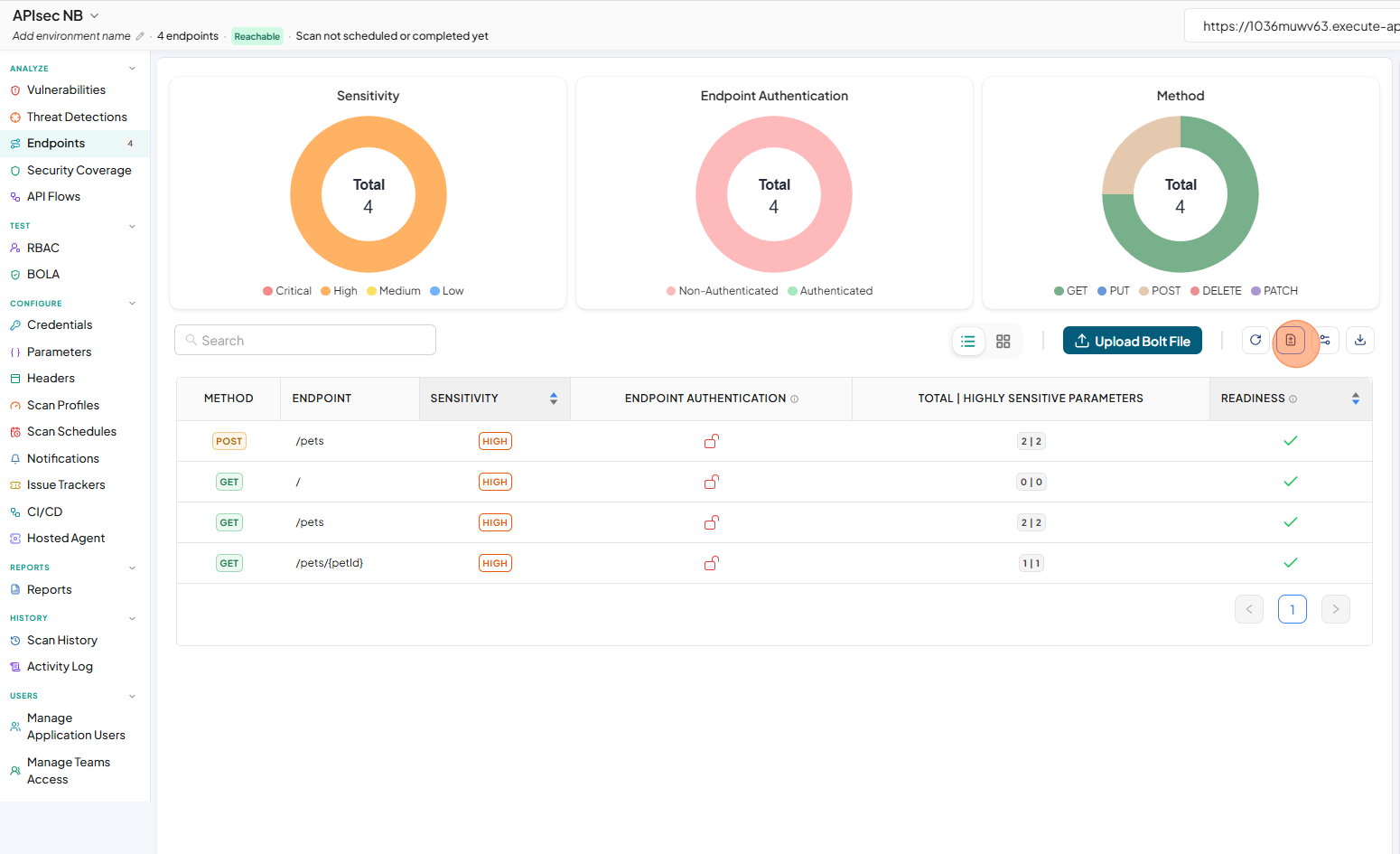
Click View Reload Diff.
-
The diff displays the changes the new specification introduced.
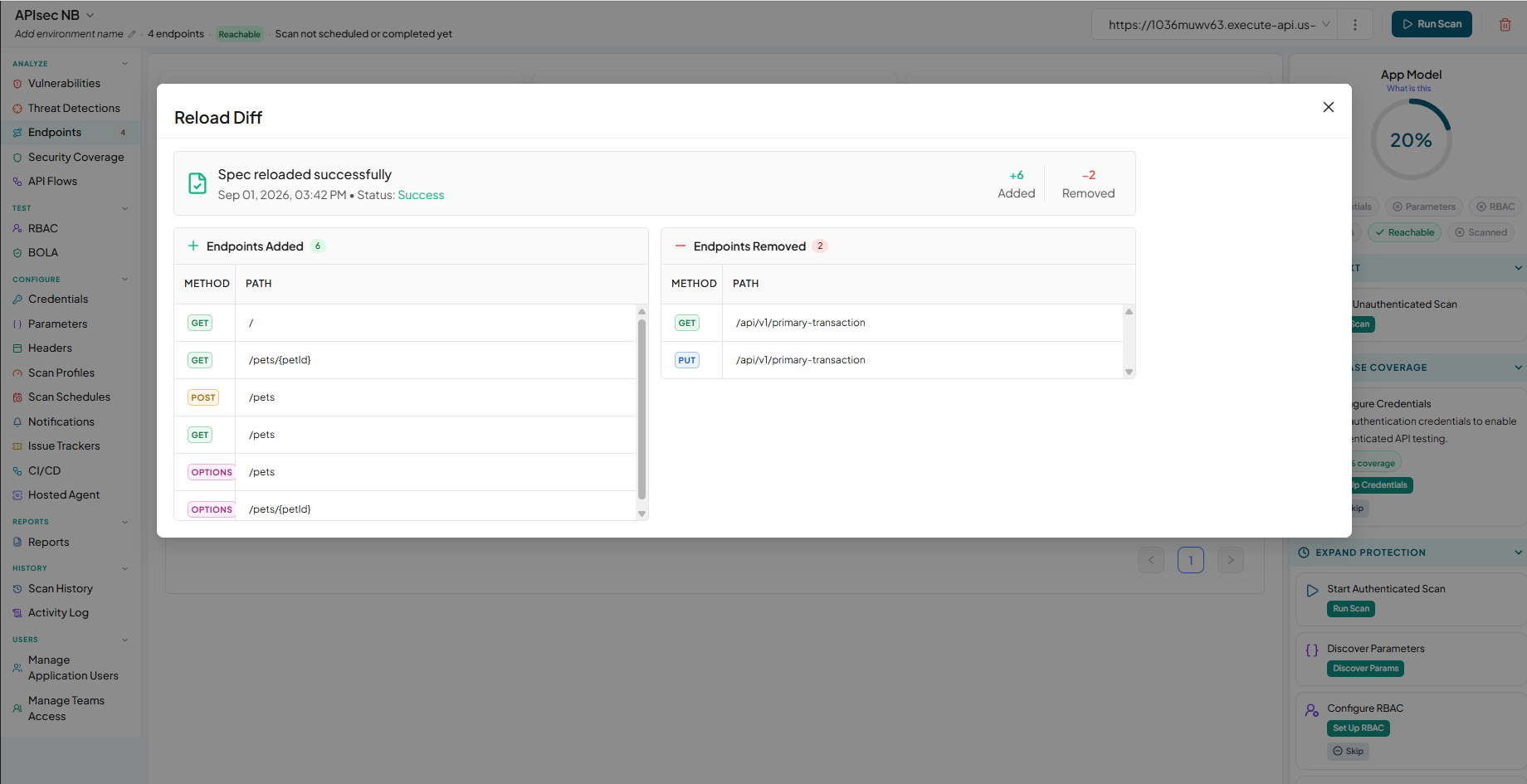
The diff identifies endpoints that were:
- Added — present in the new specification but not in the previous one.
- Removed — present in the previous specification but no longer in the new one.