Configure authentication
Authenticated scans are where APIsec finds the vulnerabilities that matter most — authorization flaws, privilege escalation, broken object-level access — because they exercise the API as a real client. This page shows how to add credentials to an application and test them. APIsec supports API Key, Basic, OAuth 2.0, Bearer Token, HMAC, and multi-step Custom authentication.
Credentials are stored per application. To share one credential set across applications, see Global Credentials.
Open the credentials form
Open your browser and visit: https://<your-tenant>.apisecapps.com
-
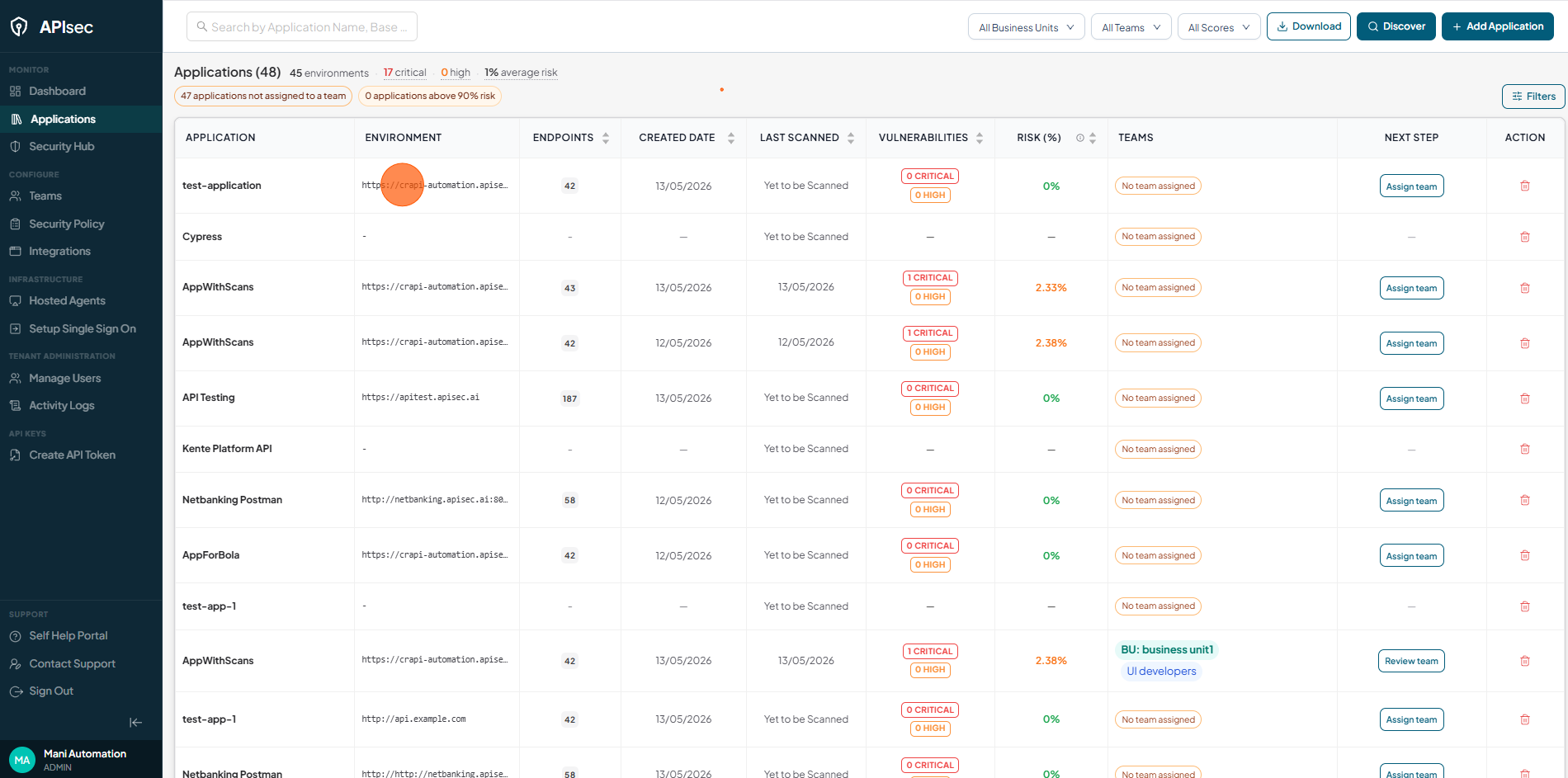
Click the required application.
-
Open the credentials view in either of two ways:
-
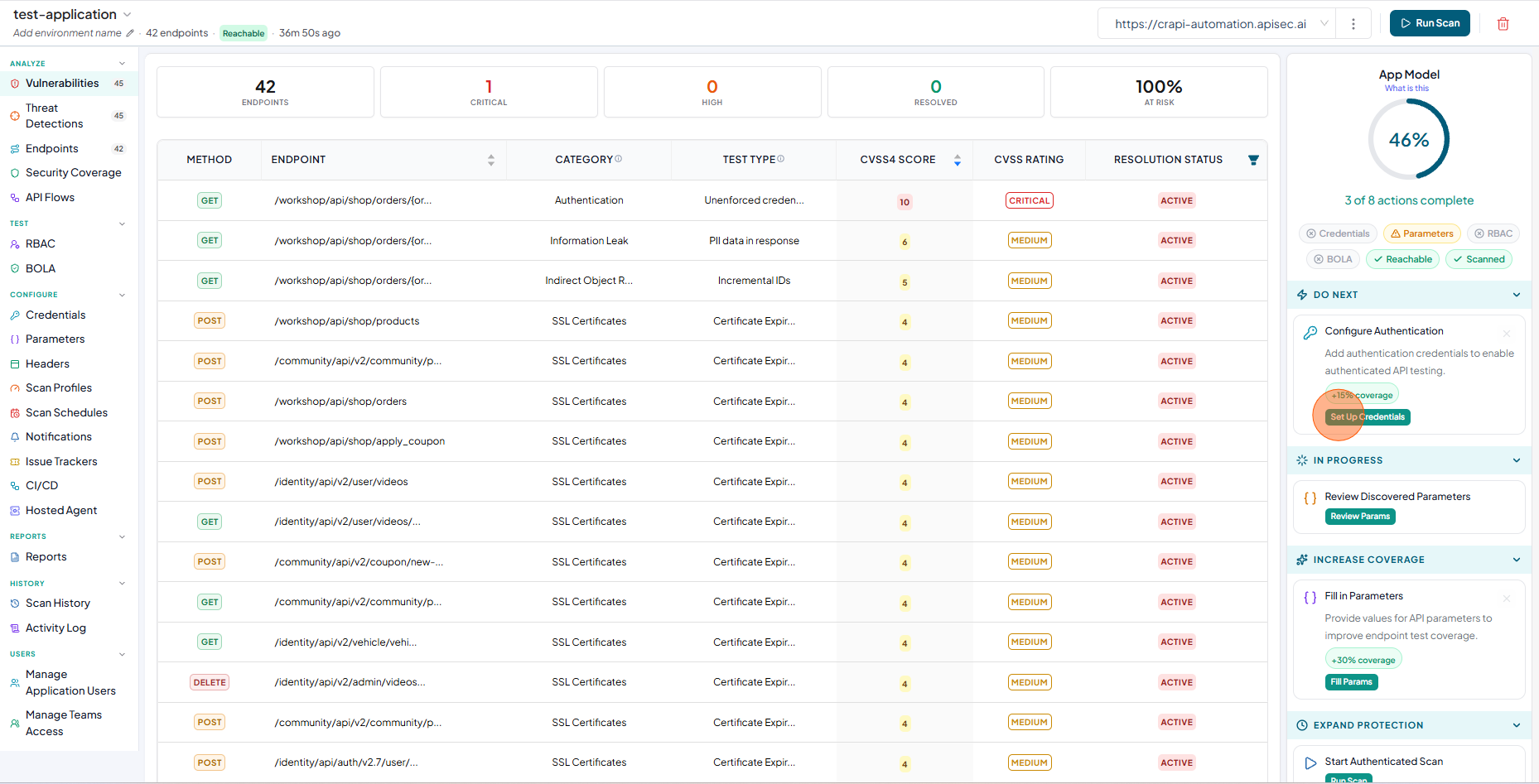
Click Set Up Credentials in the Guided actions, or
-
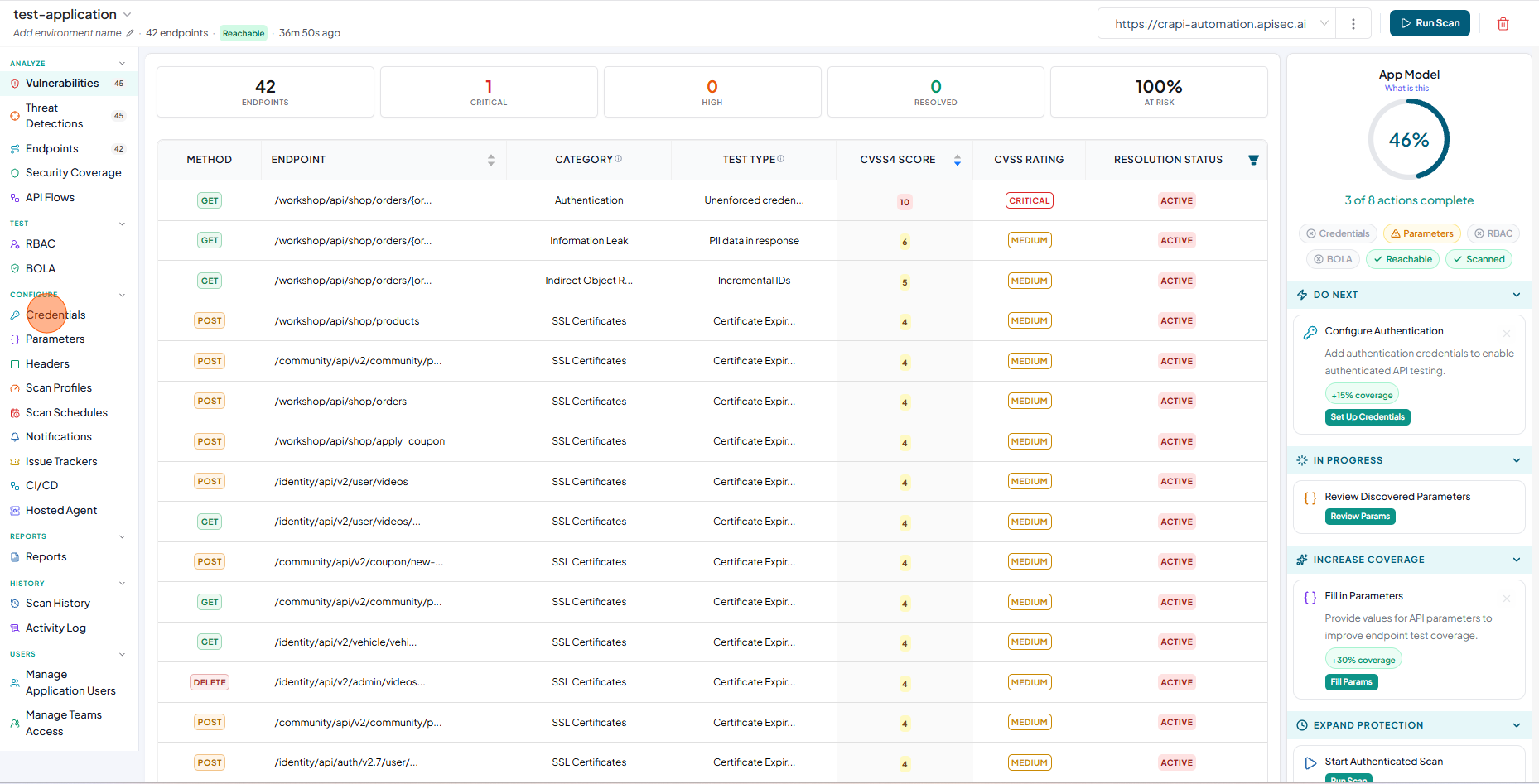
Click Credentials in the sidebar
-
-
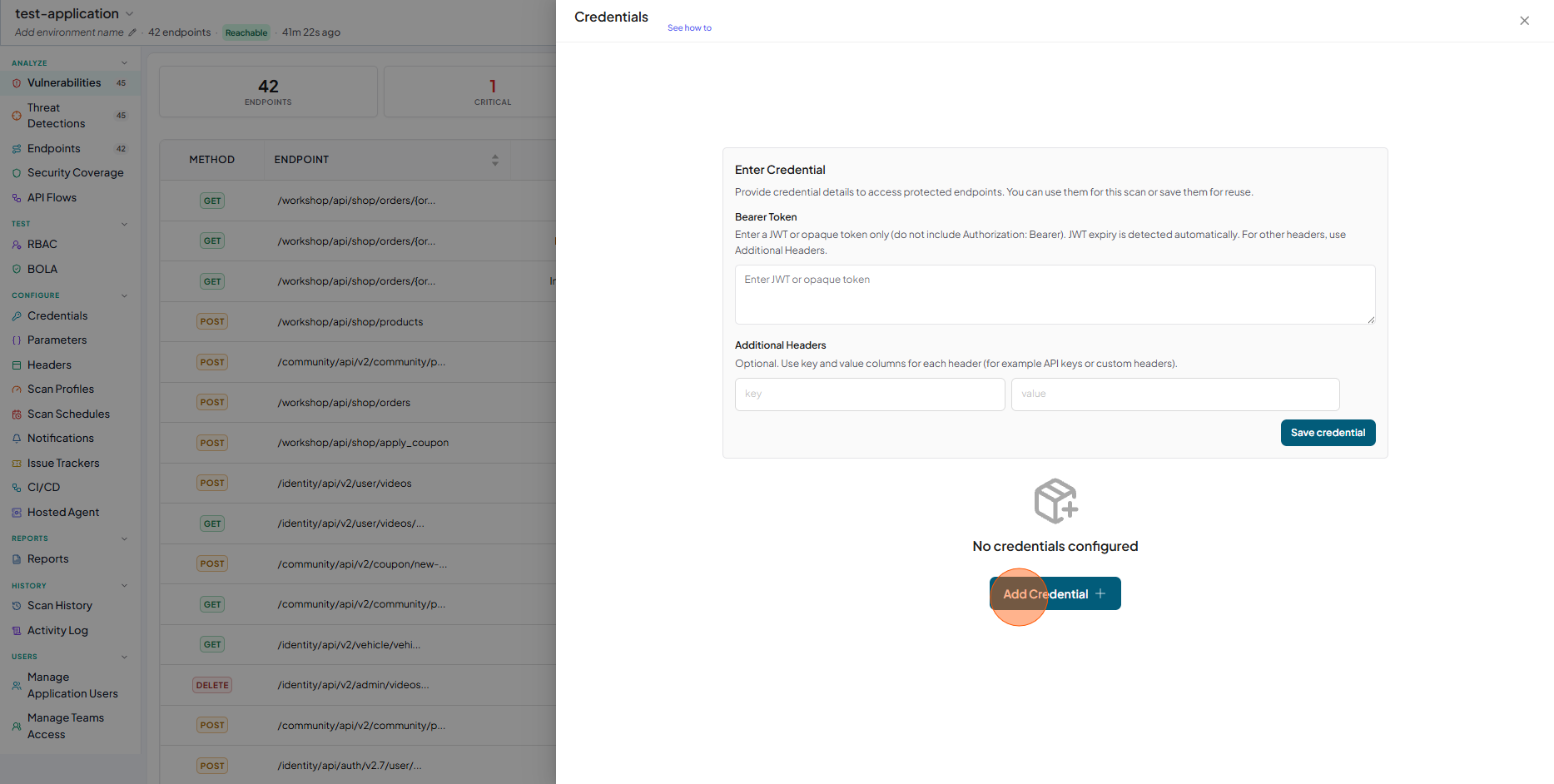
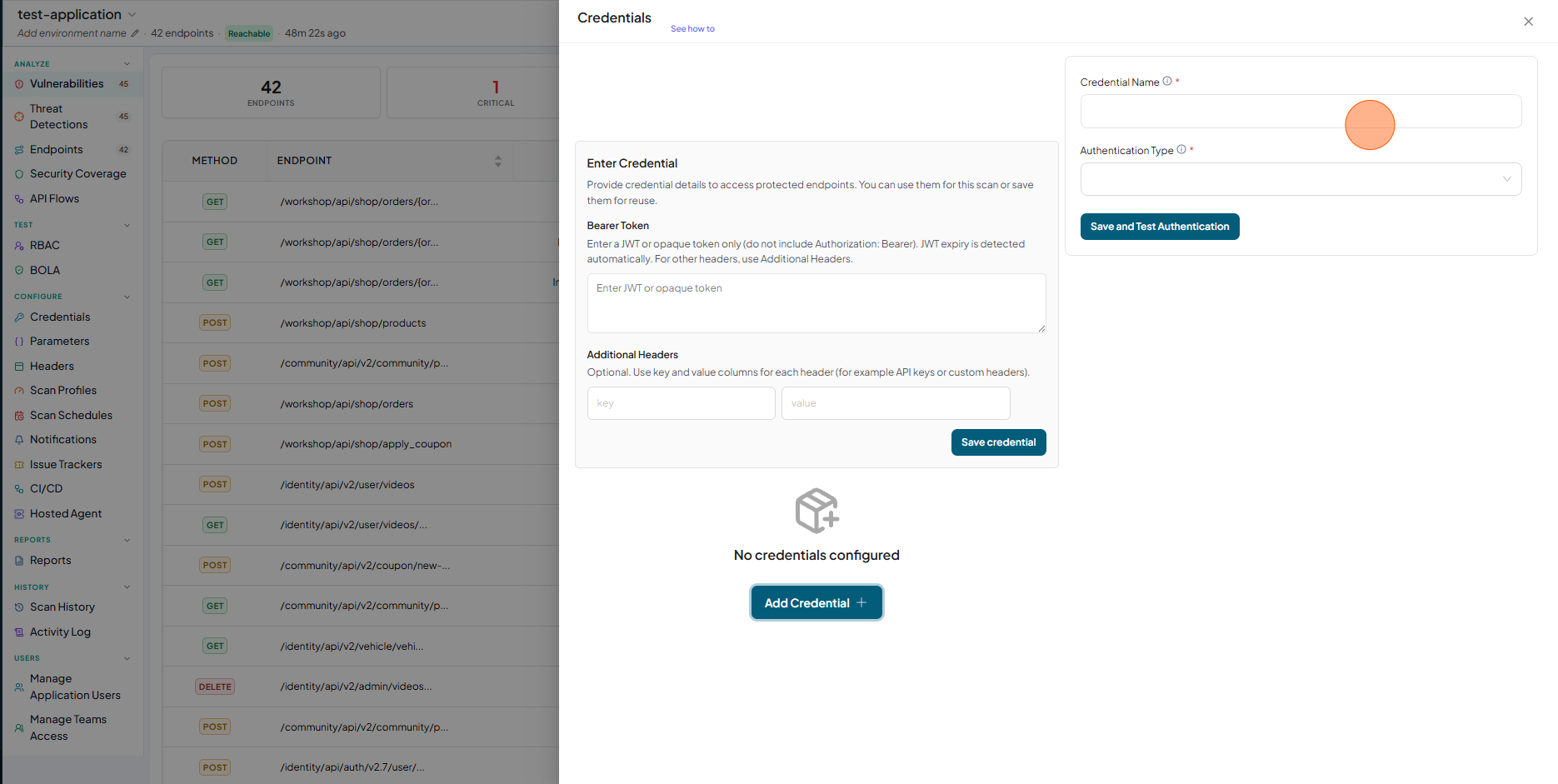
Click the Add Credentials + button.
-
The authentication form is displayed.
Users with View permissions cannot configure or add authentication in a shared application.
API Key Authentication
-
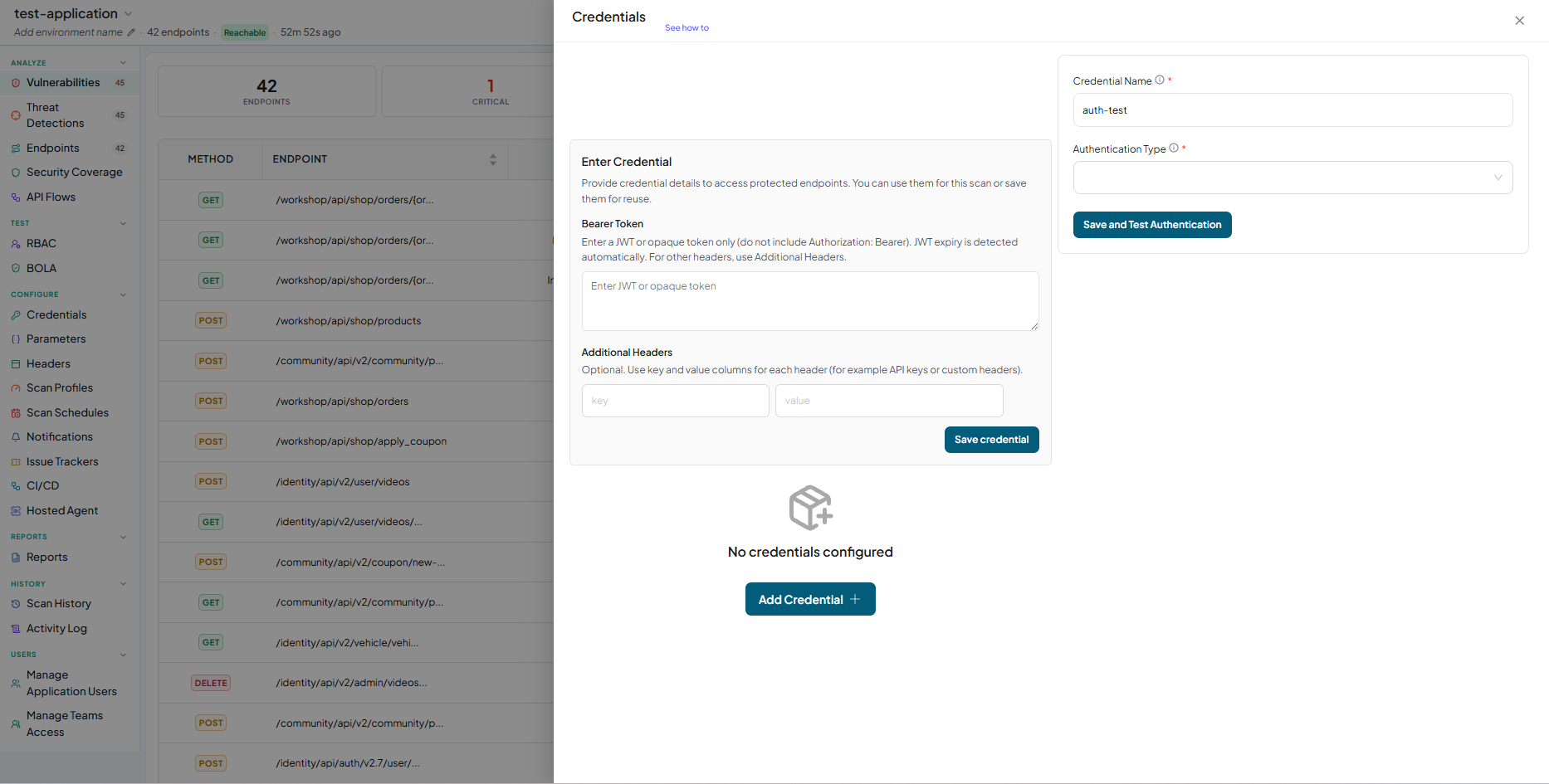
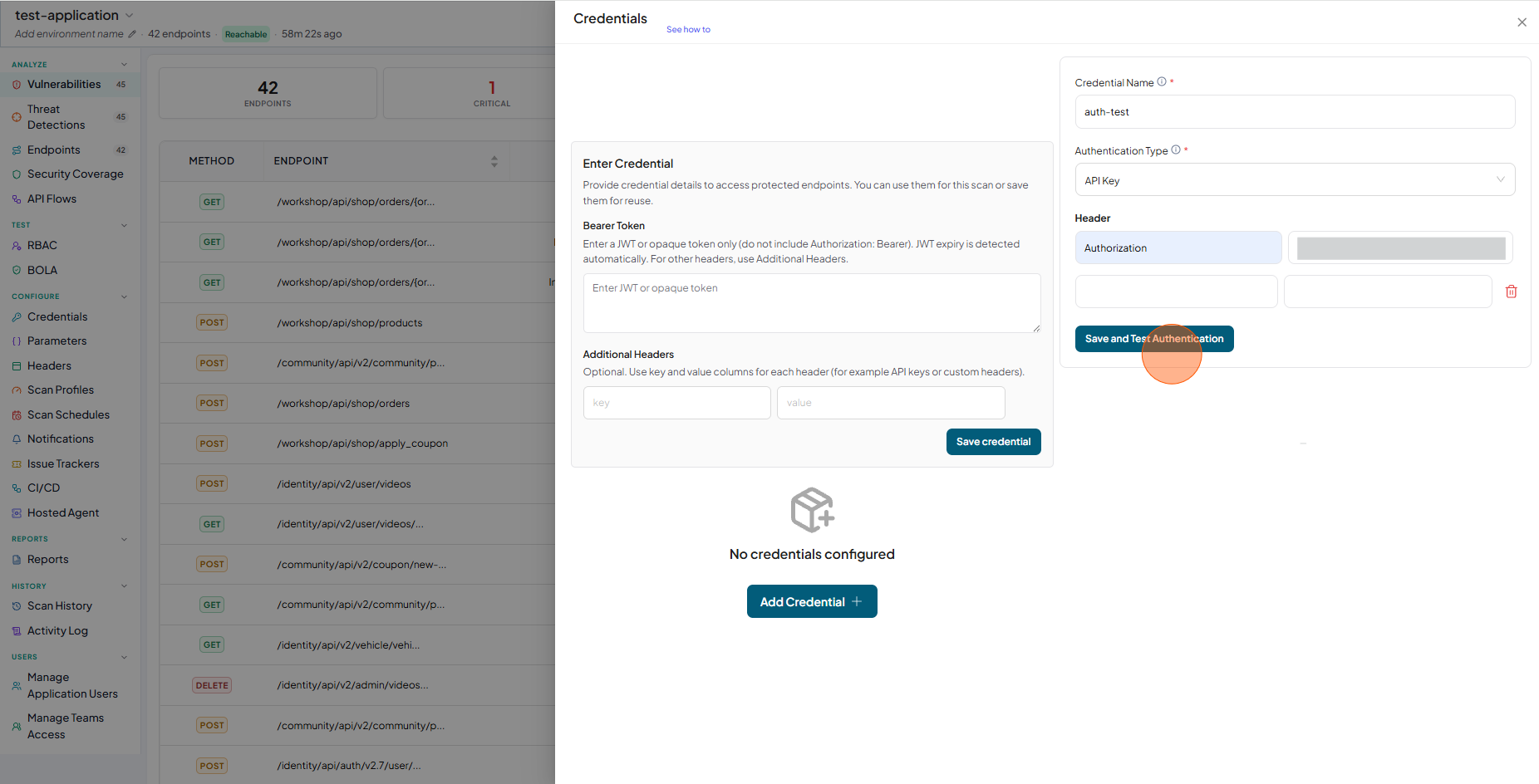
Type auth name
-
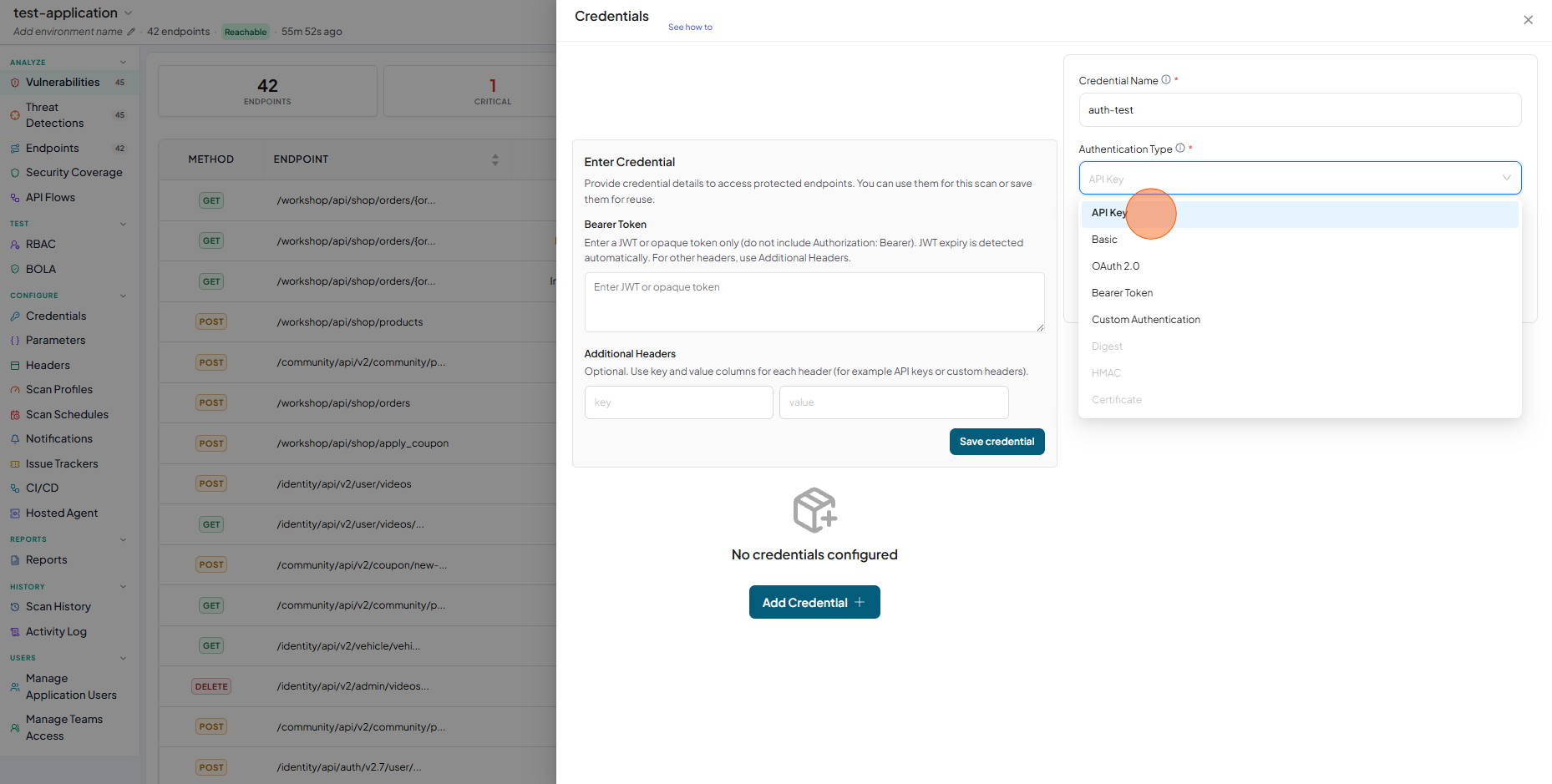
From dropdown select API Key
-
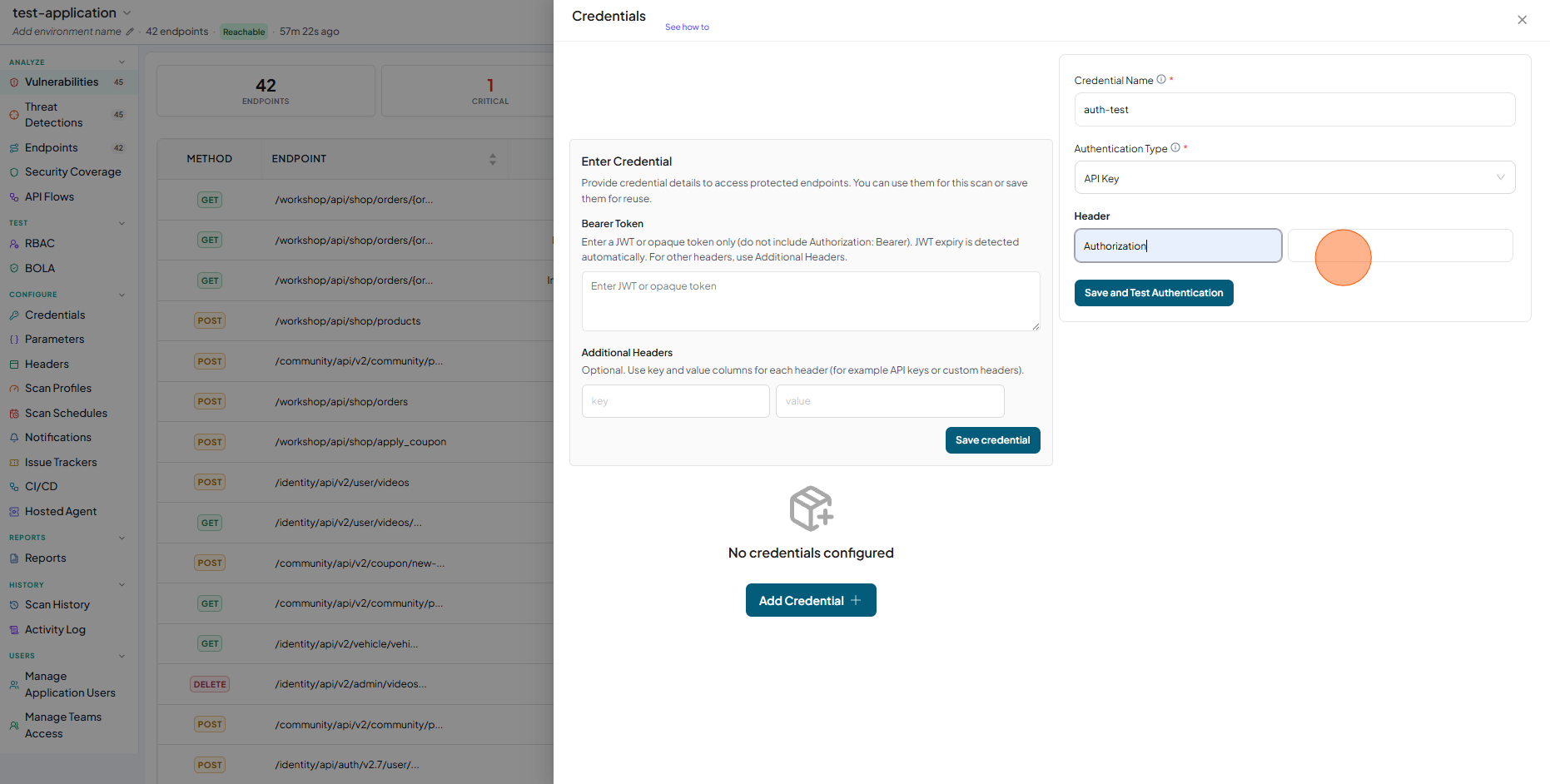
Fill the Header Key and Value
-
Click on Save and Test Authentication
-
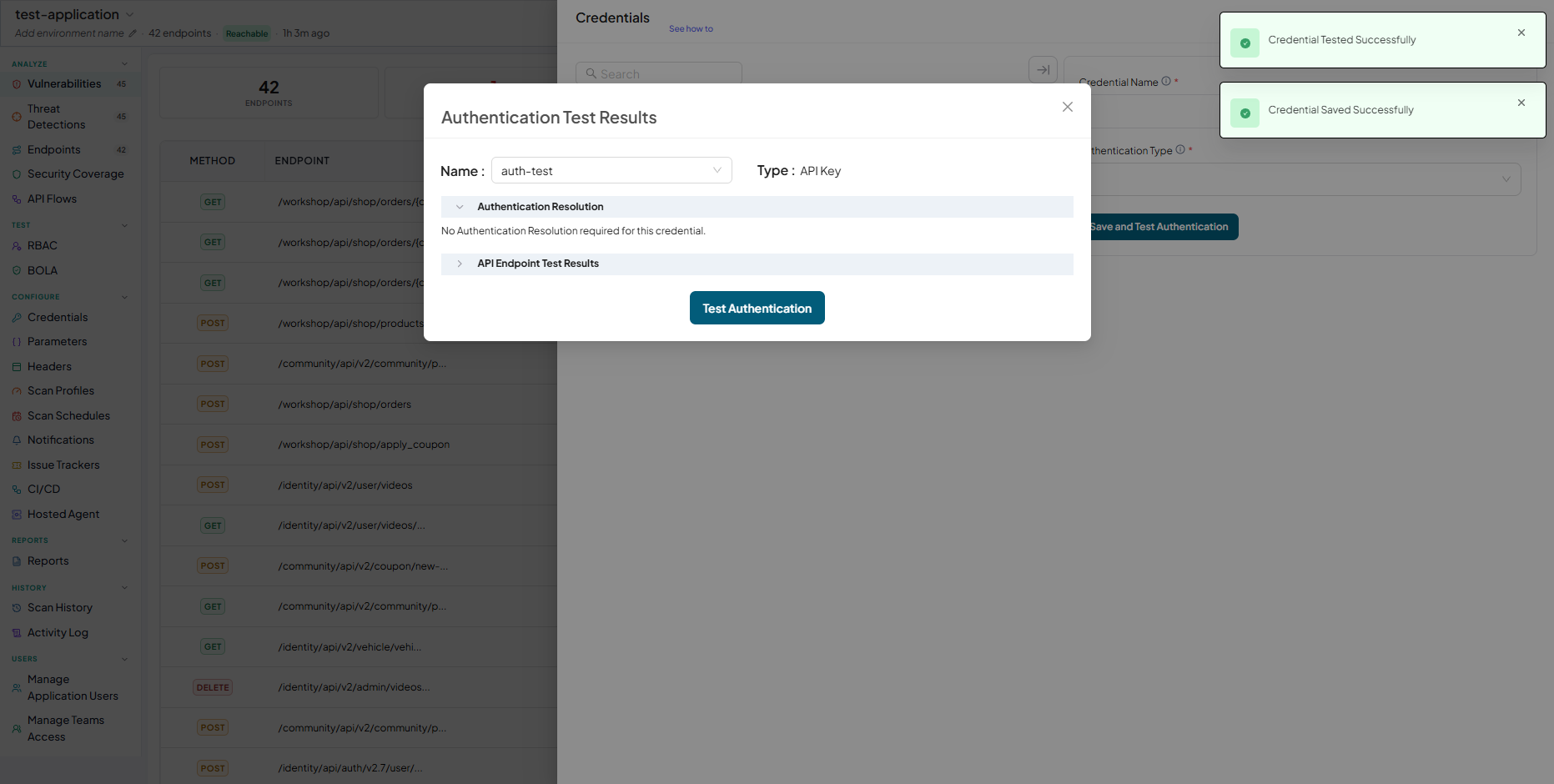
Authentication Tested Successfully
-
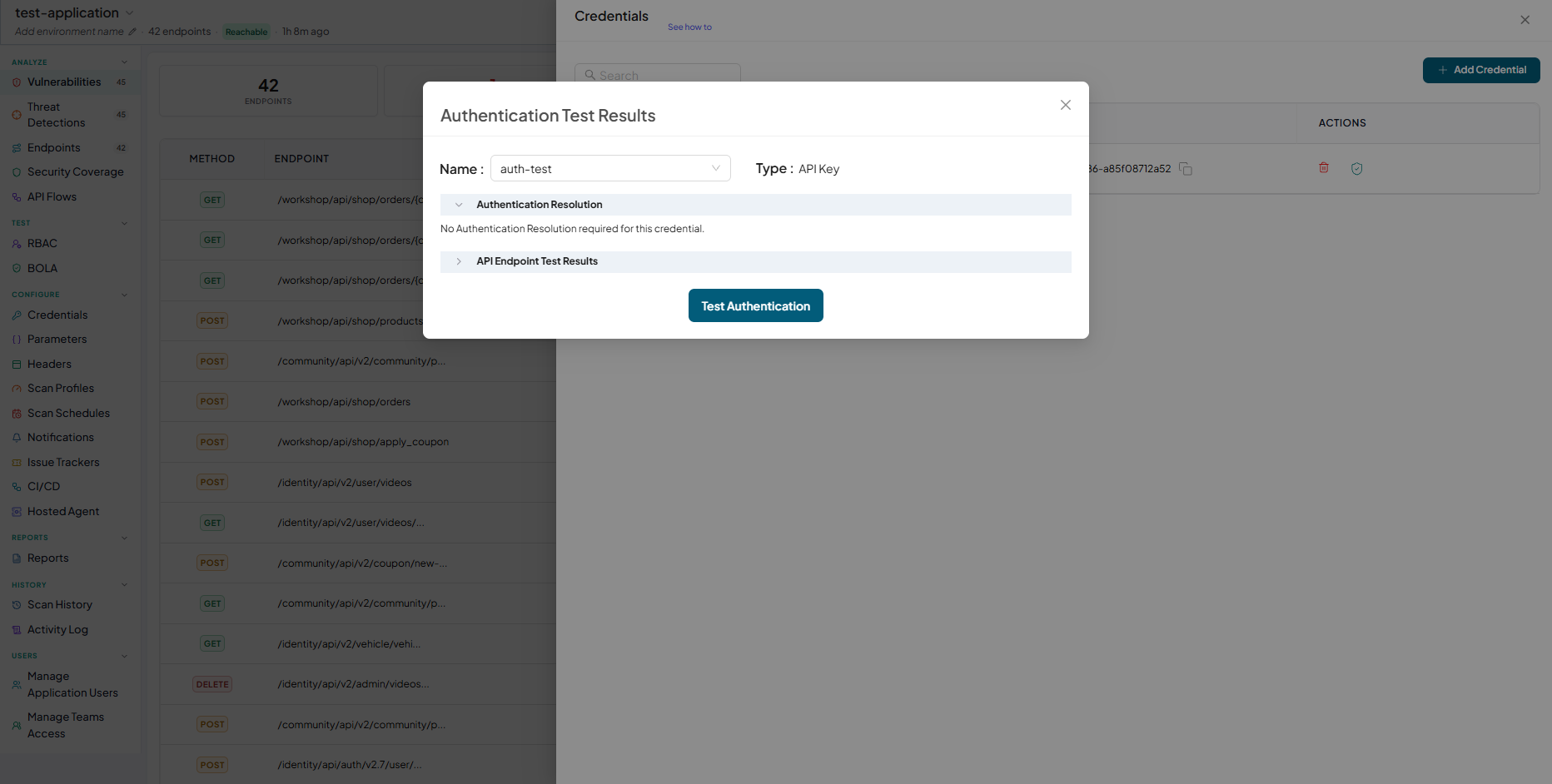
Authentication Test Results - Authentication Resolution
-
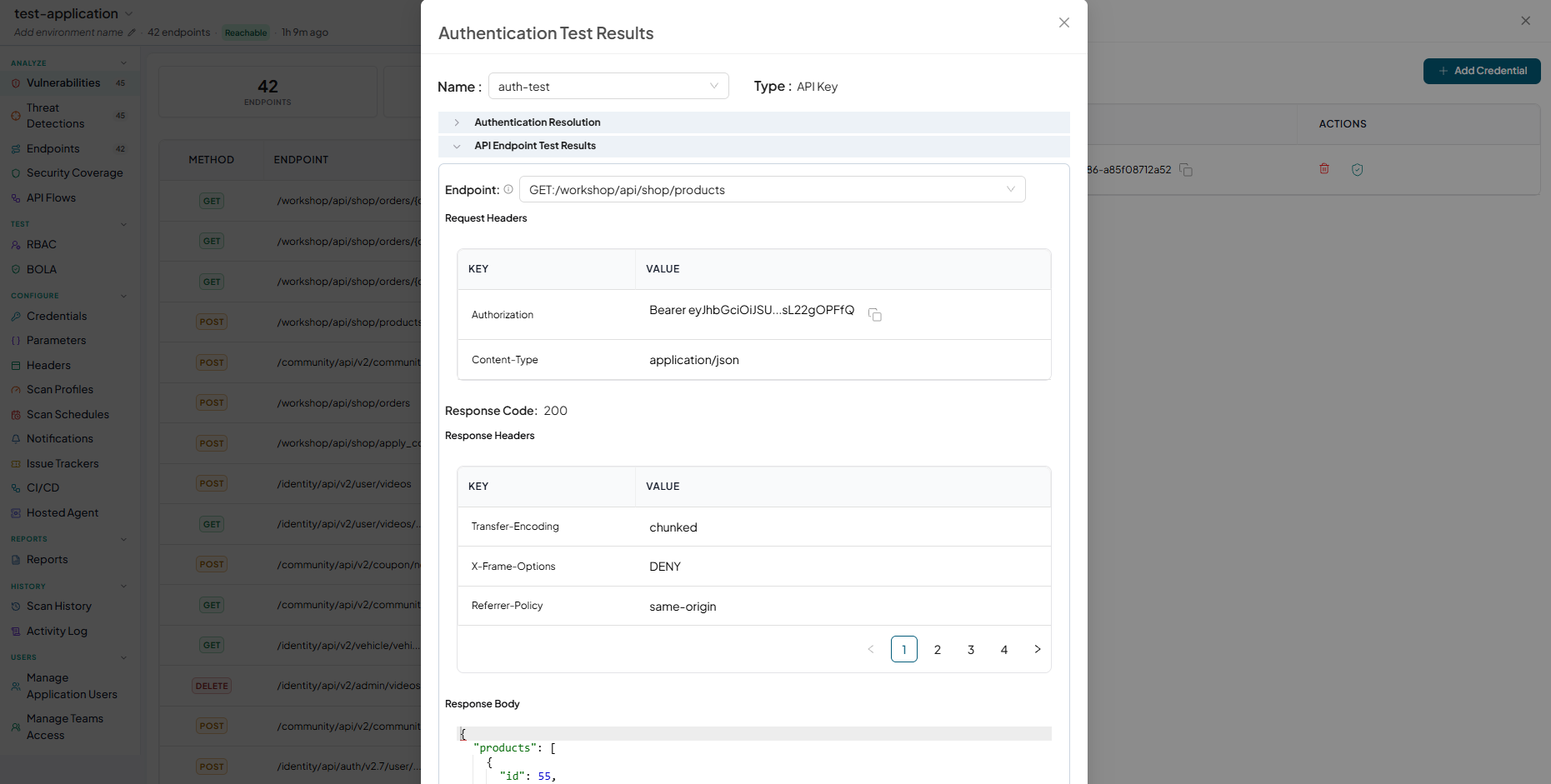
Authentication Test Results - API Endpoint Test Results
-
Check the saved credentials are available in the table
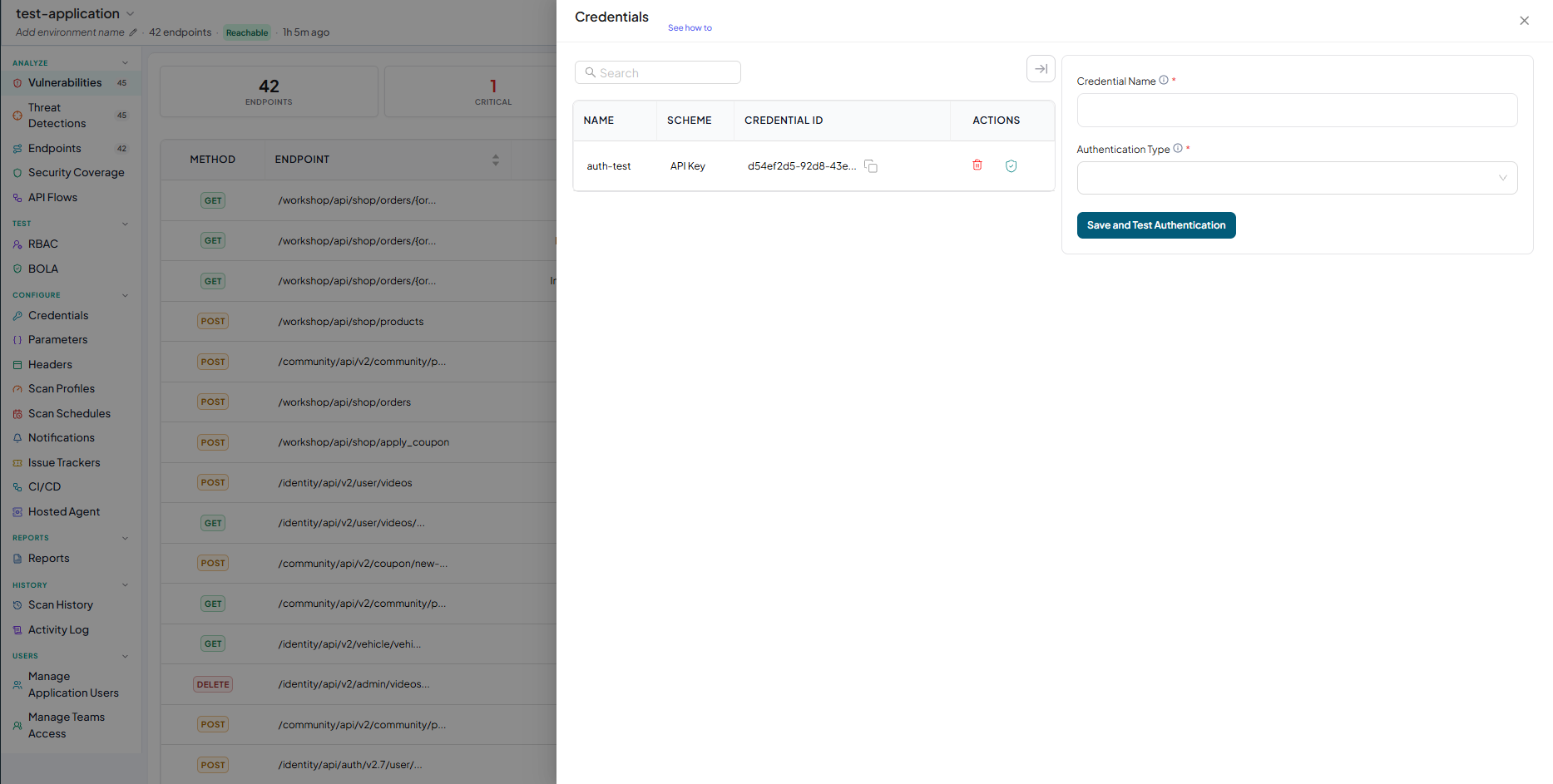
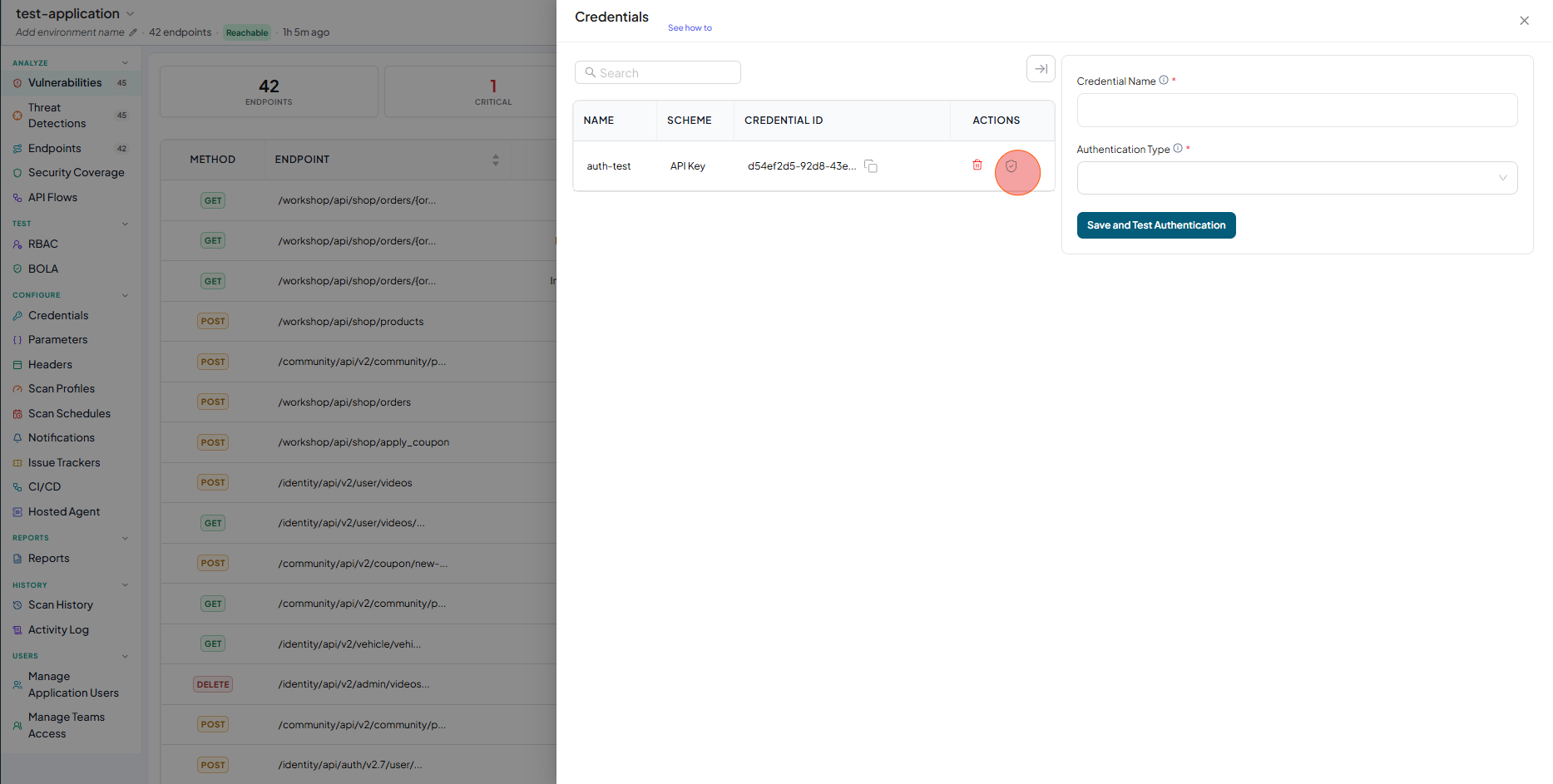
Test Authentication
- Click on Test Authentication
- Authentication Test Results - Authentication Resolution
- Authentication Test Results - API Endpoint Test Results
Basic Authentication
-
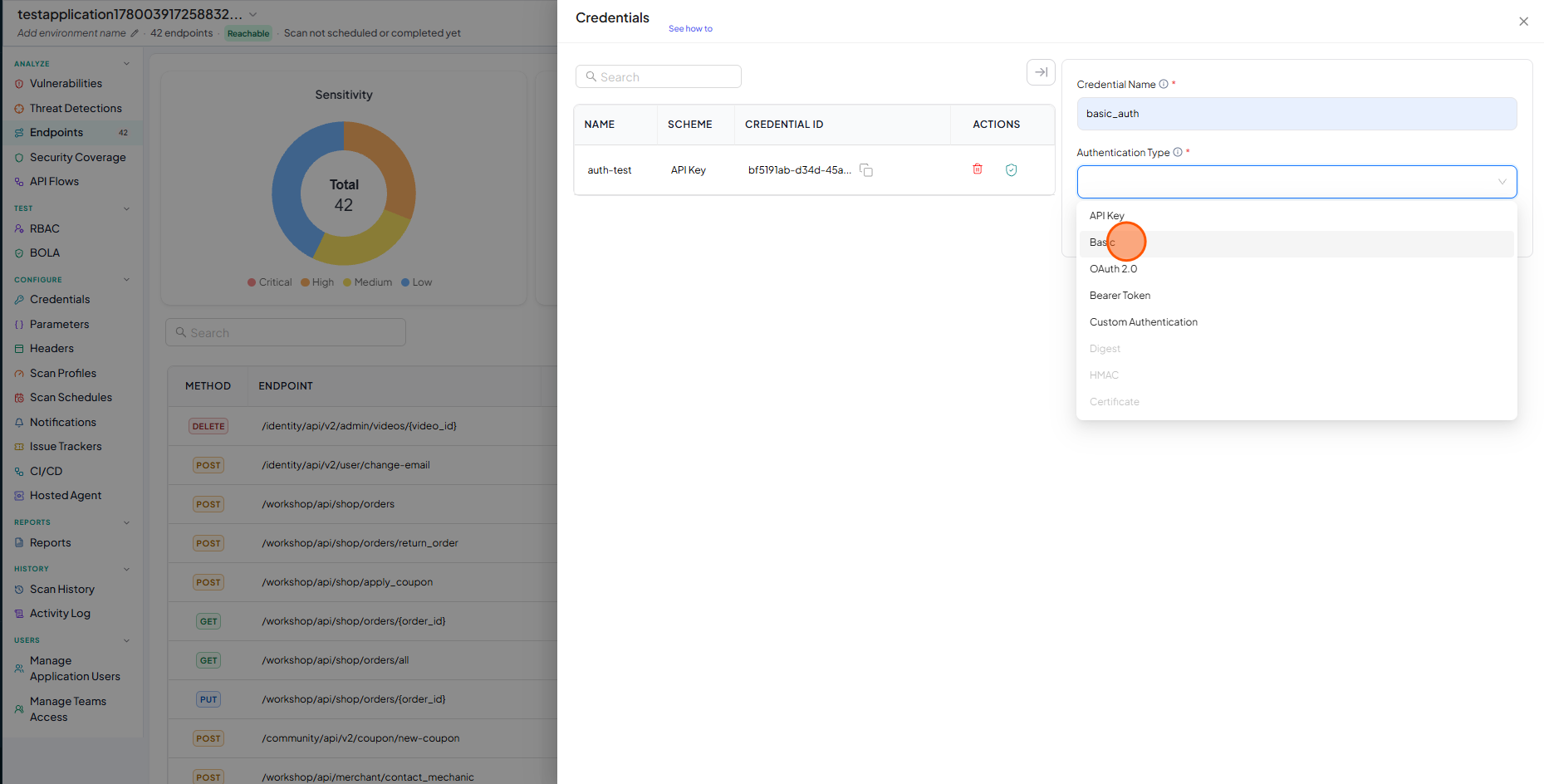
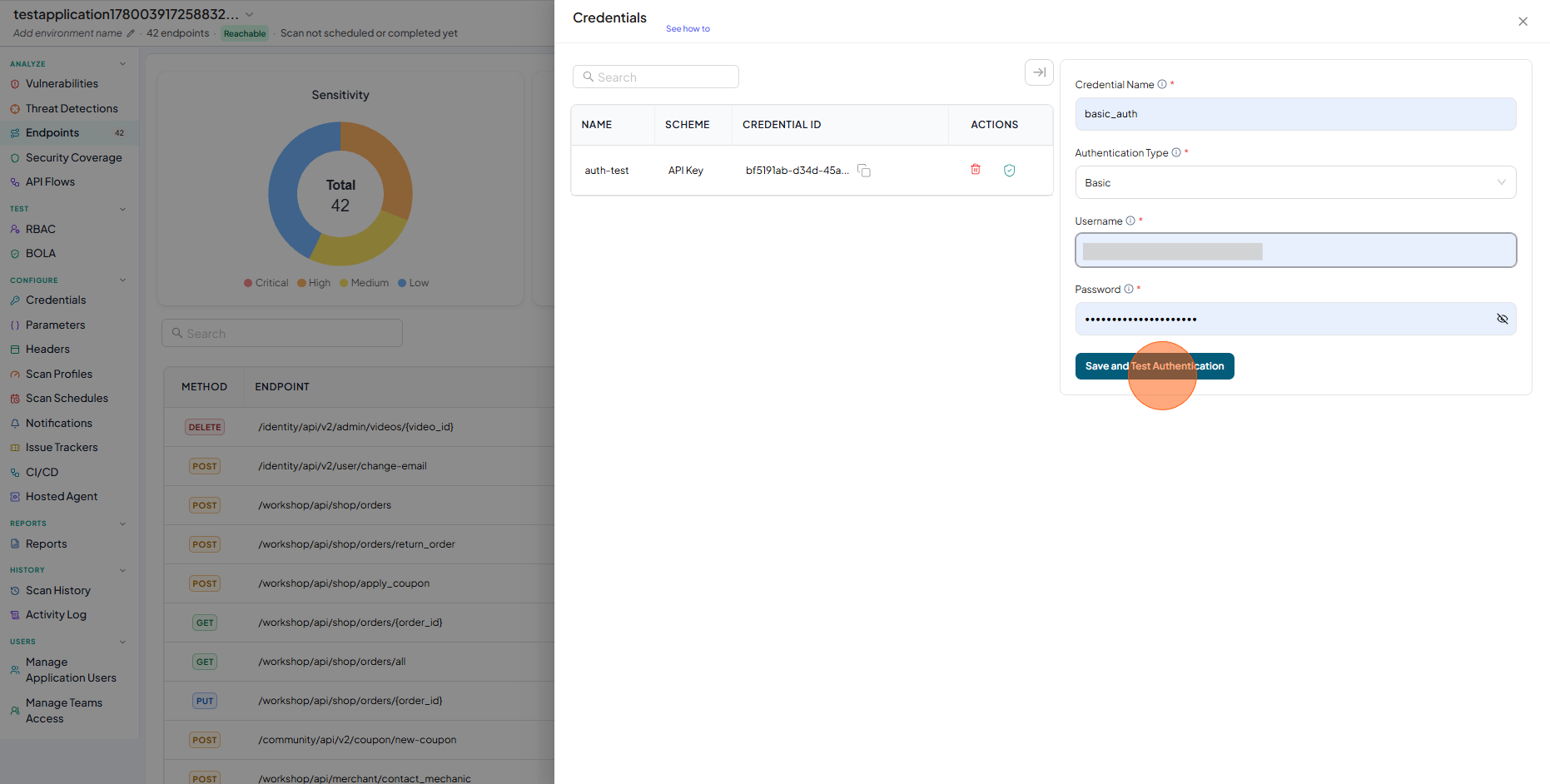
Type auth name
-
From dropdown select "Basic"
-
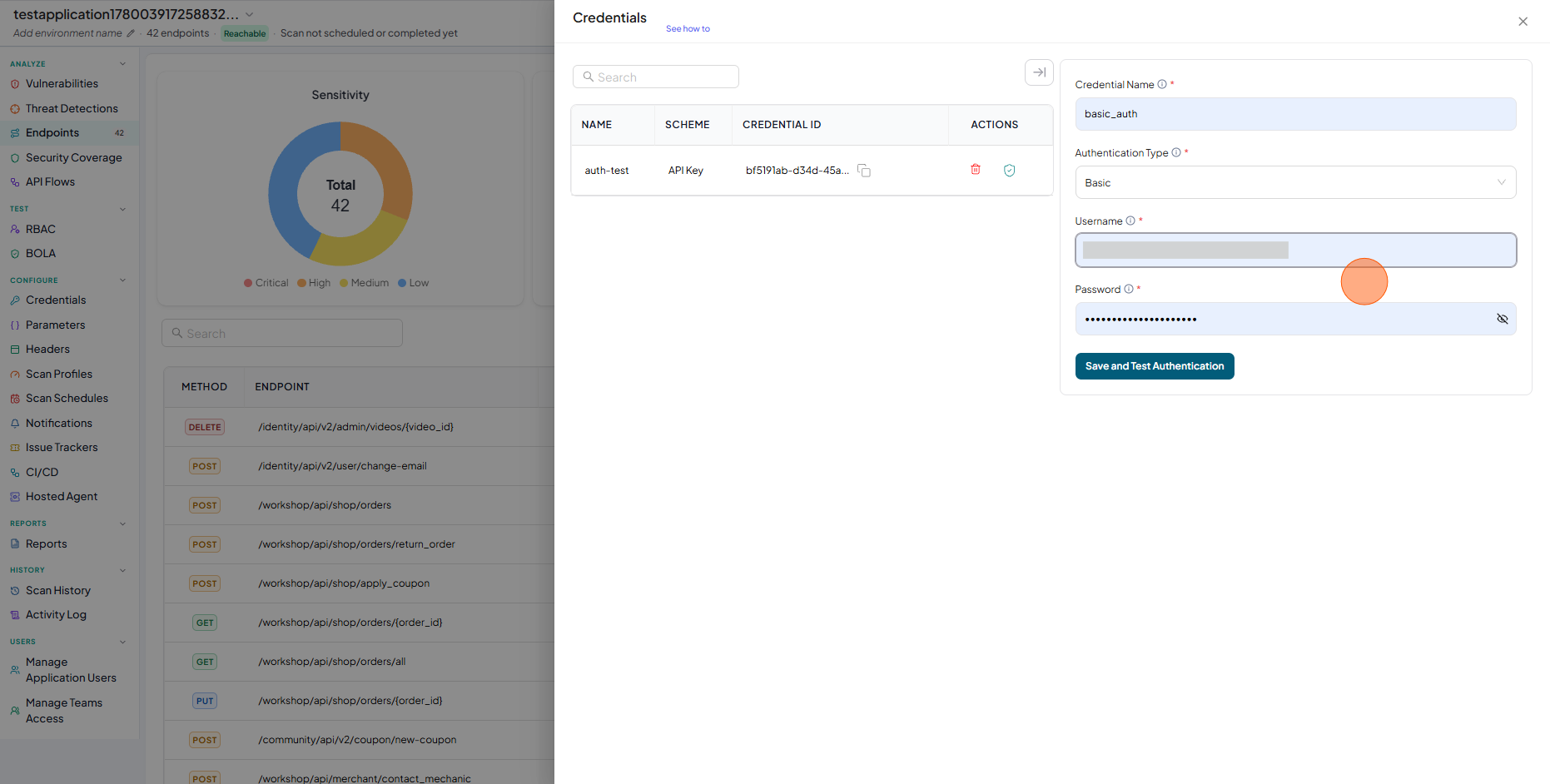
Fill Username and Password
-
Click on Save and Test Authentication
-
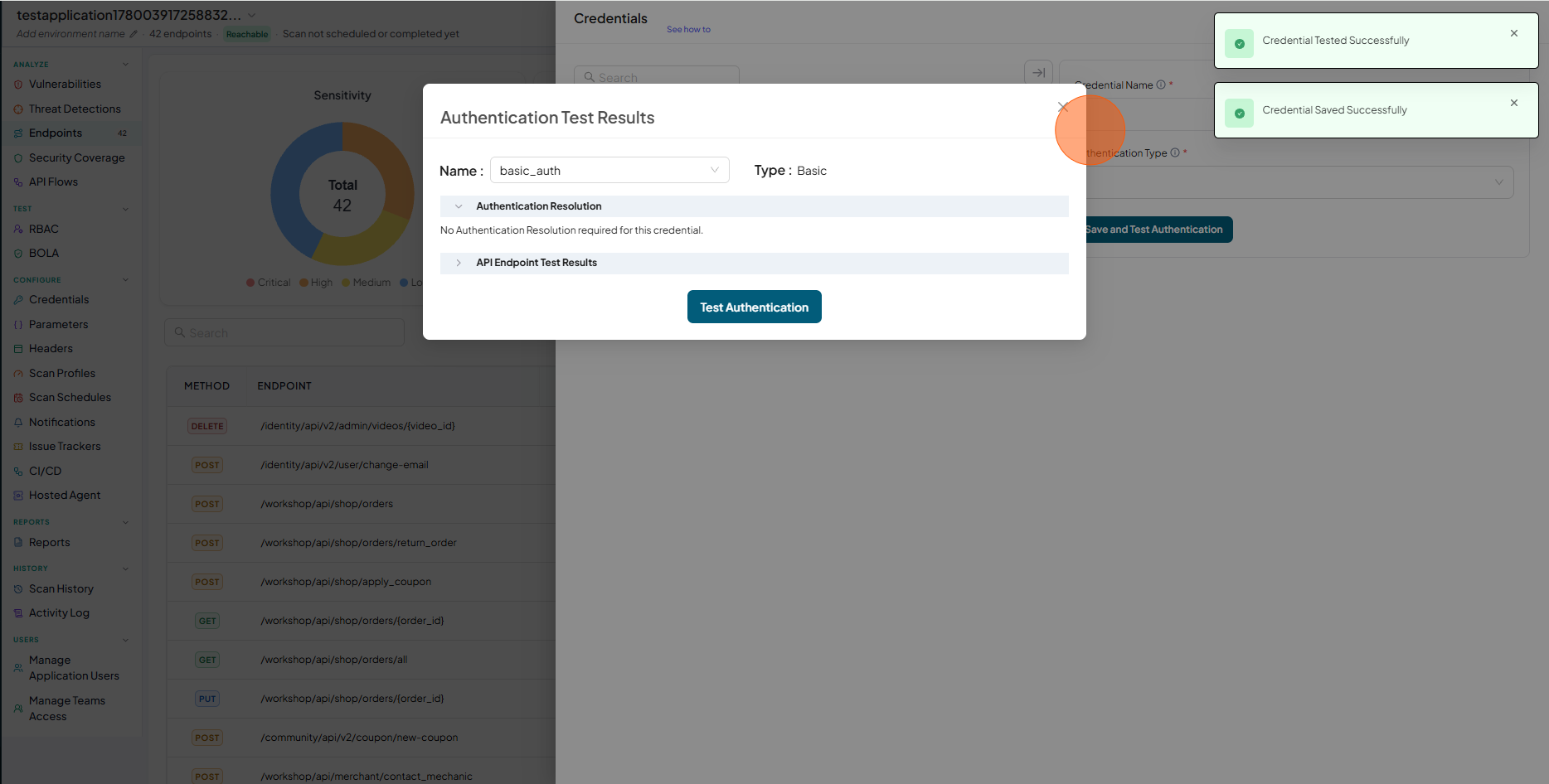
Authentication saved and Tested Successfully
-
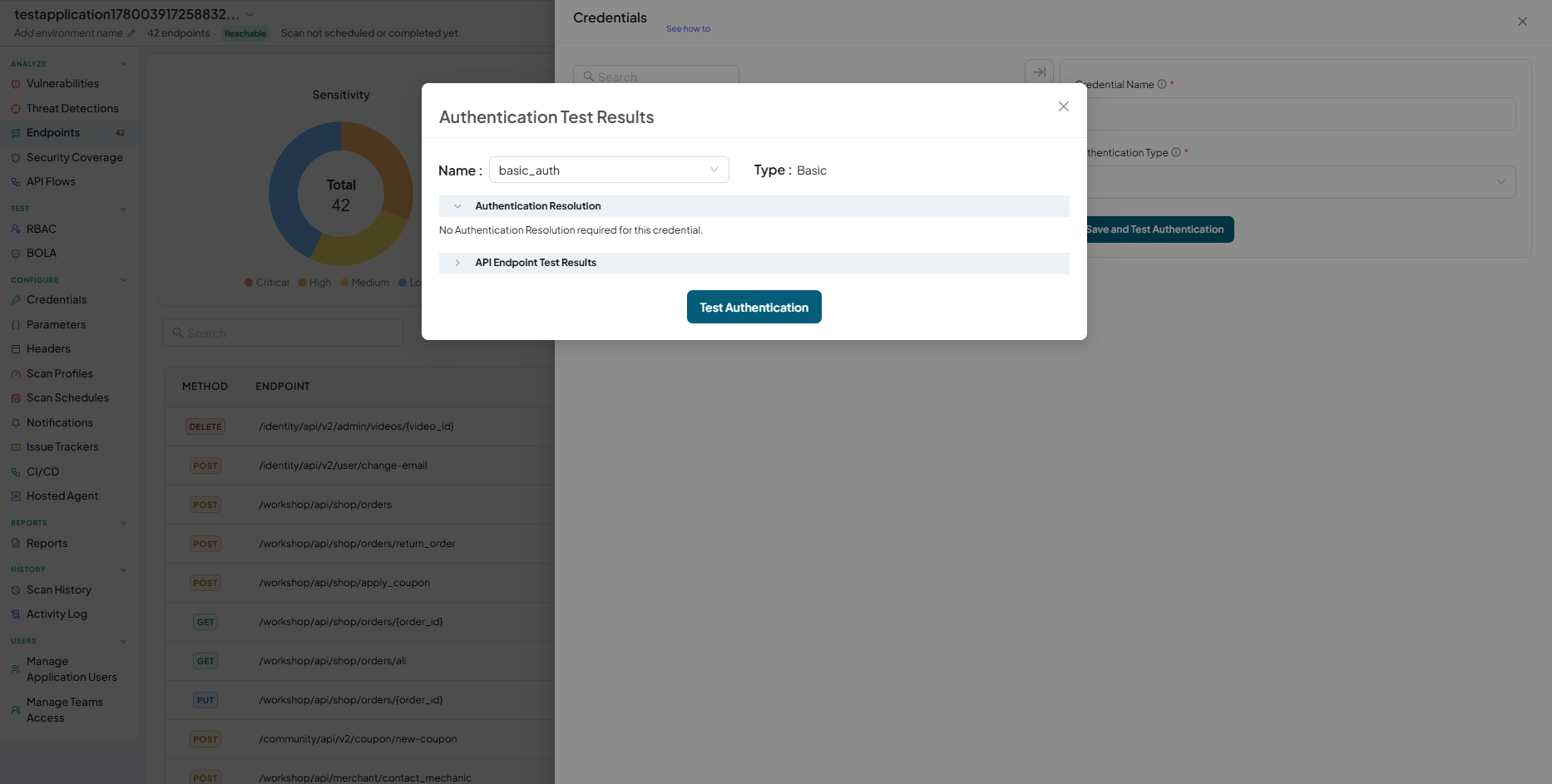
Authentication Test Results - Authentication Resolution
-
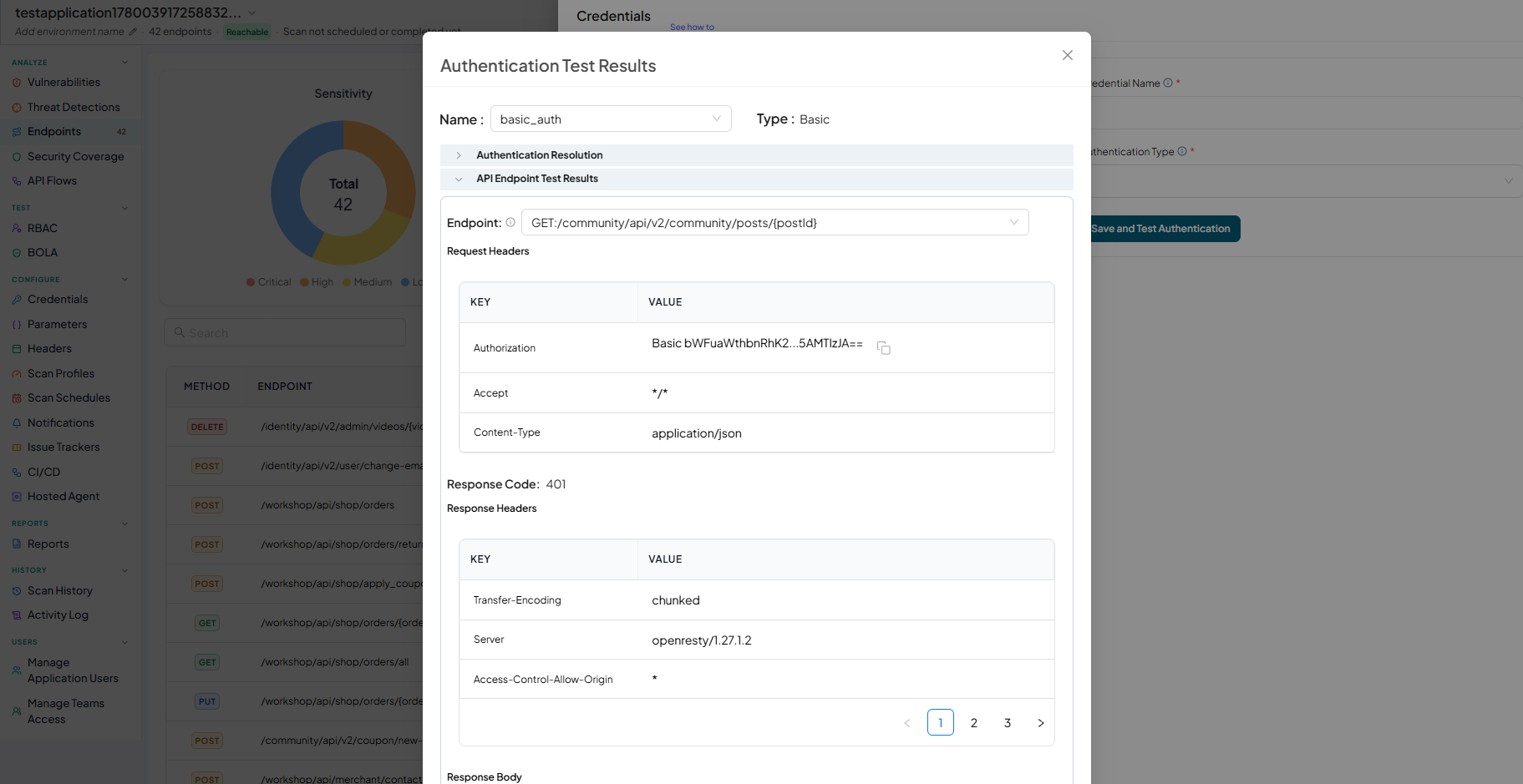
Authentication Test Results - API Endpoint Test Results
-
Check the saved credentials are available in the table
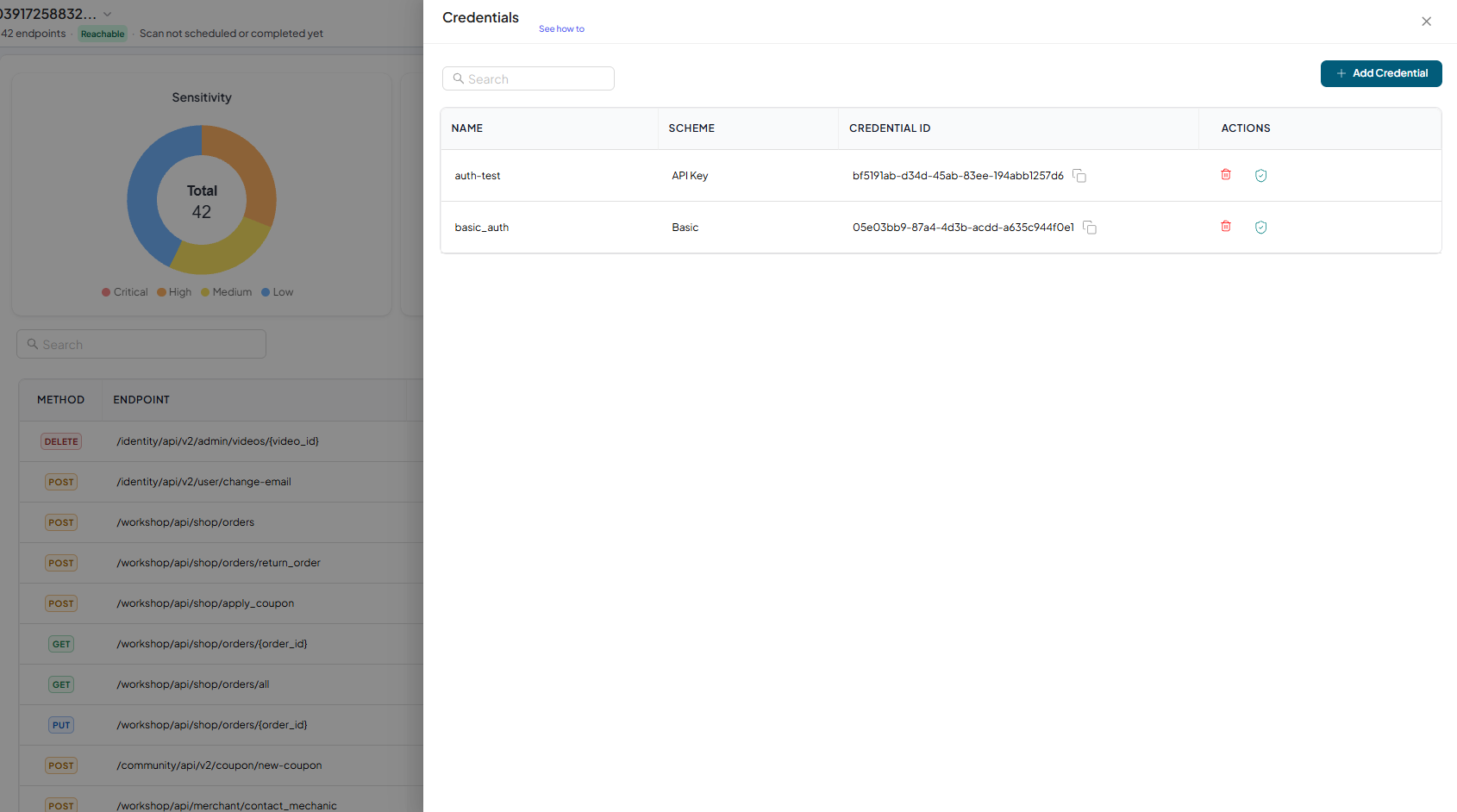
Test Authentication
- Click on Test Authentication
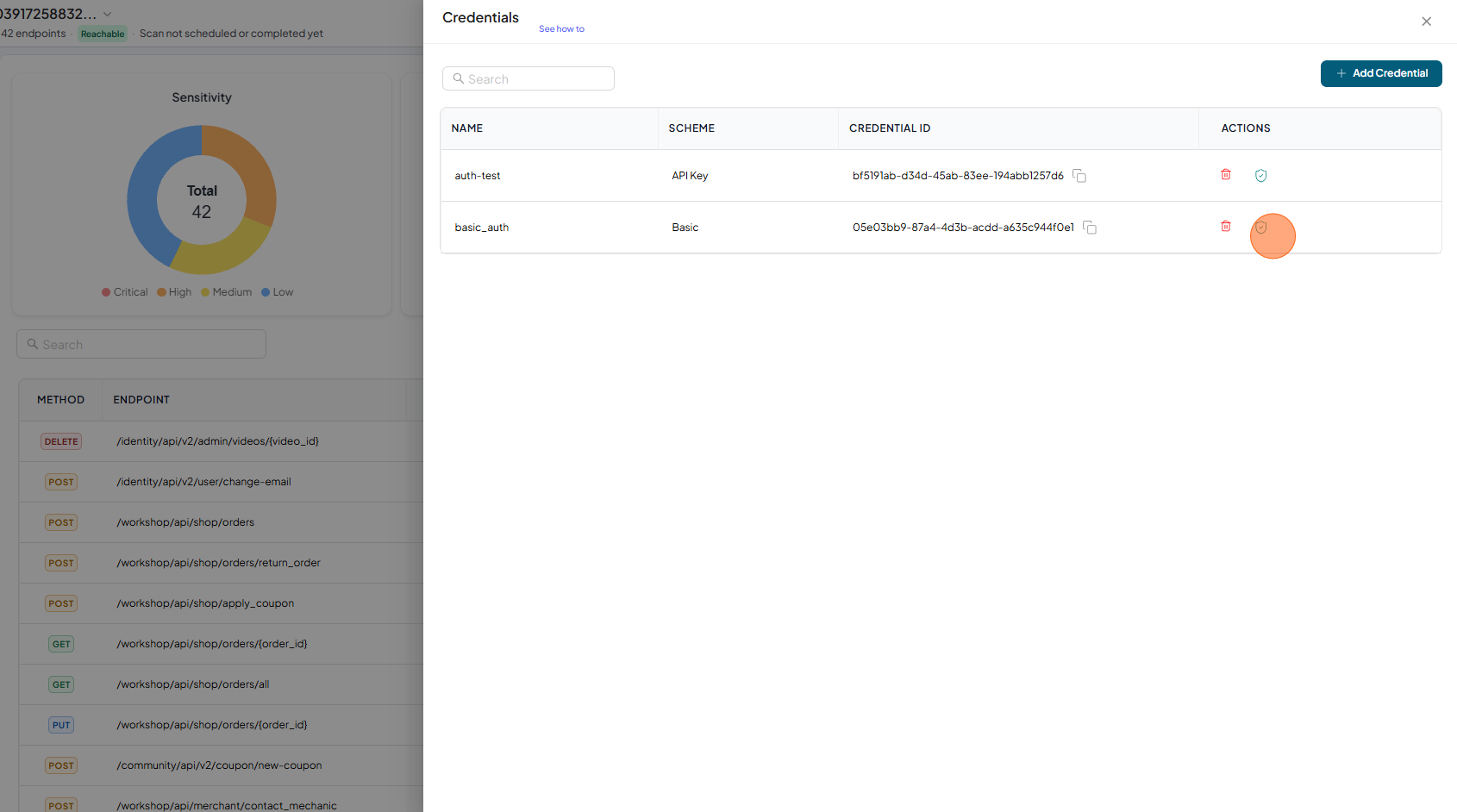
- Authentication Test Results - Authentication Resolution
- Authentication Test Results - API Endpoint Test Results
- Click on Test Authentication
OAuth 2.0 Authentications
-
Type auth name
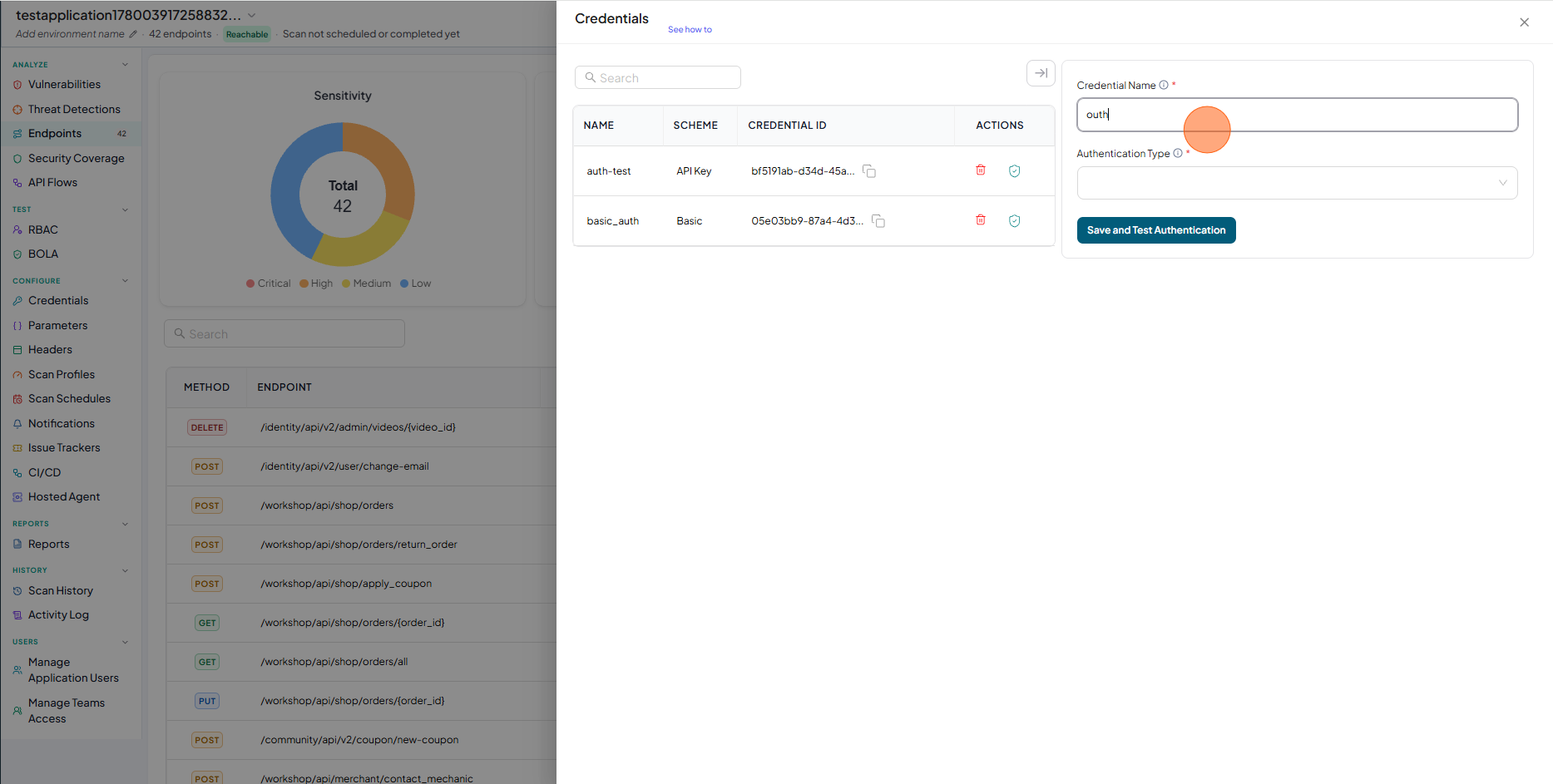
-
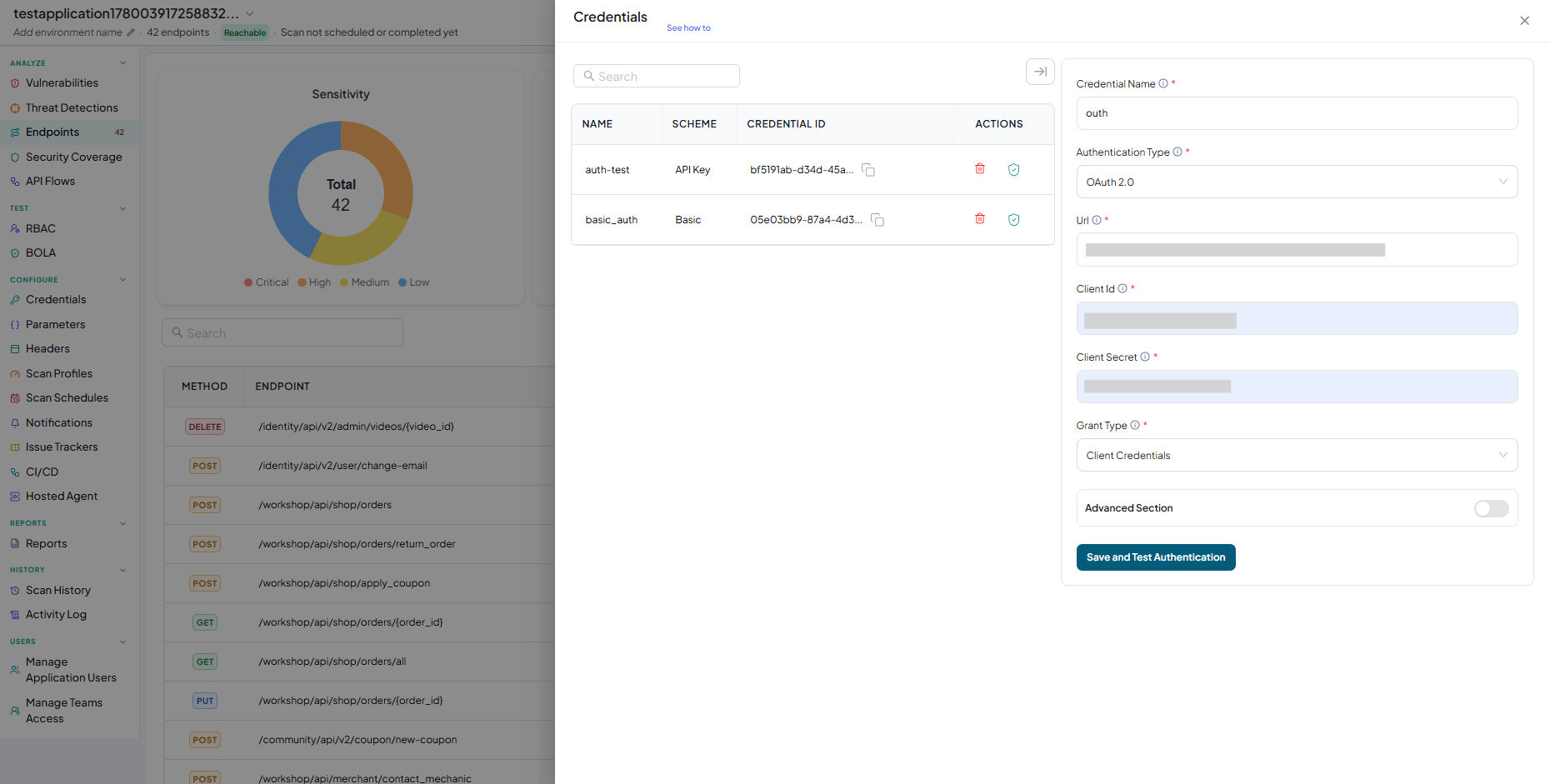
From dropdown select "OAuth 2.0"
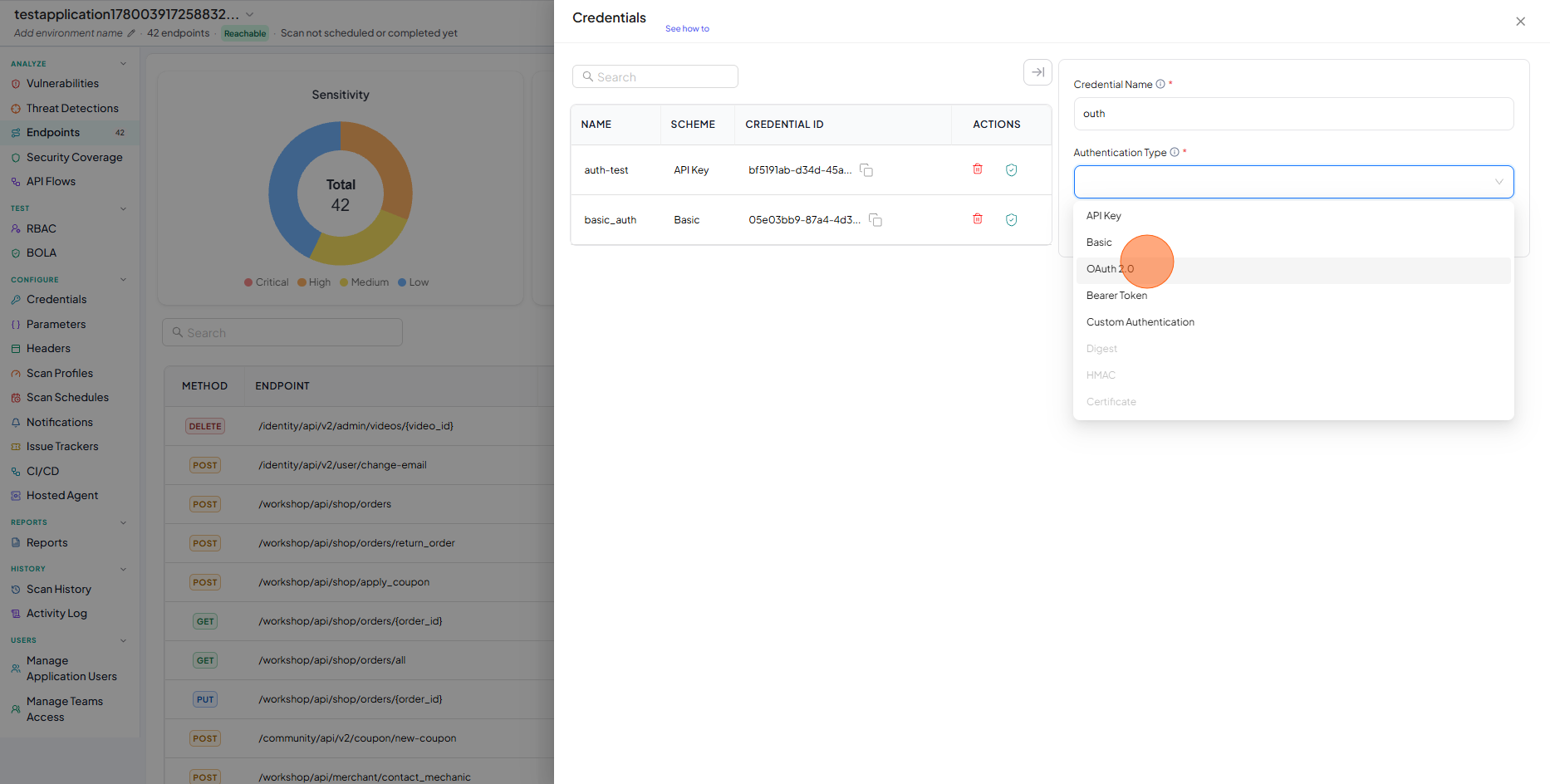
-
Fill the form
-
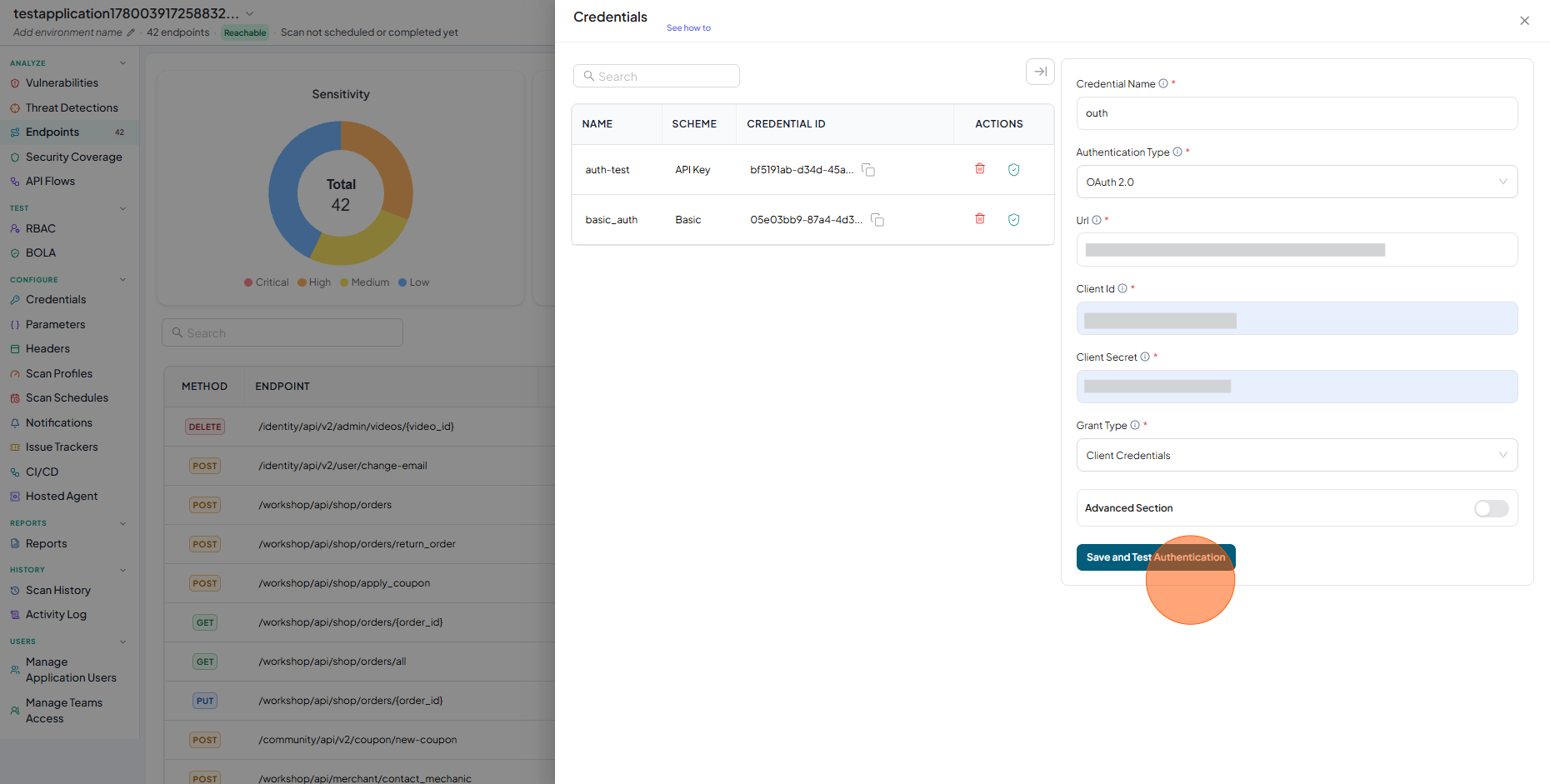
Click on Save and Test Authentication
-
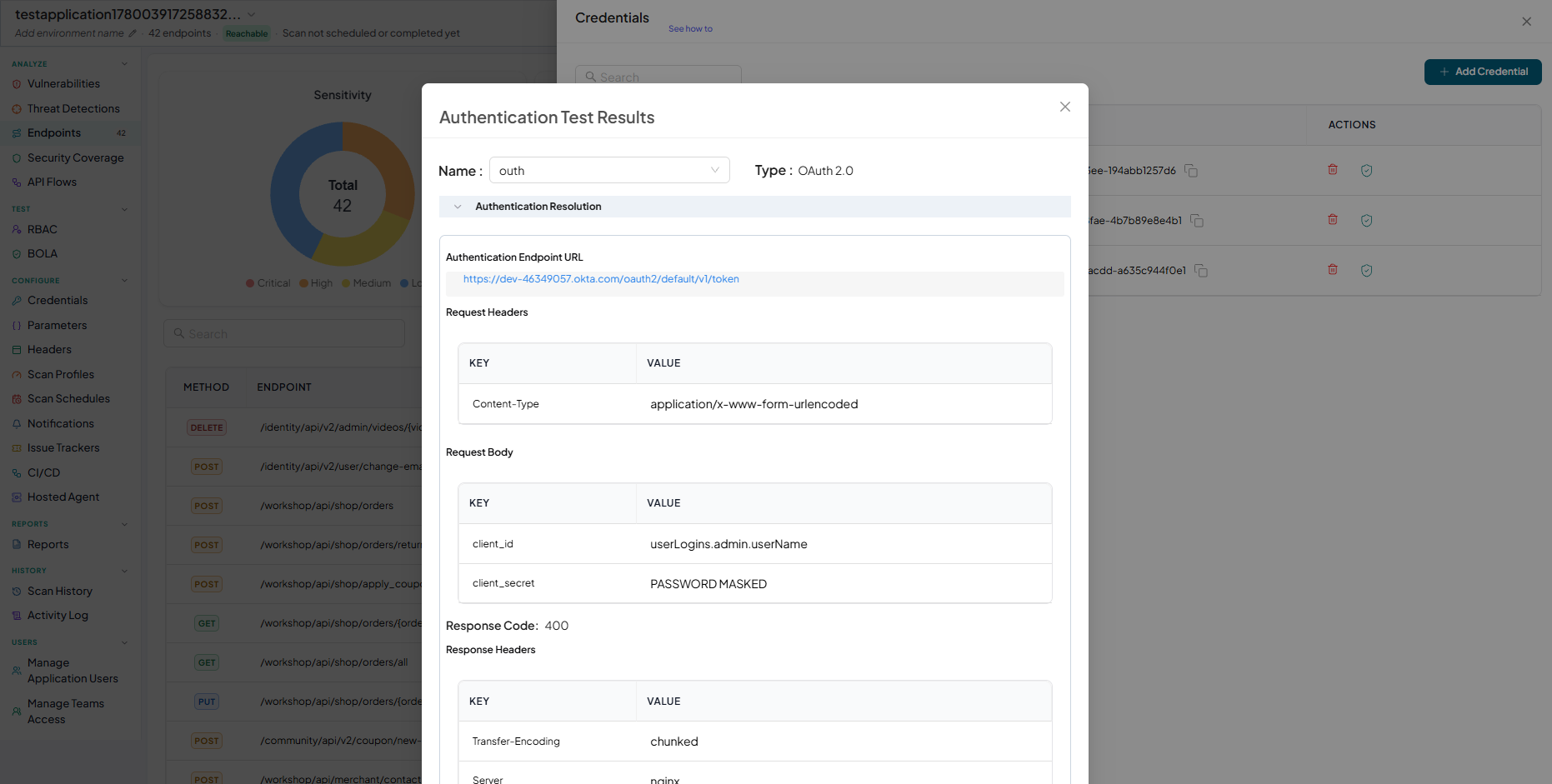
Authentication Test Results - Authentication Resolution
-
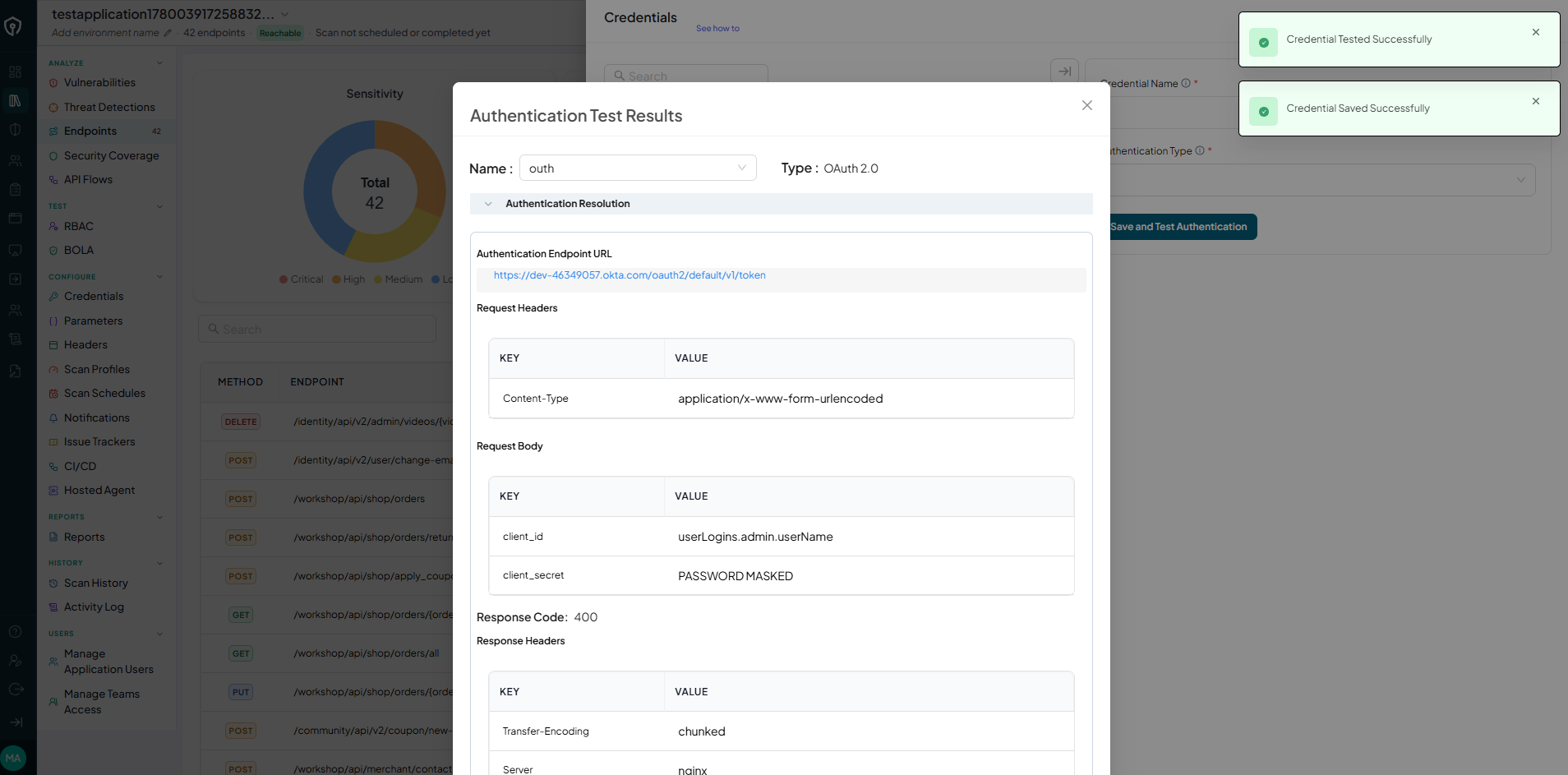
Authentication saved and Tested Successfully
-
Authentication Test Results - Authentication Test Results - API Endpoint Test Results
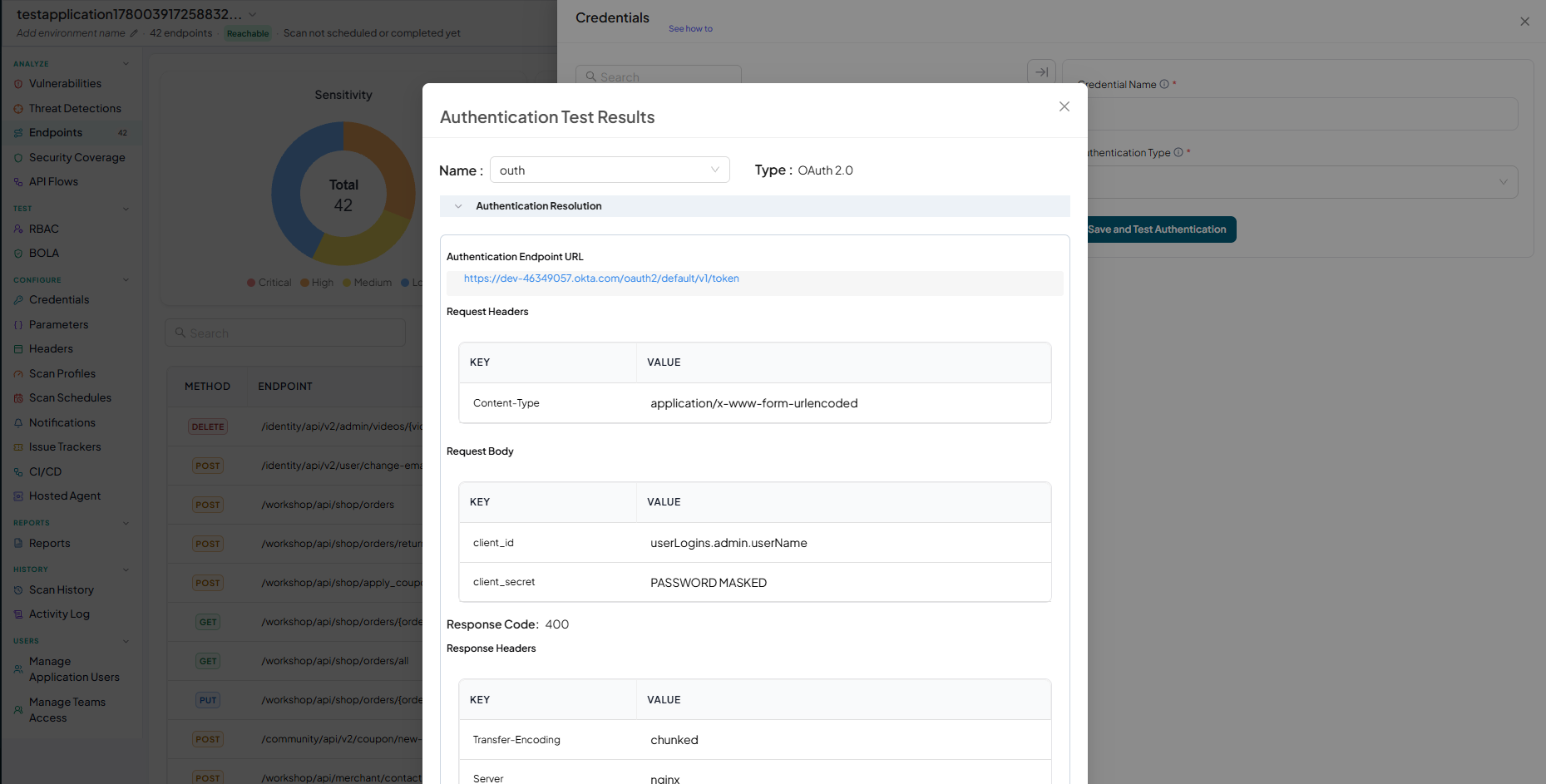
-
Check the saved credentials are available in the table
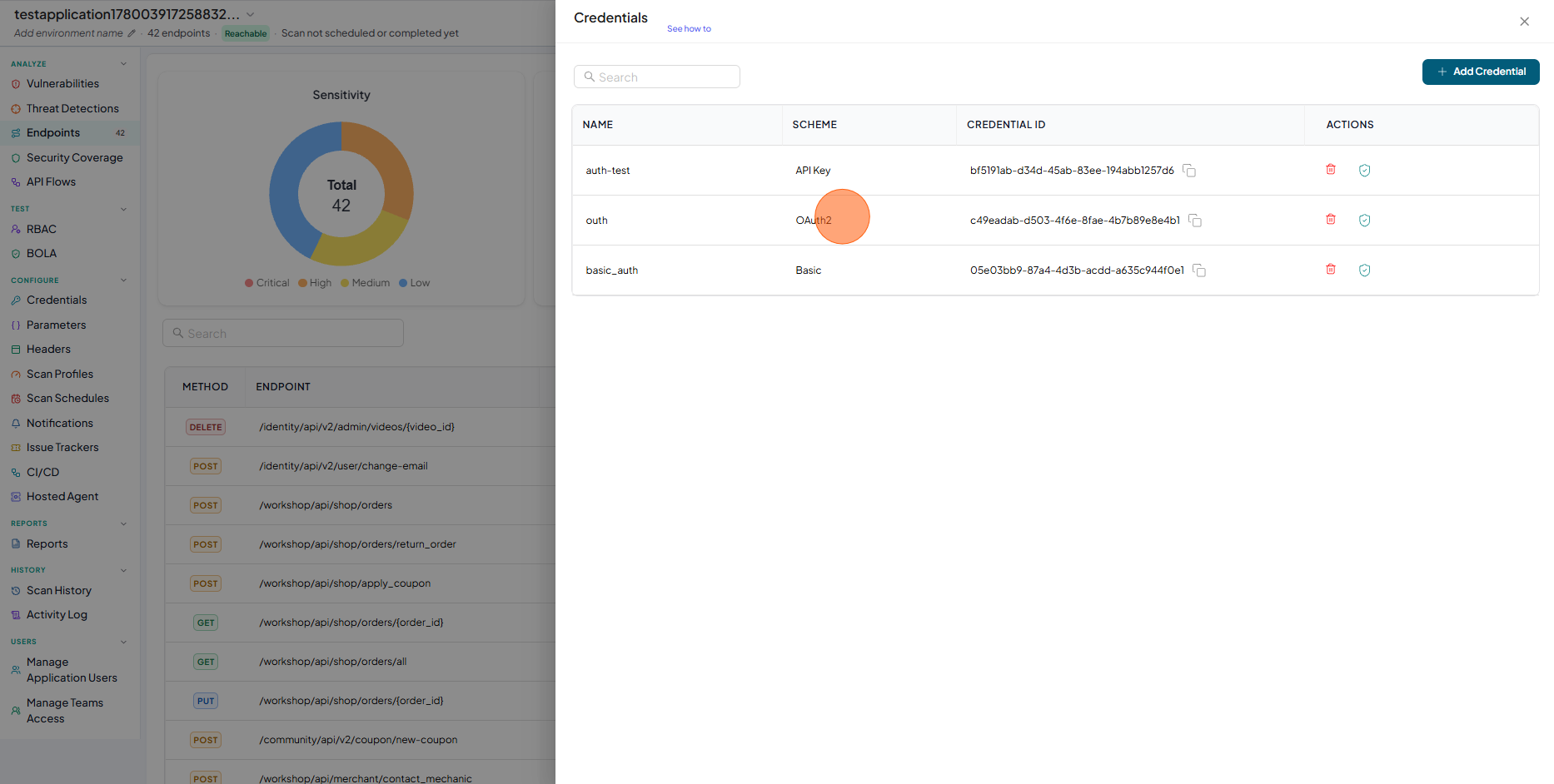
Test Authentication
- Click on Test Authentication
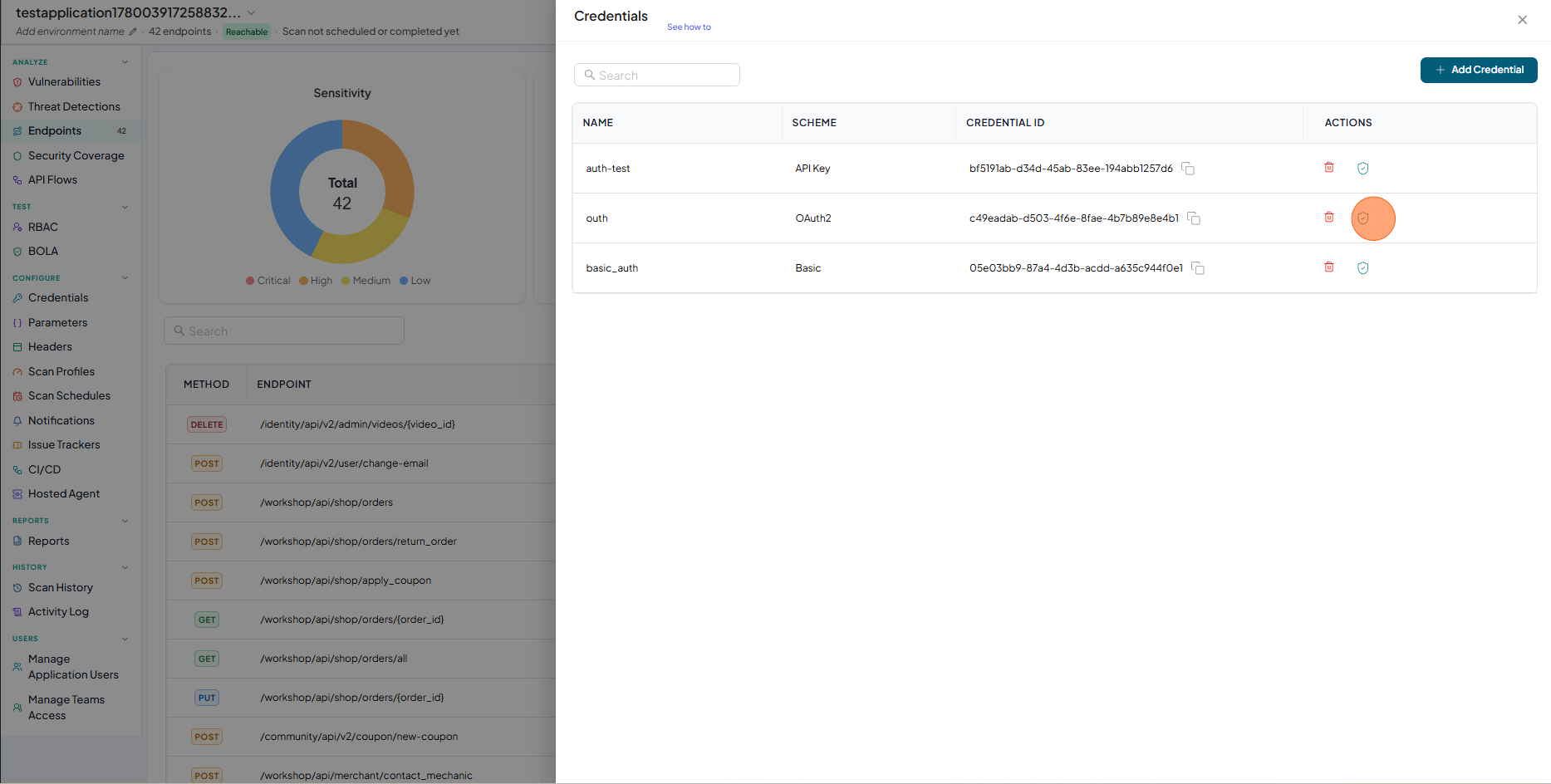
- Authentication Test Results - Authentication Resolution
- Click on Test Authentication
OAuth 2.0 Authentications Advance Option
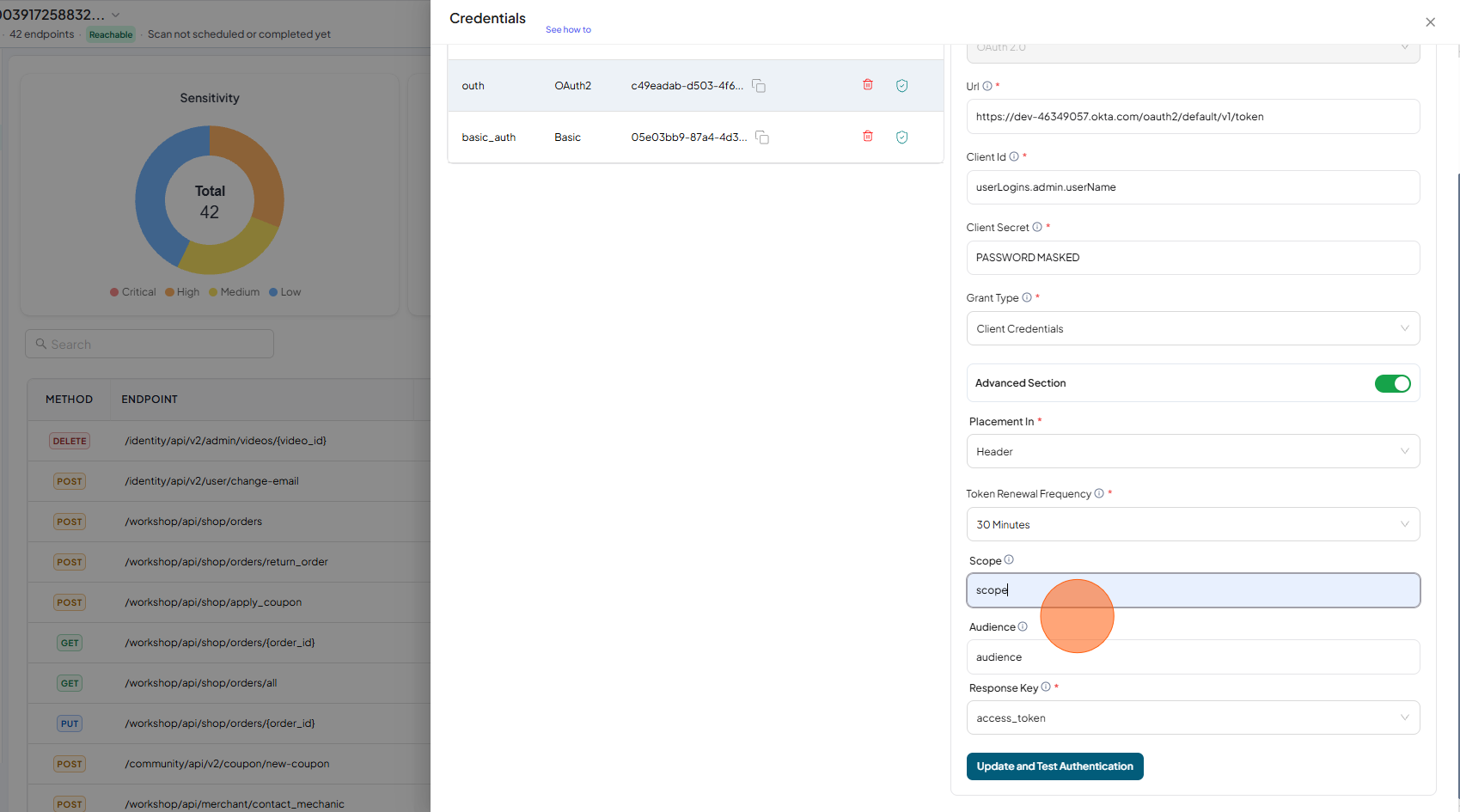
- Click on the row where OAuth 2.0 available in the table, it will open the OAuth 2.0 in edit mode.
- Click on Advance Section toggle button.
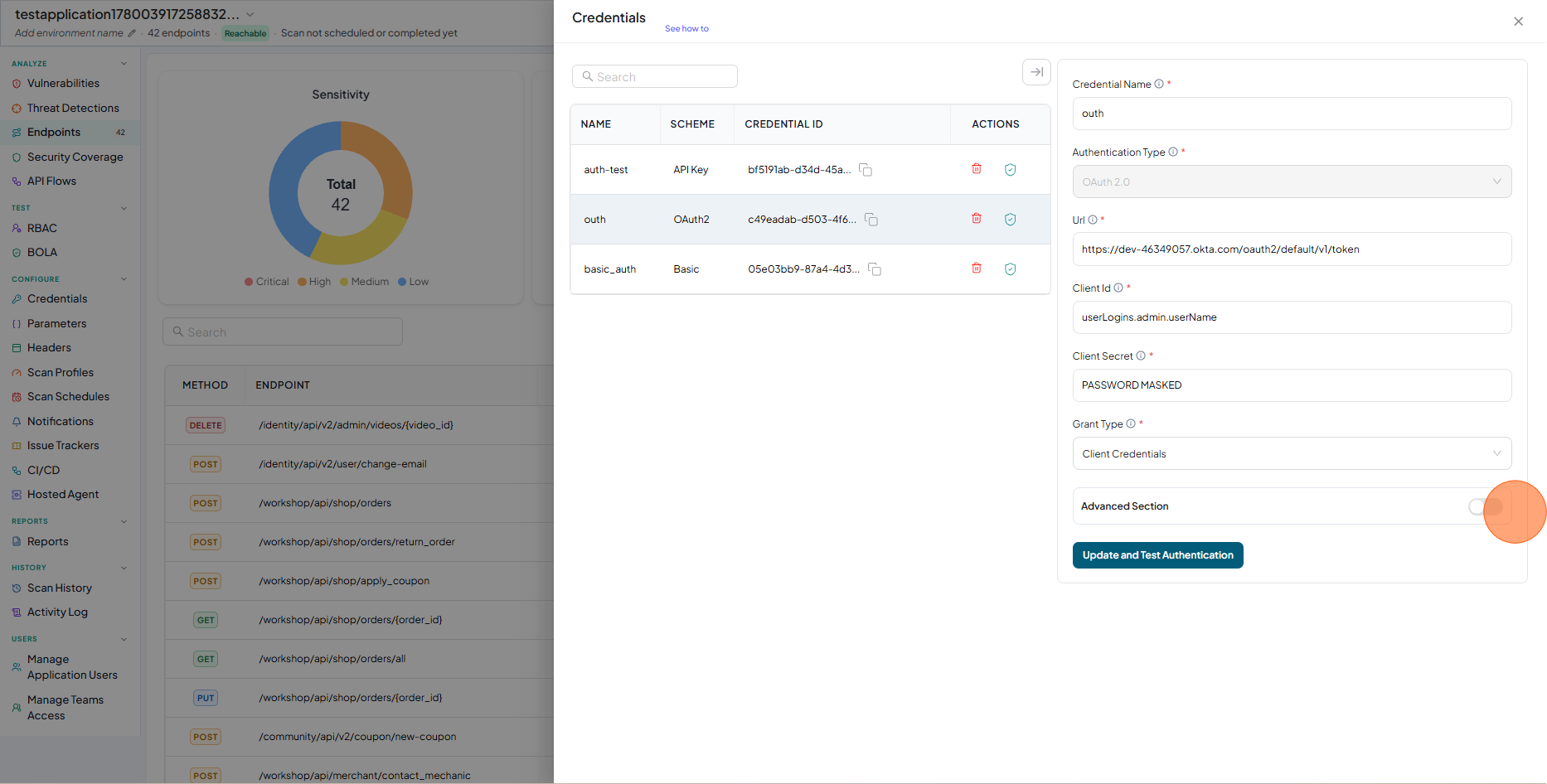
- Select Header from the Placement In dropdown, and fill in the Scope and Audience fields in the form.
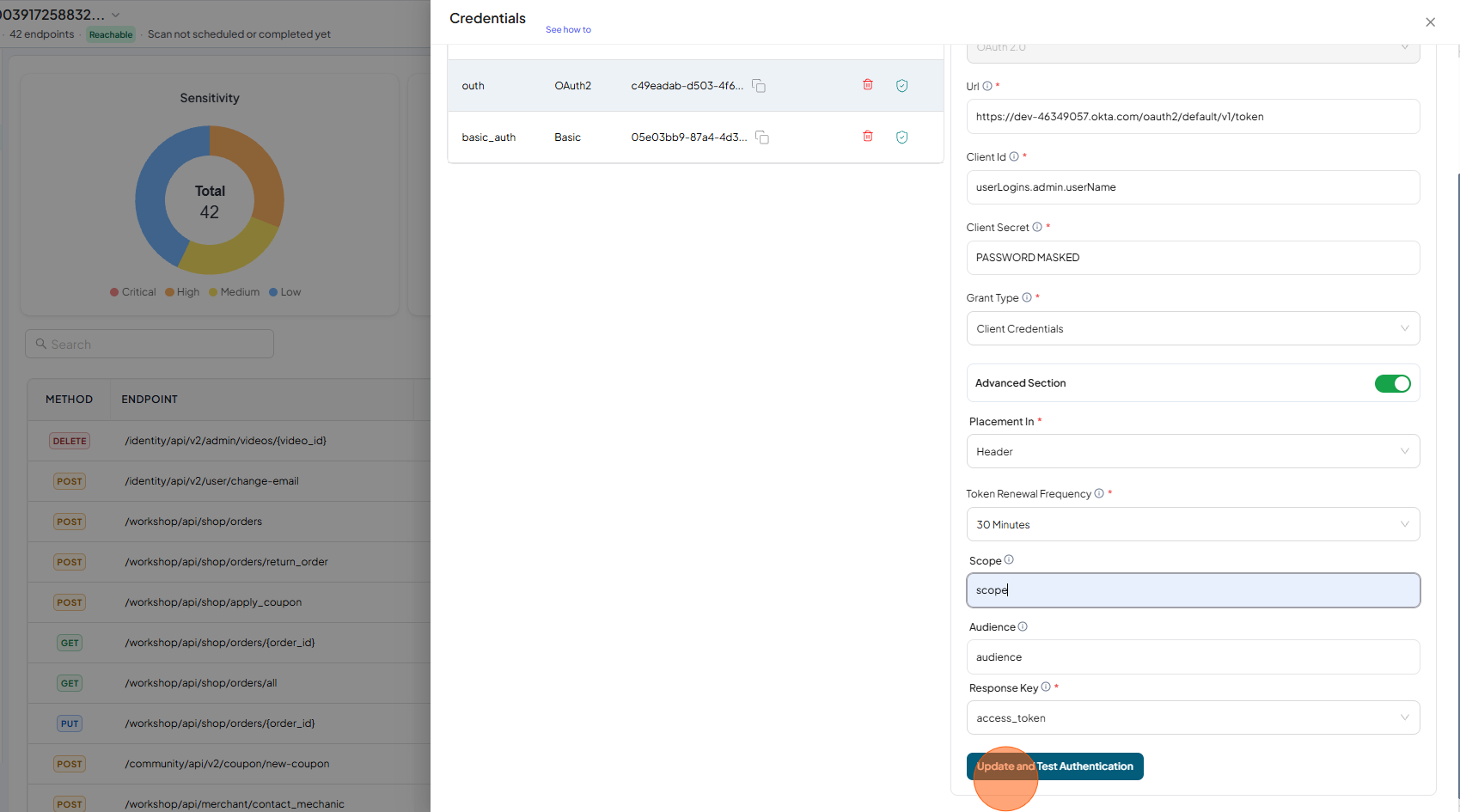
- Click on "Update and Test Authentication"
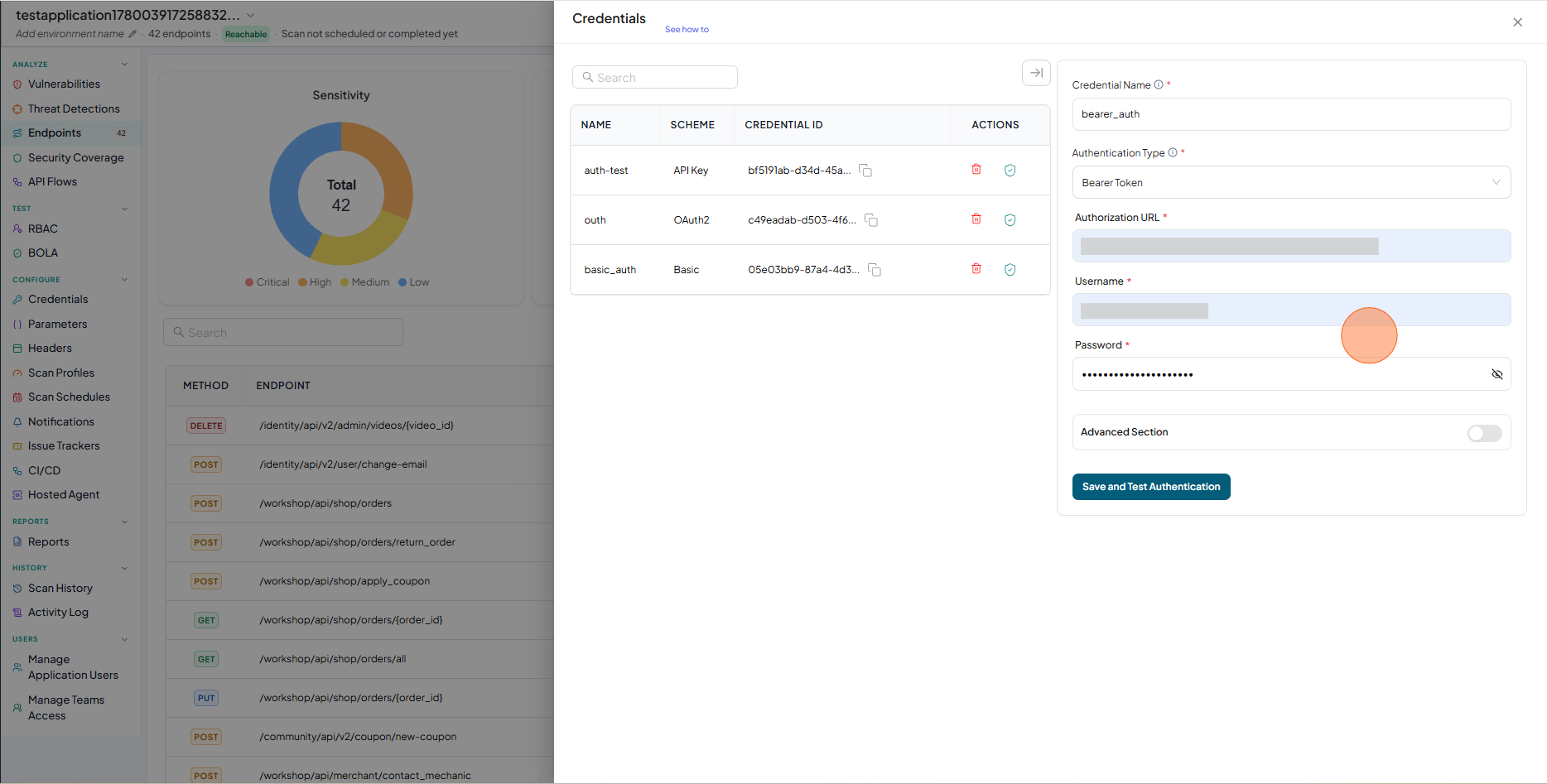
Bearer Token Authentications
-
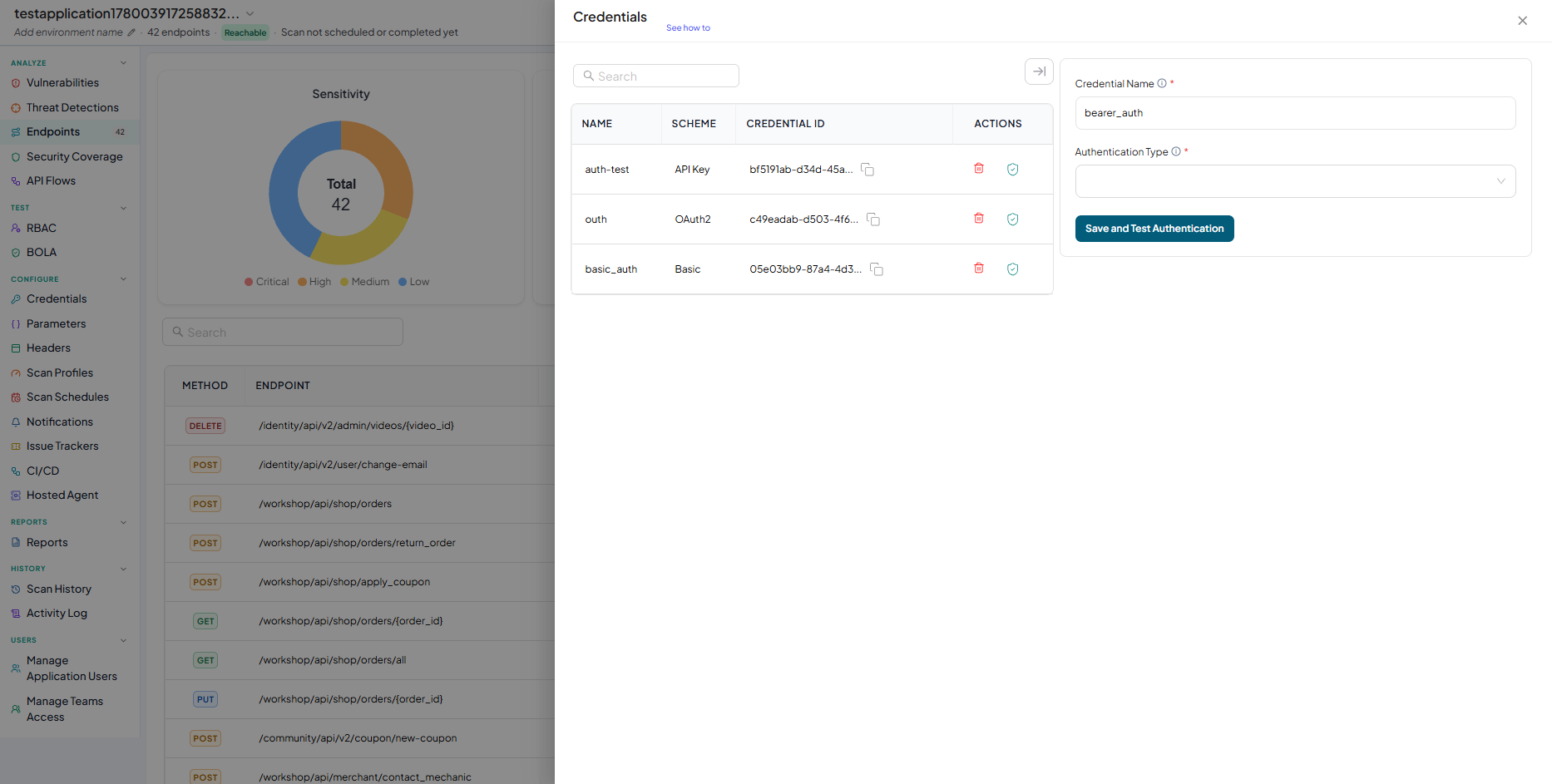
Type Auth Name
-
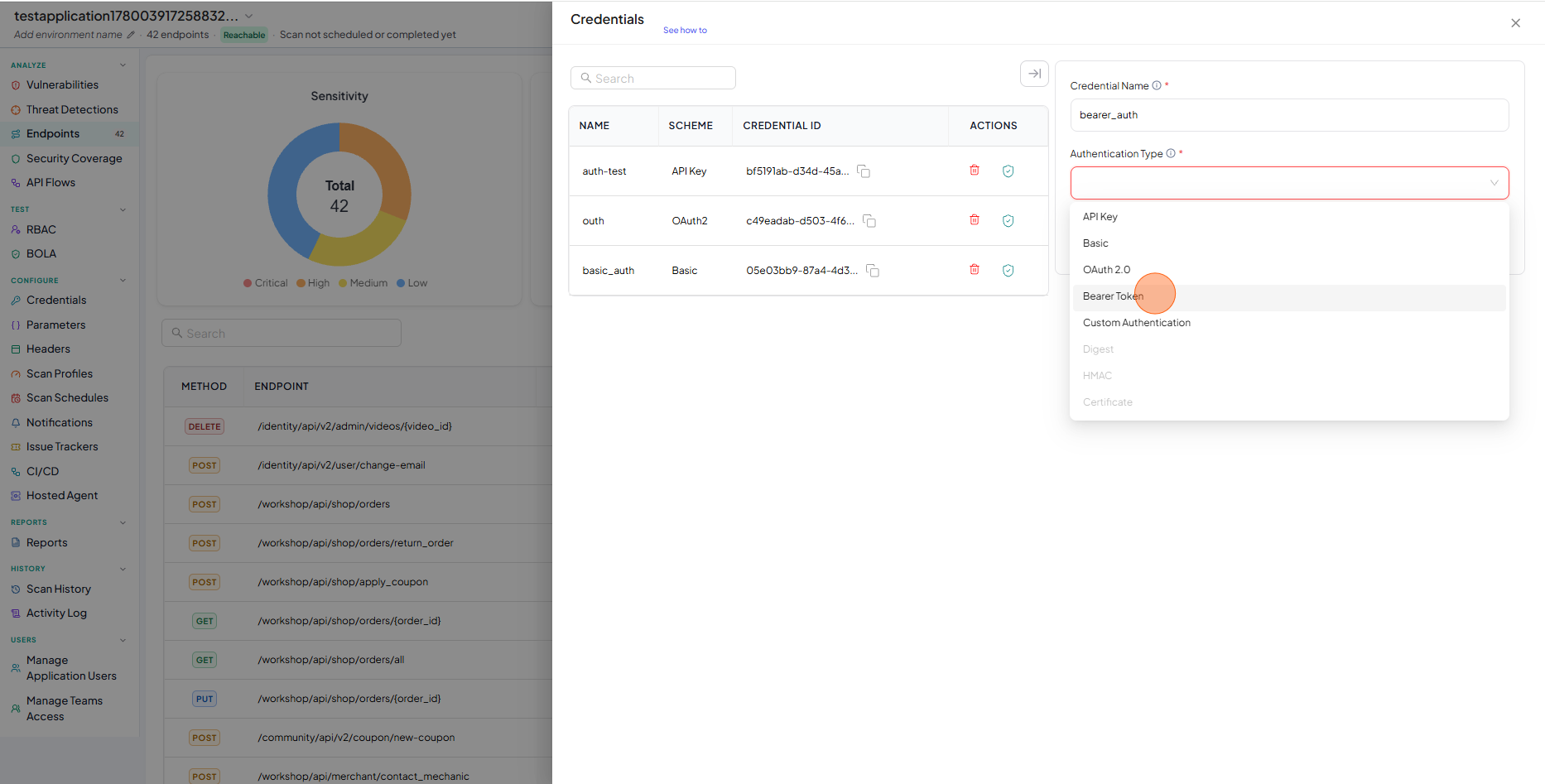
From dropdown select "Bearer Token"
-
Fill the form
-
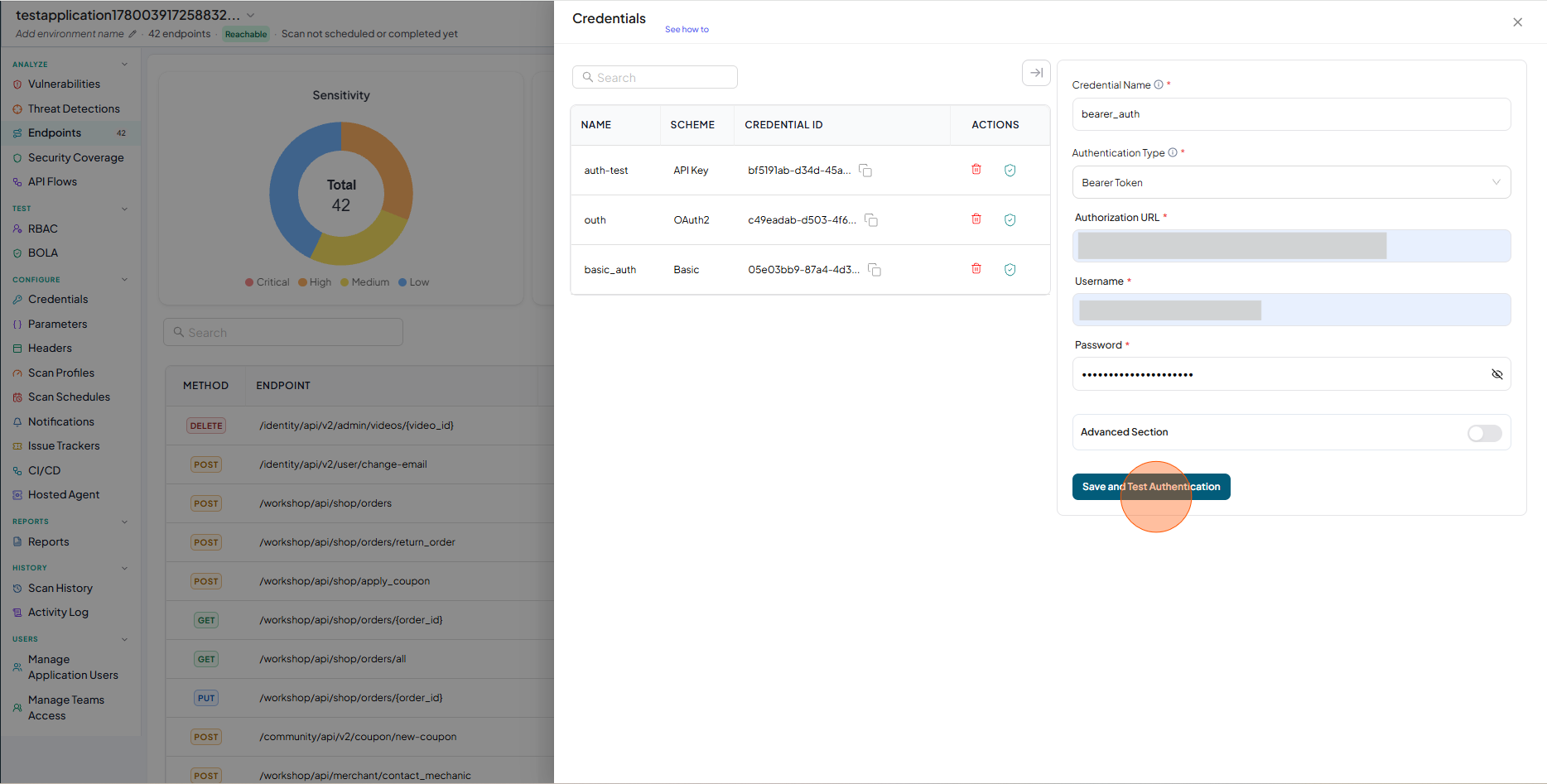
Click on Save and Test Authentication
-
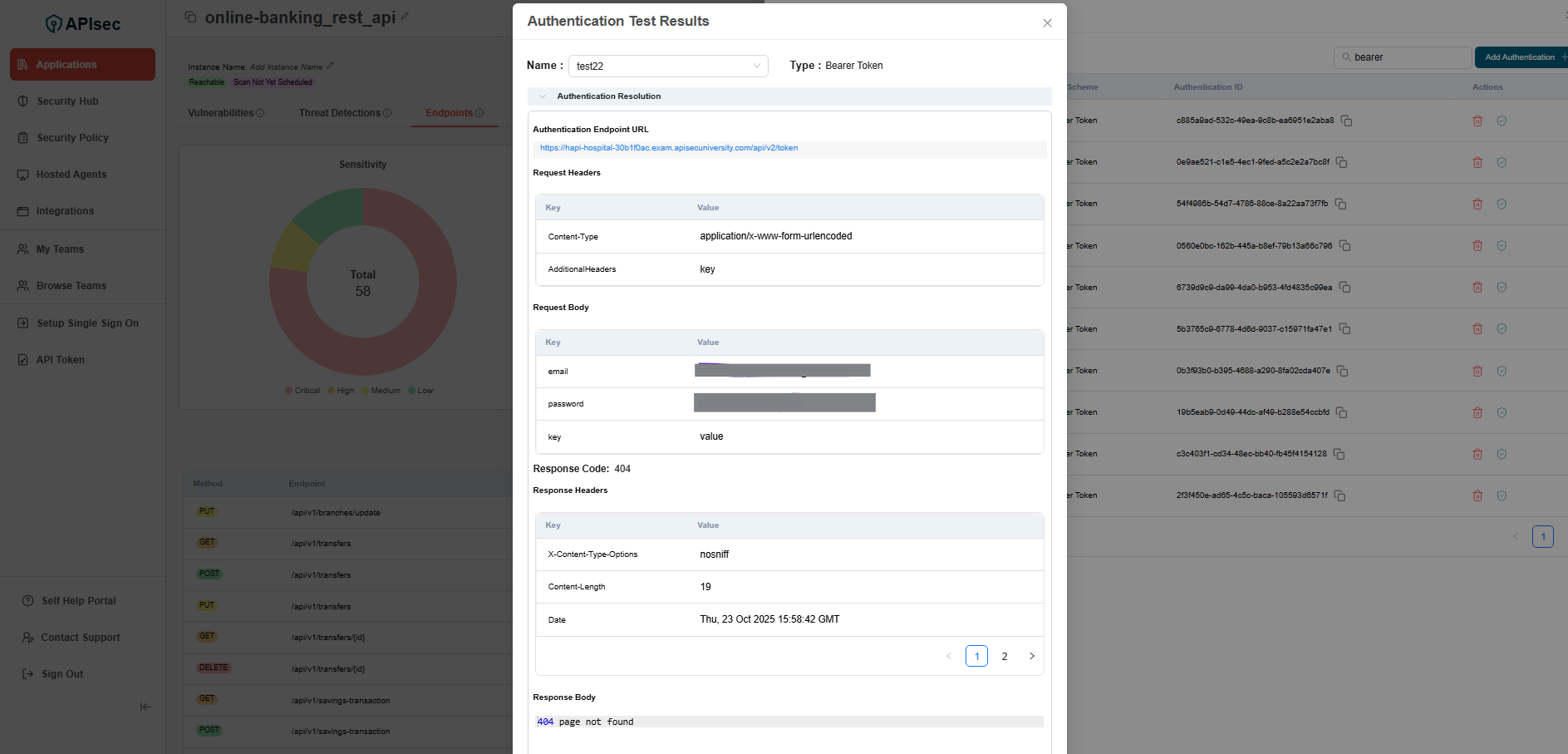
Authentication Test Results - Authentication Resolution
-
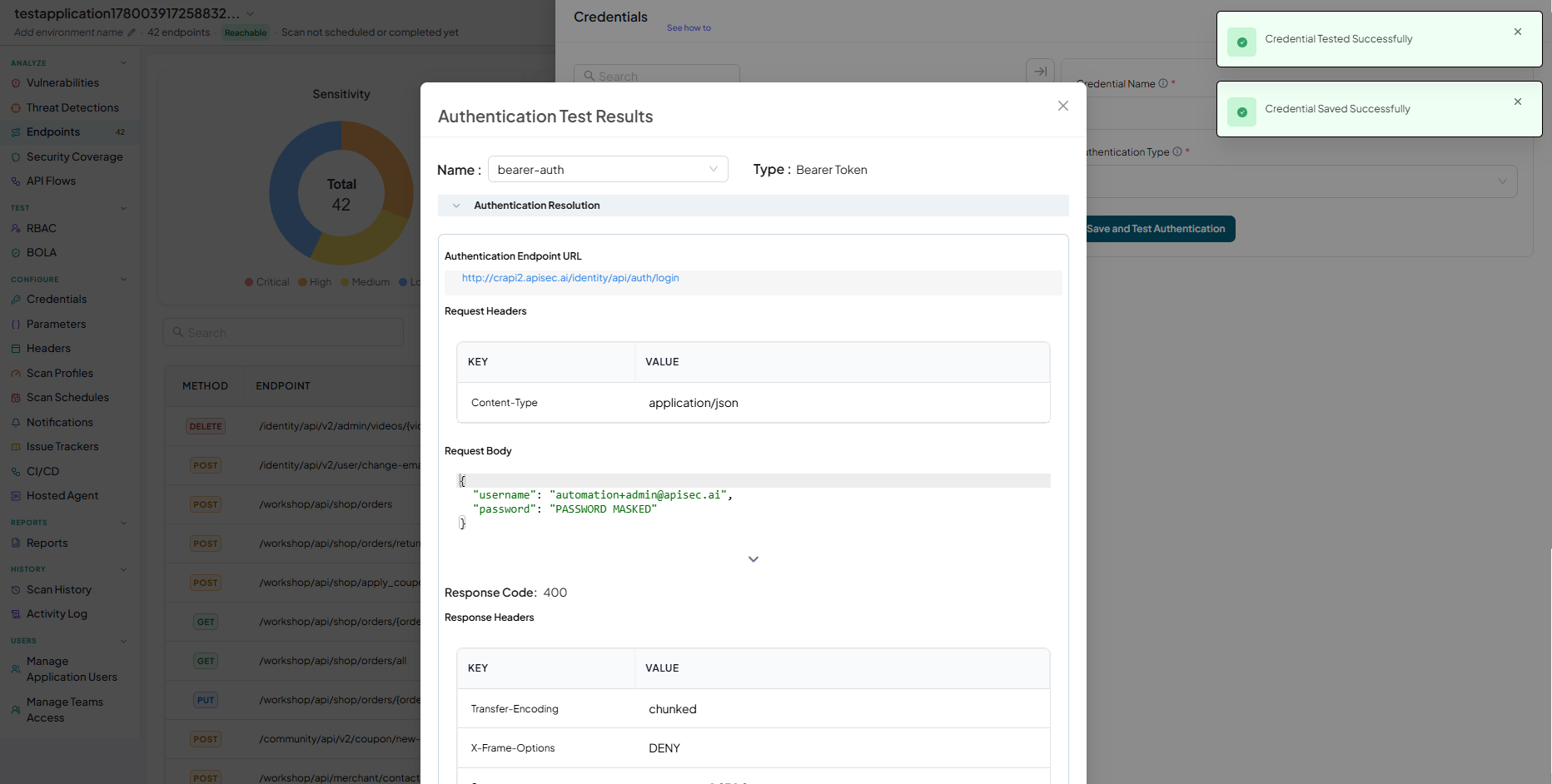
Authentication saved and Tested Successfully
-
Authentication Test Results - API Endpoint Test Results
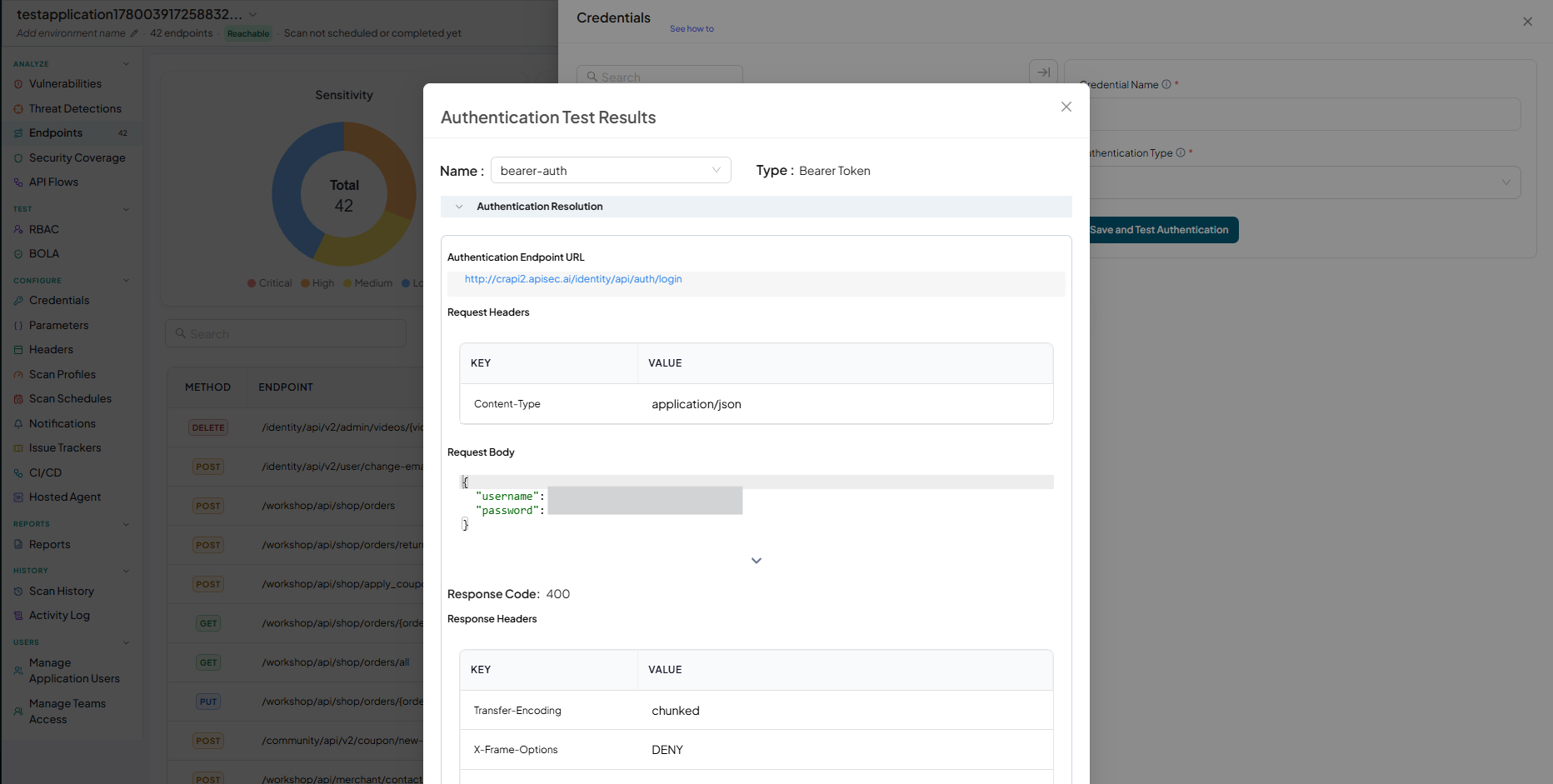
-
Check the saved credentials are available in the table
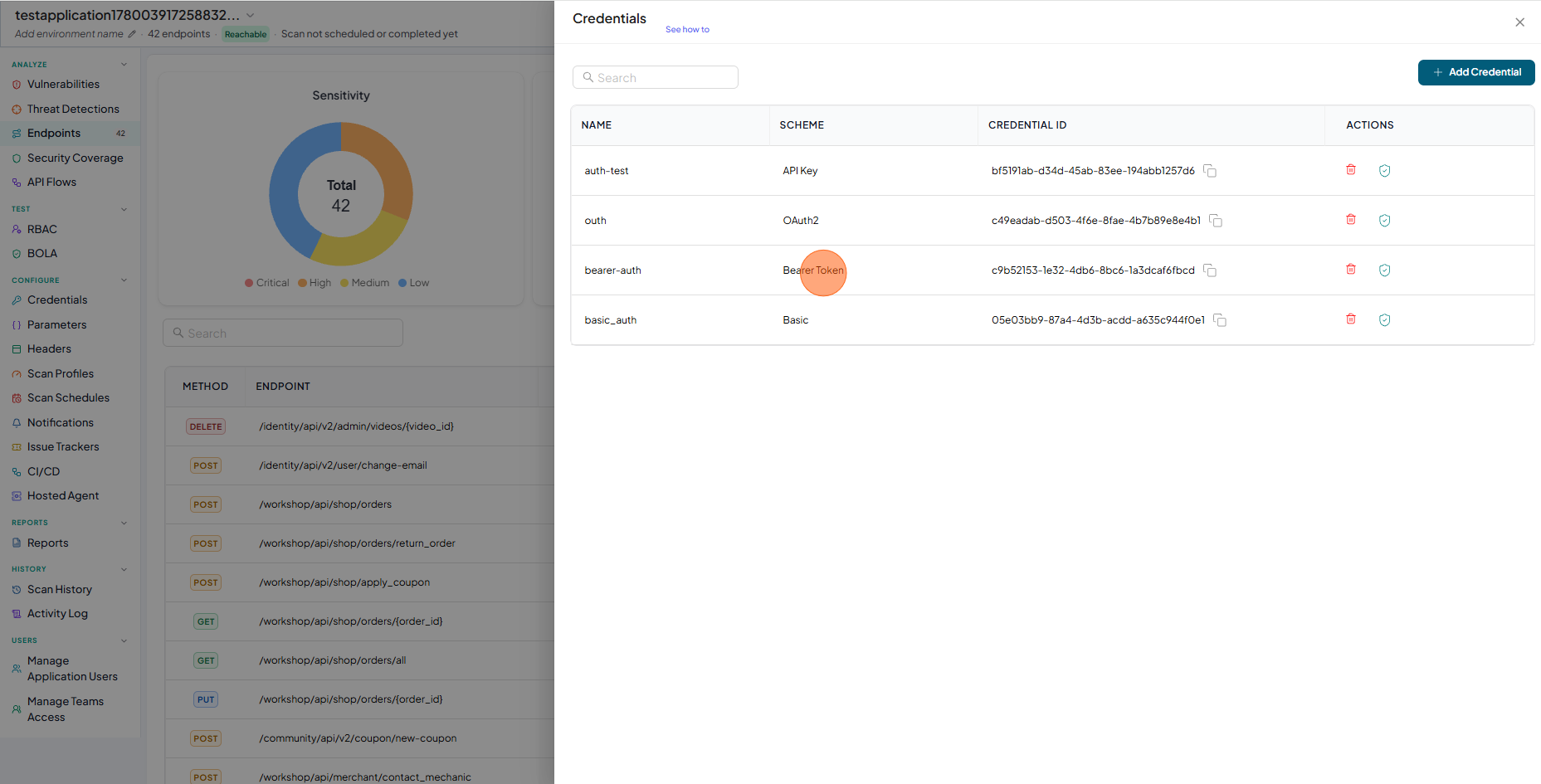
Test Authentication
- Click on Test Authentication
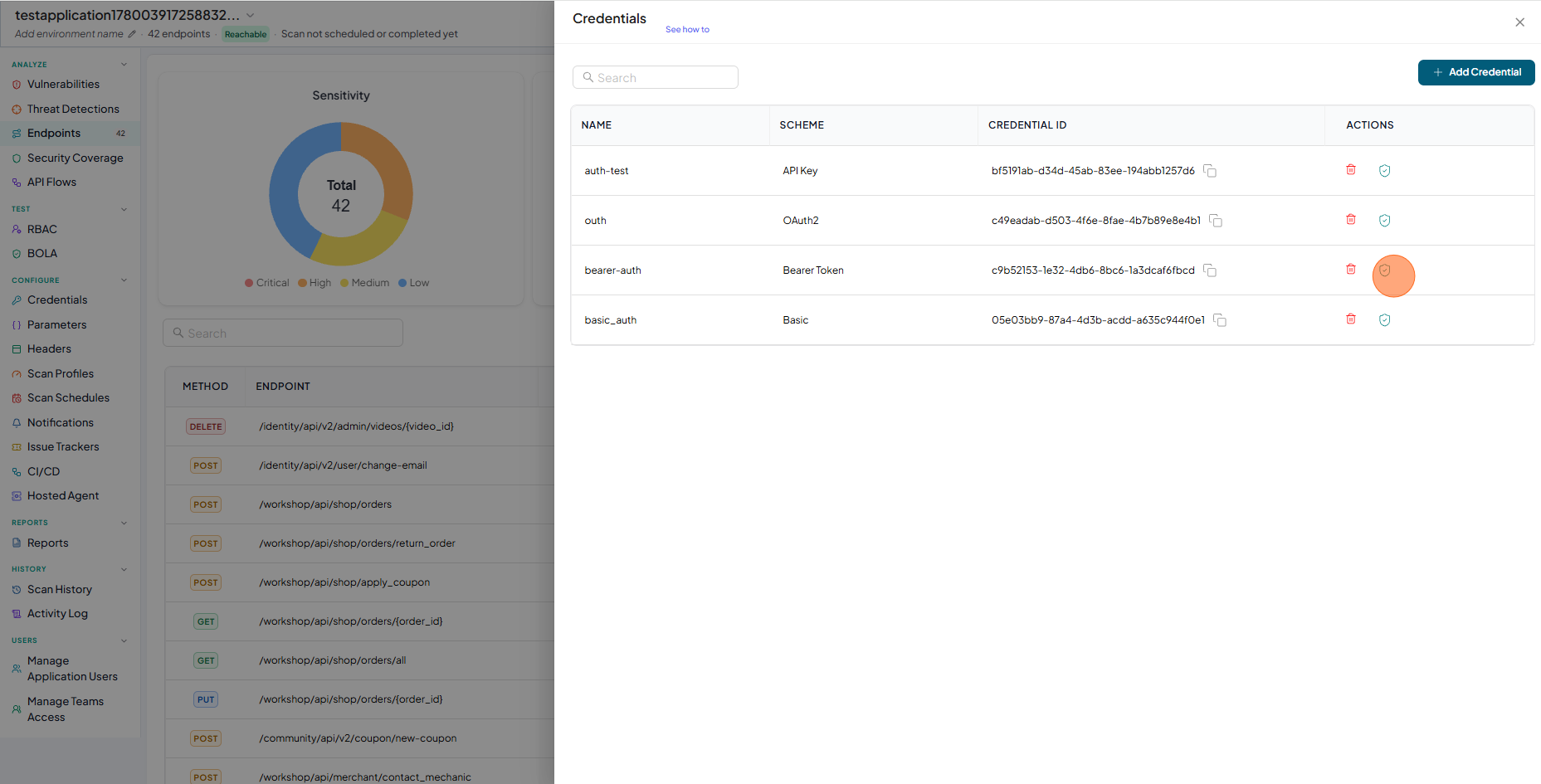
- Authentication Test Results - Authentication Resolution
- Click on Test Authentication
Bearer Token Authentications Advance Option
- Click on the row where Bearer Token available in the table, it will open the Bearer Token in edit mode.
- Click on Advance Section toggle .
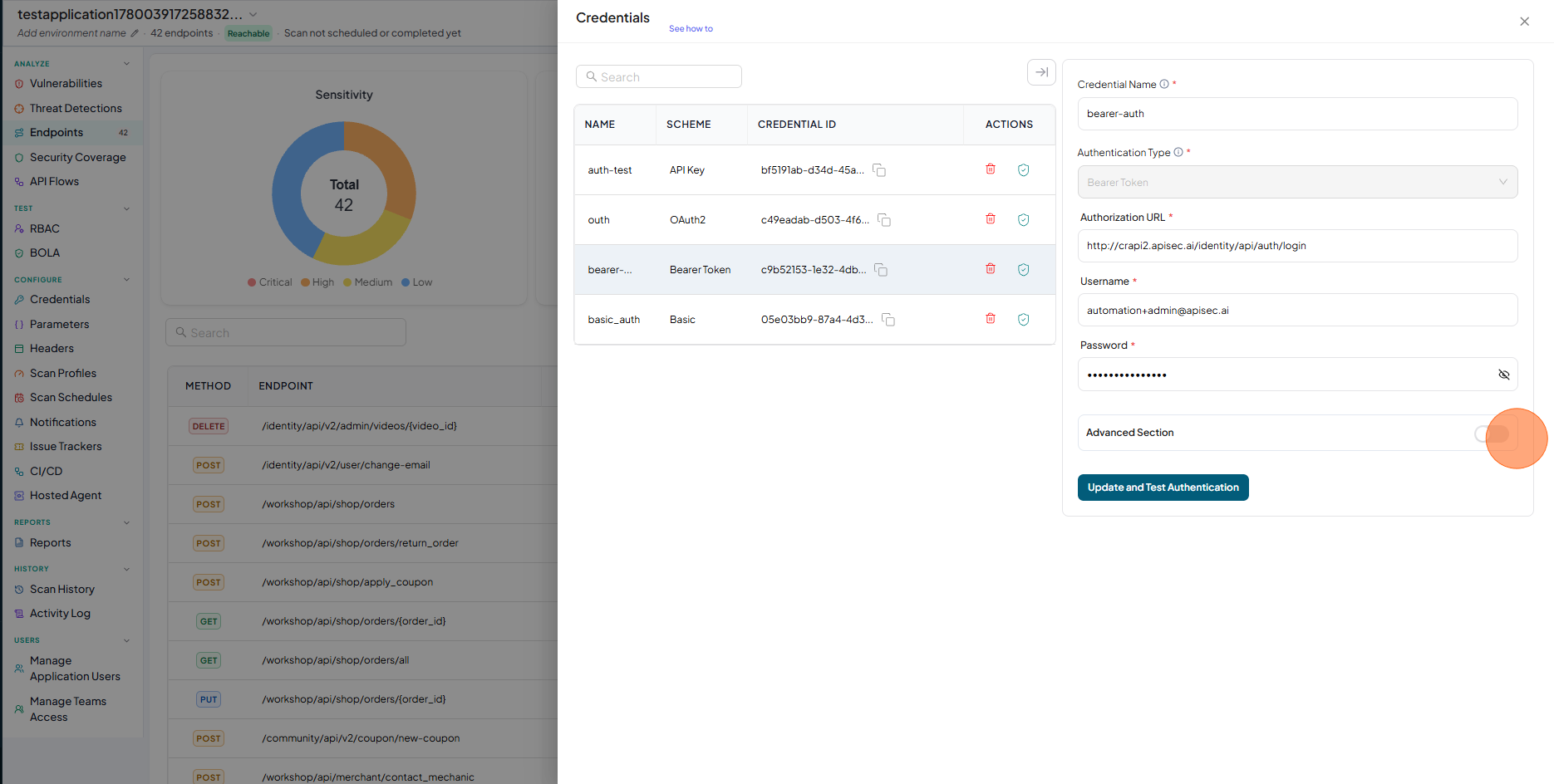
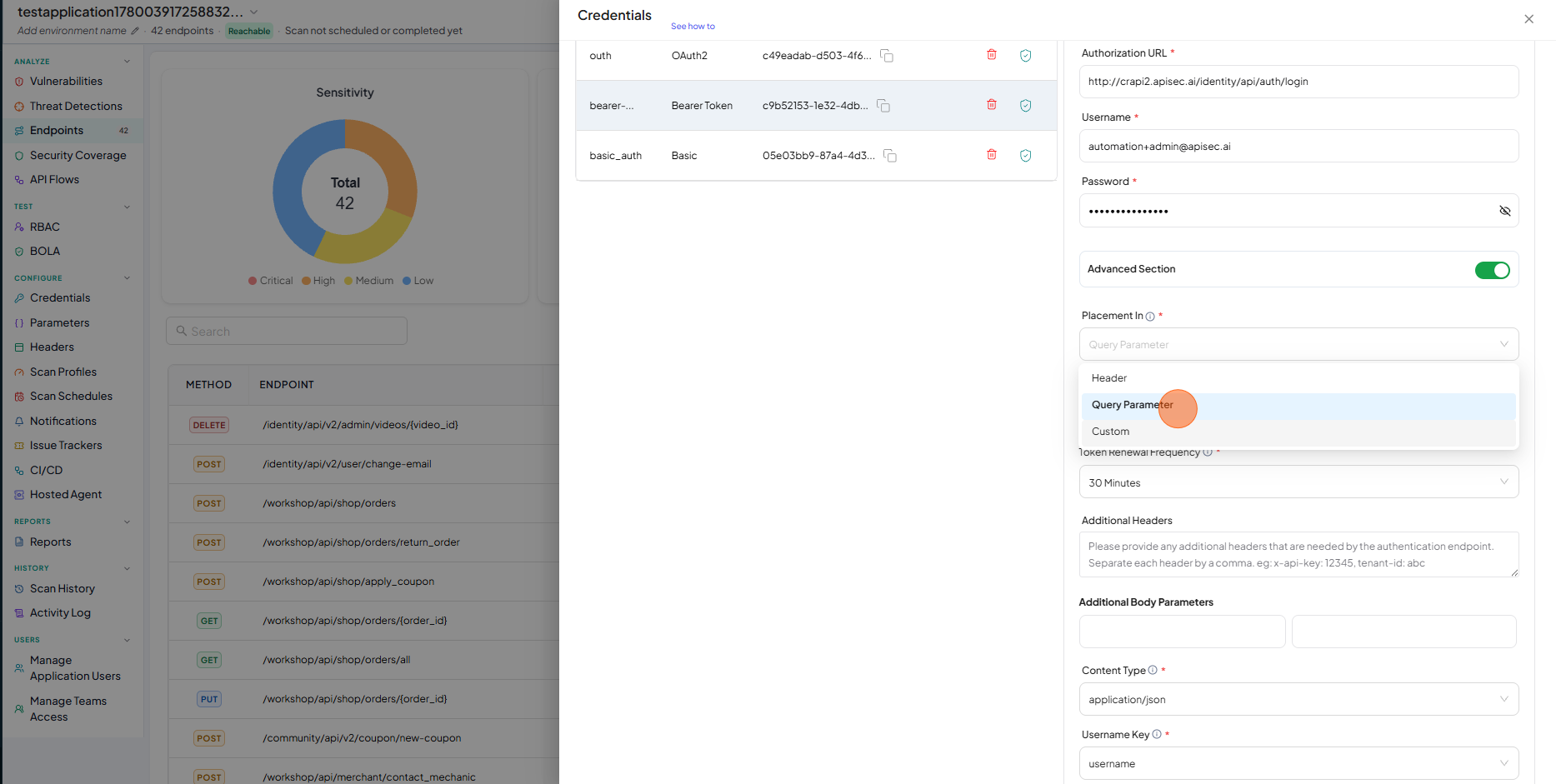
- Select the Query Parameter from Placement In dropdown.
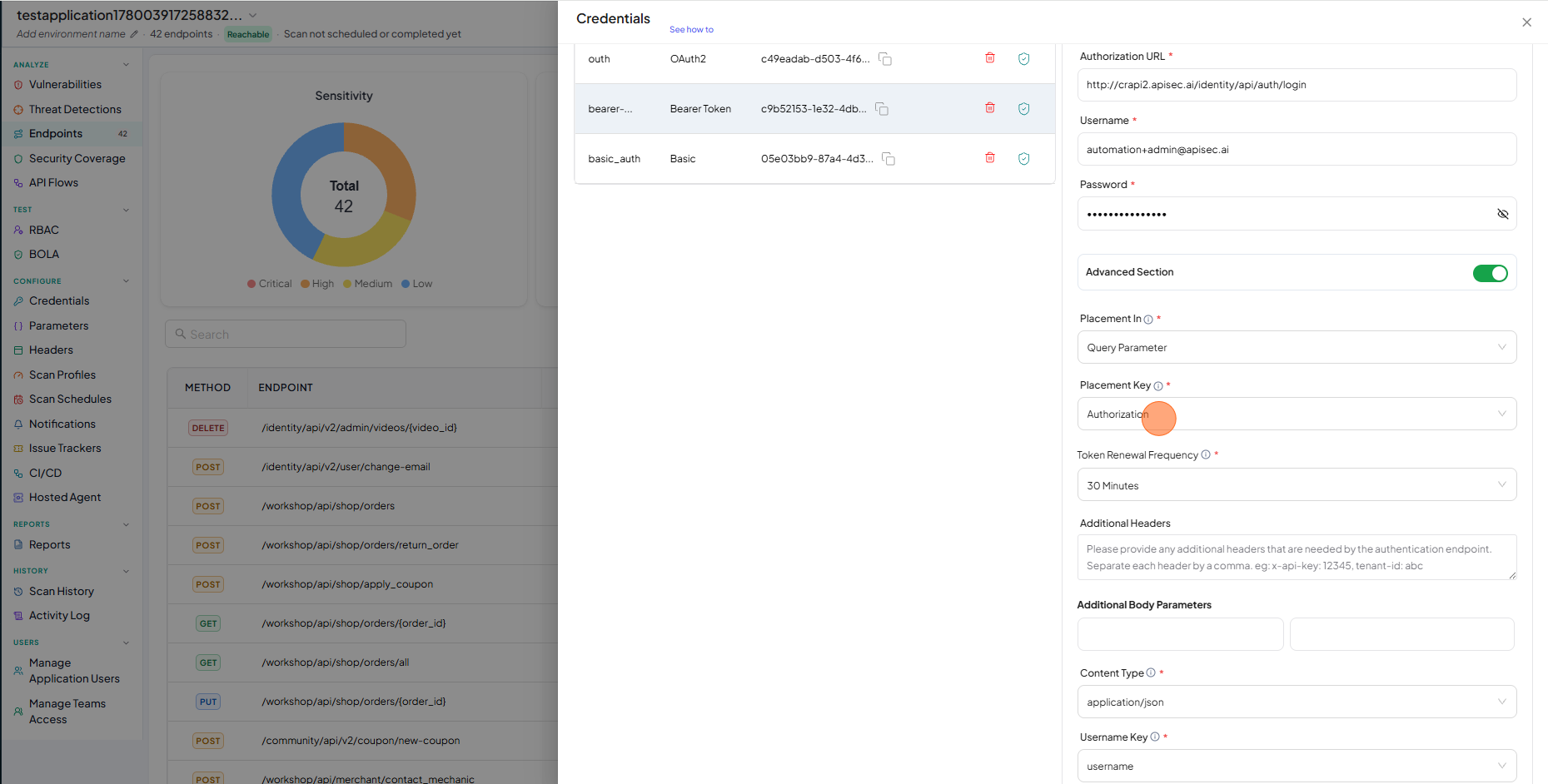
- Select the Authorization from Placement Key dropdown.
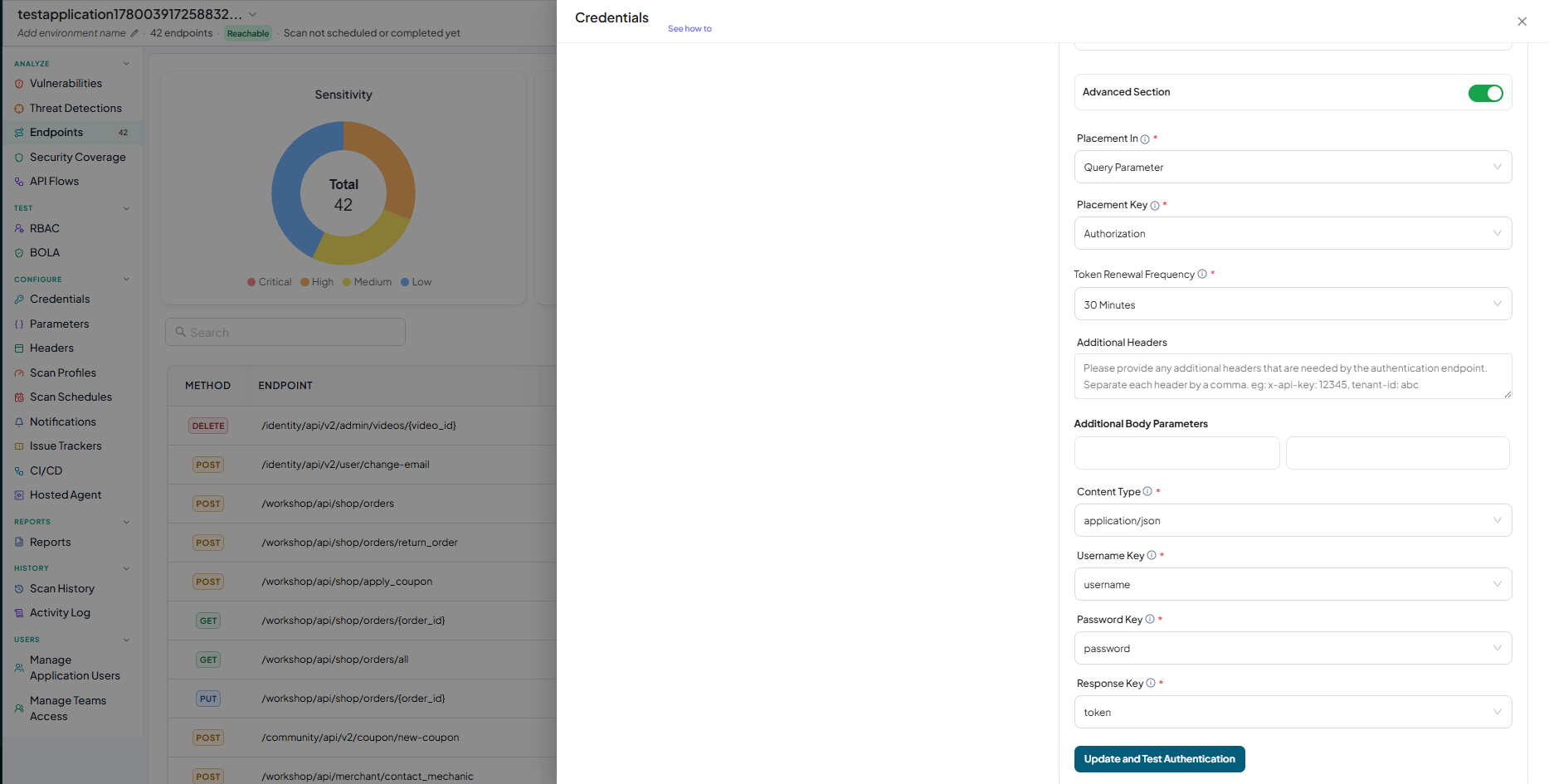
- Fill the required additional columns.
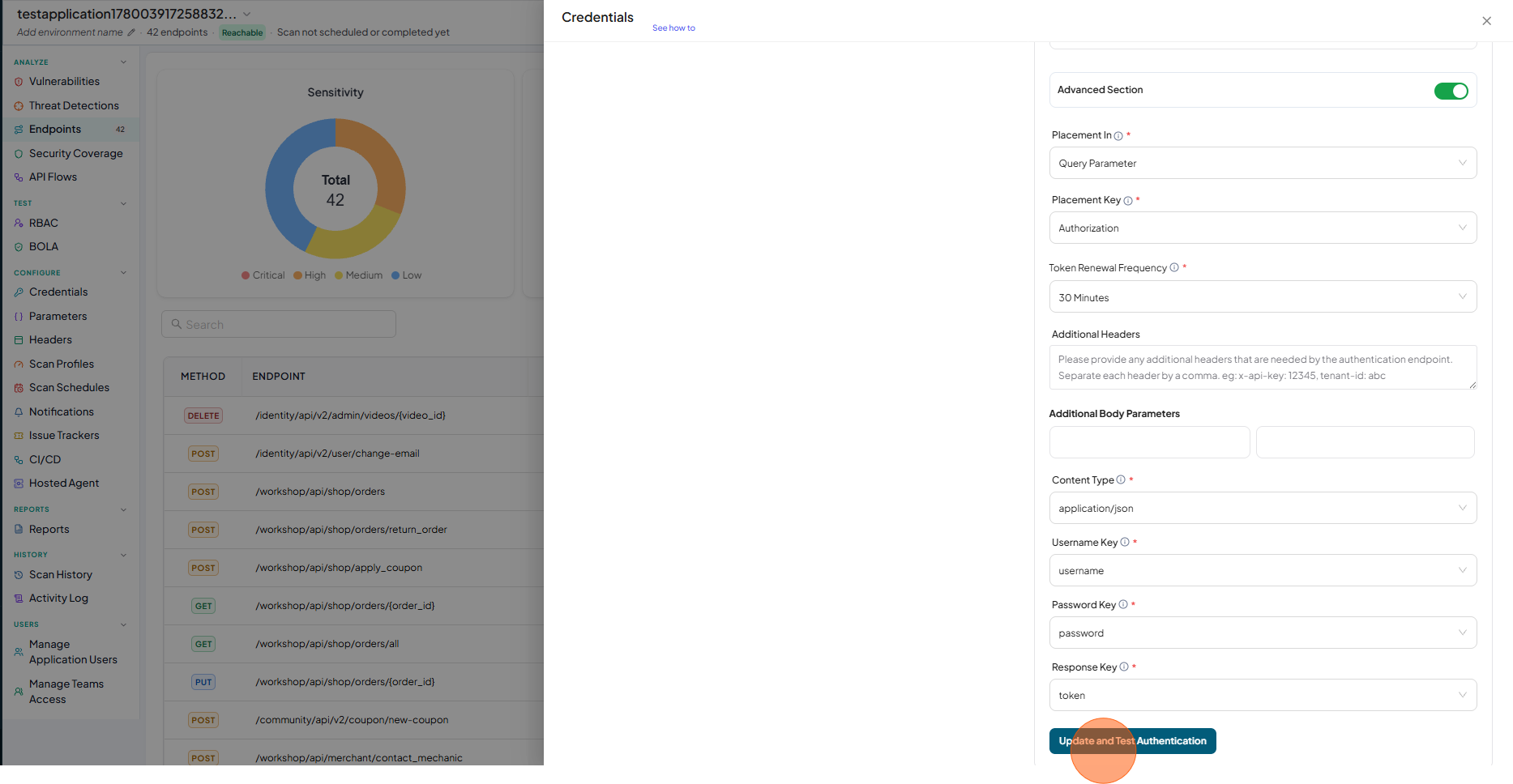
- Click on "Update and Test Authentication"
Custom Authentications
Custom Authentication is designed to support complex, multi-step login flows, often needed for APIs that require chaining multiple requests, passing cookies, and extracting values from headers or response bodies.
-
Enter Credential Name
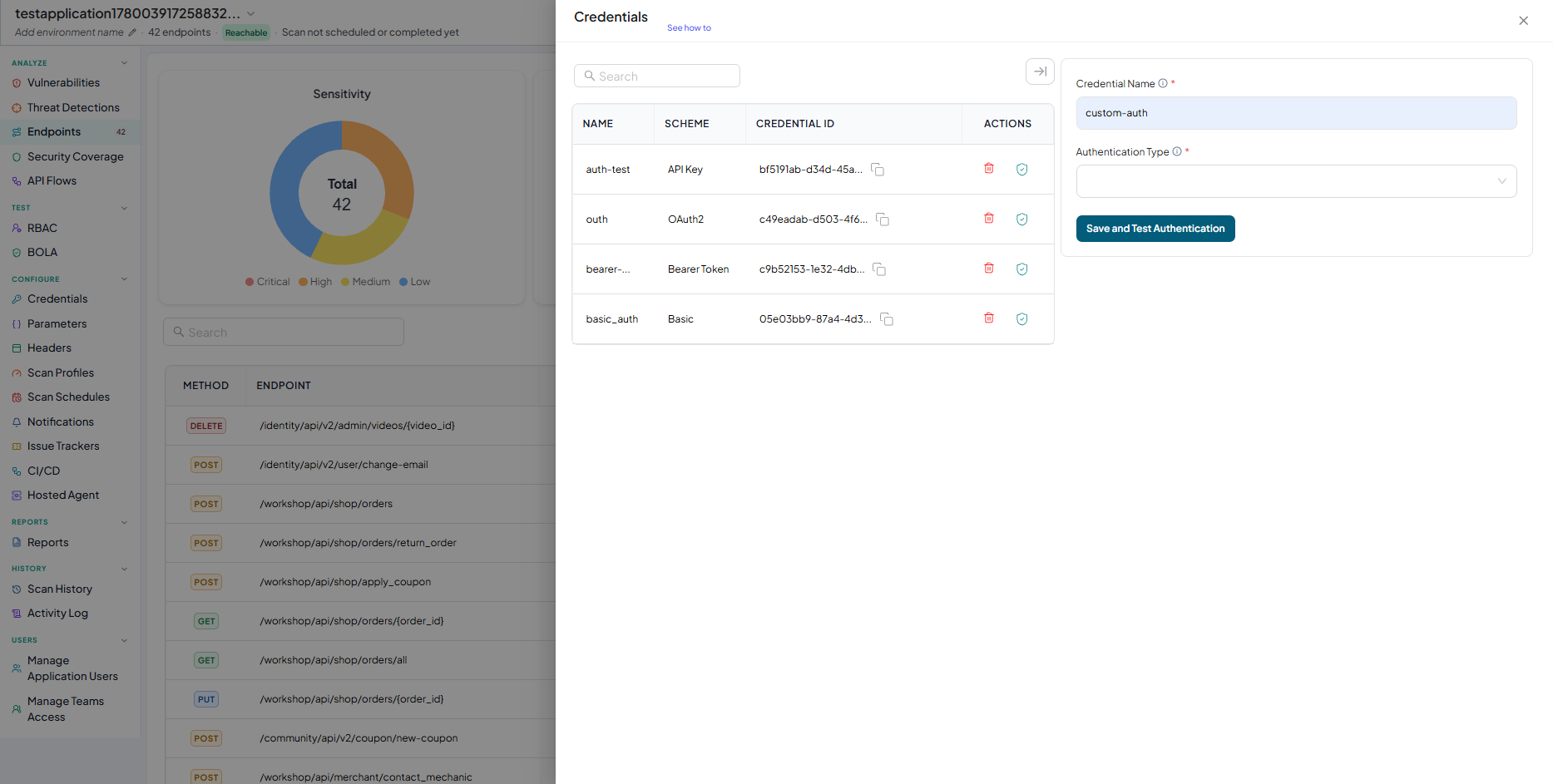
-
From dropdown select "Custom Authentication"
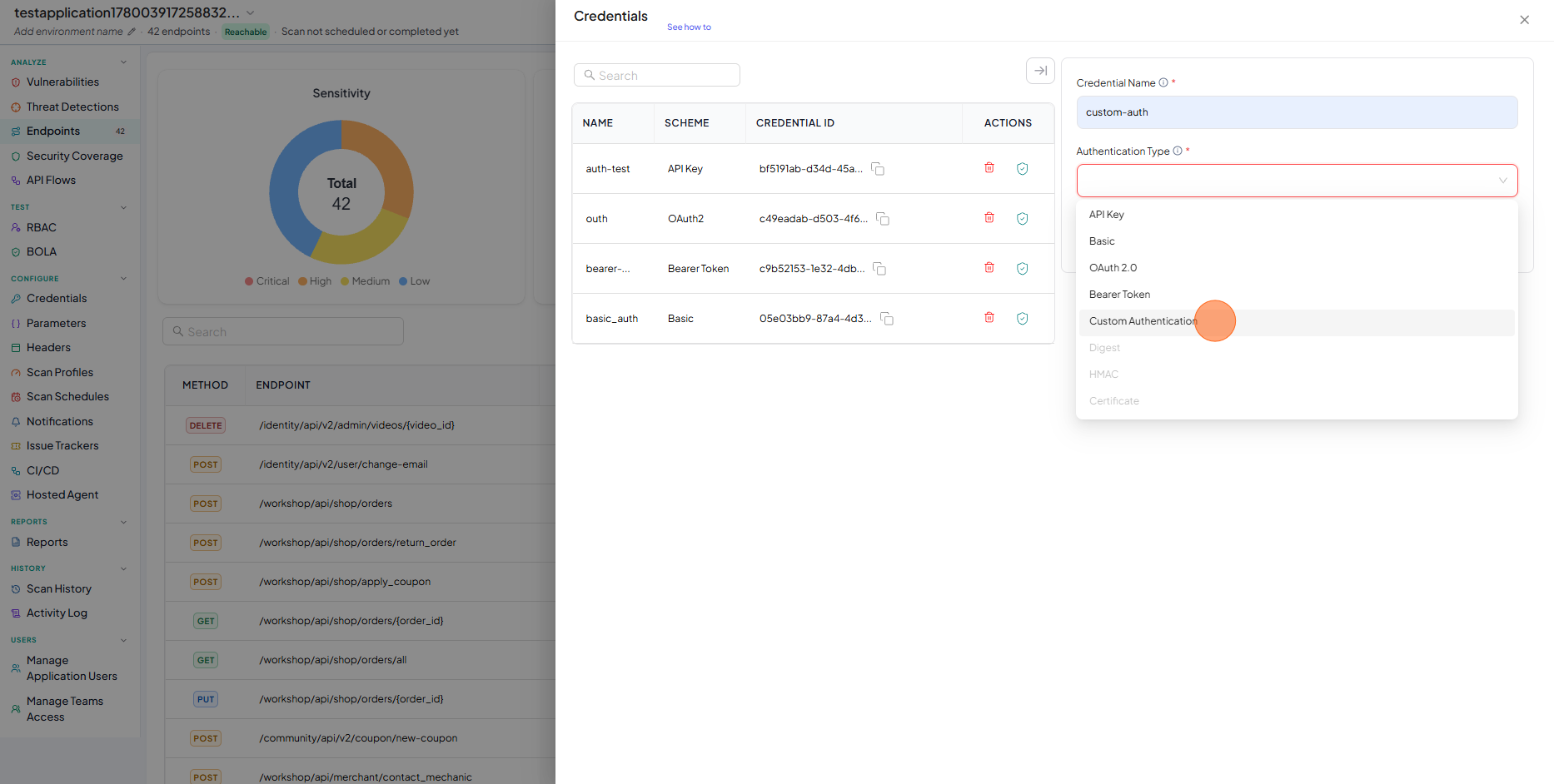
-
Select Authentication Flow configured to obtain a token for APIs that require multi-step authentication.
noteCustom Authentication allows you to run chained requests to obtain a token through a multi-step authentication process. If no authentication flow has been set up, please contact APIsec support team.
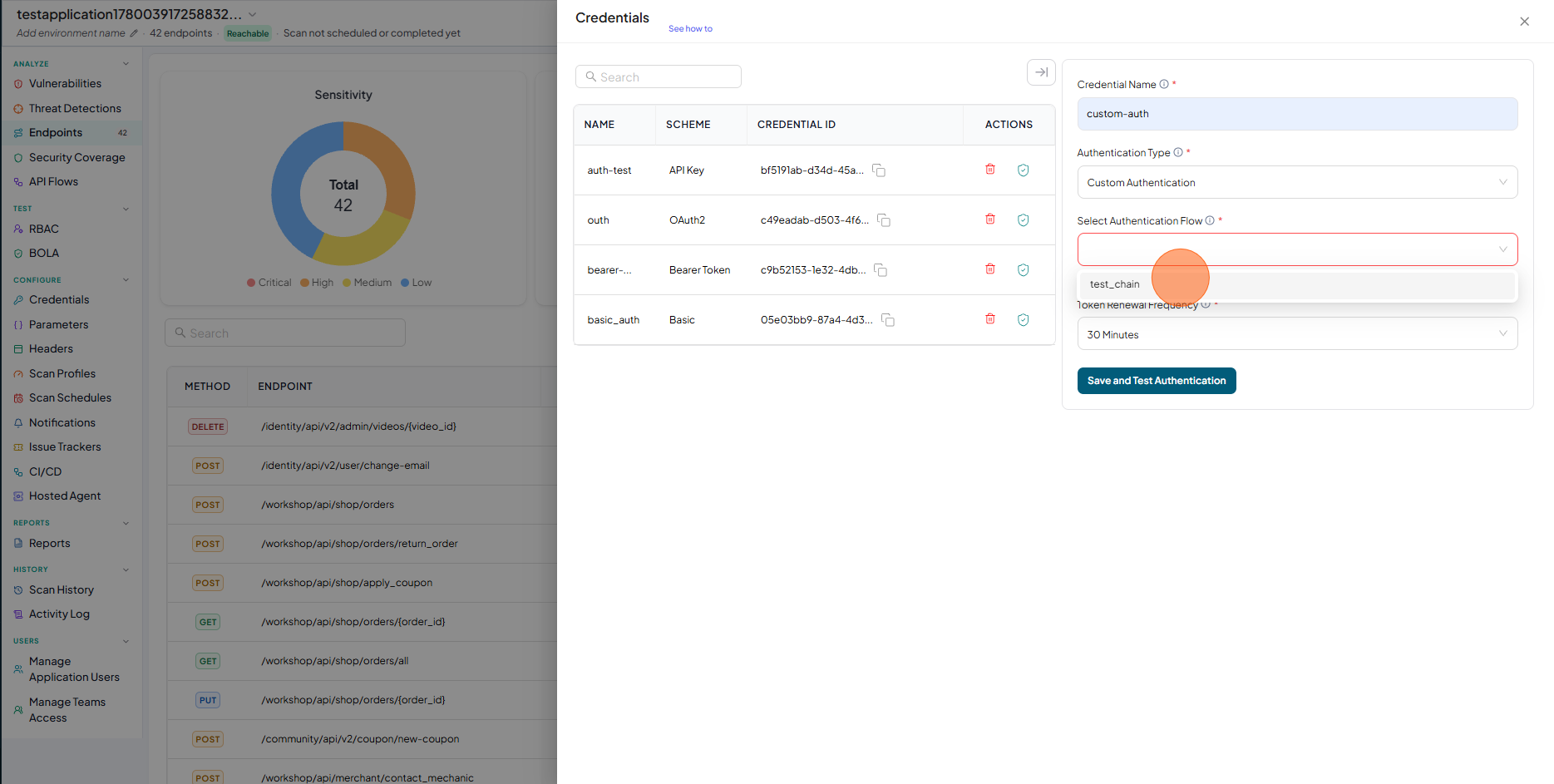
-
Enter the credentials required to run the script.
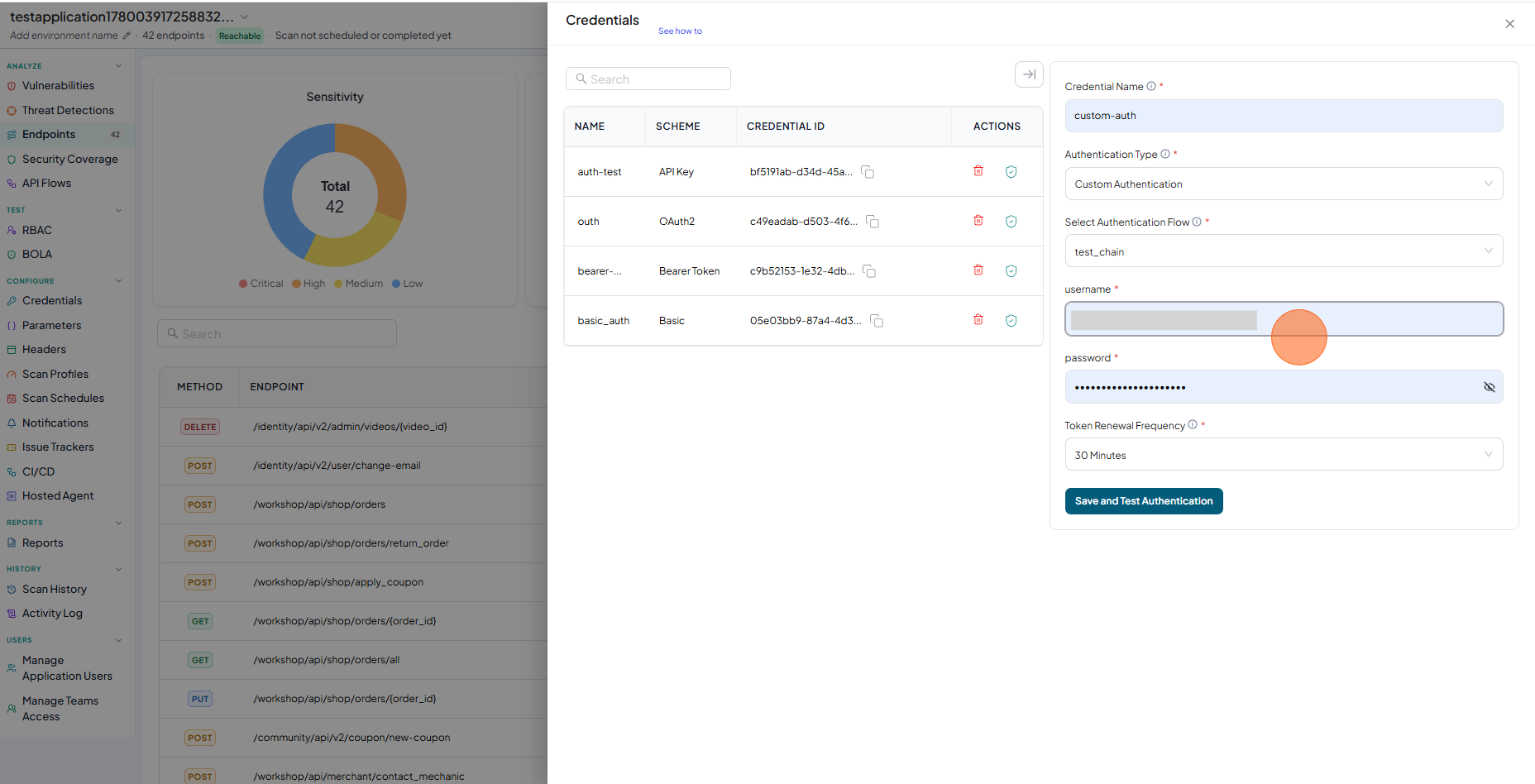
-
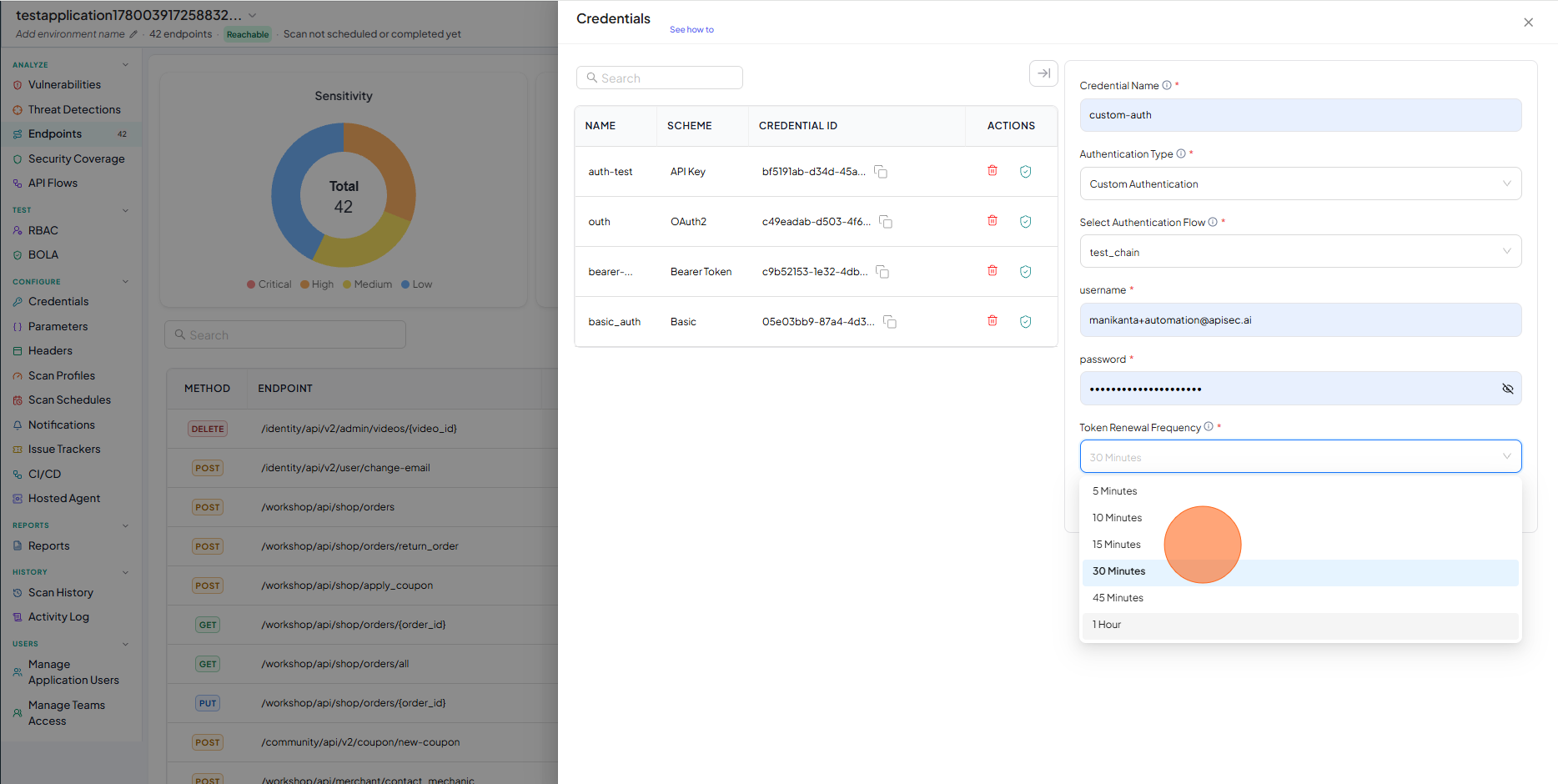
Token Renewal Frequency Select the duration for which the token stays valid before it must be regenerated.
-
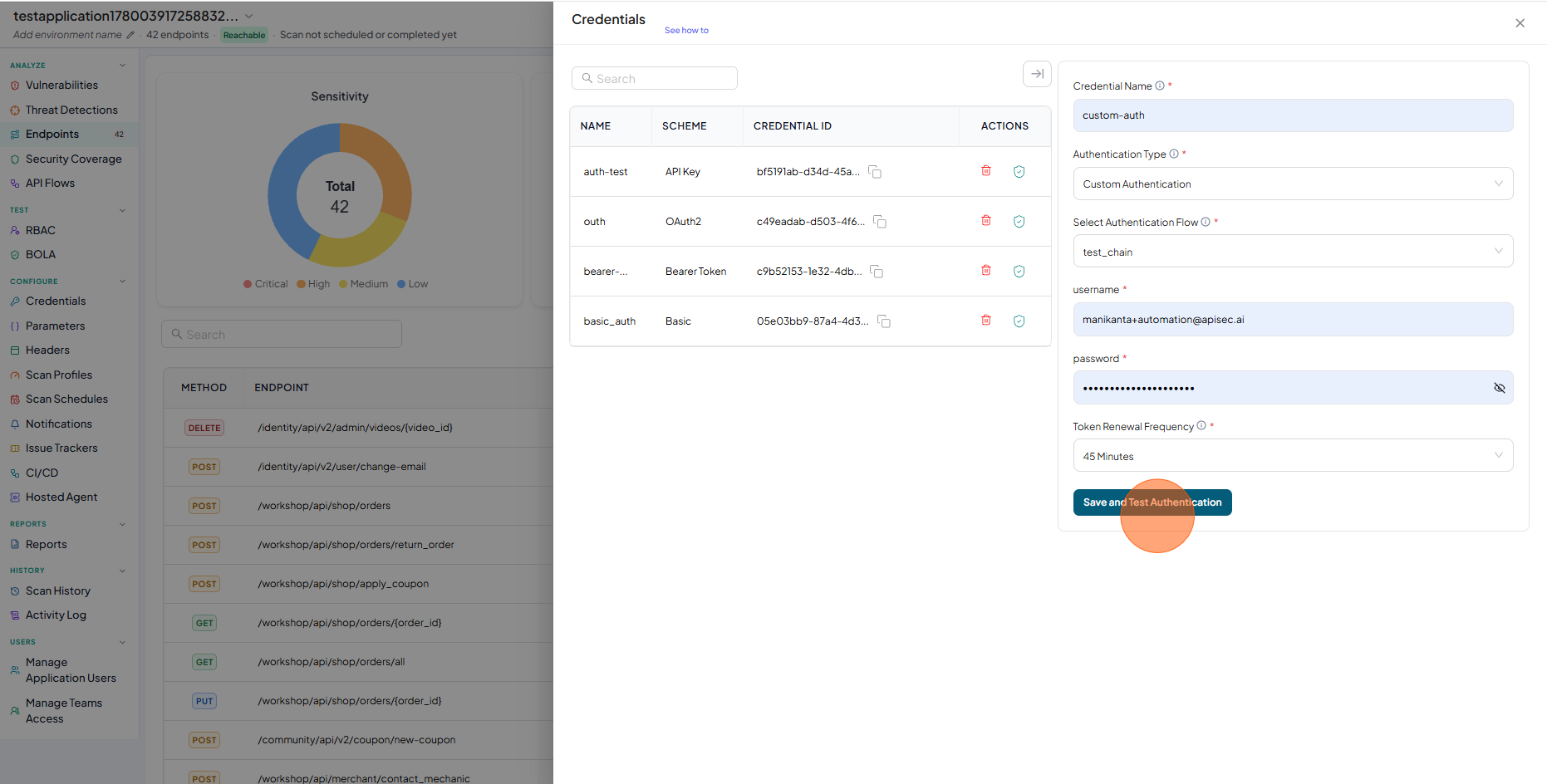
Click on Save and Test Authentication
-
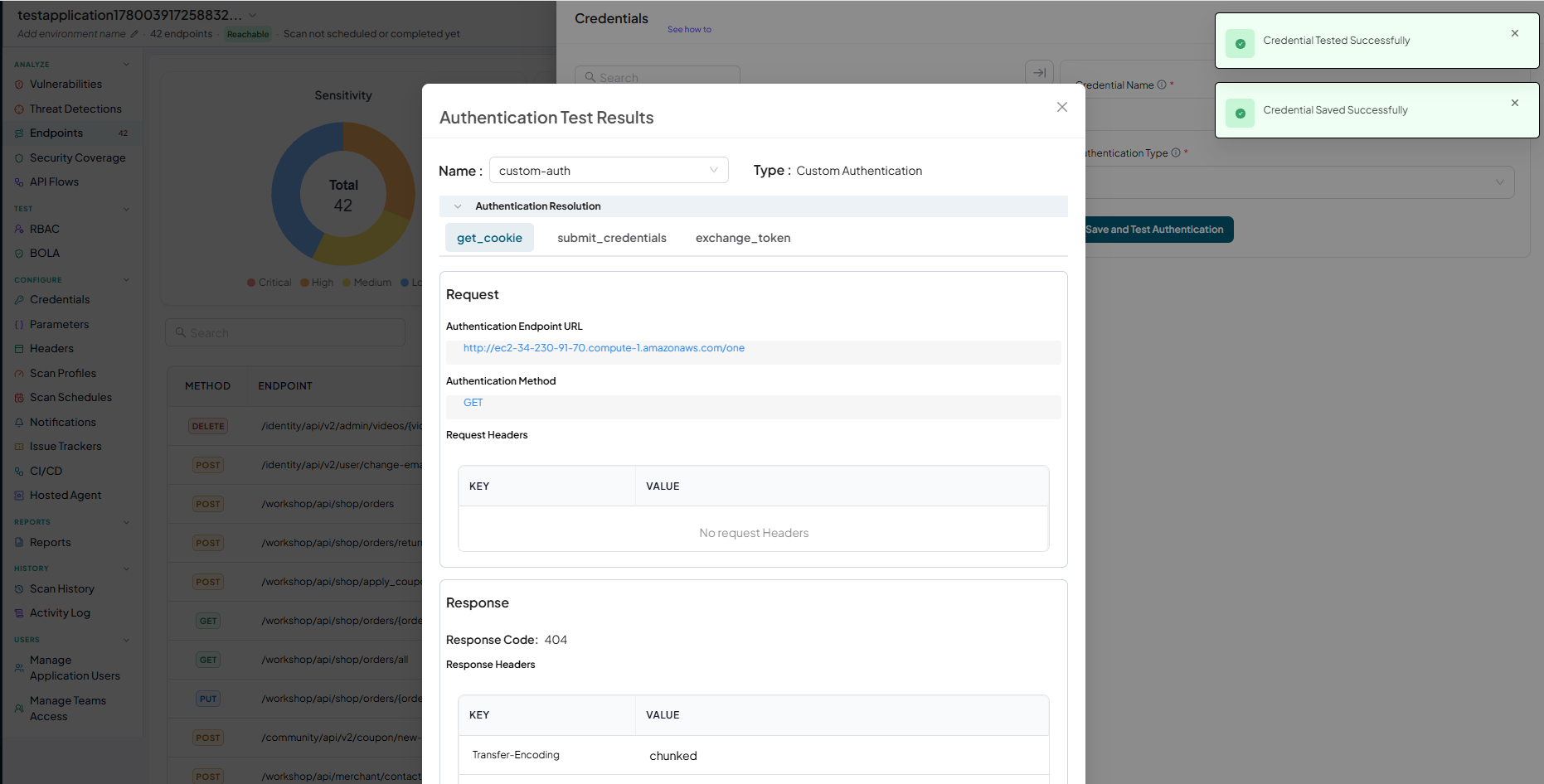
Authentication saved and Tested Successfully
-
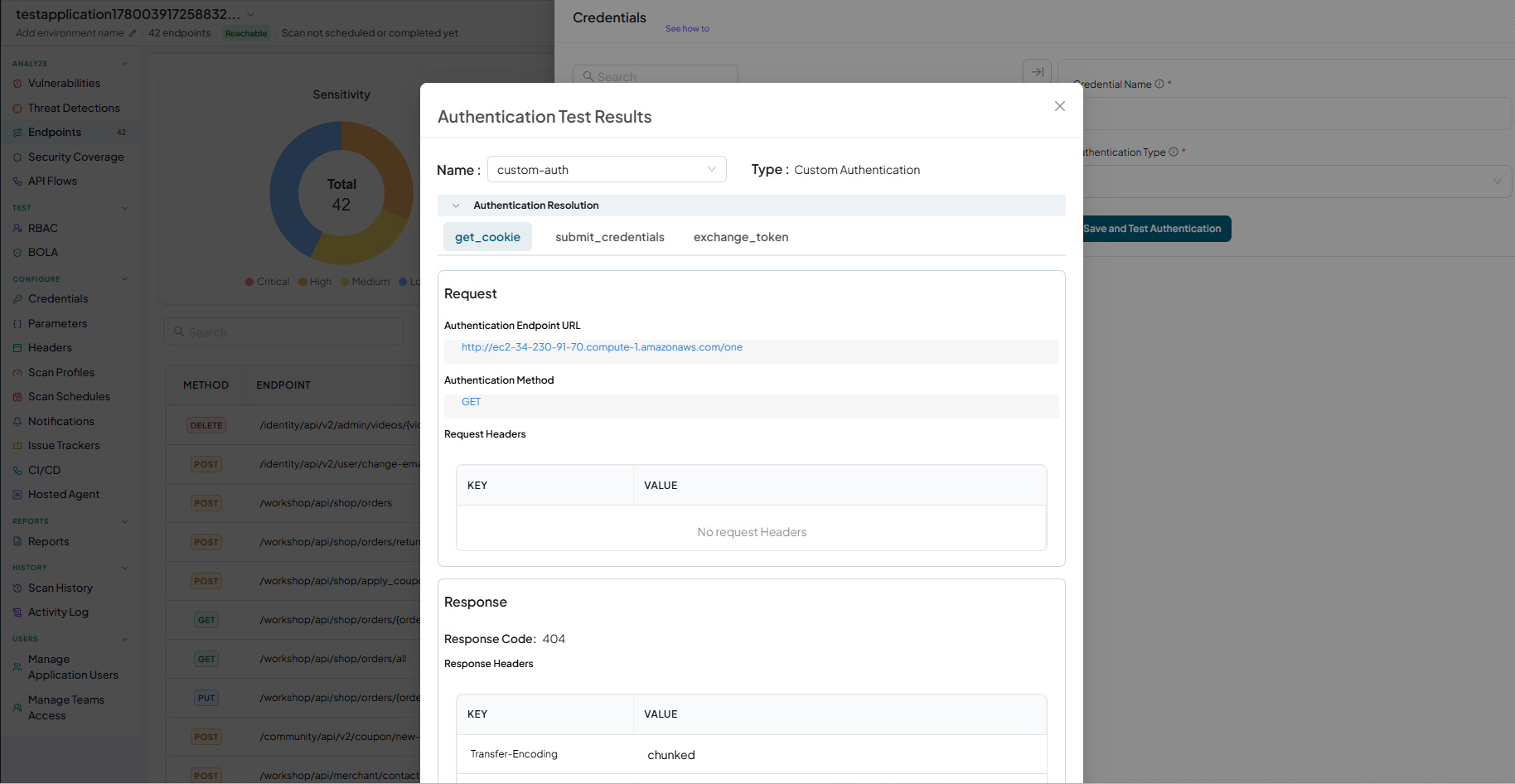
Authentication Test Results - Authentication Resolution
-
Authentication Test Results - API Endpoint Test Results
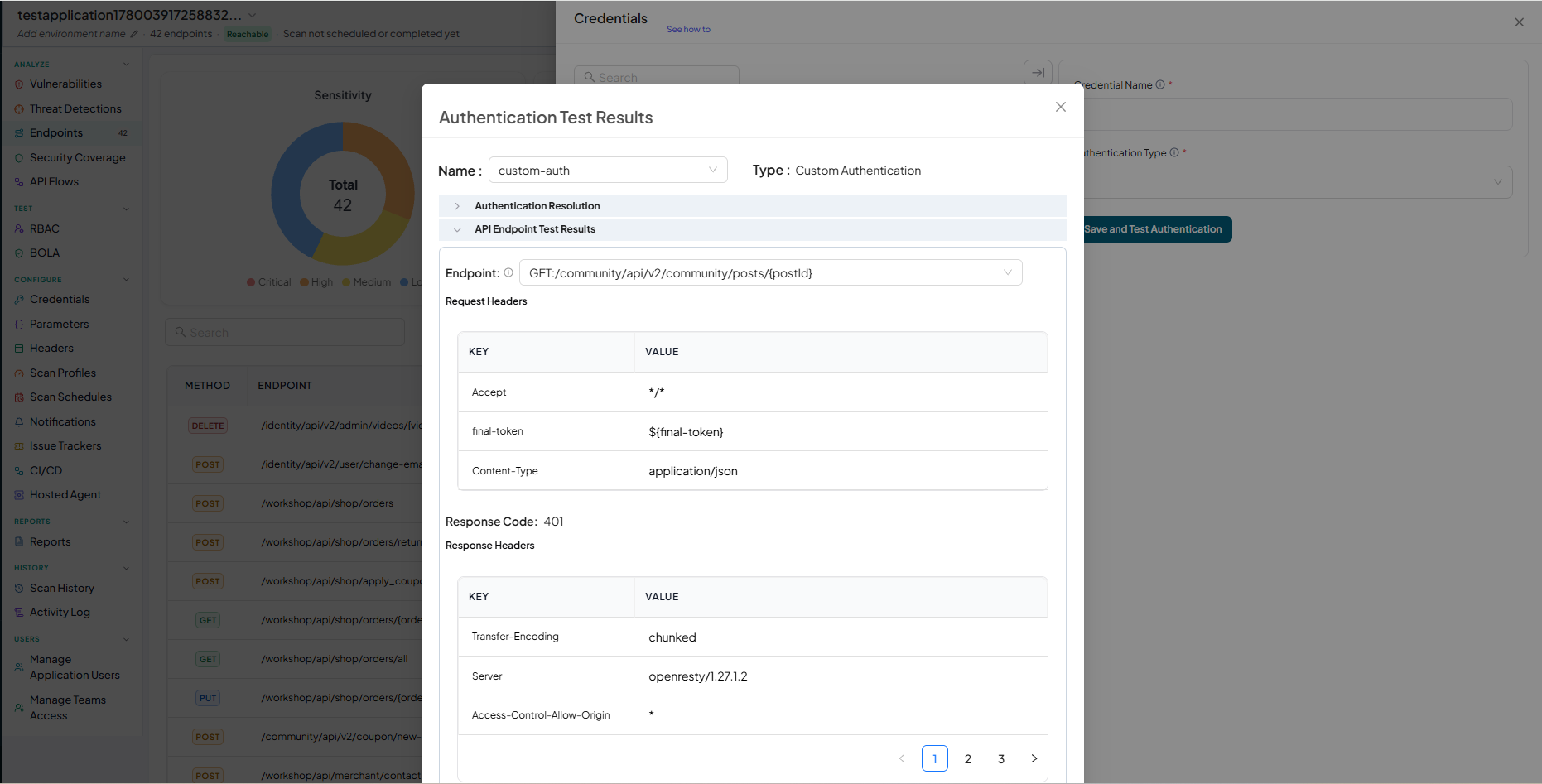
-
Check the saved credentials are available in the table
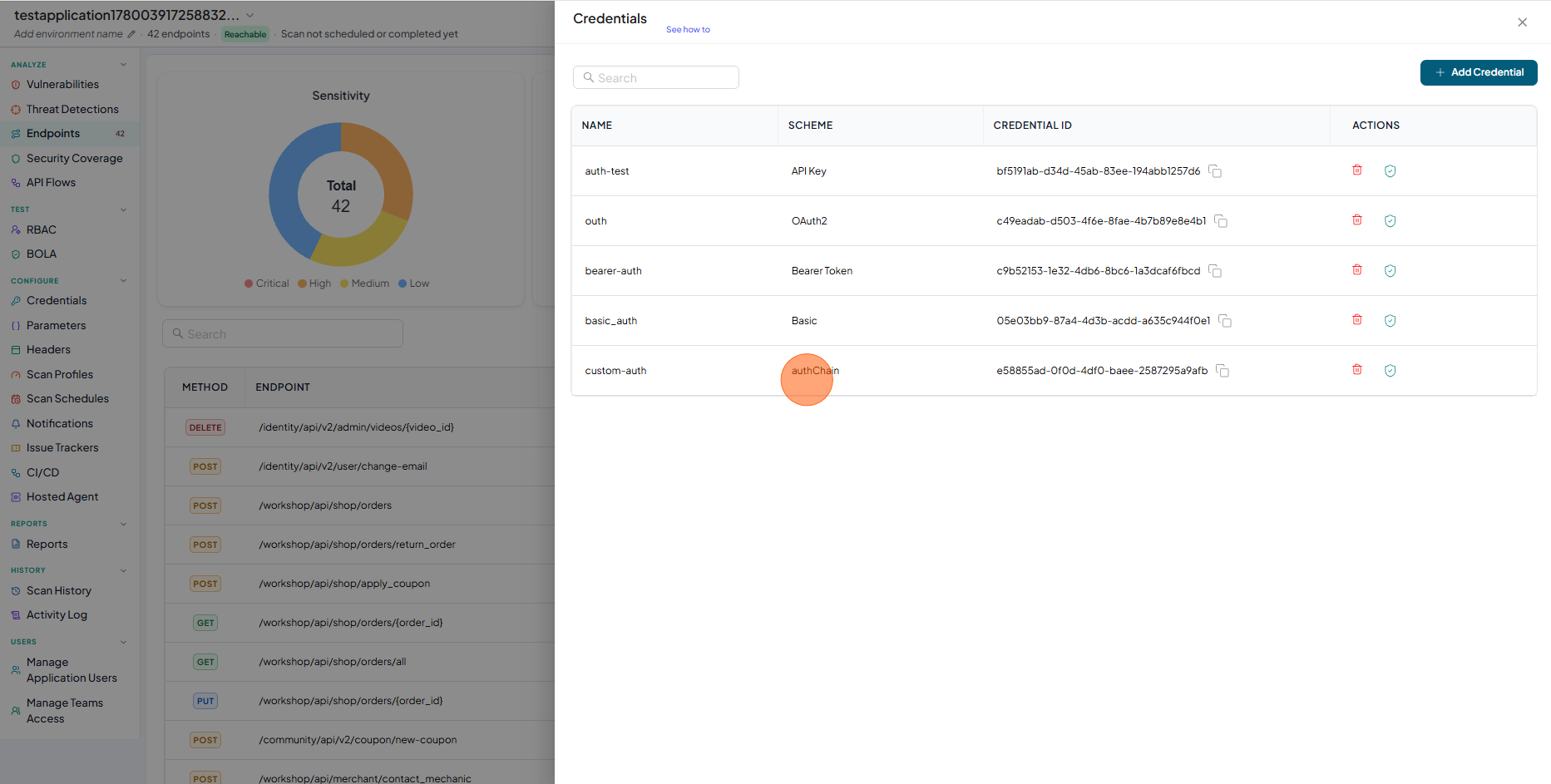
Test Authentication
- Click on Test Authentication
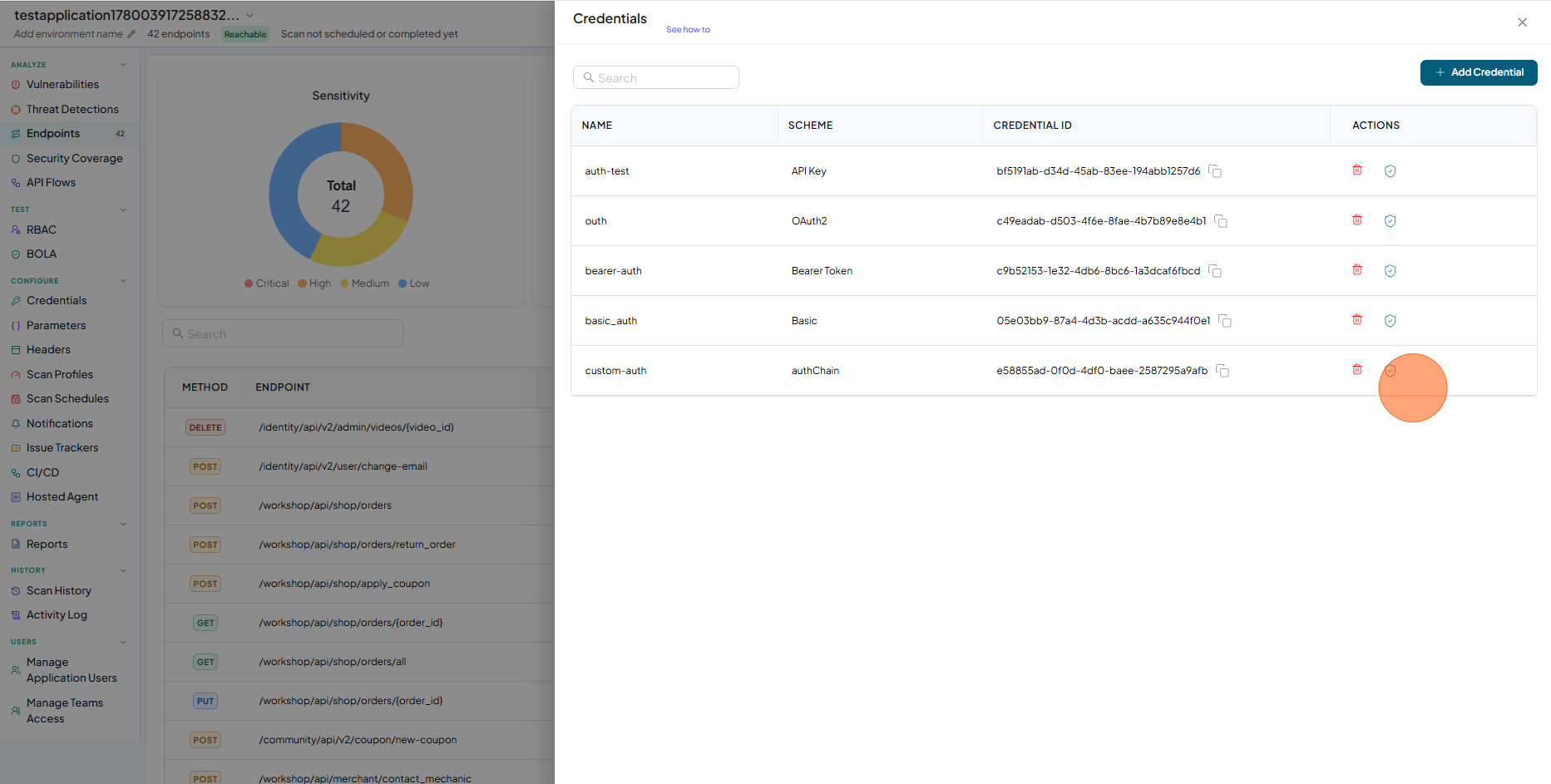
- Authentication Test Results - Authentication Resolution
- Authentication Test Results - API Endpoint Test Results
- Click on Test Authentication
HMAC Authentication
HMAC (Hash-based Message Authentication Code) authentication secures API requests by generating a cryptographic signature using a shared secret. It verifies the authenticity and integrity of each request, ensuring that only trusted clients can access the API and that request data has not been modified during transmission.
- Type auth name

- From dropdown select "HMAC"

- Fill the form

- Click on Save and Test Authentication

- Authentication saved and Tested Successfully

- Authentication Test Results - Authentication Resolution

- Authentication Test Results - API Endpoint Test Results

- Check the saved credentials are available in the table

Test authentication on a different endpoint
- Click on Test Authentication
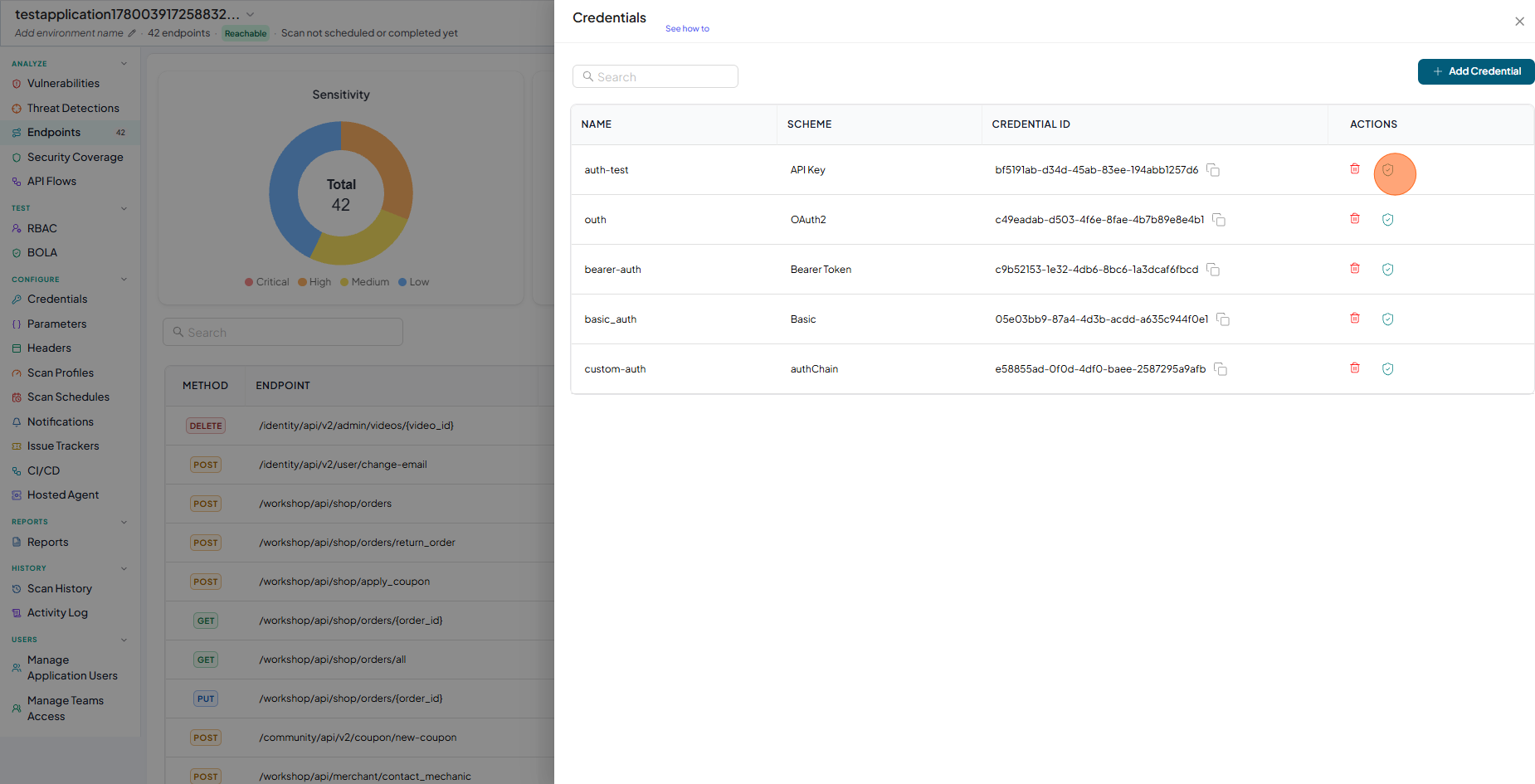
- Authentication Test Results - Authentication Resolution
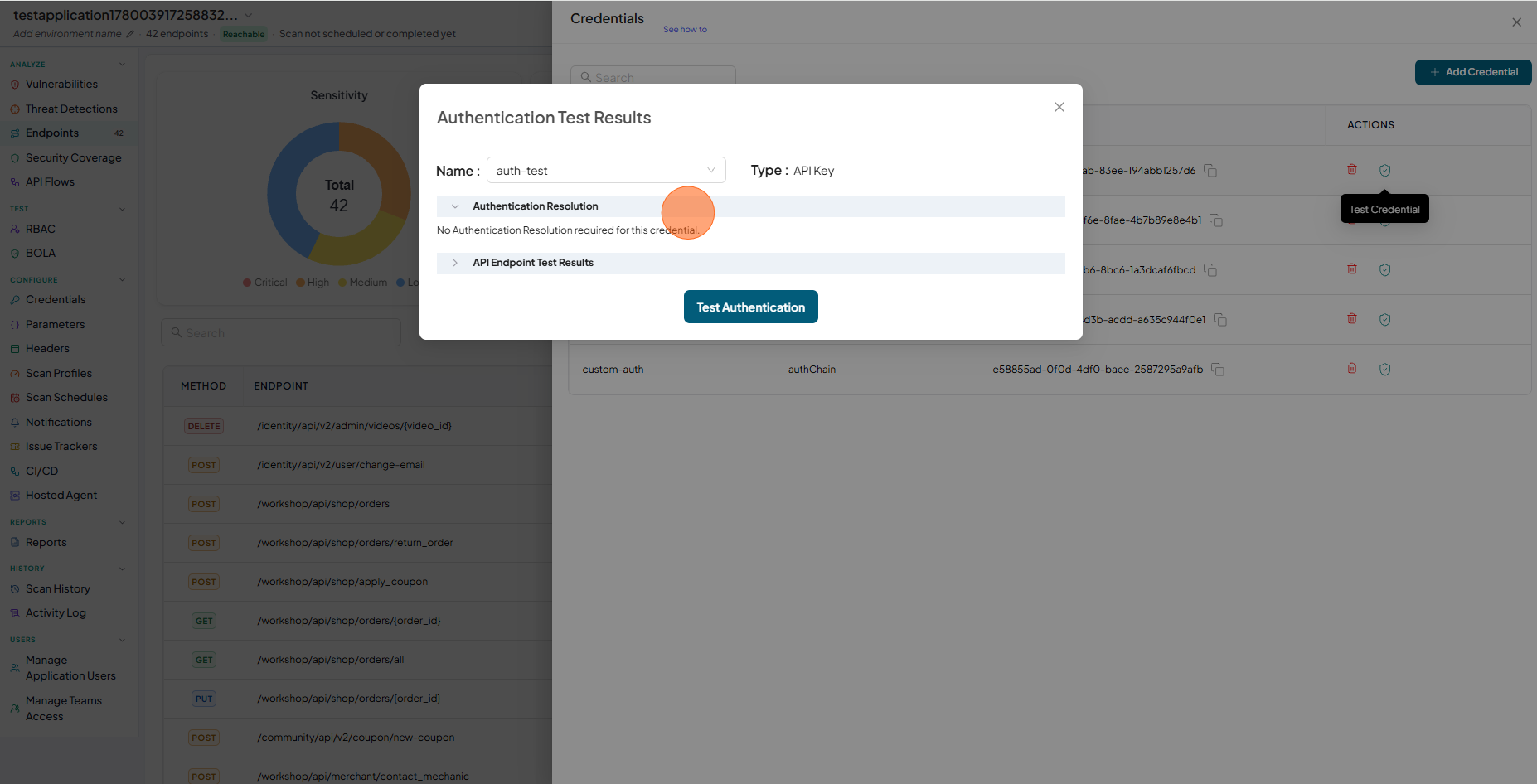
- Authentication Test Results - API Endpoint Test Results
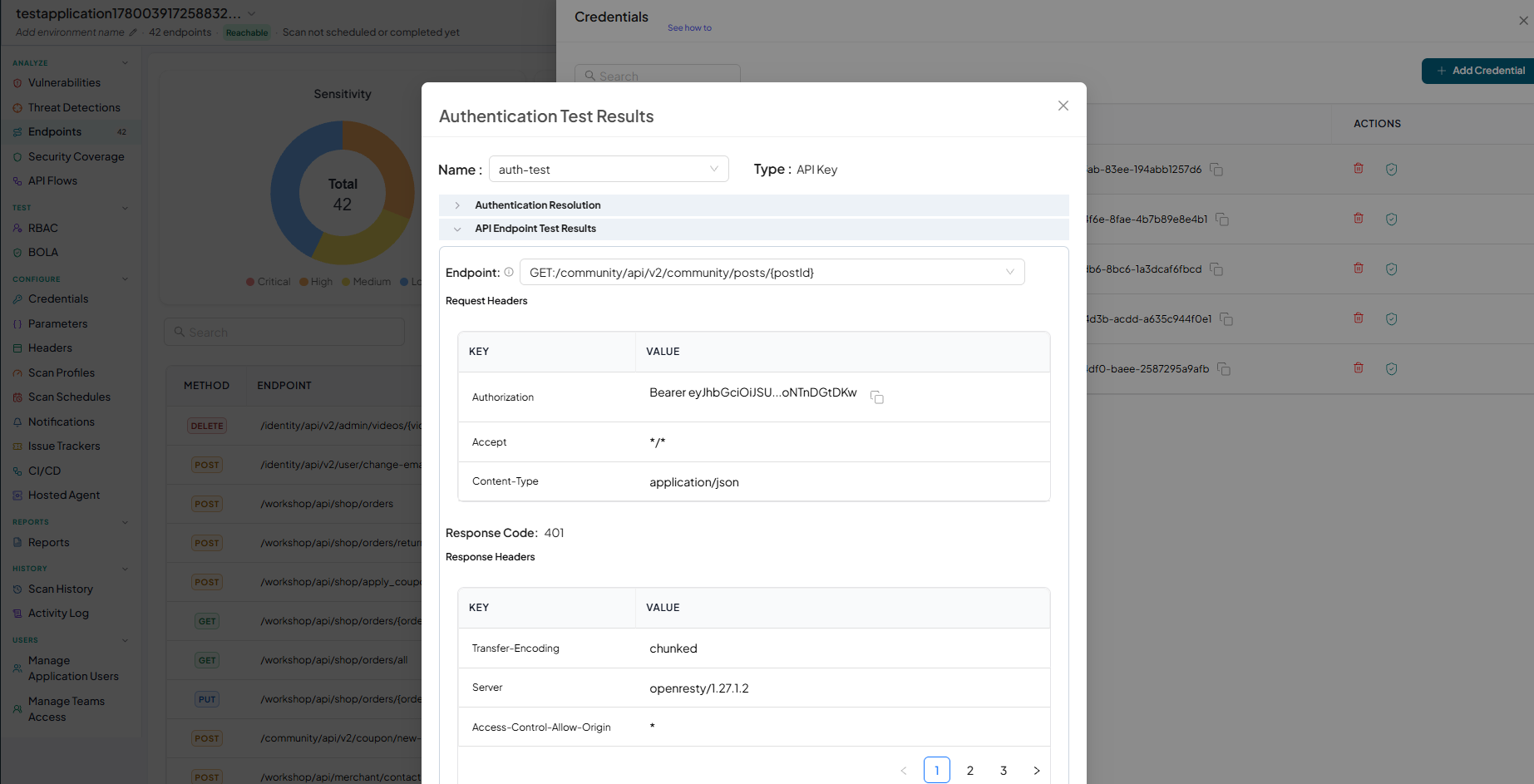
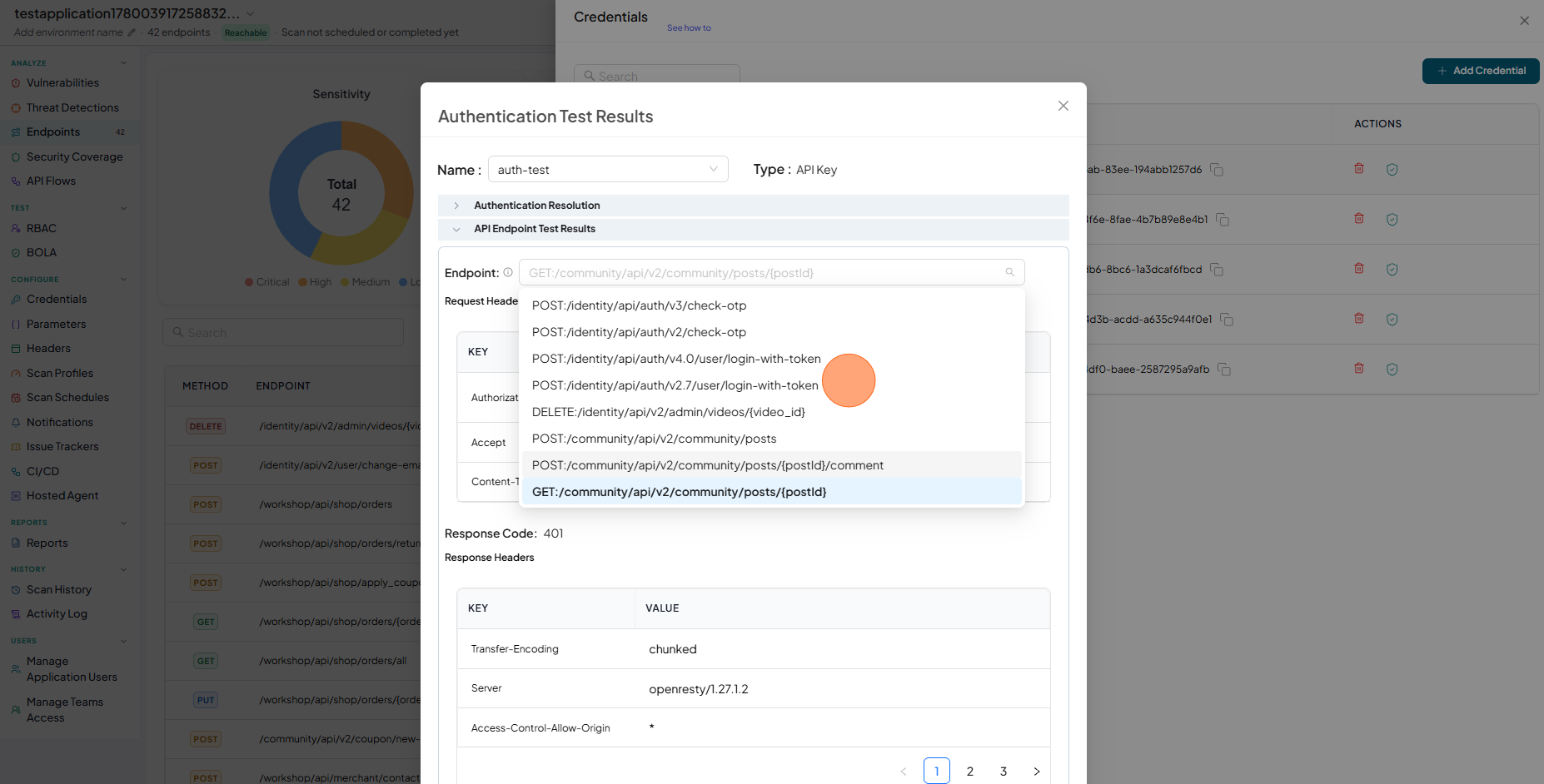
- Select any other Endpoint from the dropdown
- Click on Test Authentication
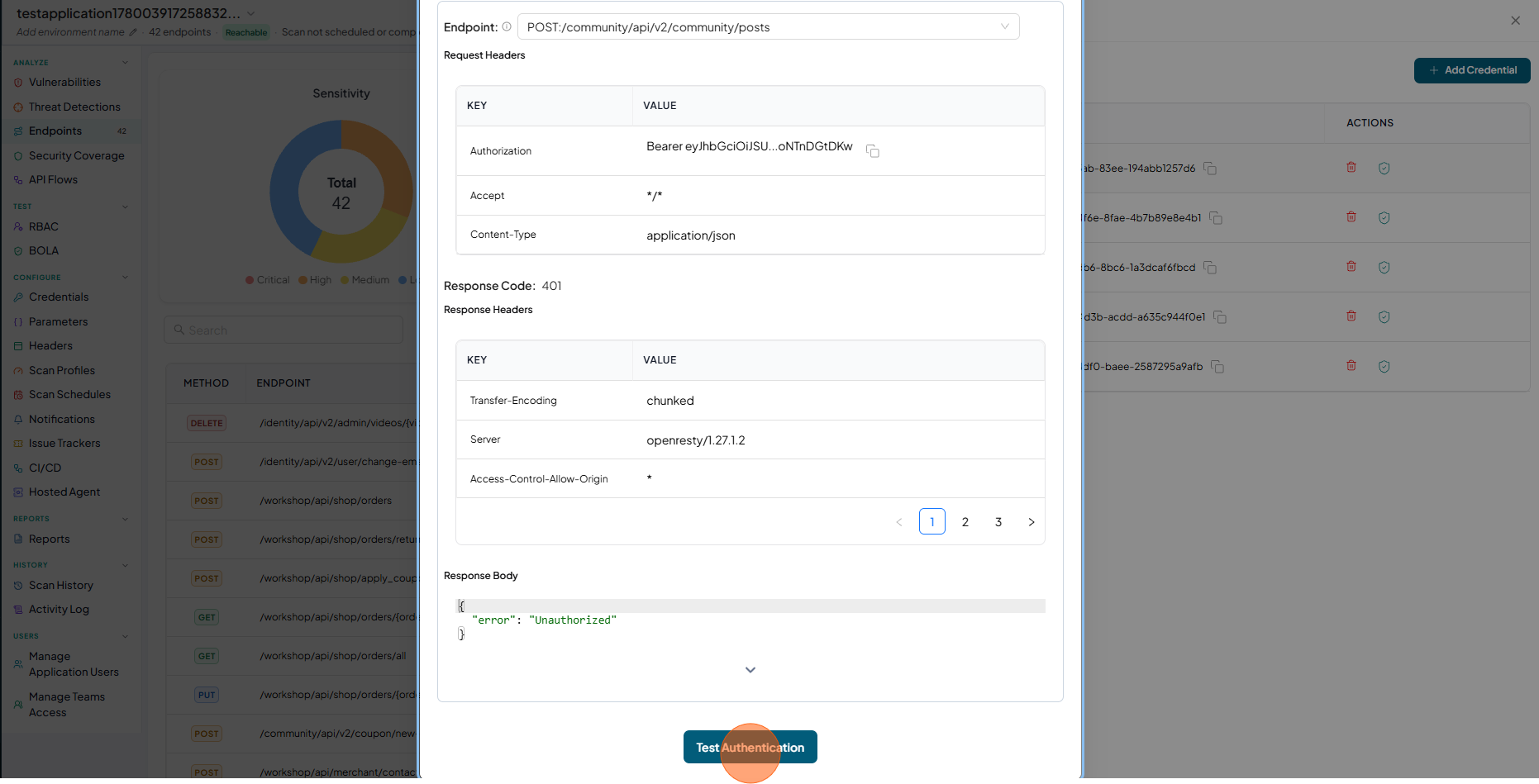
- Authentication Test Results - API Endpoint Test Results
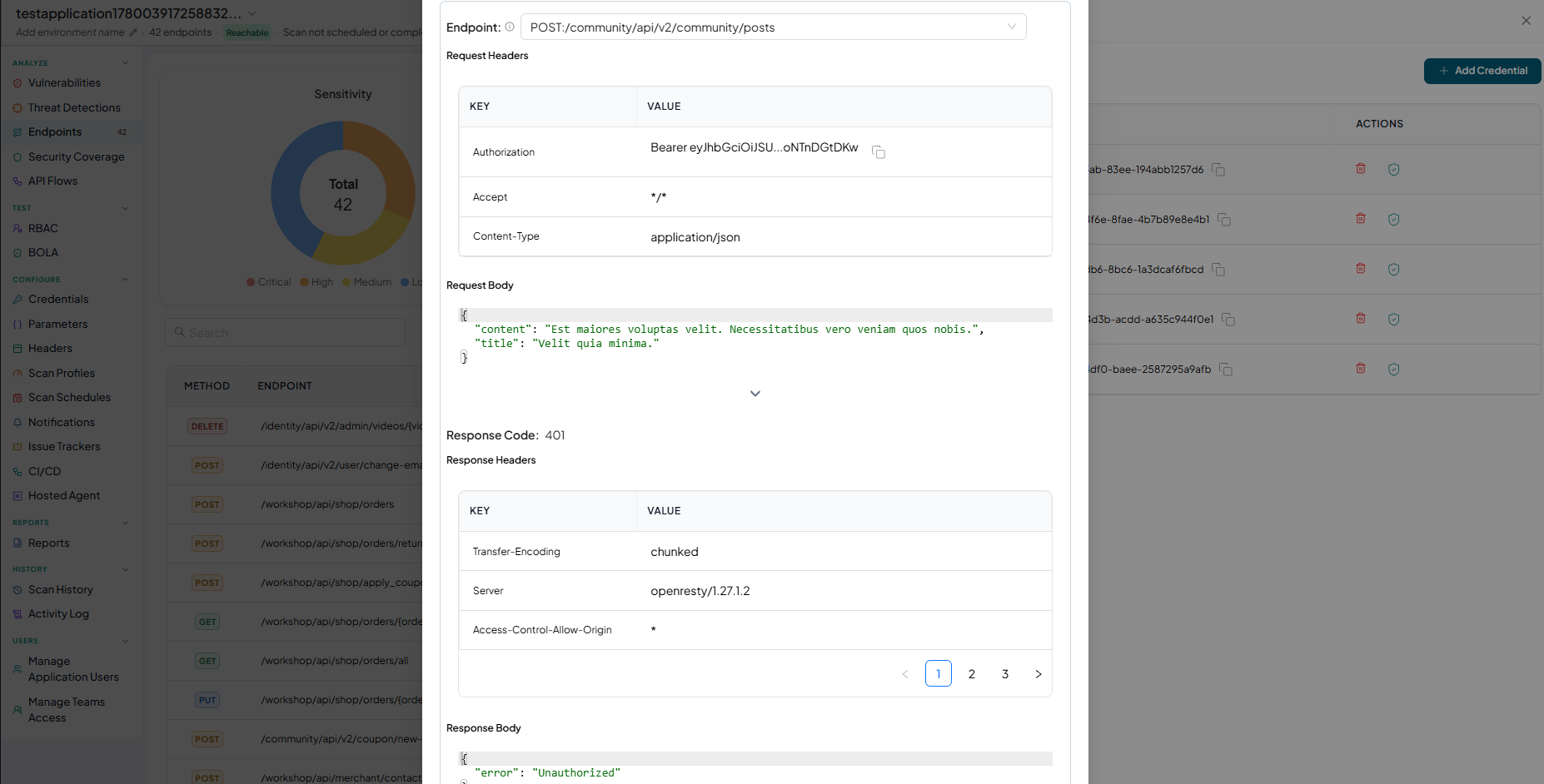
If results show 403, try to change the endpoint and re-test
Edit authentication
-
Click on Credentials
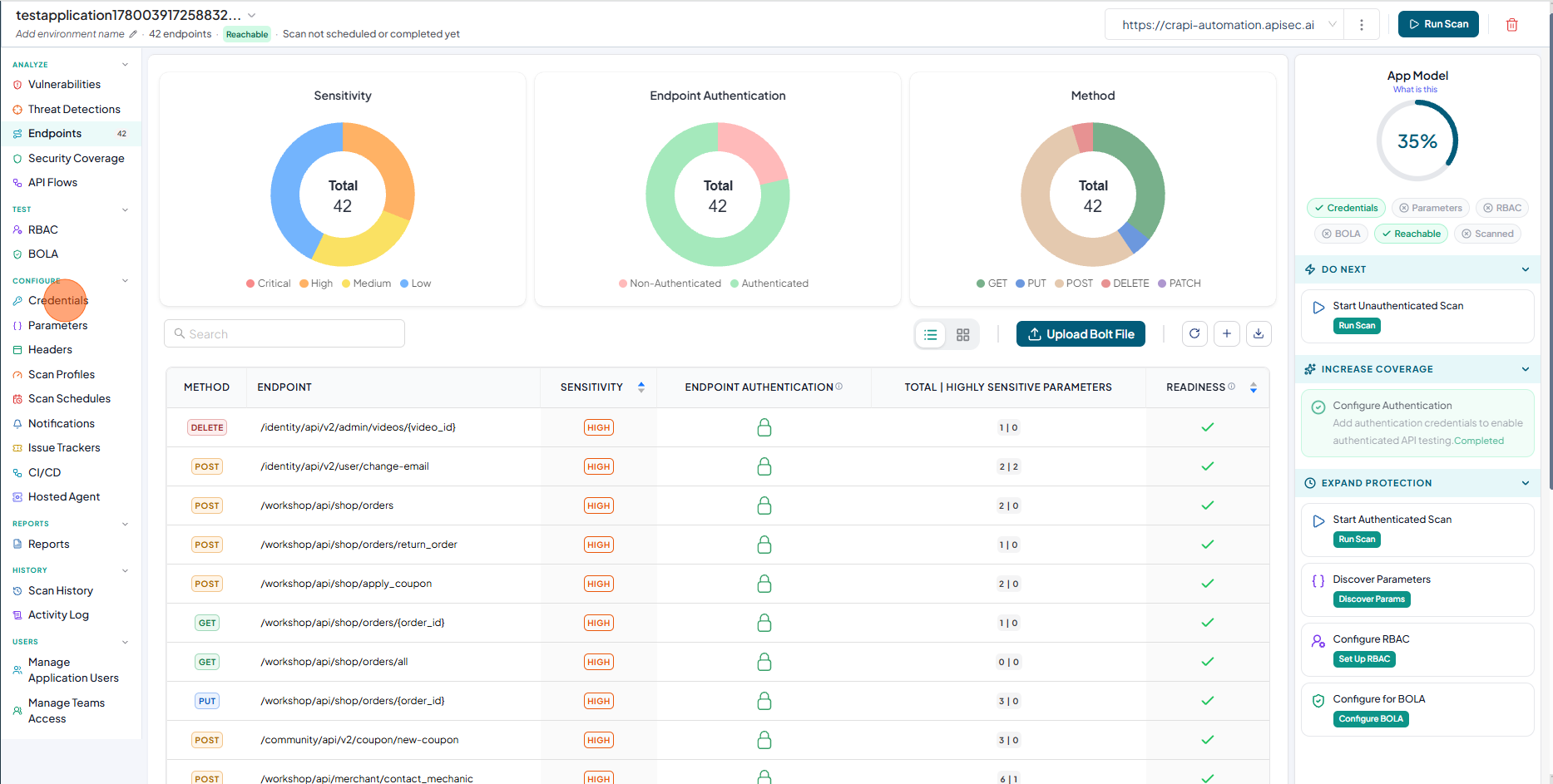
-
Click on required authentication from the list
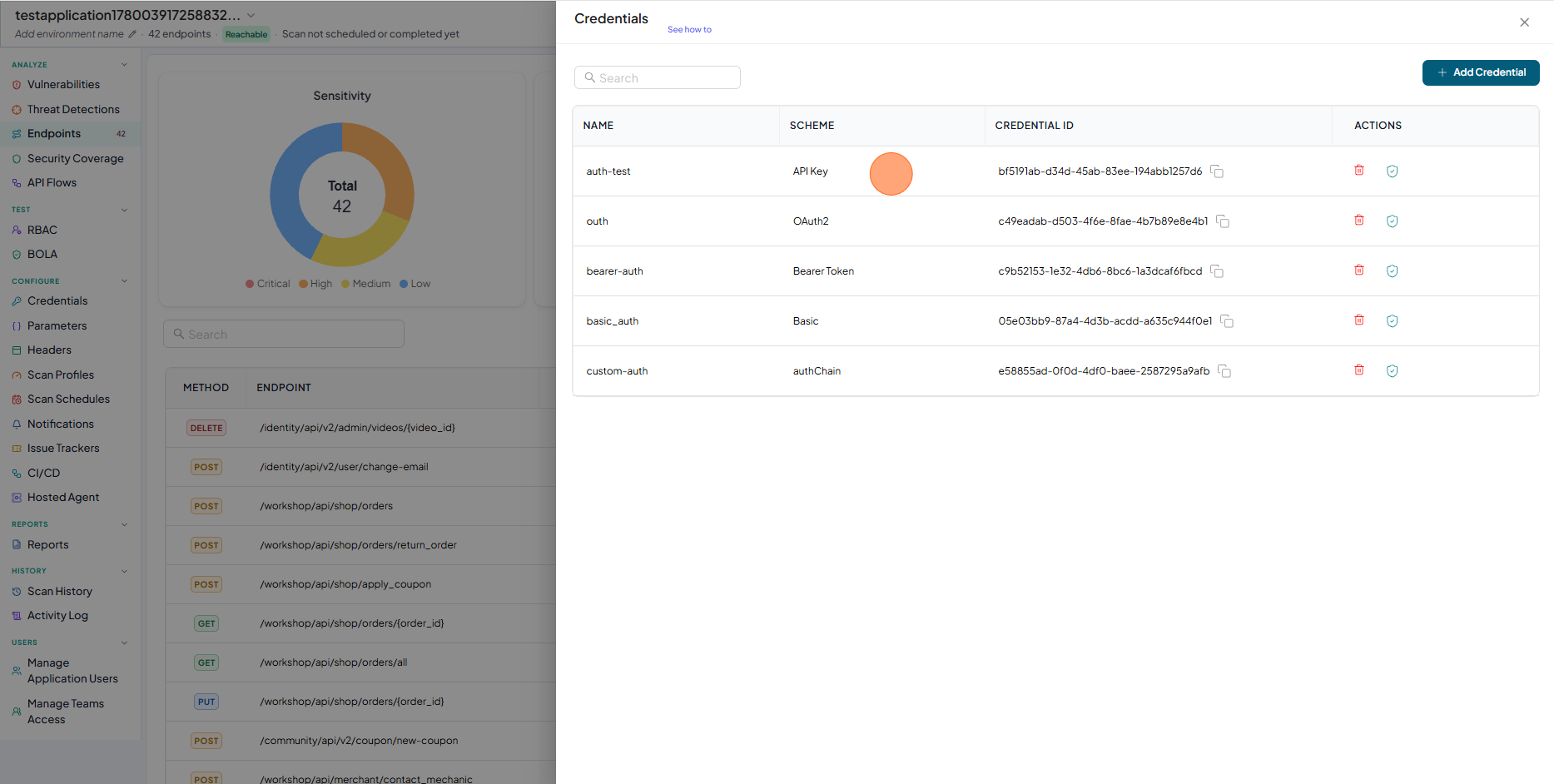
-
Update the required fields and click on Update and Test Authentication
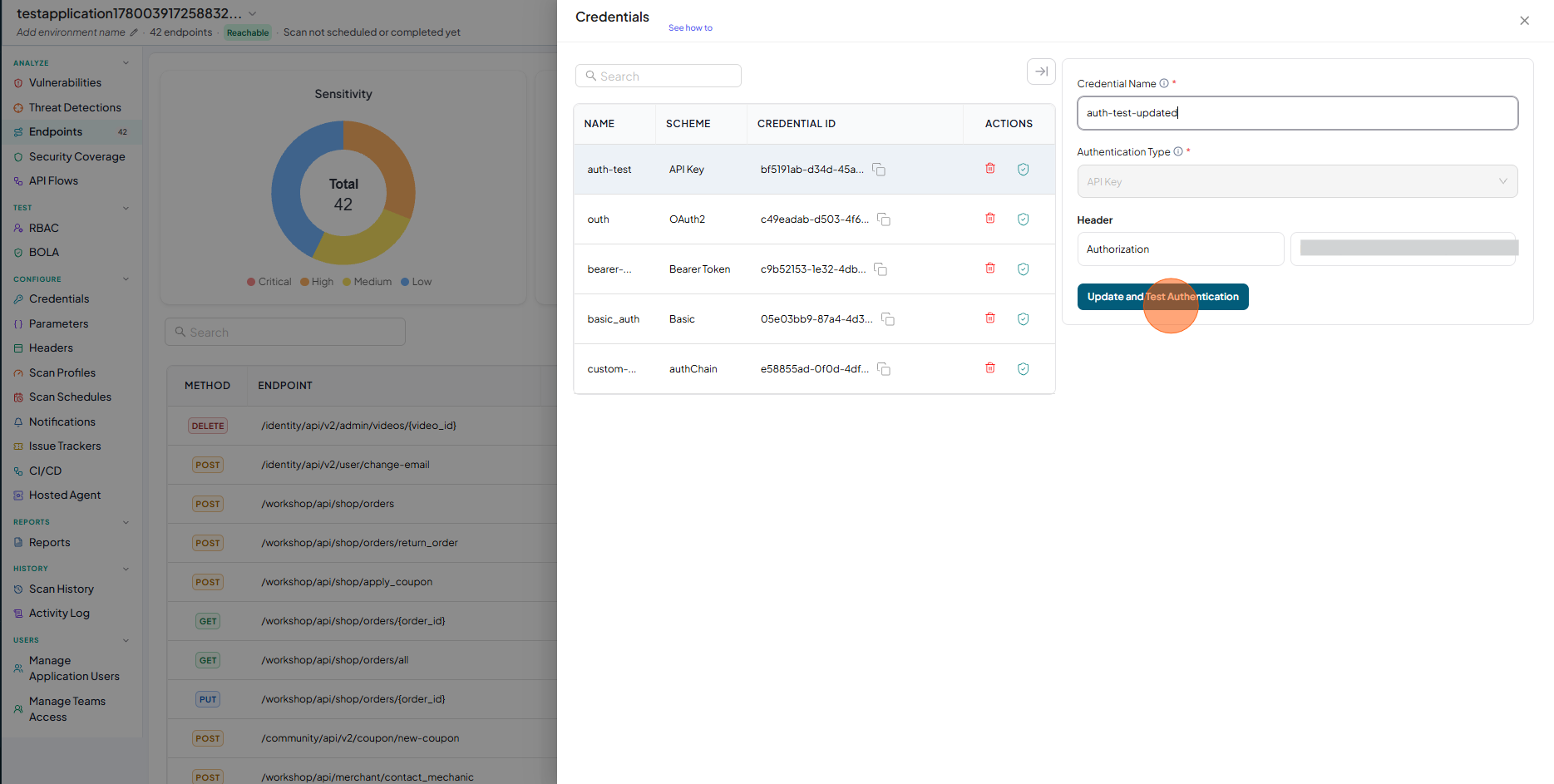
Users with View permissions cannot edit authentication in shared application
Delete authentication
-
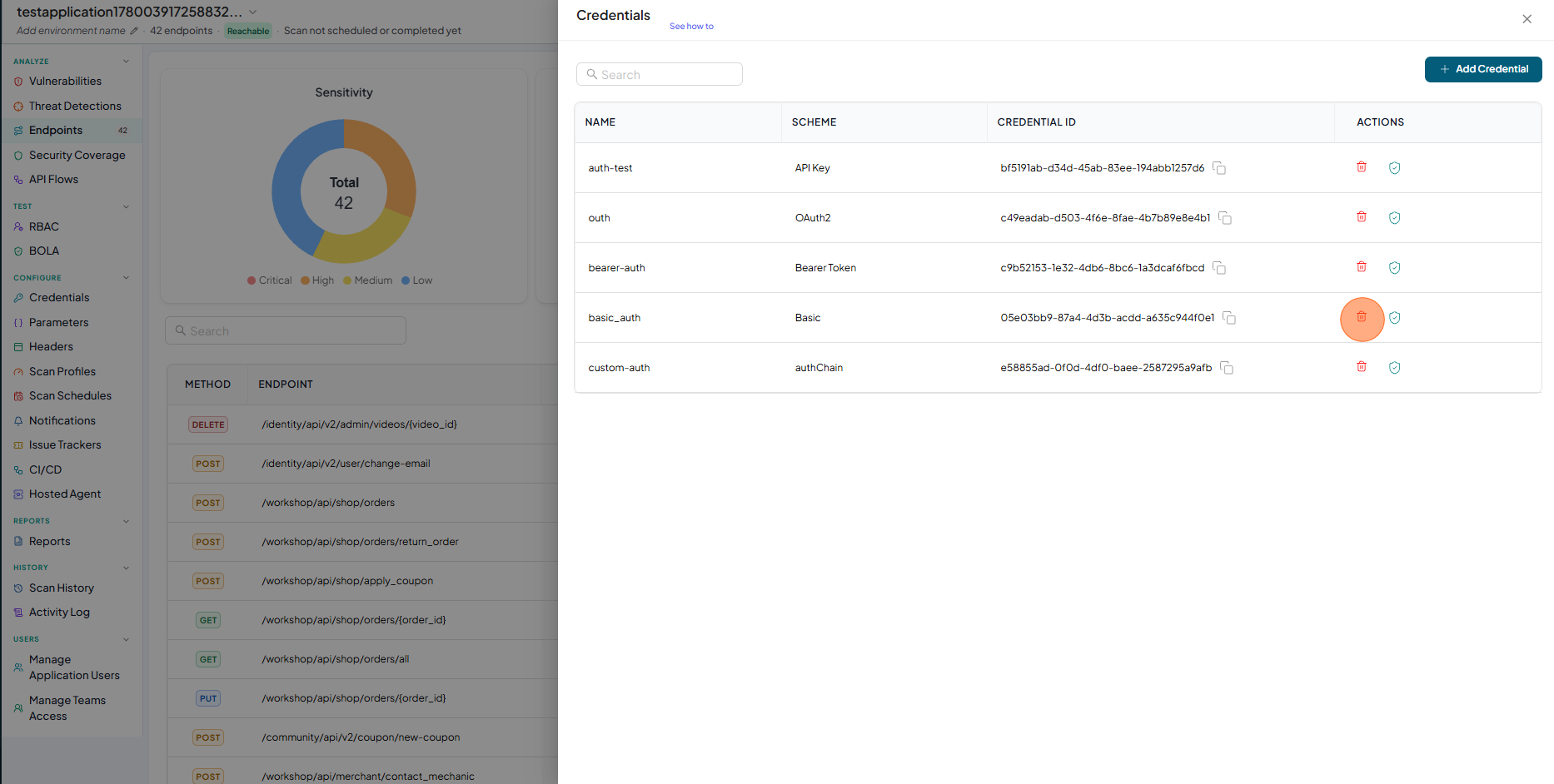
Click on Credentials
-
Click on Delete icon next to the Authentication.
-
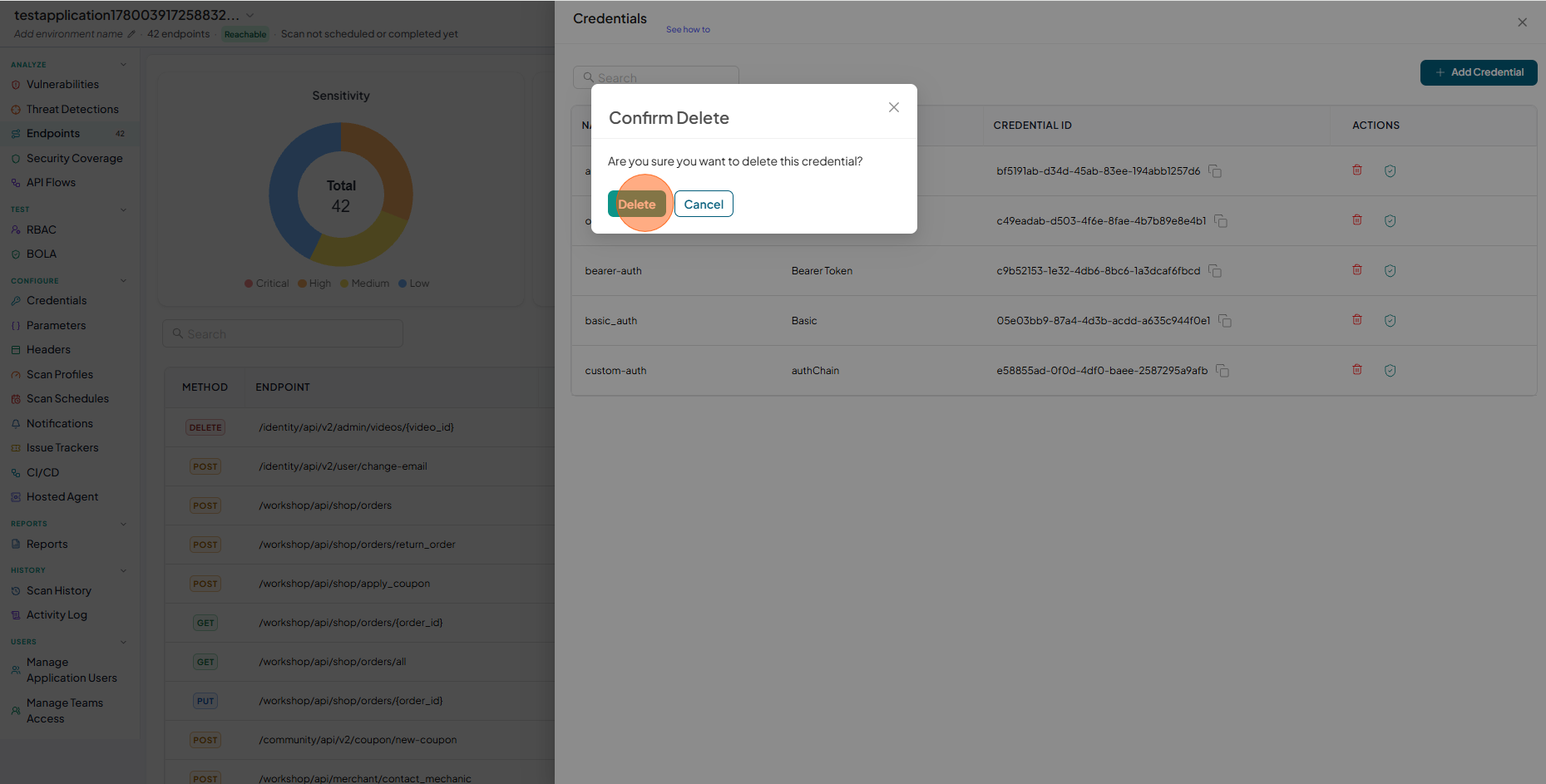
Confirm Delete.
-
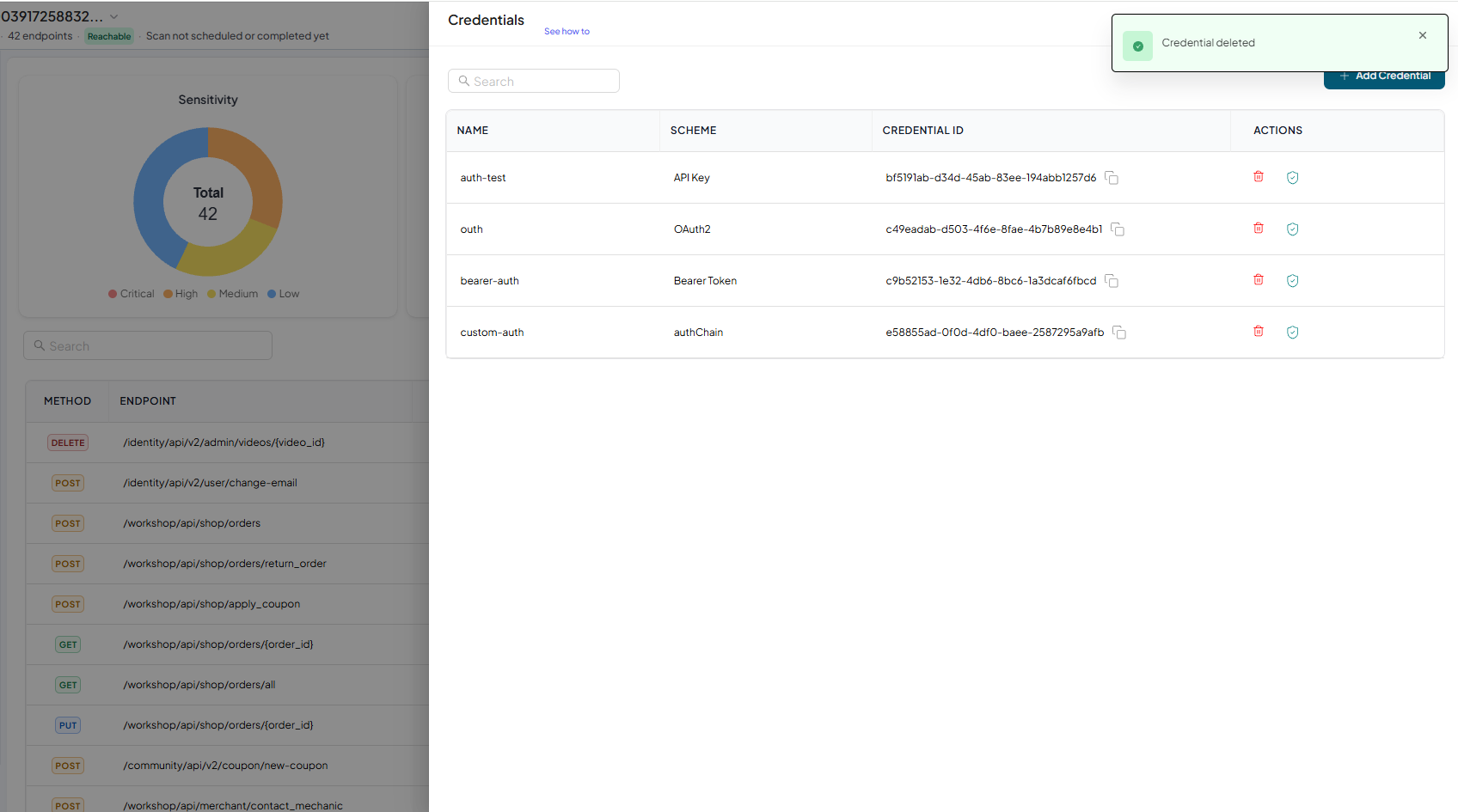
Authentication deleted.
 note
Users with View permissions cannot delete authentication in shared application