How To Onboard An Application Using Azure API Gateway
Prerequisites
Create an App Registration in Azure Active Directory (AAD)
-
Log in to Azure Portal.
-
Follow the steps below to obtain the Client ID and Tenant ID.
-
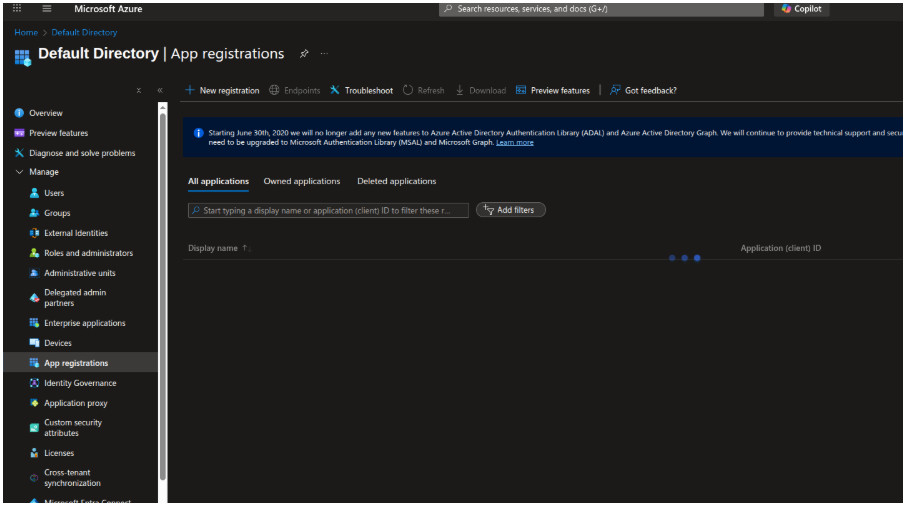
Click on New registration in App registrations
-
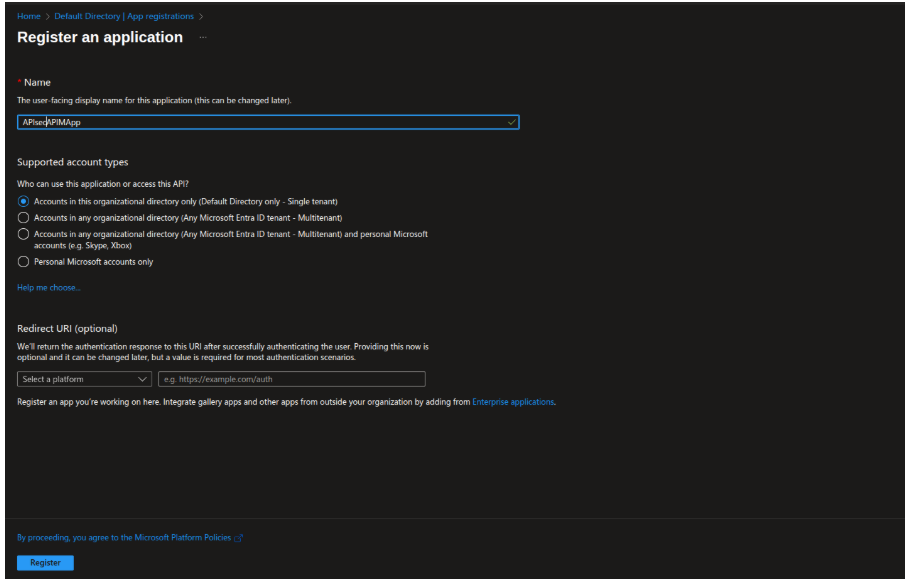
Enter the name of the application, choose supported account types, and (optionally) set a Redirect URI and Click Register
-
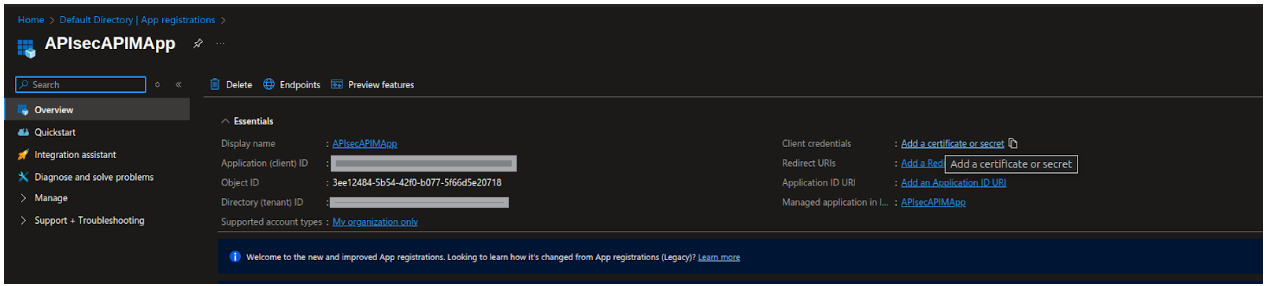
Copy the Application (client) ID and Directory (tenant) ID.
-
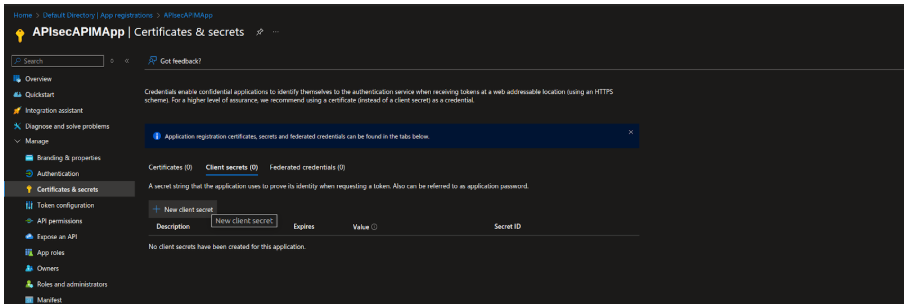
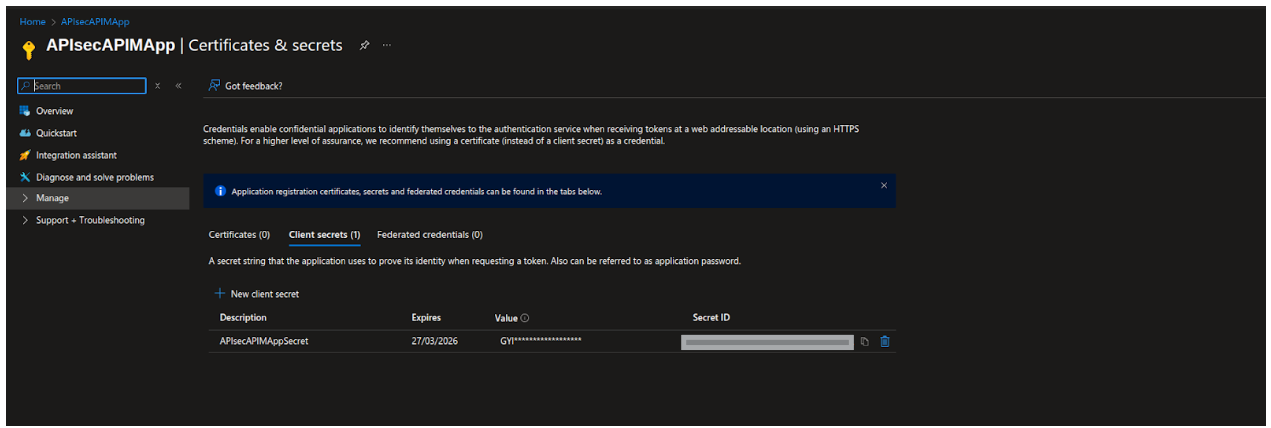
Follow the steps below to obtain Client secret i.e Key,
-
Visit Certificates & secrets and click on New client secret and then copy the generated values
-
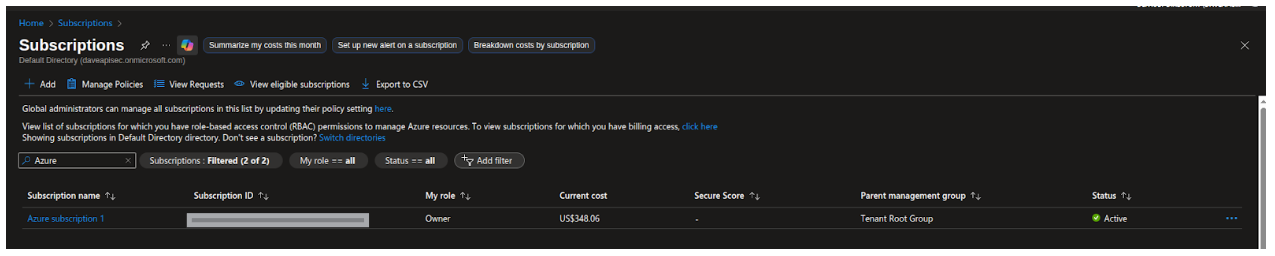
To get Subscription Id, navigate to Subscriptions and copy Subscription ID
-
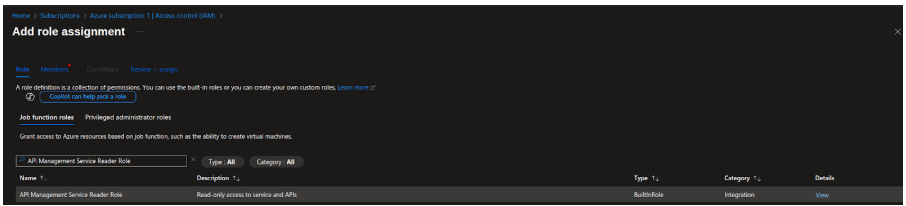
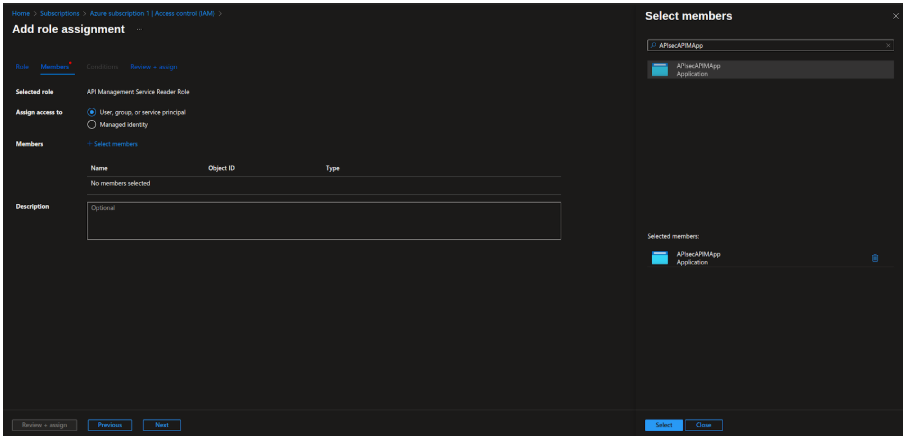
Assign the API Management Service Reader role to the App Registration on the APIM resource to allow read-only access for fetching OpenAPI specifications.
- Select Add role assignment in Select Access control (IAM)
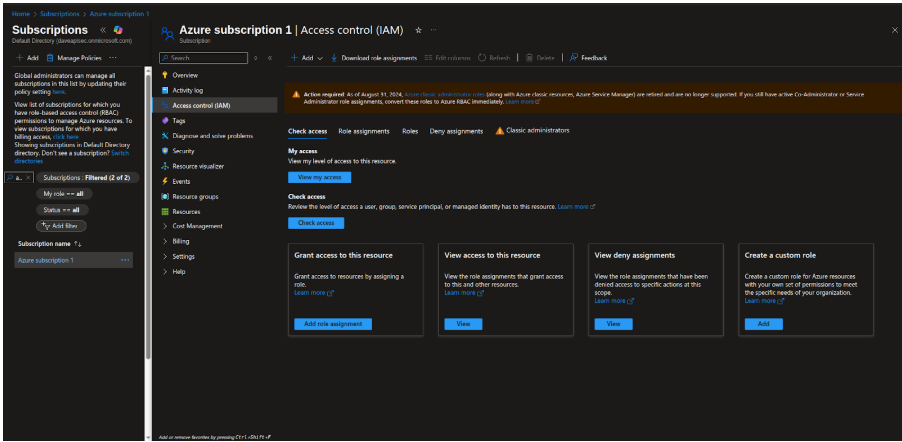
- Select the role 'API Management Service Reader'
- Assign the role to the created App Registration (Service Principal) and Click on Next
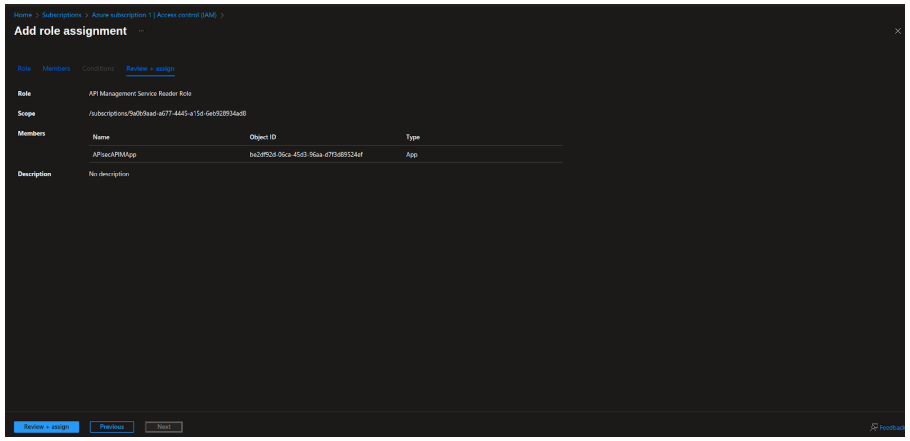
- Click Review&Assign
Azure Integration with APIsec Product
Start Adding a New Application
-
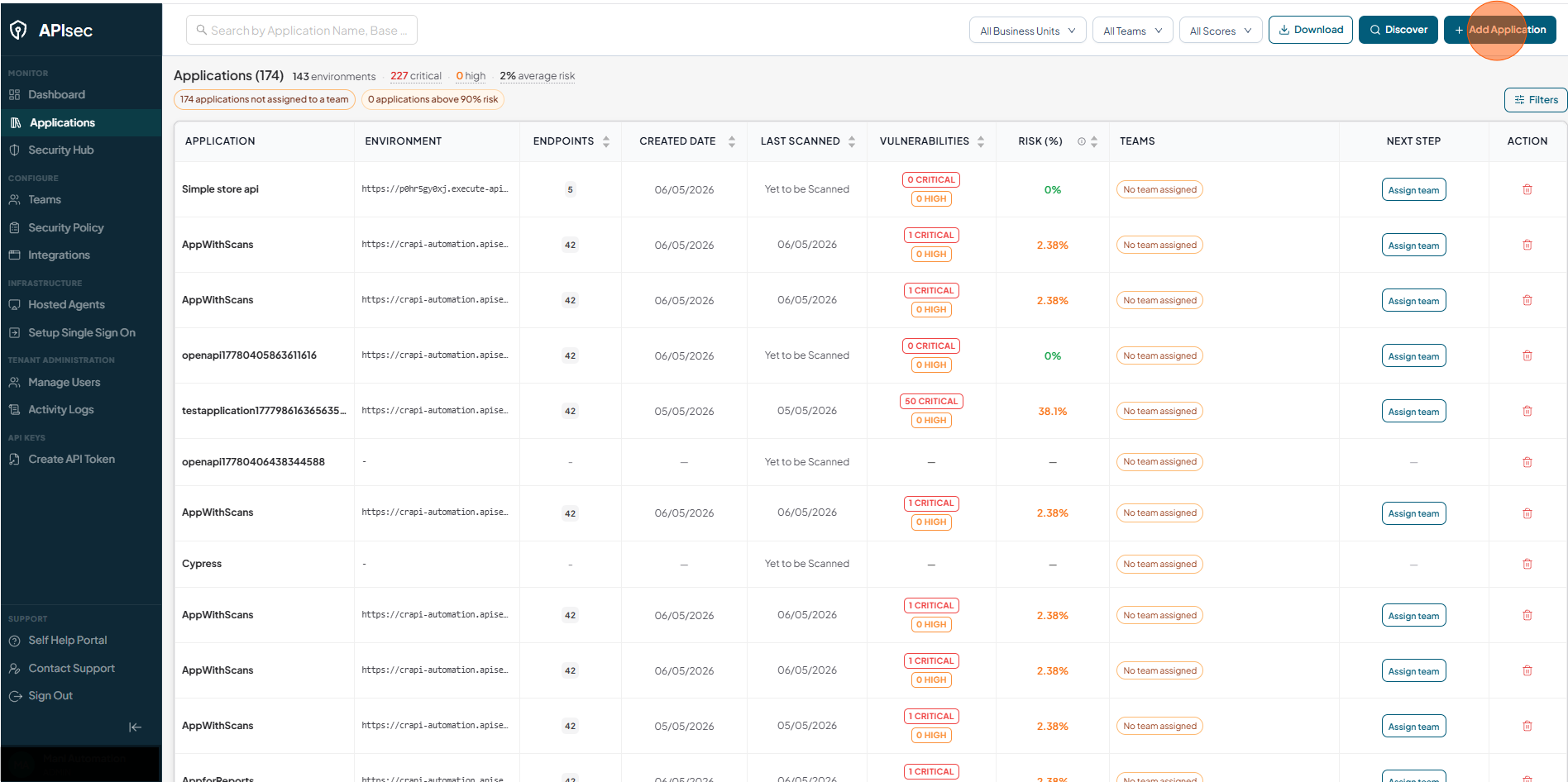
Open your browser and visit: https://<your-tenant>.apisecapps.com
-
Click on the Add Application.
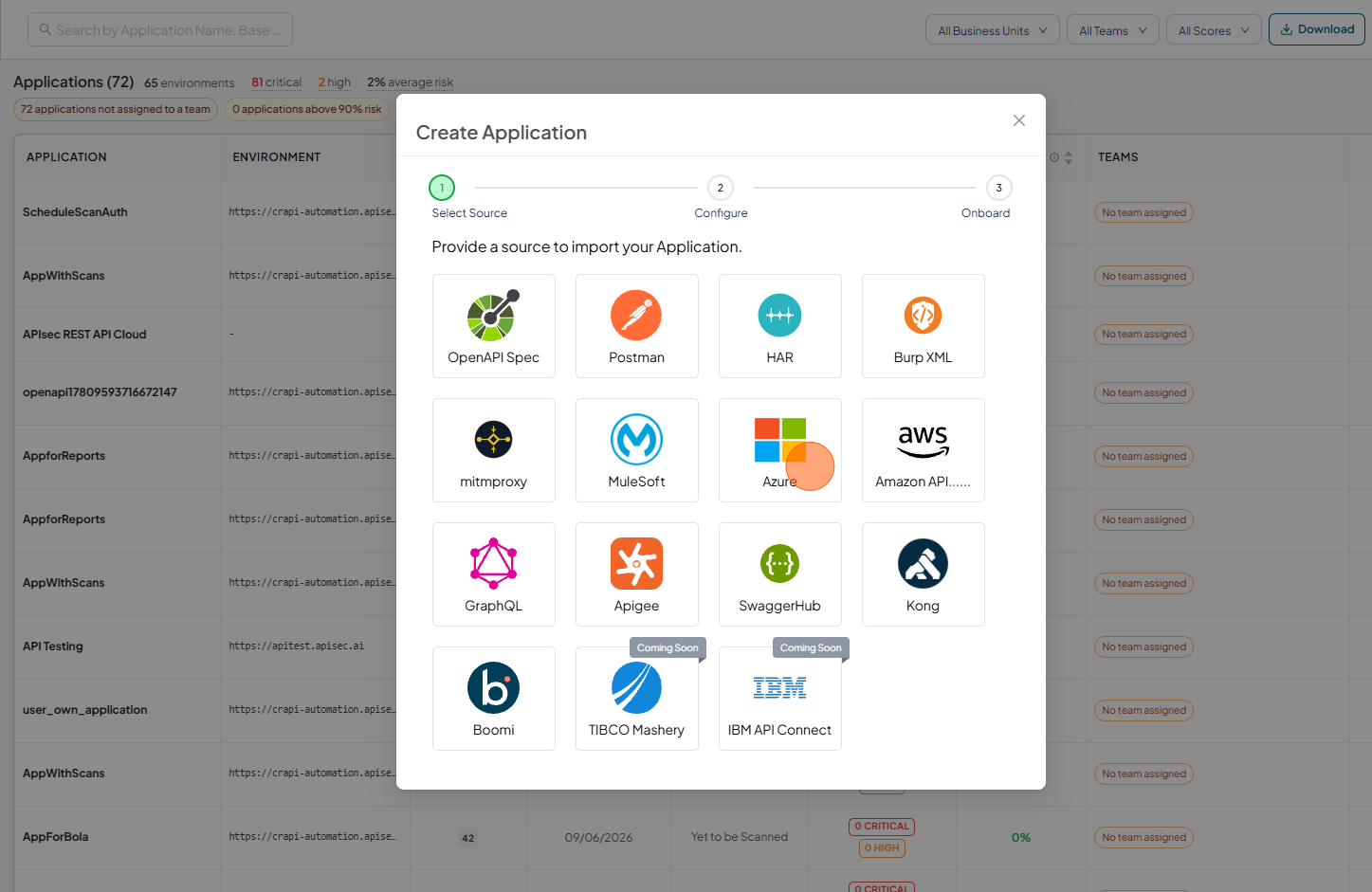
Select Azure API Gateway
-
Choose the "Azure API Gateway" option.
-
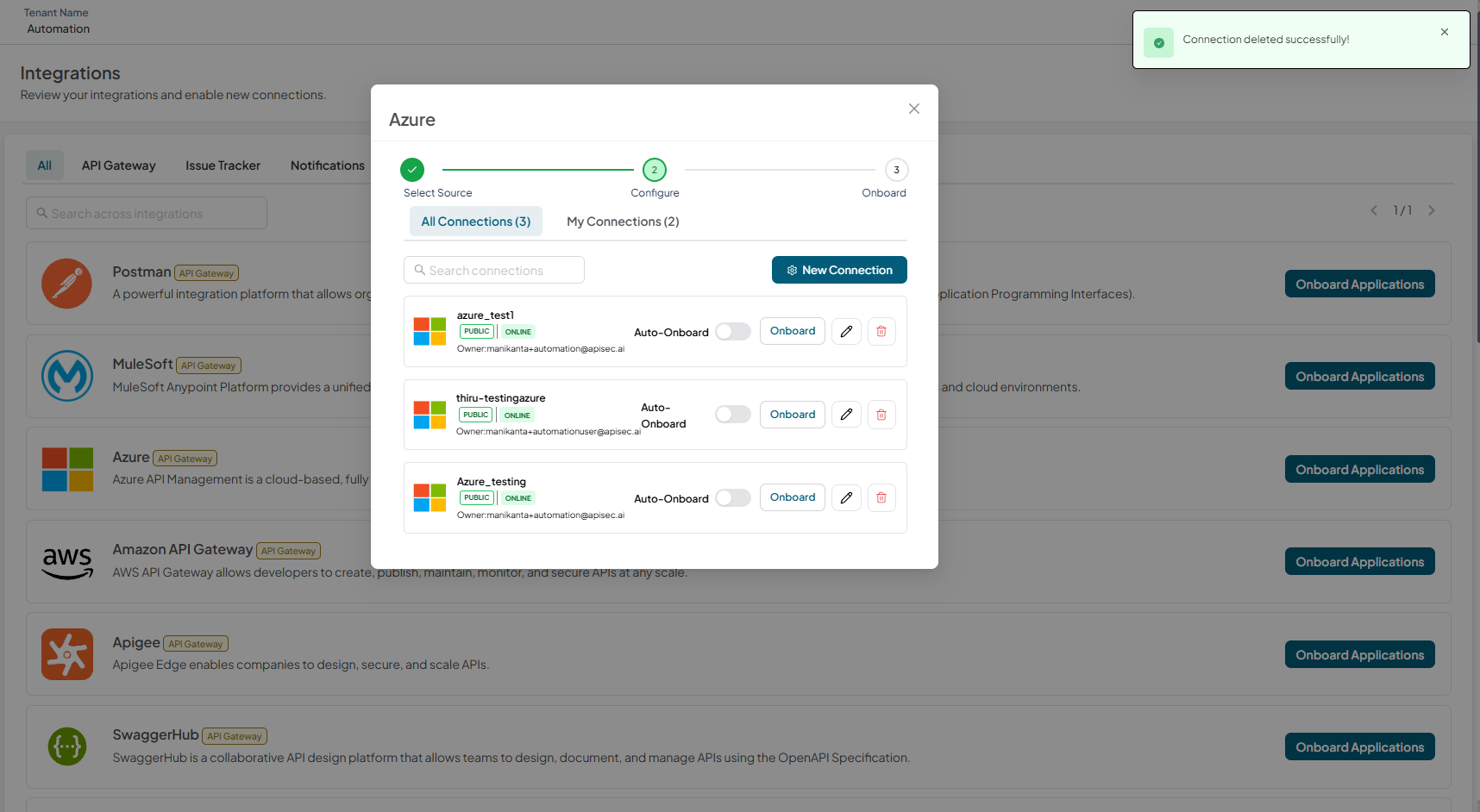
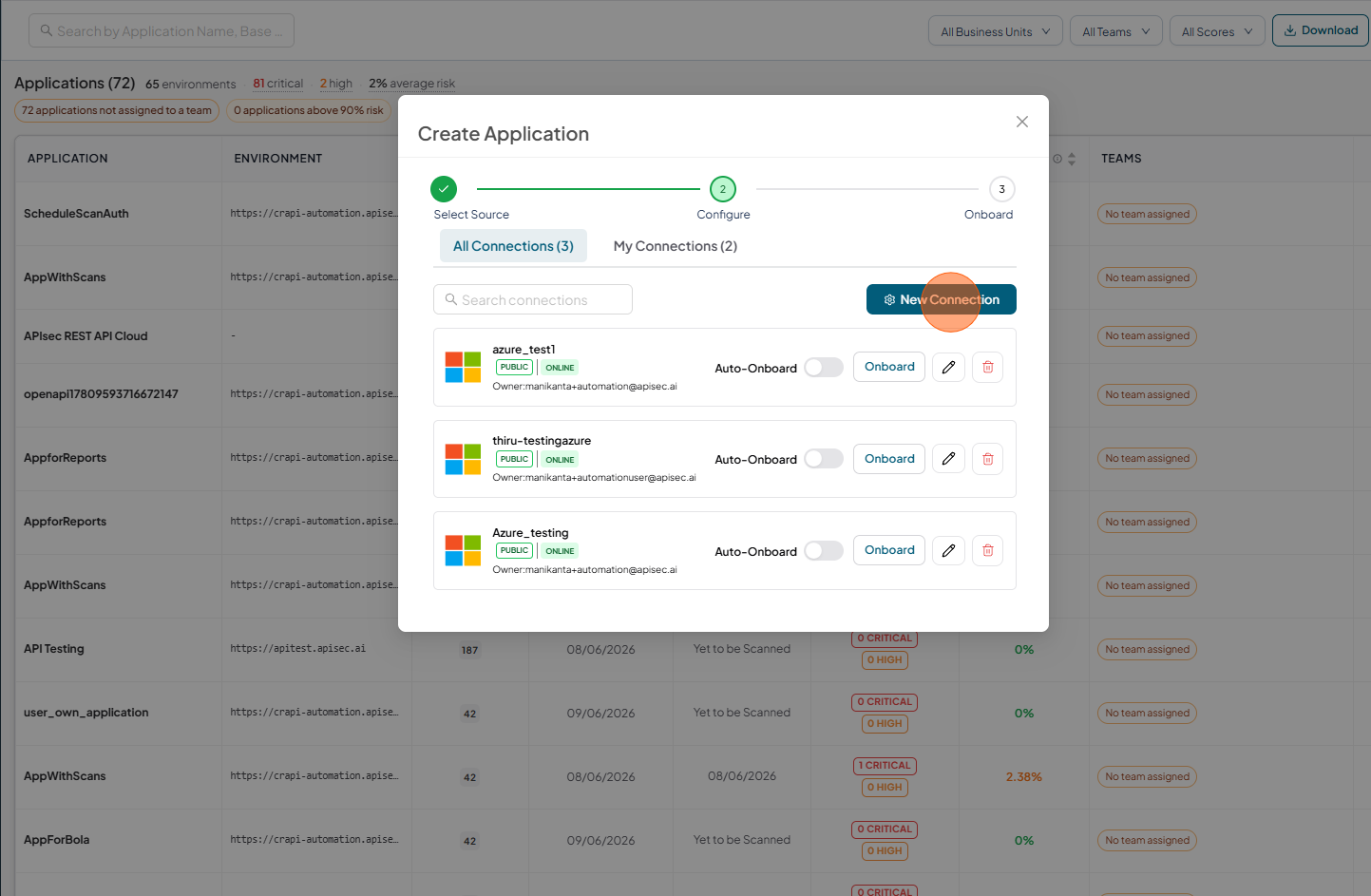
If existing connections are available, they will be displayed in the Connections list. To create a new connection, click New Connection.
-
If no connections exist, a connection form is displayed, allowing you to enter the required details and create a connection.
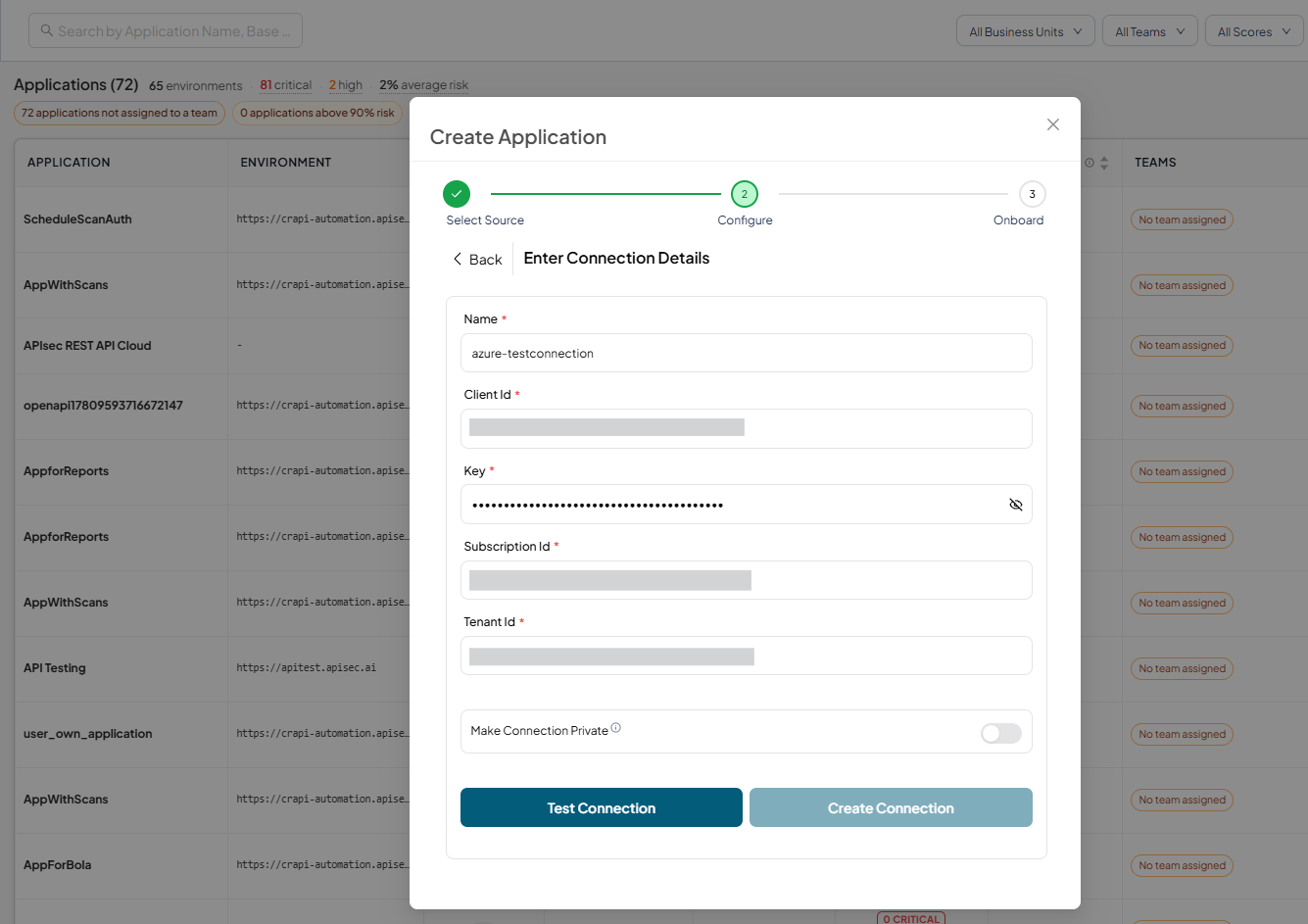
Enter Application Details
-
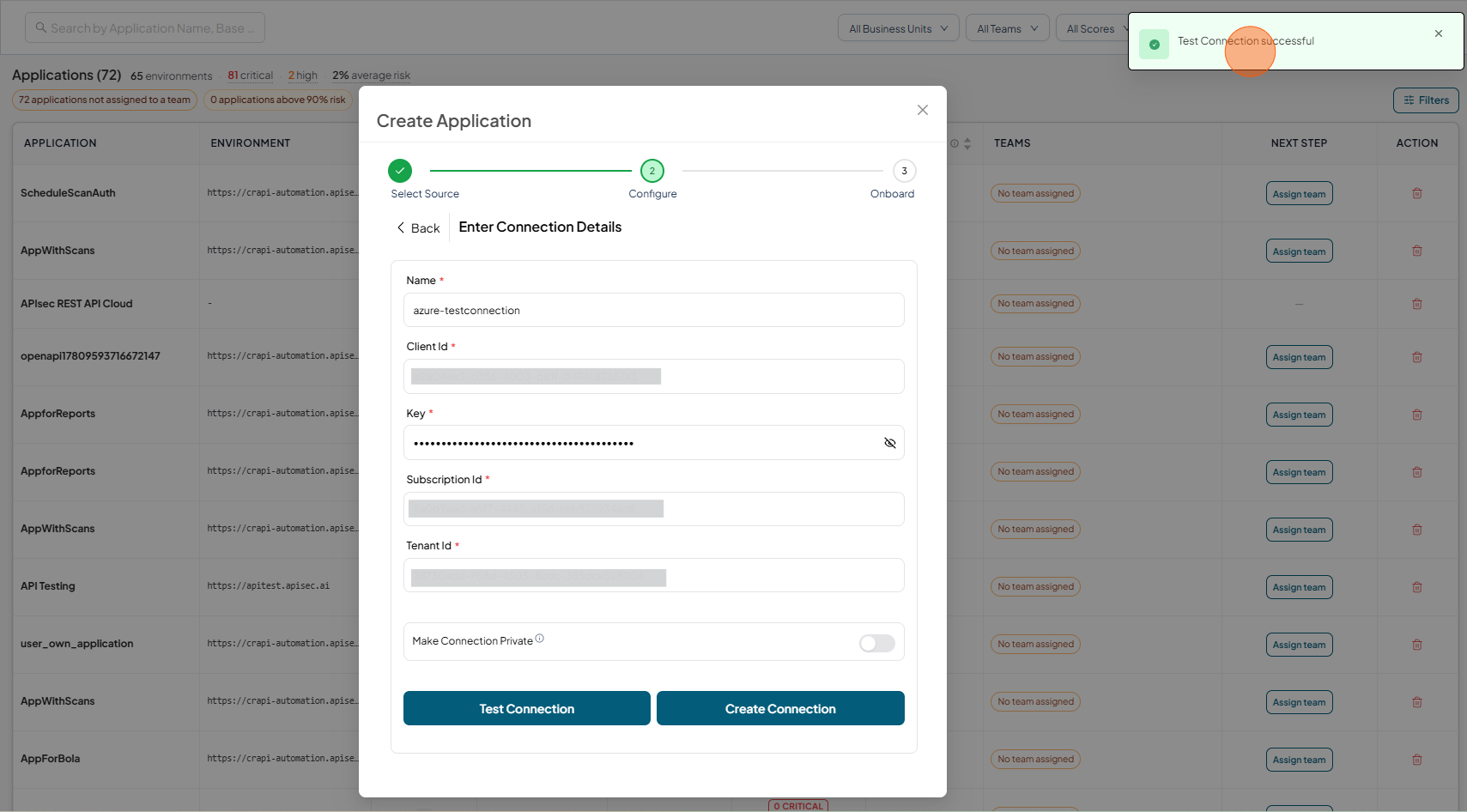
Fill the Form, Name, Key, Subscription Id, Tenant Id
-
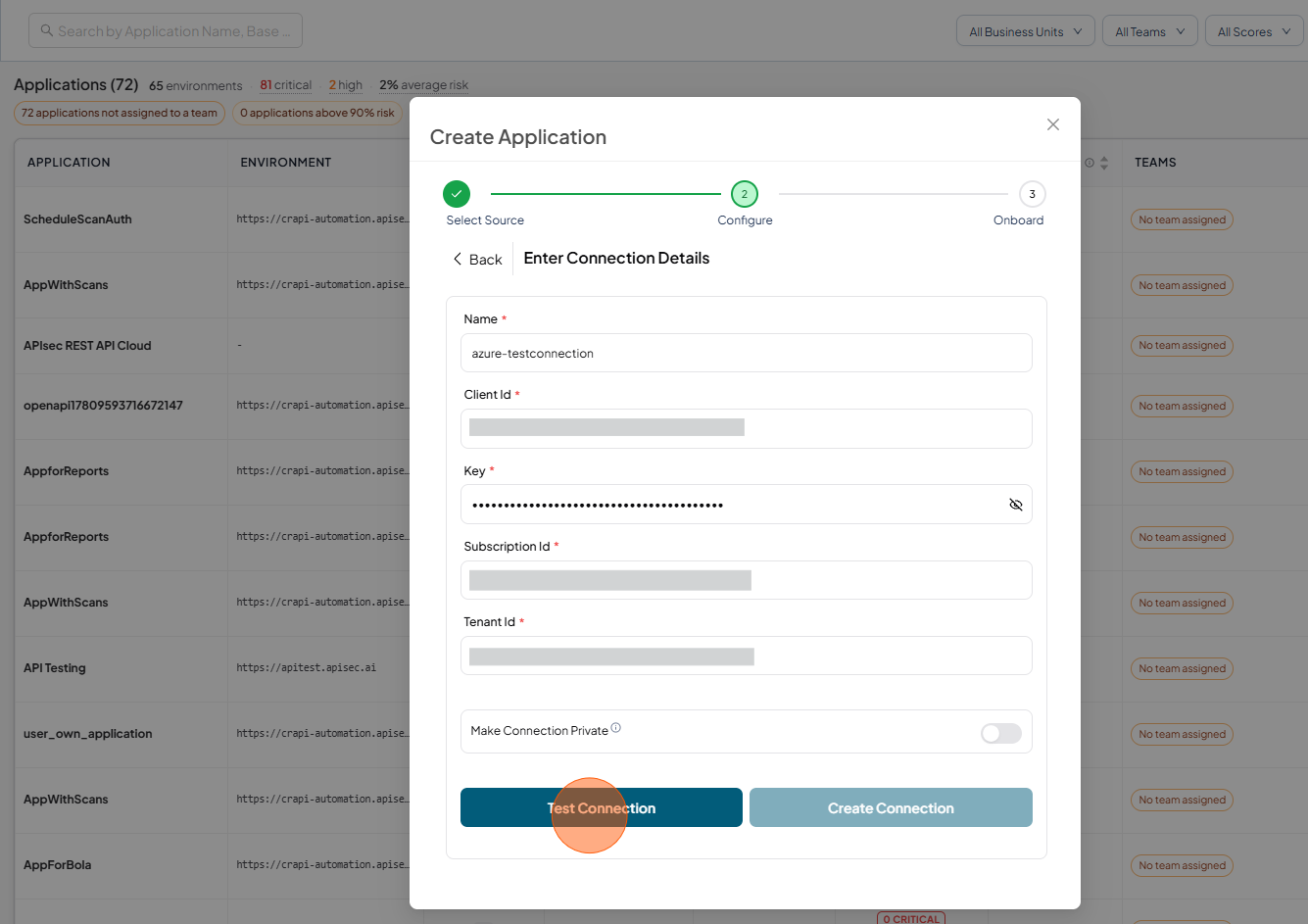
Click Test Connection
-
Test Connection Success
-
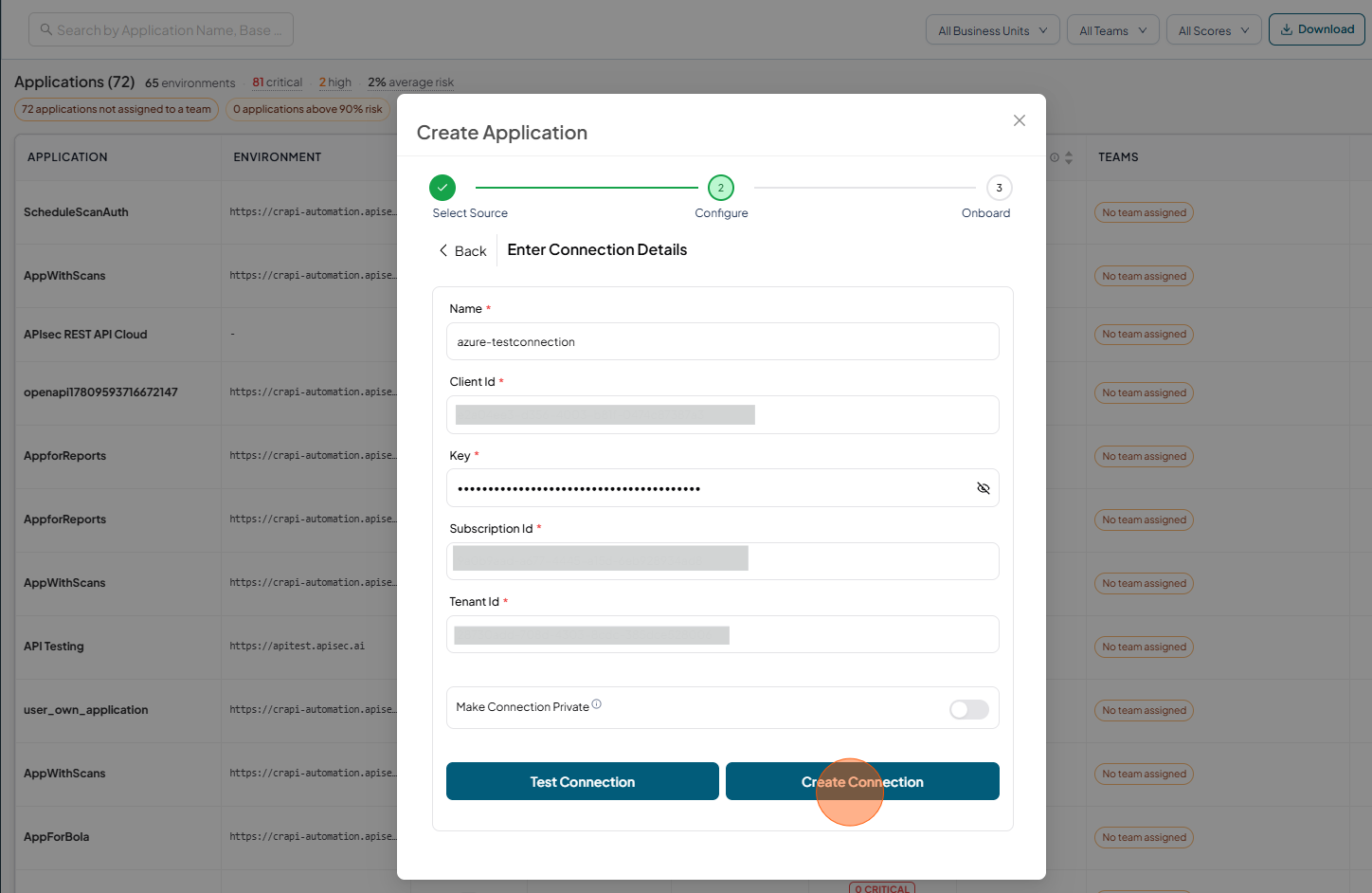
Click Create Connection
-
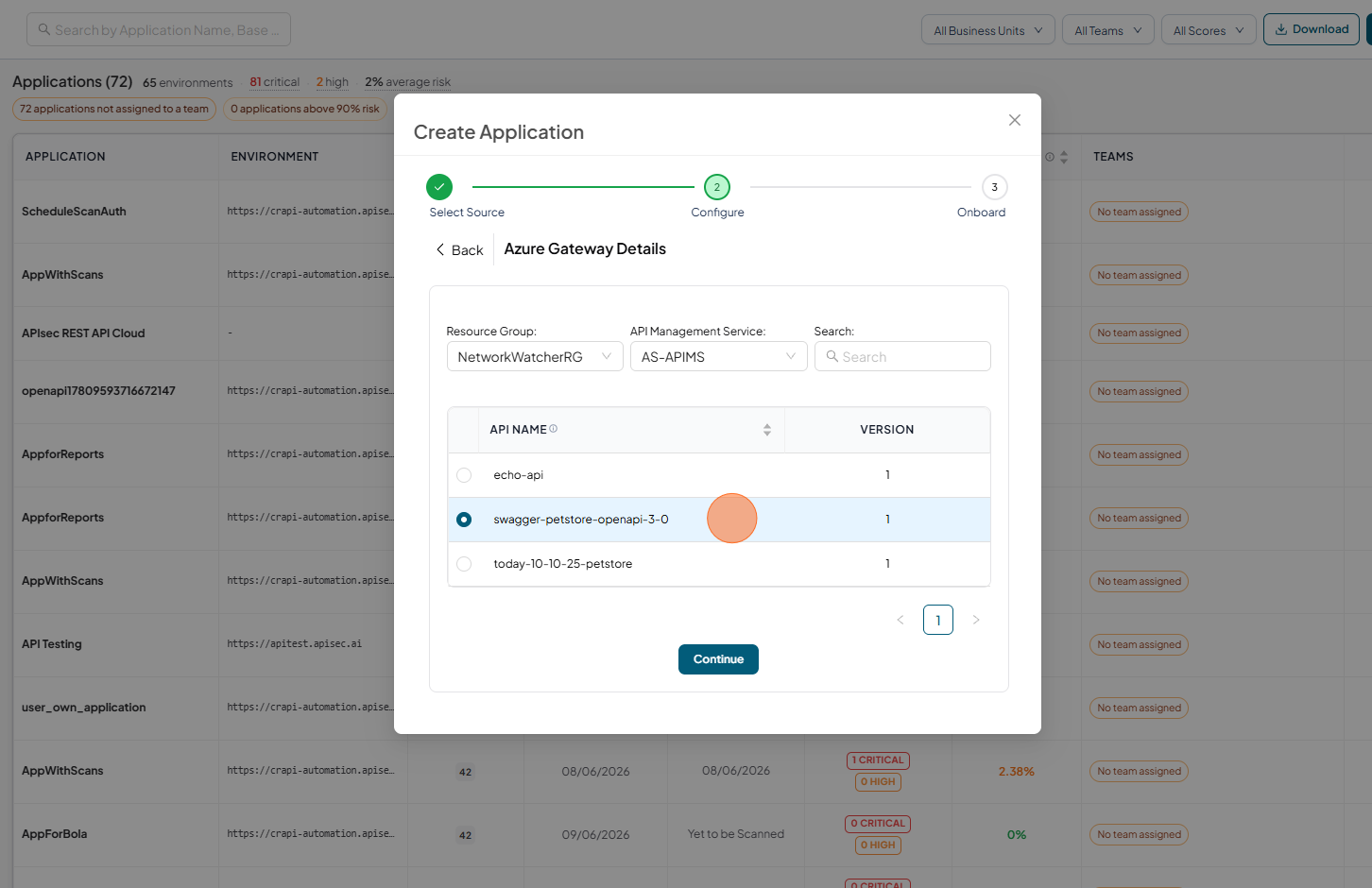
Select the Resource Group and API Management Service then Select require API
-
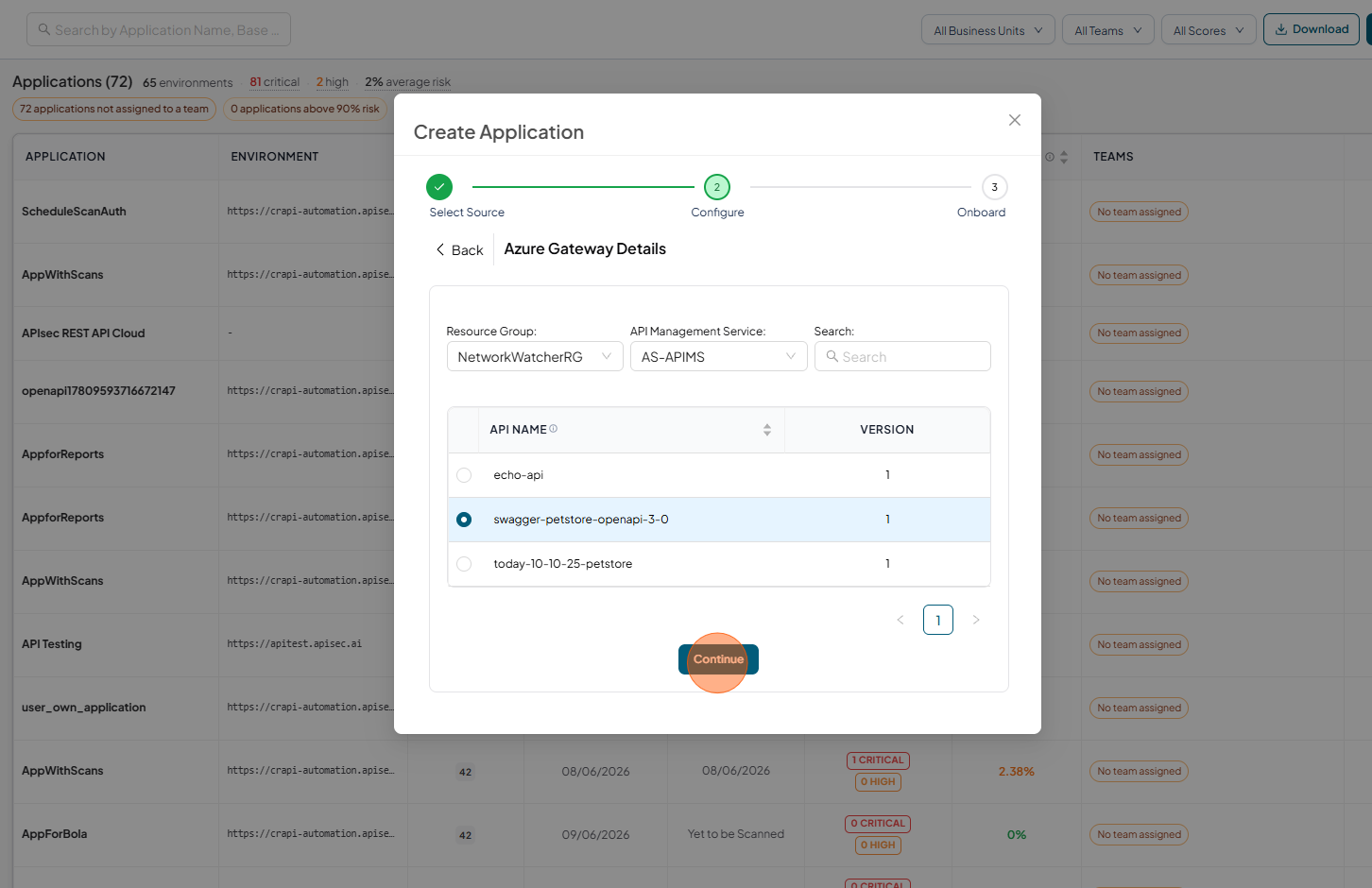
Click Continue
-
Click Onboard
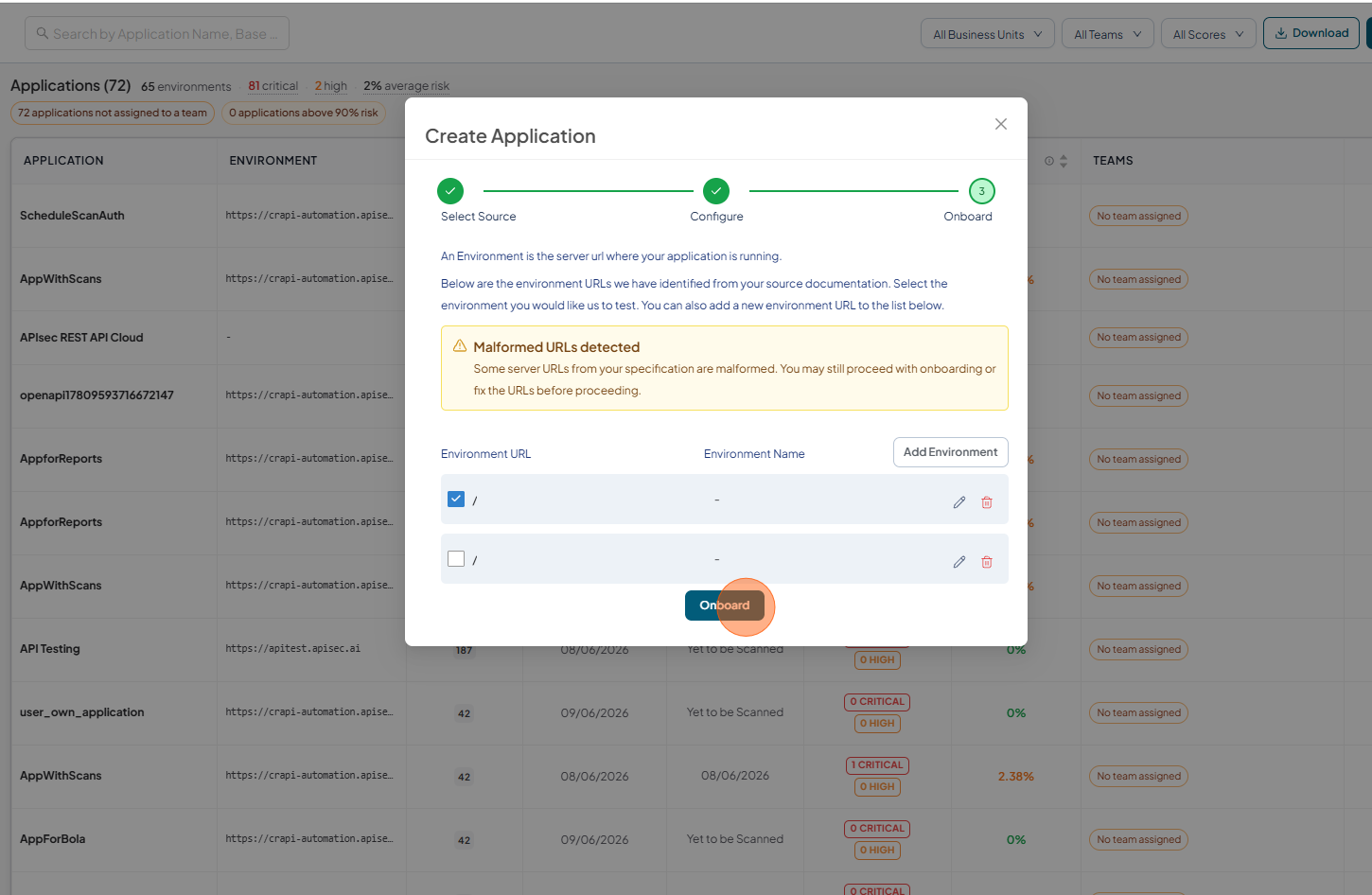
-
Azure Application Dashboard
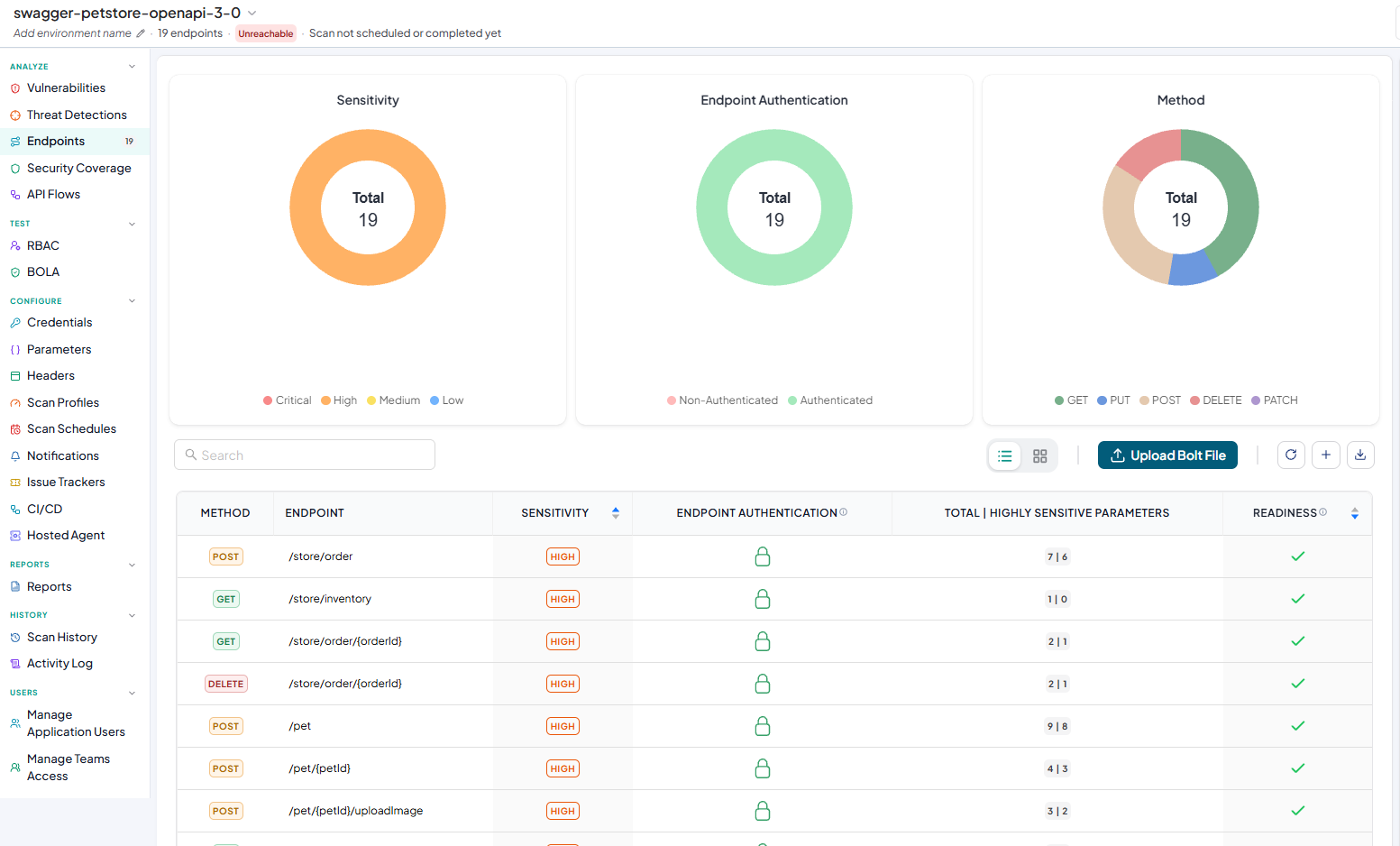
Auto-Onboard
The Auto-Onboard feature streamlines API onboarding by automatically detecting and registering unregistered APIs from Azure Gateway. This ensures that all APIs, including newly published ones, are consistently onboarded and tested for vulnerabilities with minimal manual effort.
Enable Auto-onboard
-
Open your browser and visit: https://<your-tenant>.apisecapps.com
-
Click Integrations tab
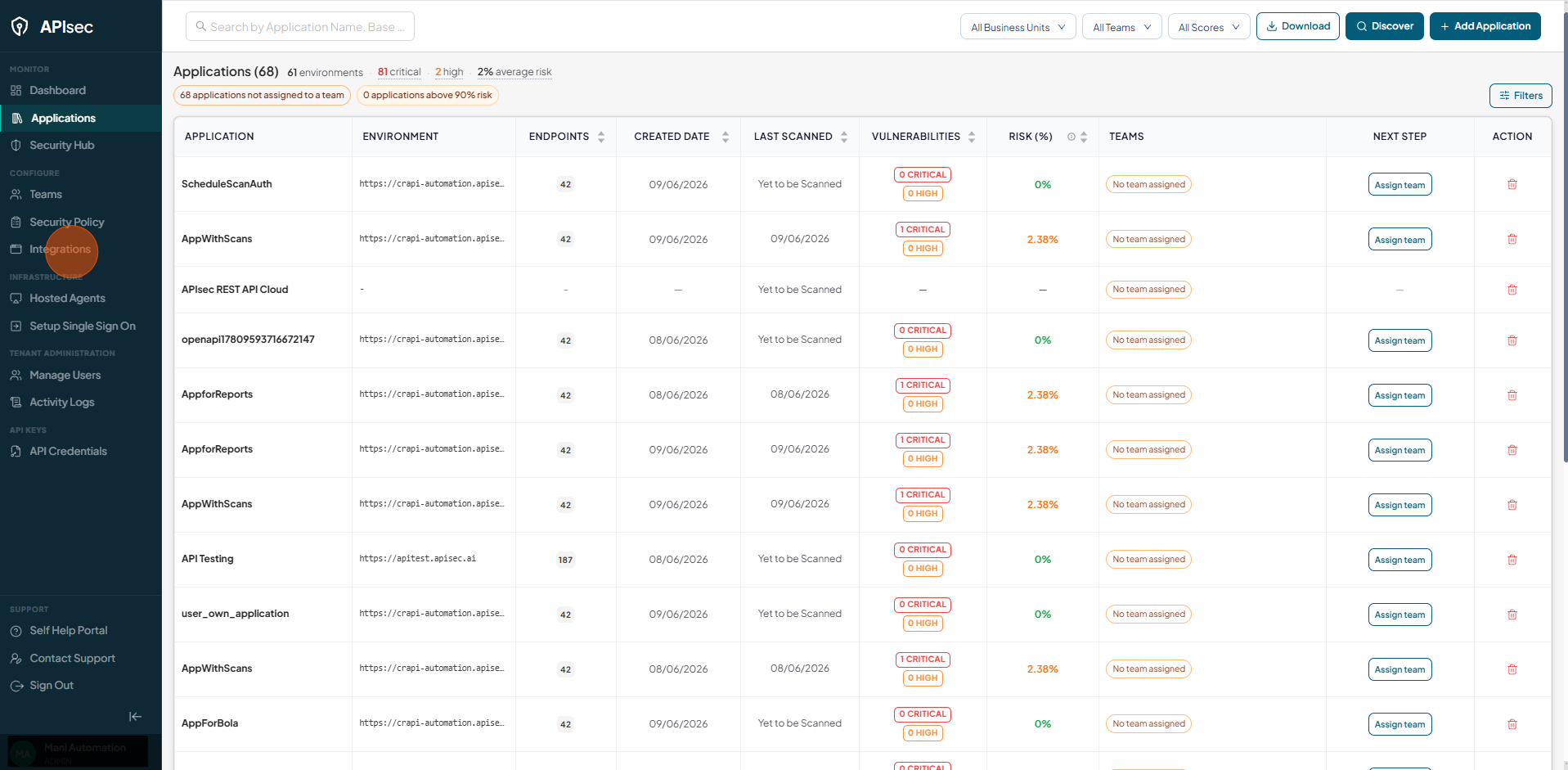
-
Click Onboard Applications adjacent to the Azure
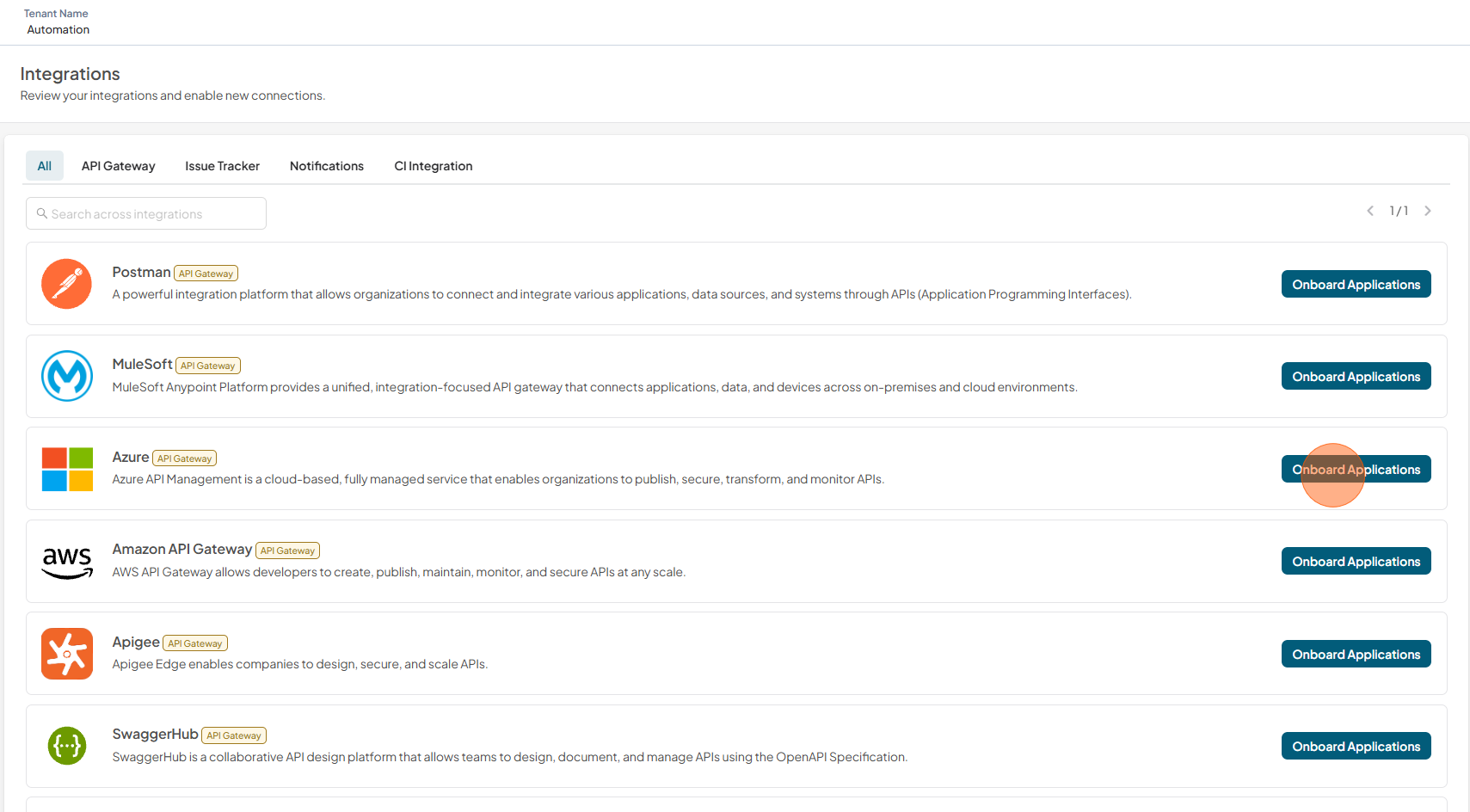
-
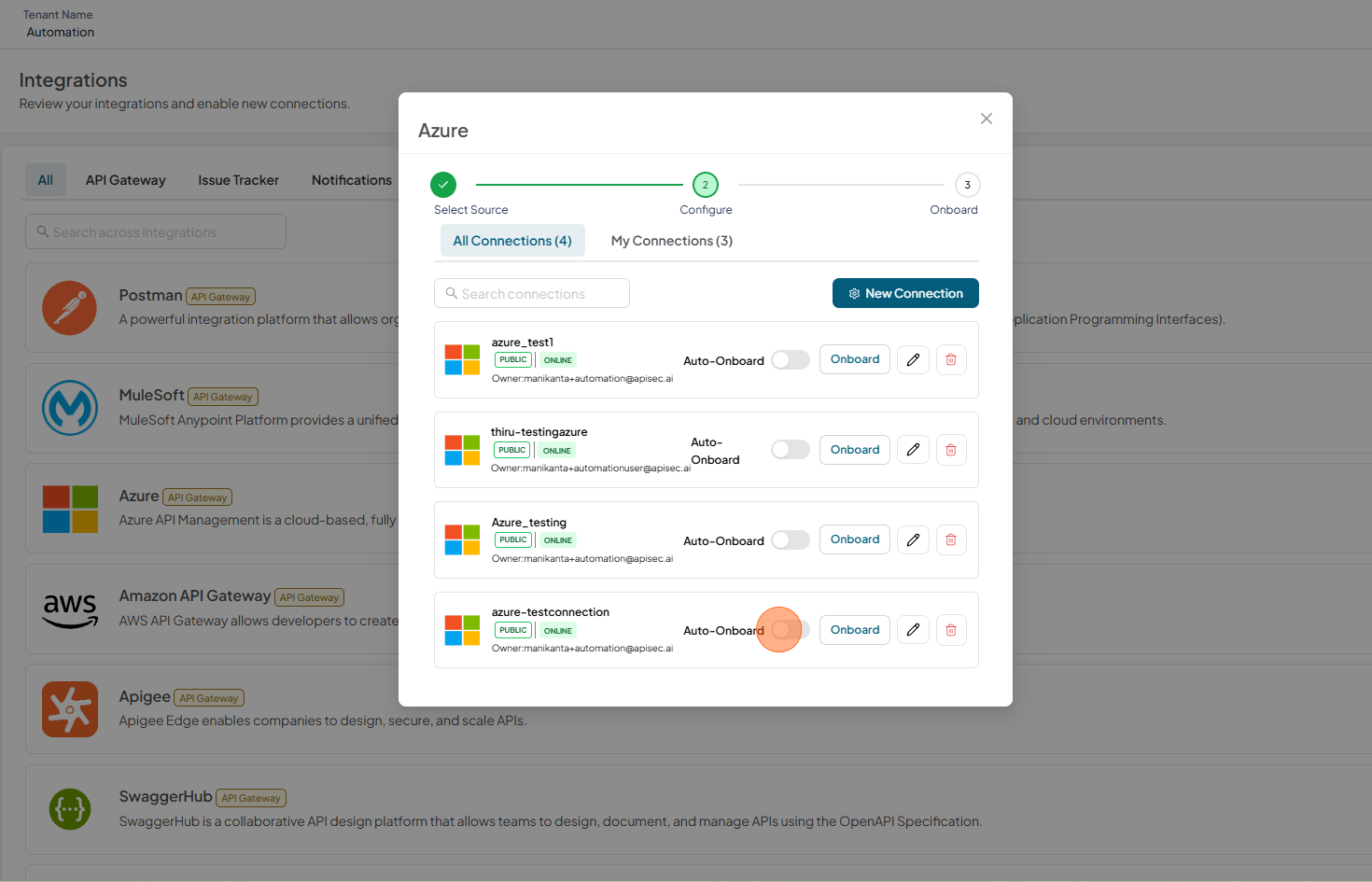
Enable Auto-Onboard of any existing Azure Gateway connection.
-
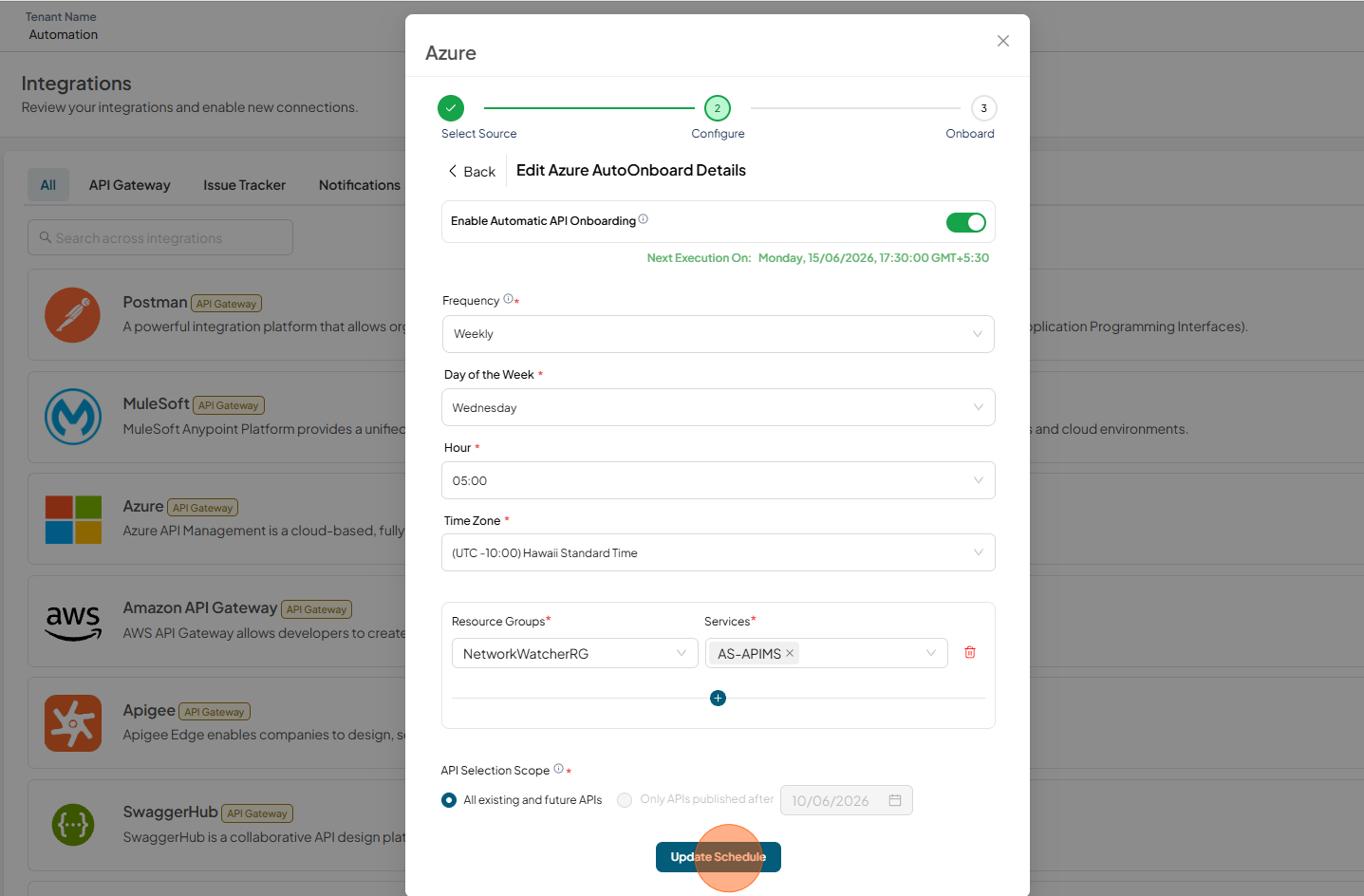
Fill the Azure AutoOnboard Details and click on Save Schedule
- Frequency – How often the onboarding should occur. By default it is weekly.
- Day of the Week – Select the specific day for onboarding.
- Hour – The exact time (in hours and minutes) when the onboarding should start.
- Timezone – The timezone in which the schedule should be applied
- Resource Groups - Select Resource Group
- Services - Select Service
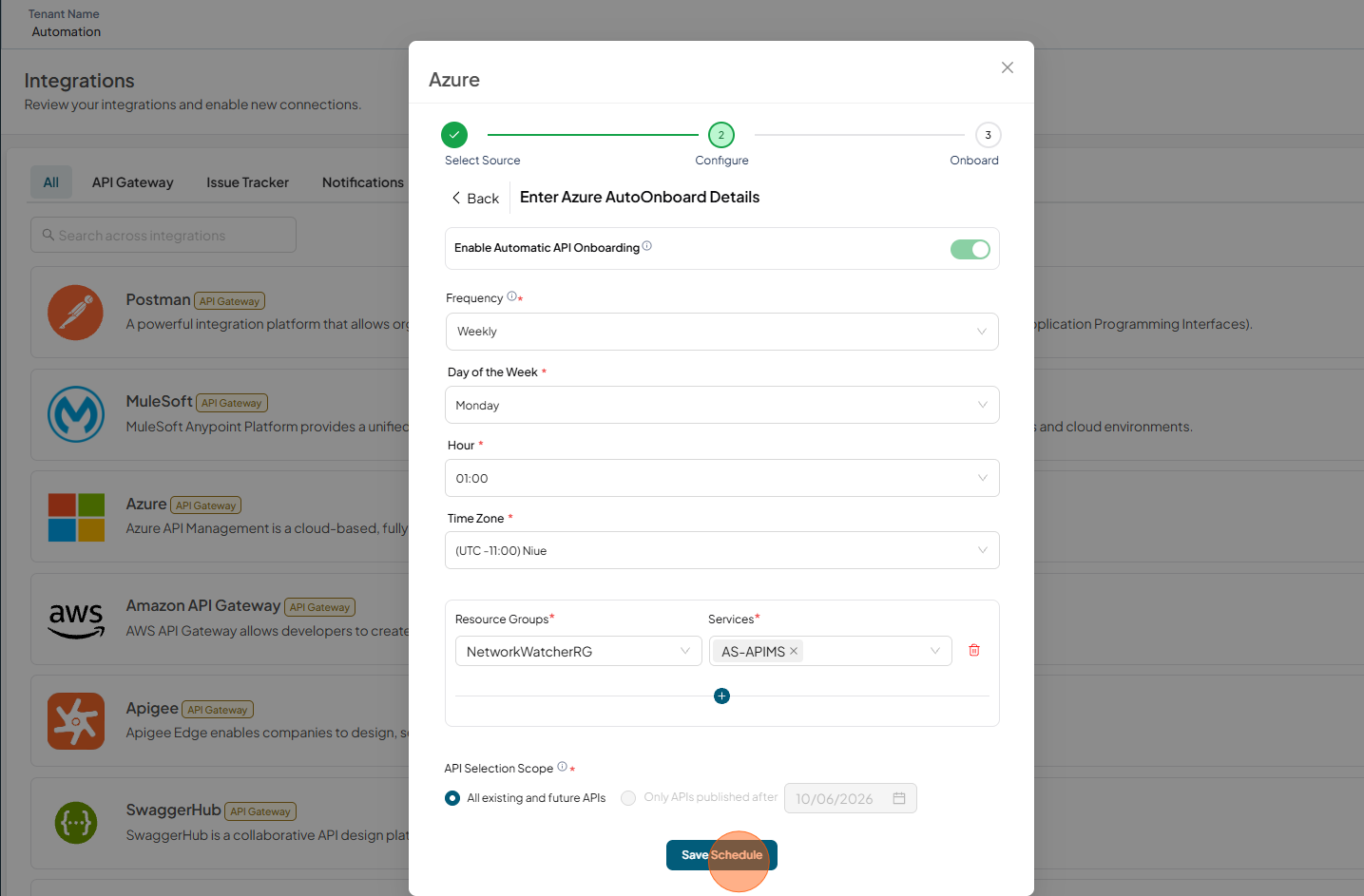
- Successfully saved auto-onboard details
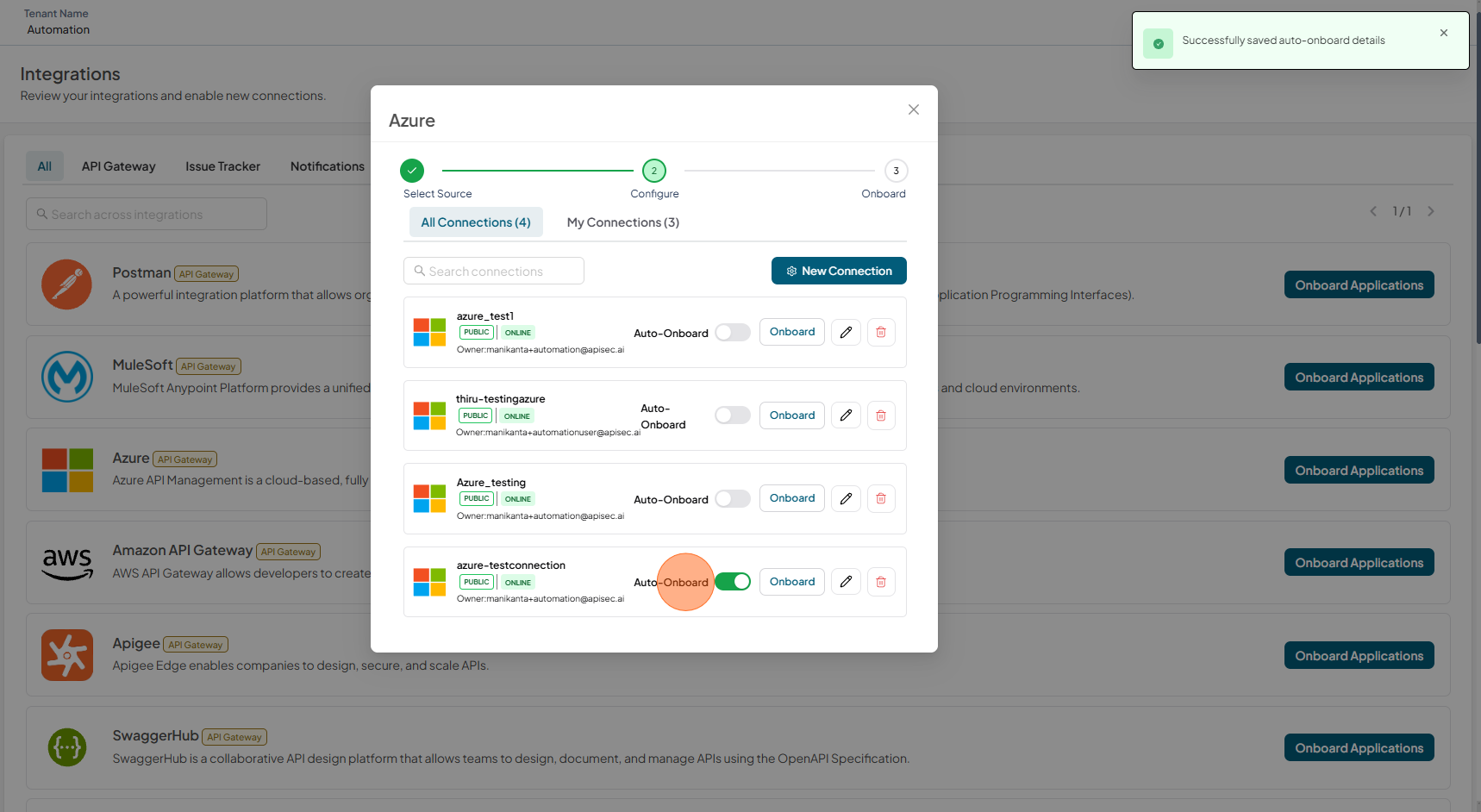
Update Schedule
-
Open your browser and visit: https://<your-tenant>.apisecapps.com
-
Click Integrations tab
-
Click Onboard Applications adjacent to the Azure
-
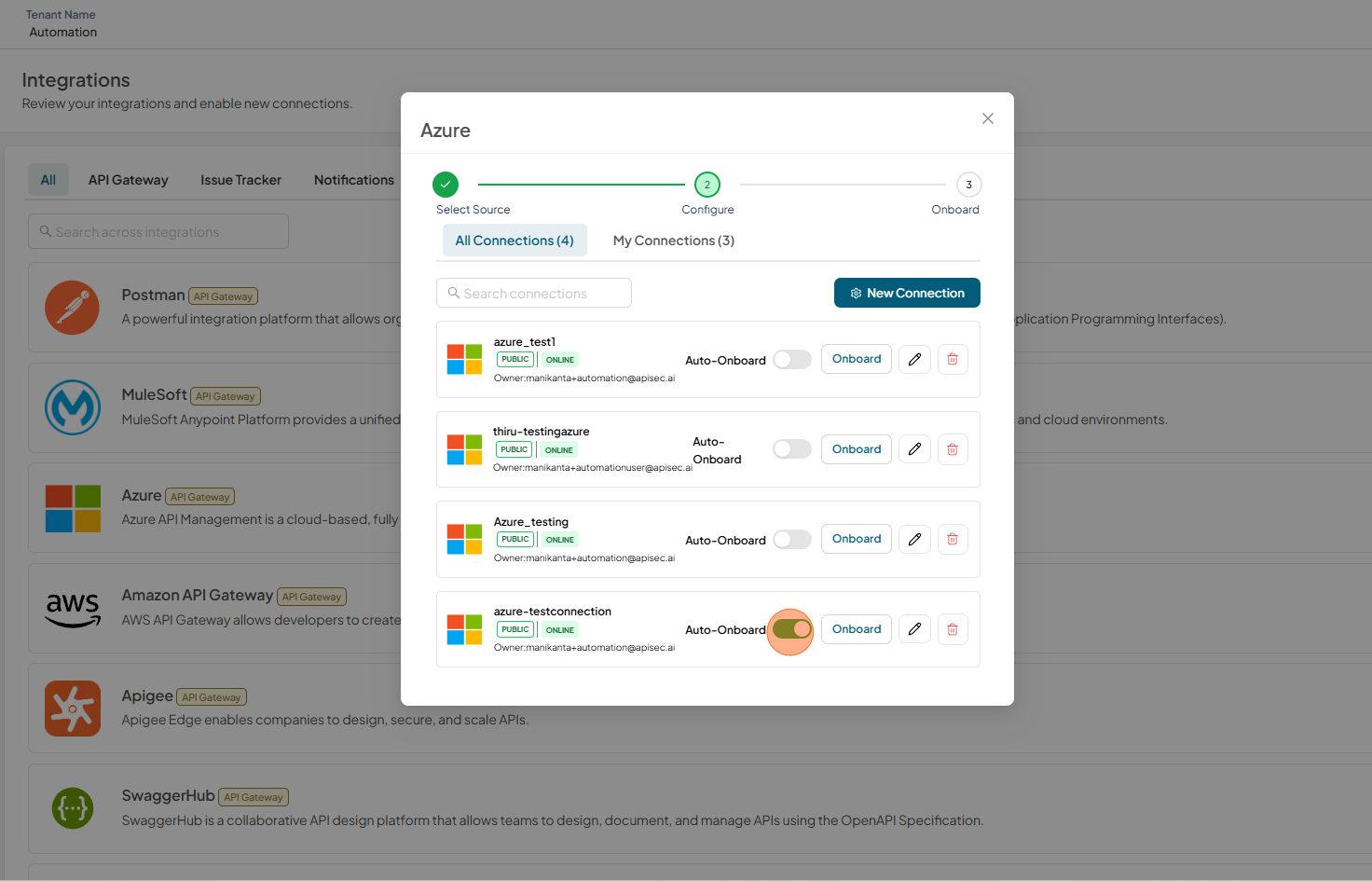
Click Auto-Onboard enabled toggle
-
Update the details and Click on Update Schedule
Disable Auto-Onboard
-
Open your browser and visit: https://<your-tenant>.apisecapps.com
-
Click Integrations tab
-
Click Onboard Applications adjacent to the Azure
-
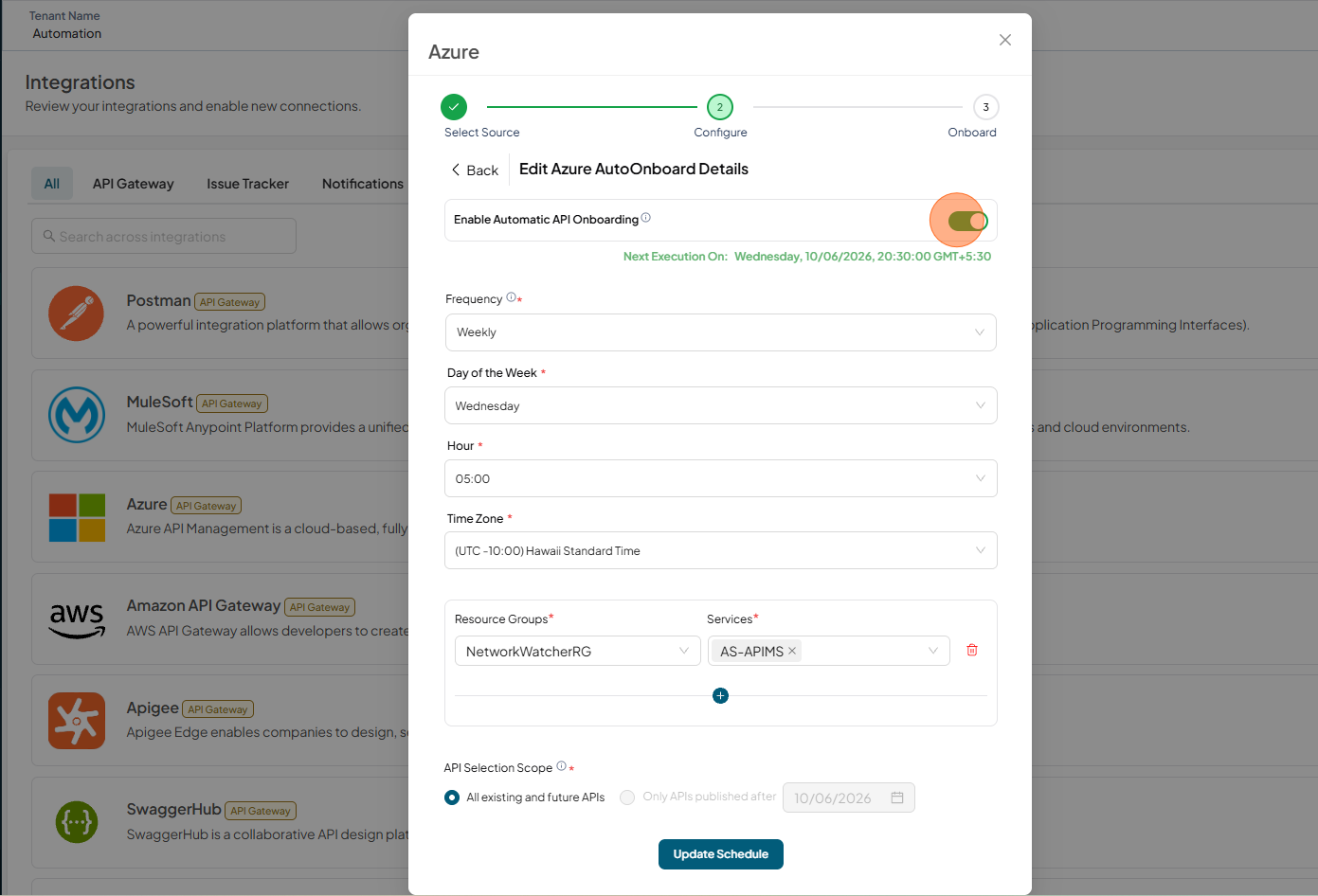
Click Auto-Onboard enabled toggle
-
In Edit Azure AutoOnboard Details, disable the Enable Automatic API Onboarding.
-
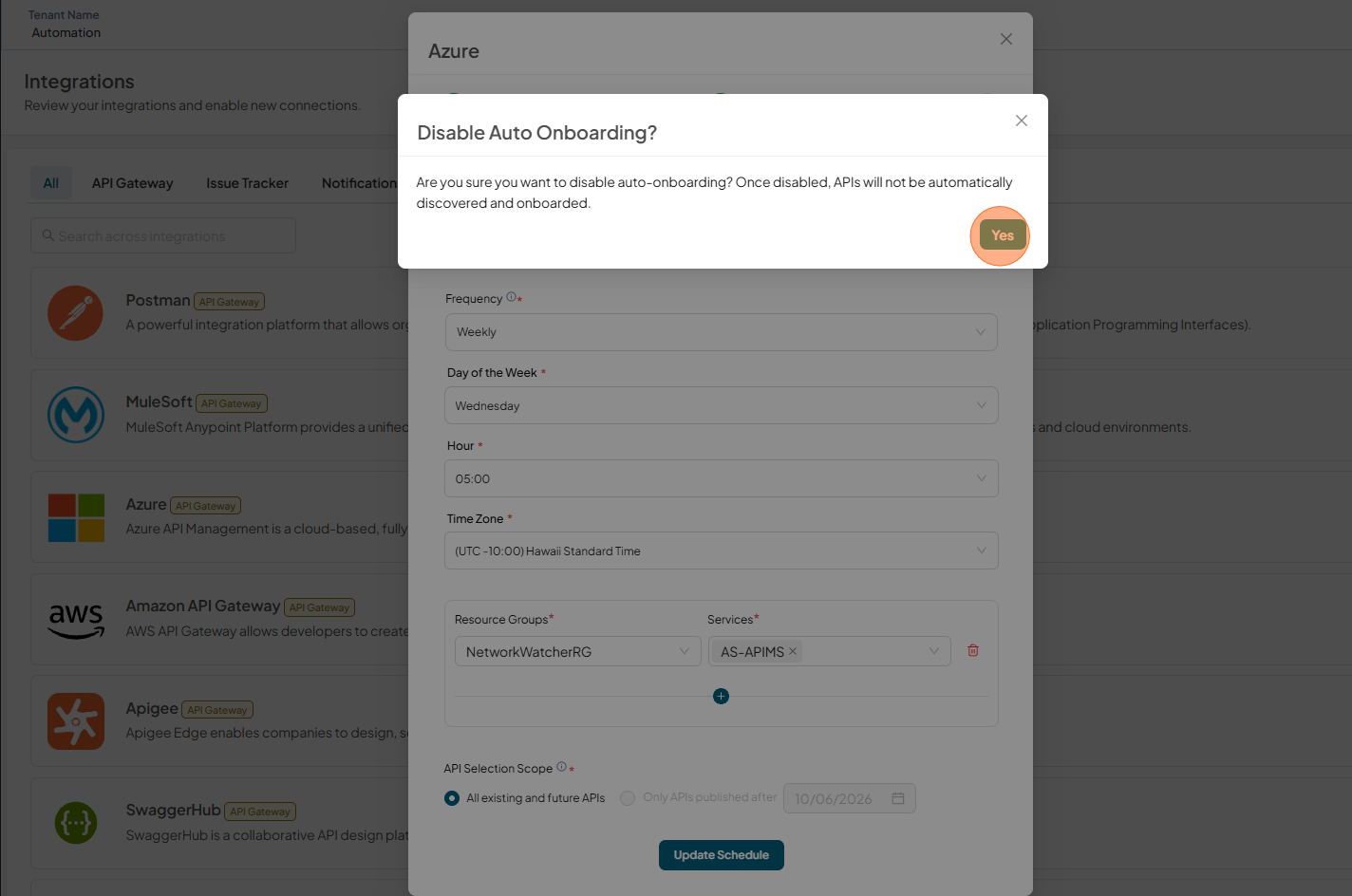
Click Yes to confirm
-
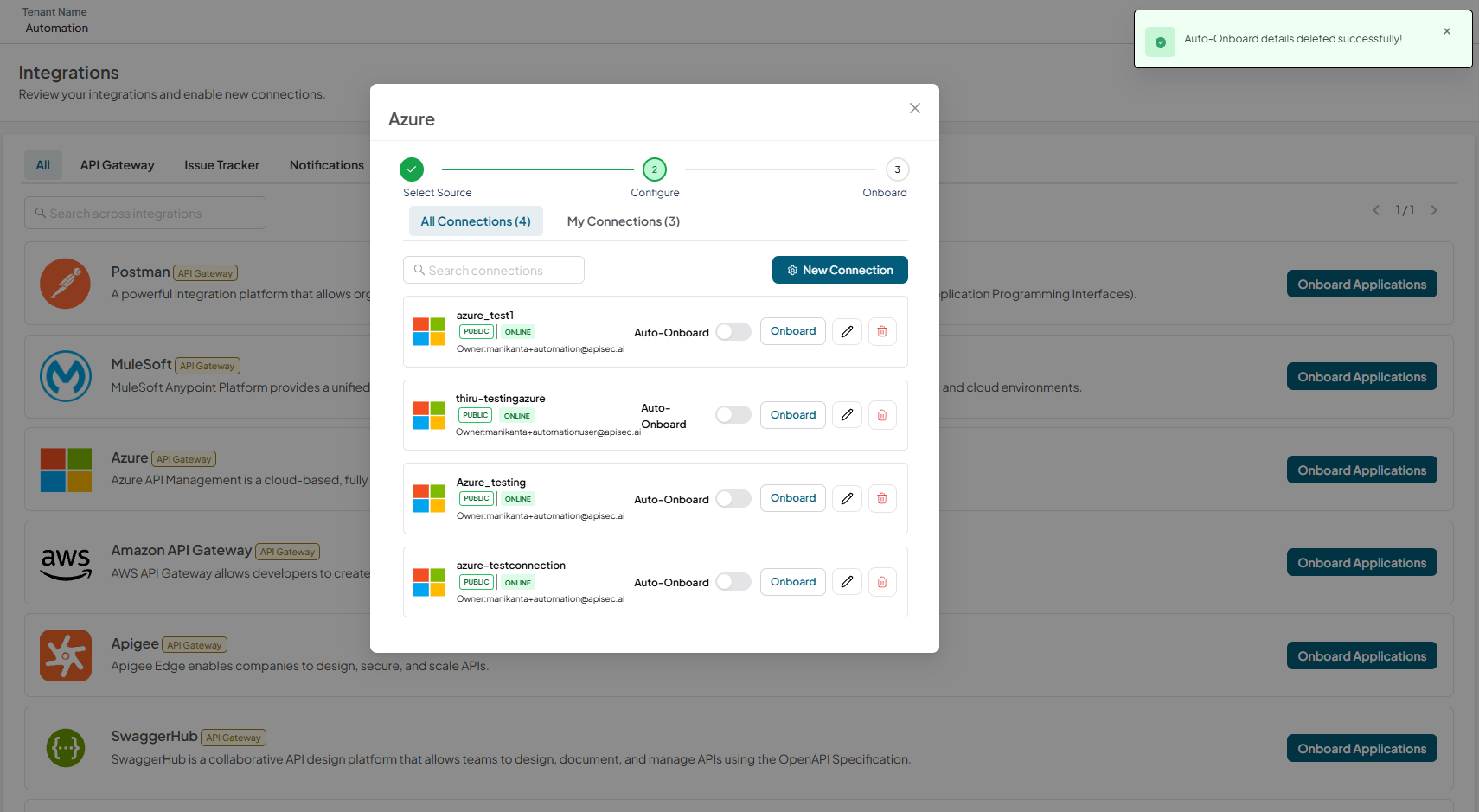
Auto-Onboard details deleted successfully!
Edit Azure Connection
-
Open your browser and visit: https://<your-tenant>.apisecapps.com
-
Click Integrations tab
-
Click Onboard Applications adjacent to the Azure
-
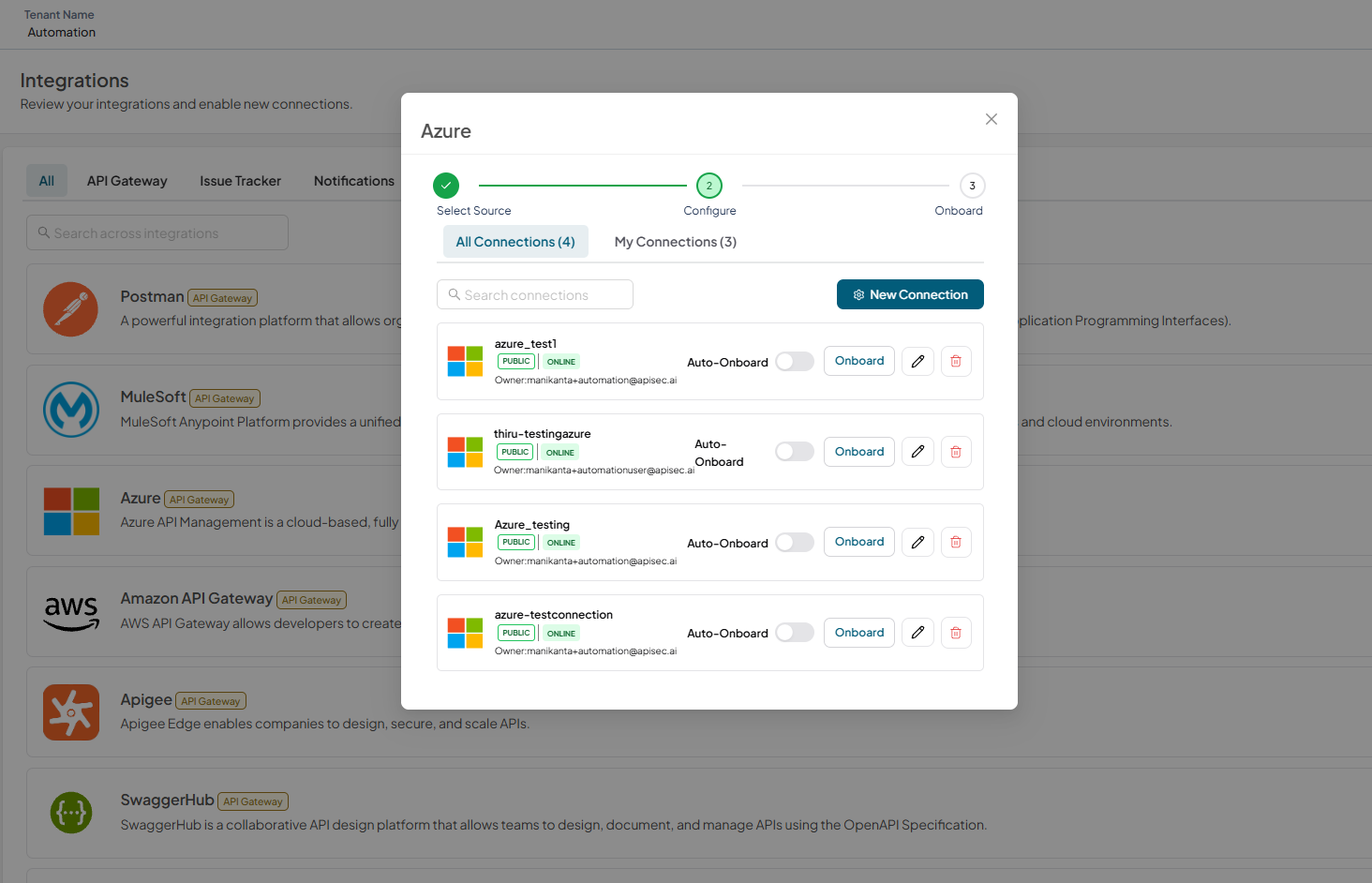
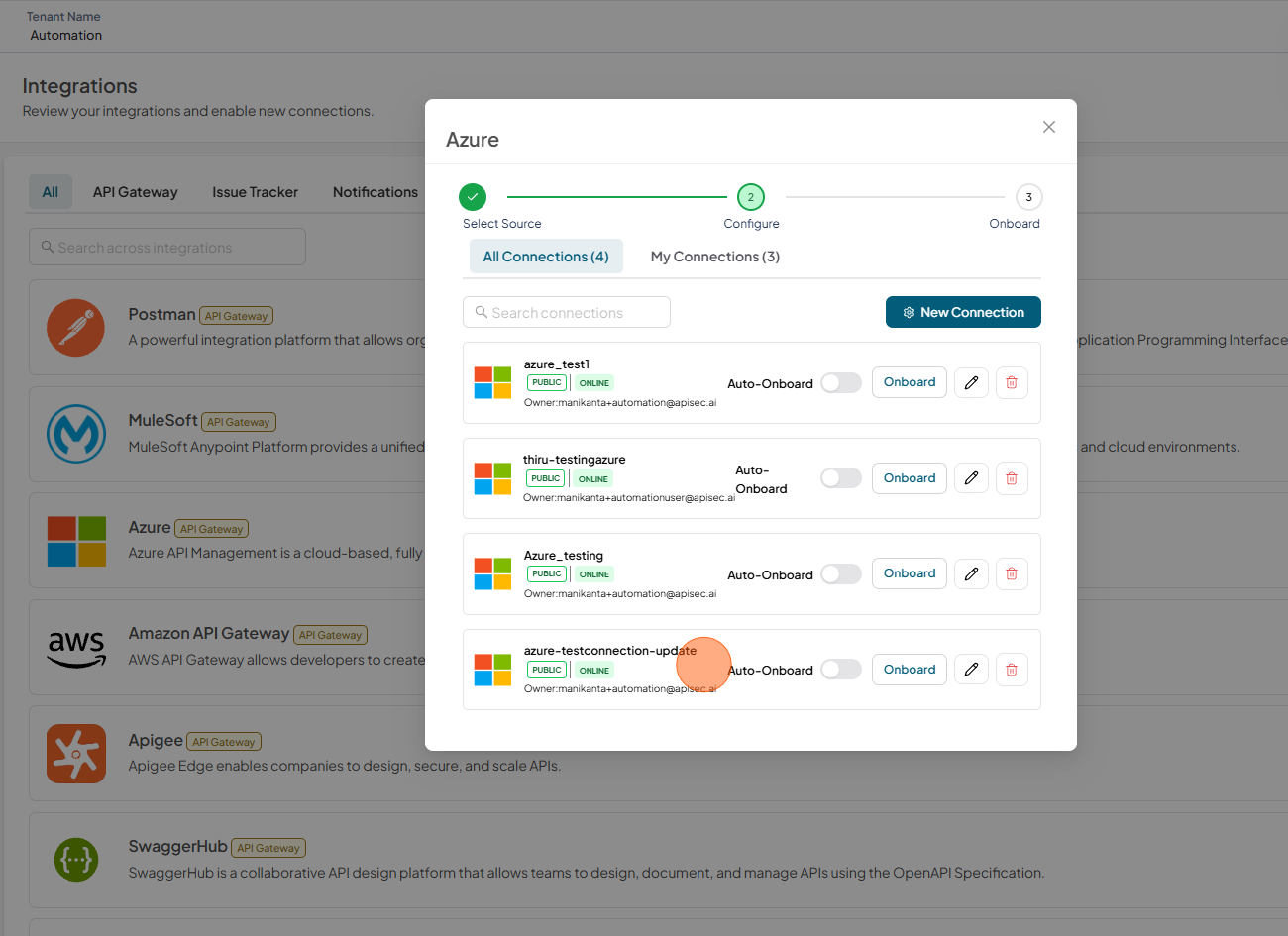
A list of existing Azure connections is displayed.
-
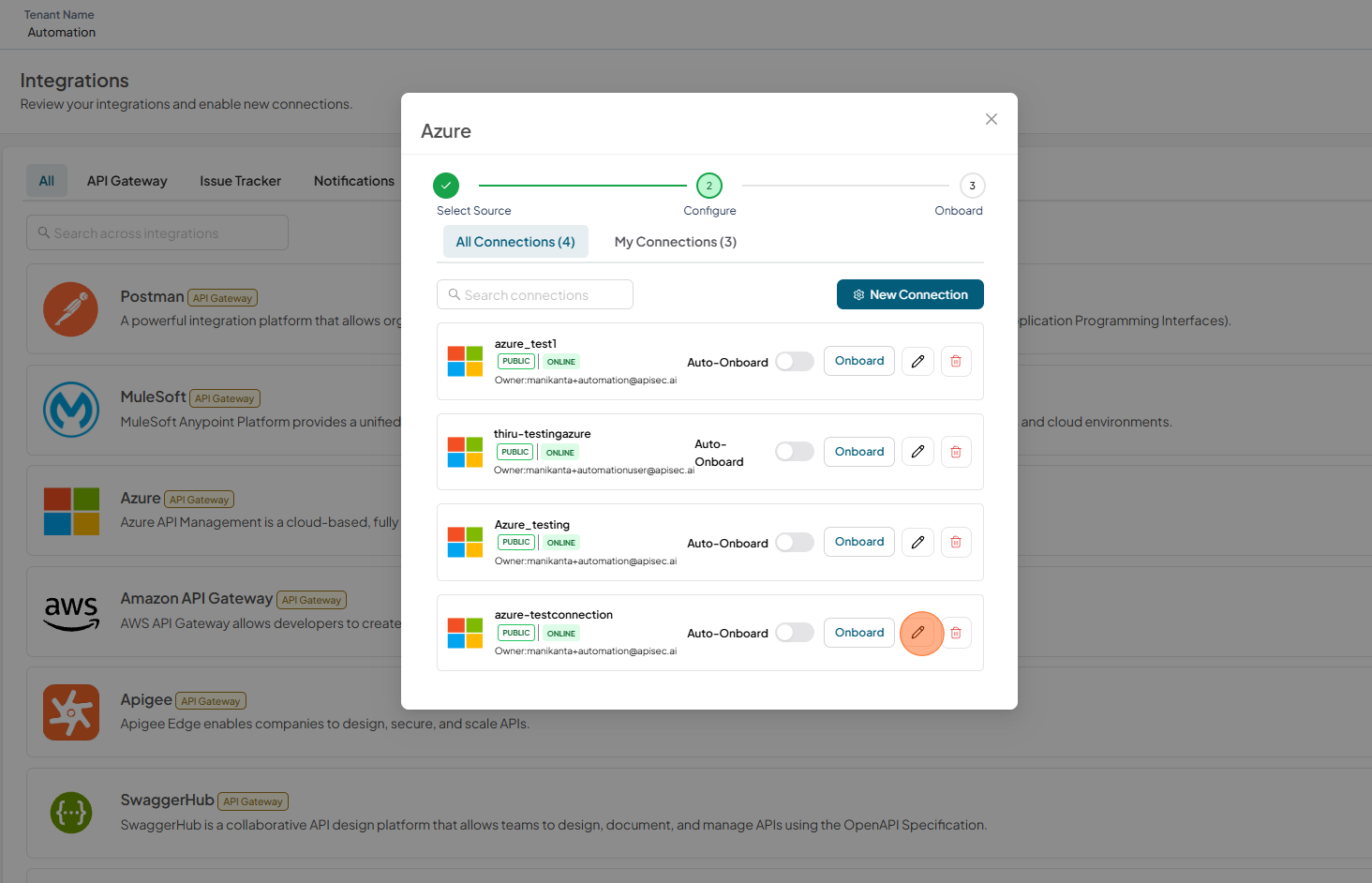
Select the Pencil icon next to the connection you want to edit.
-
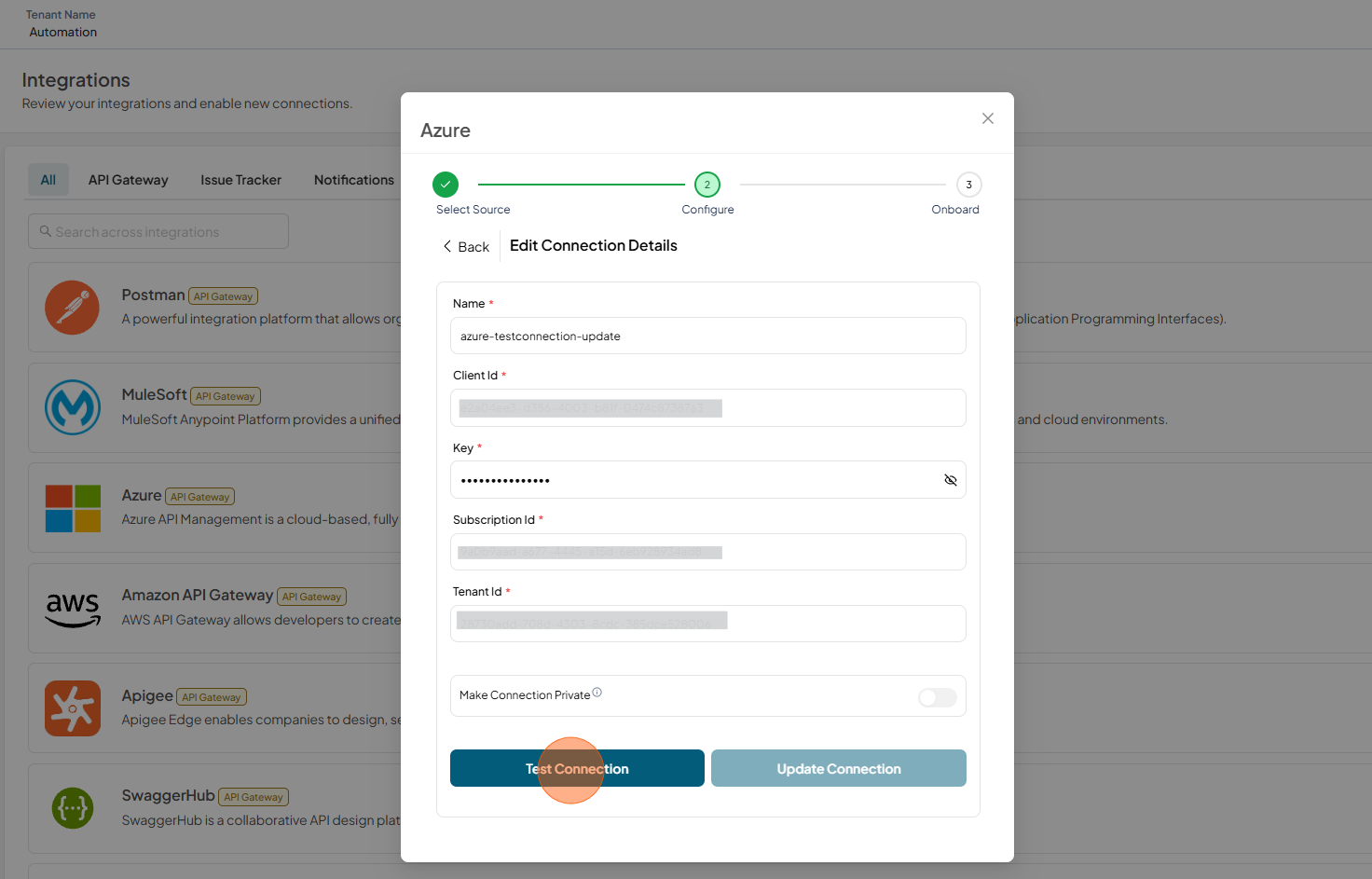
Update the required details and Click on Test Connection
-
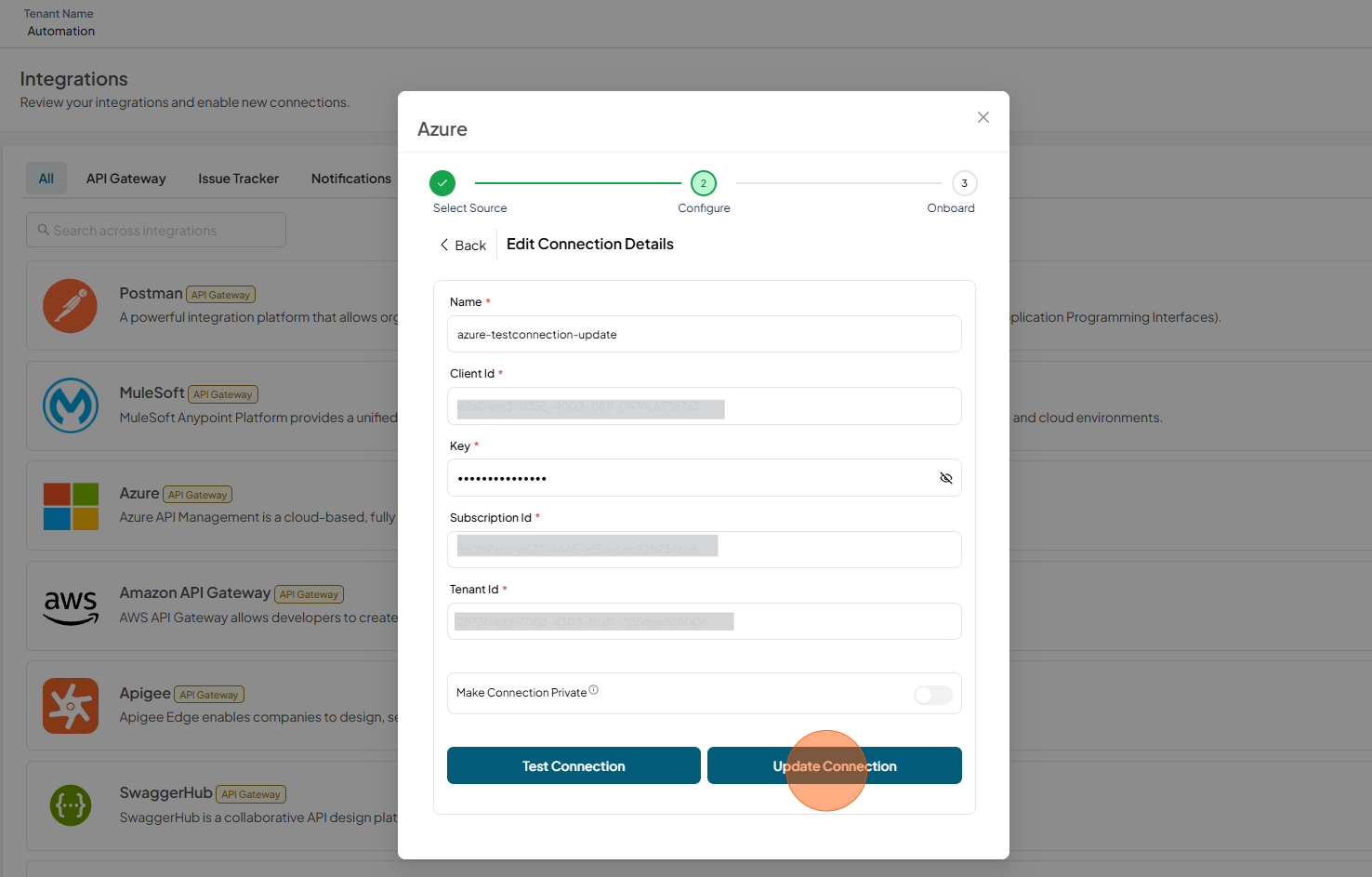
once Test connection successfull then Click on Update Connection
-
The updated connection is now displayed in the connections list.
Delete Azure Connection
-
Open your browser and visit: https://<your-tenant>.apisecapps.com
-
Click Integrations tab
-
Click Onboard Applications adjacent to the Azure
-
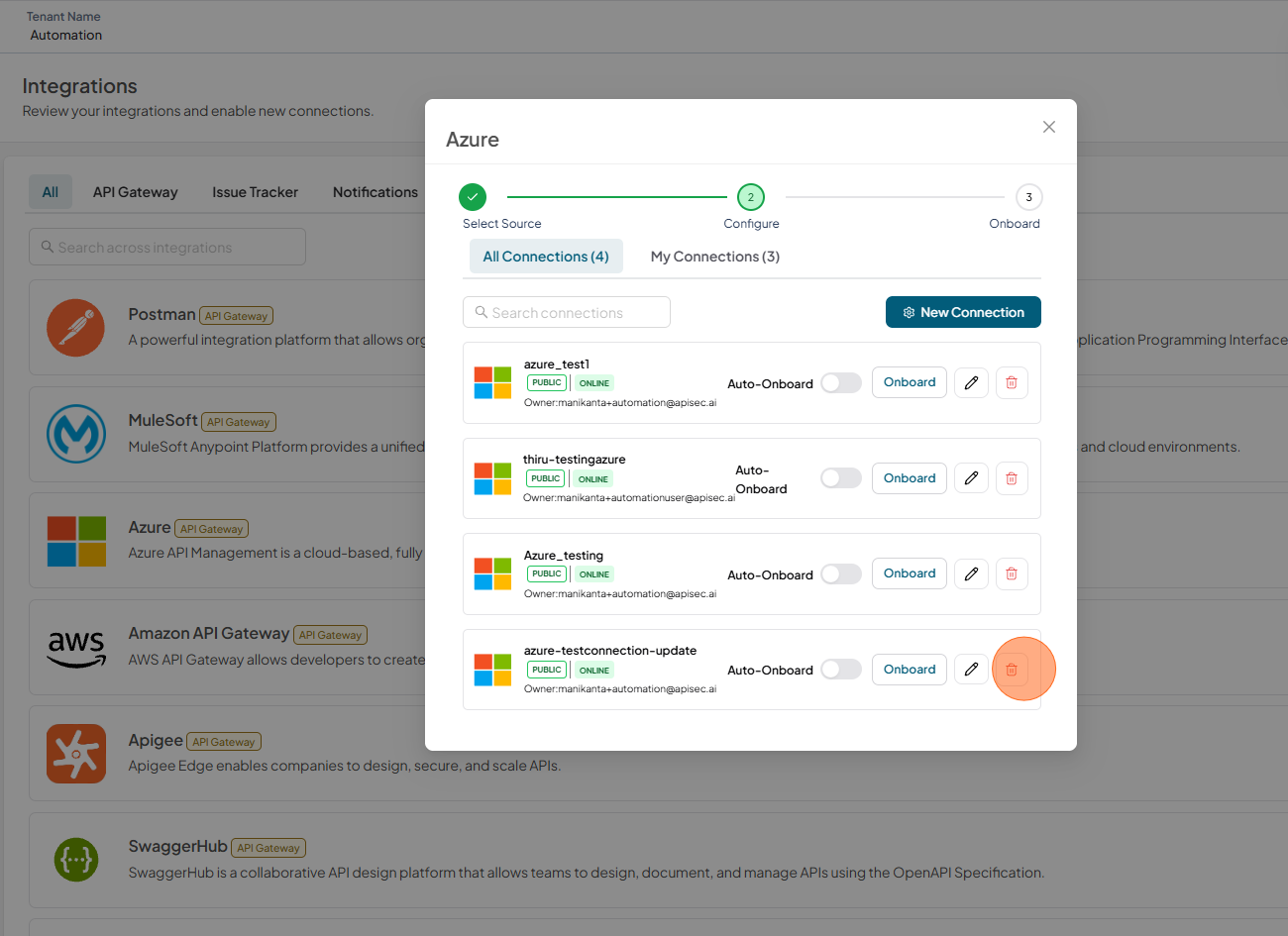
A list of existing Azure connections is displayed.
-
Select the Delete icon next to the connection you want to delete.
-
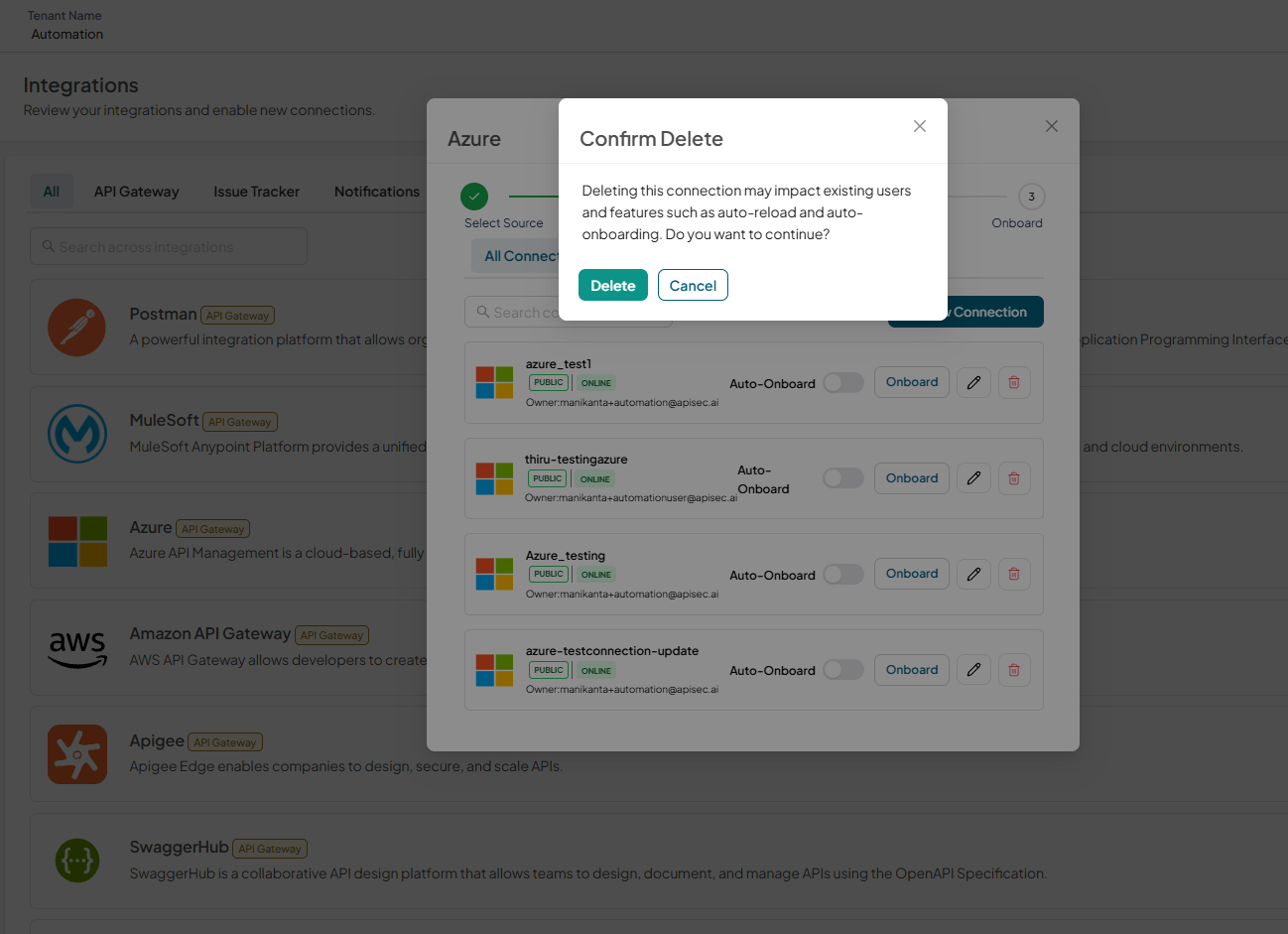
Click Delete to confirm
-
The deleted connection is no longer displayed in the connections list.