How To Onboard An Application Using SwaggerHub API Gateway
Prerequisites
-
APIsec platform needs API Key to connect with SwaggerHub Cloud
-
Follow the steps below to obtain API Key
-
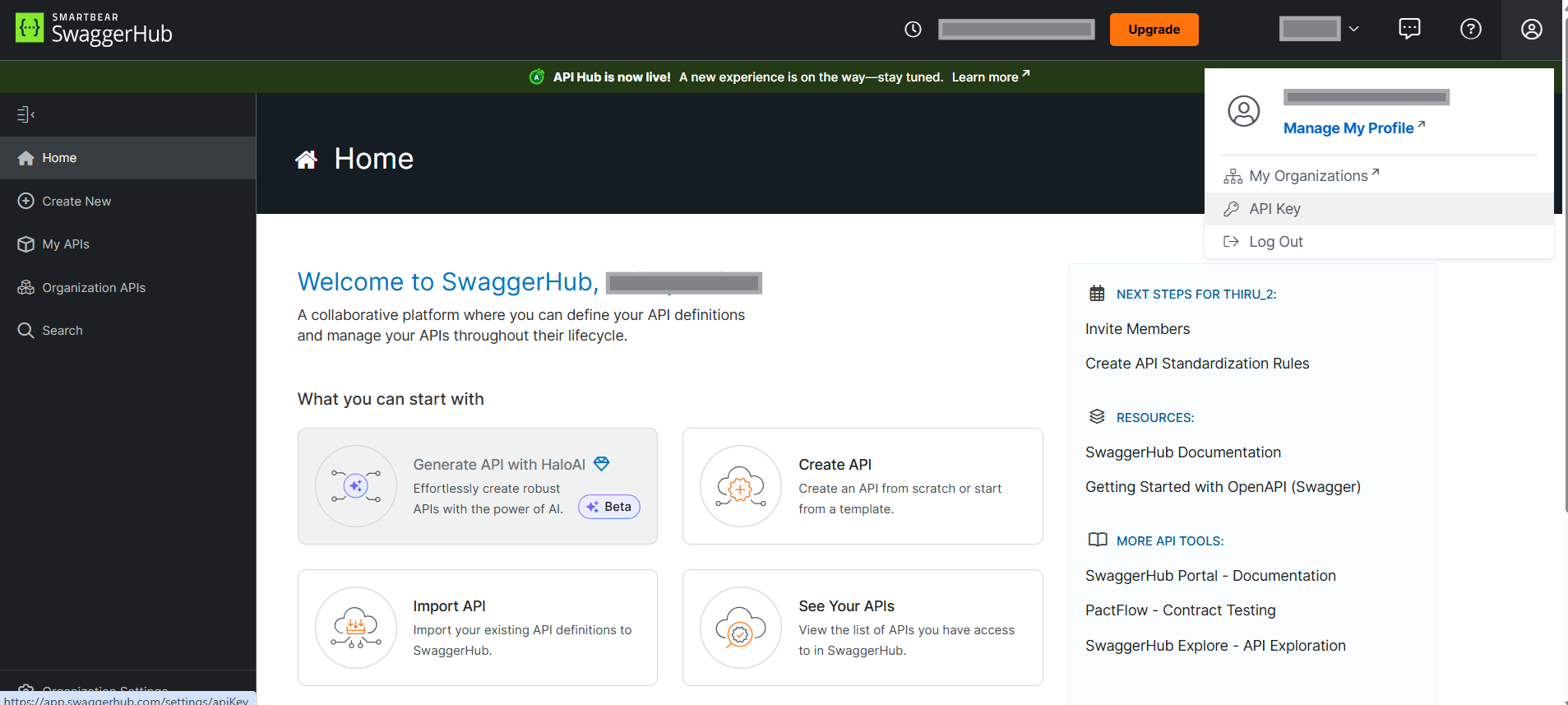
Click on Profile Icon
-
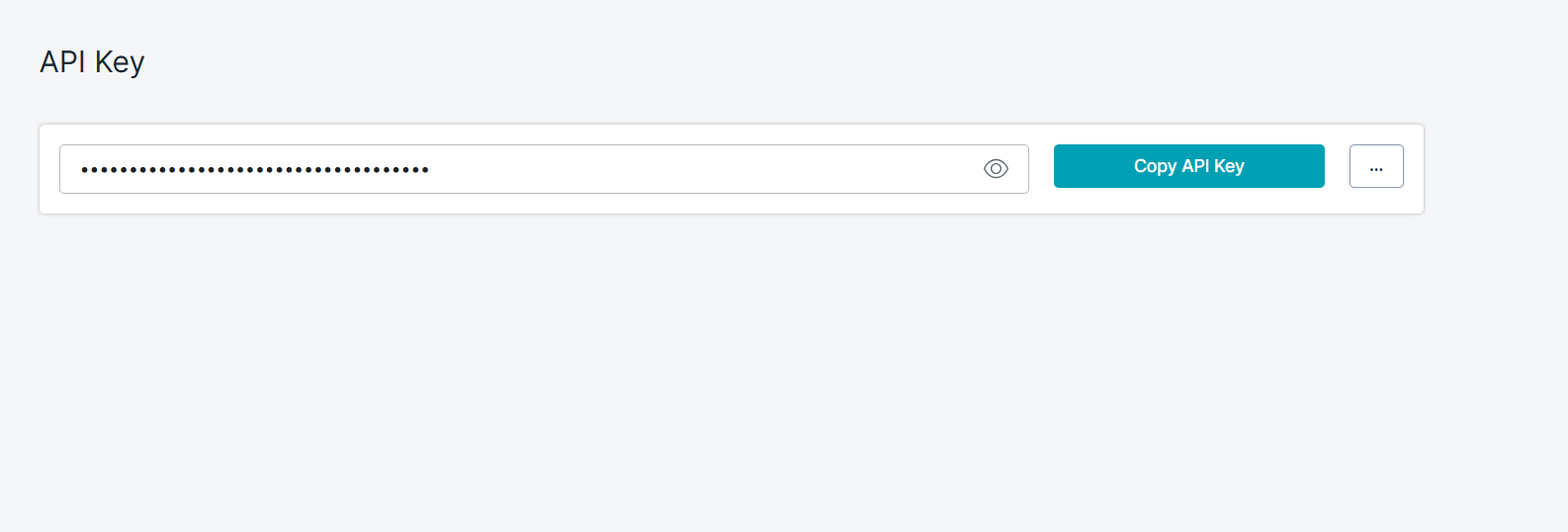
Select API Key and Copy API Key
-
-
-
APIsec platform needs API Key and Server URL to connect with SwaggerHub On-premises
- Follow the above steps to get the API Key.
- Set up the server address, complete the on-premise installation, and then use it as the SwaggerHub Server URL.
Start Adding a New Application
-
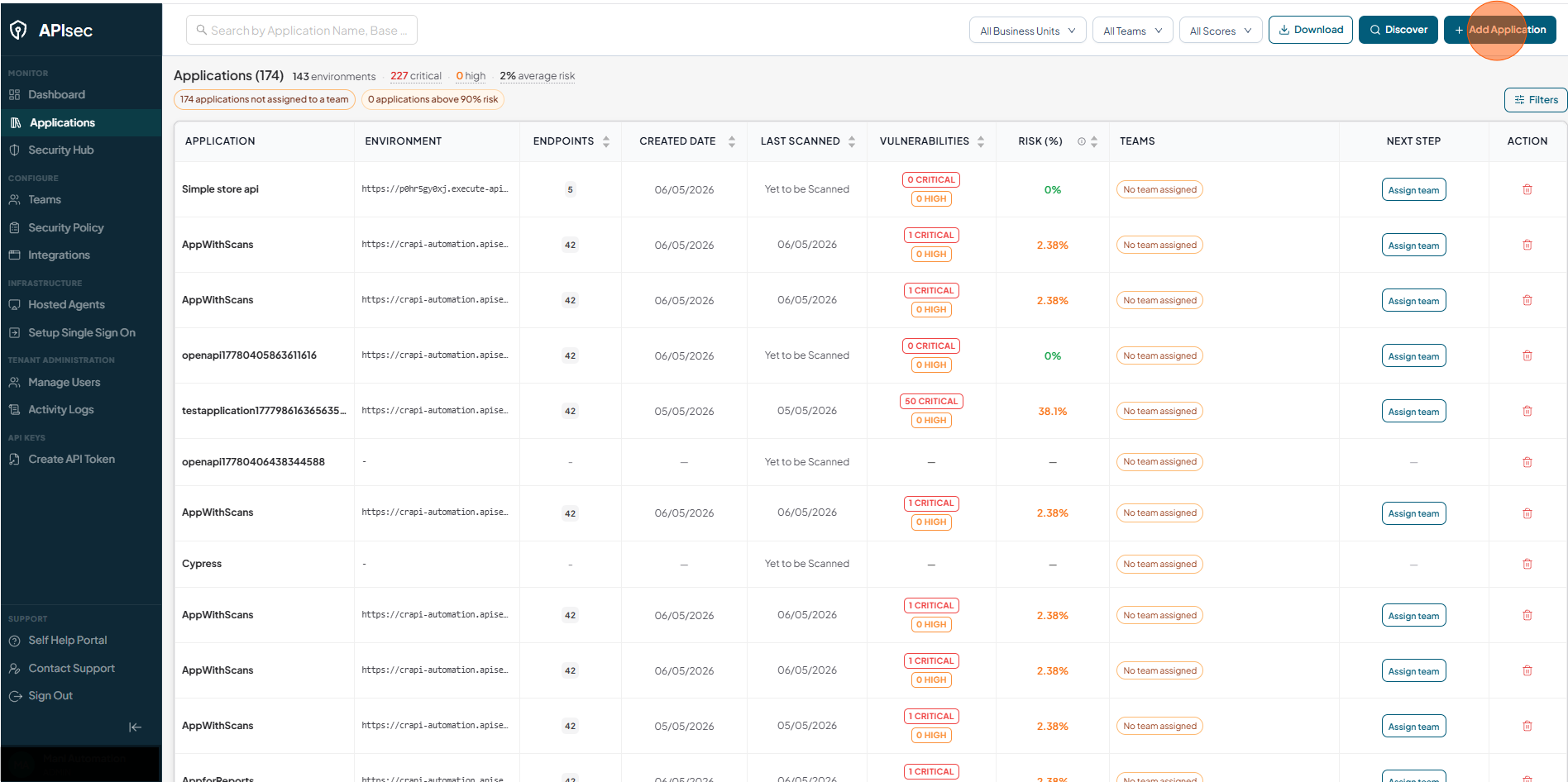
Open your browser and visit: https://<your-tenant>.apisecapps.com
-
Click on the Add Application.
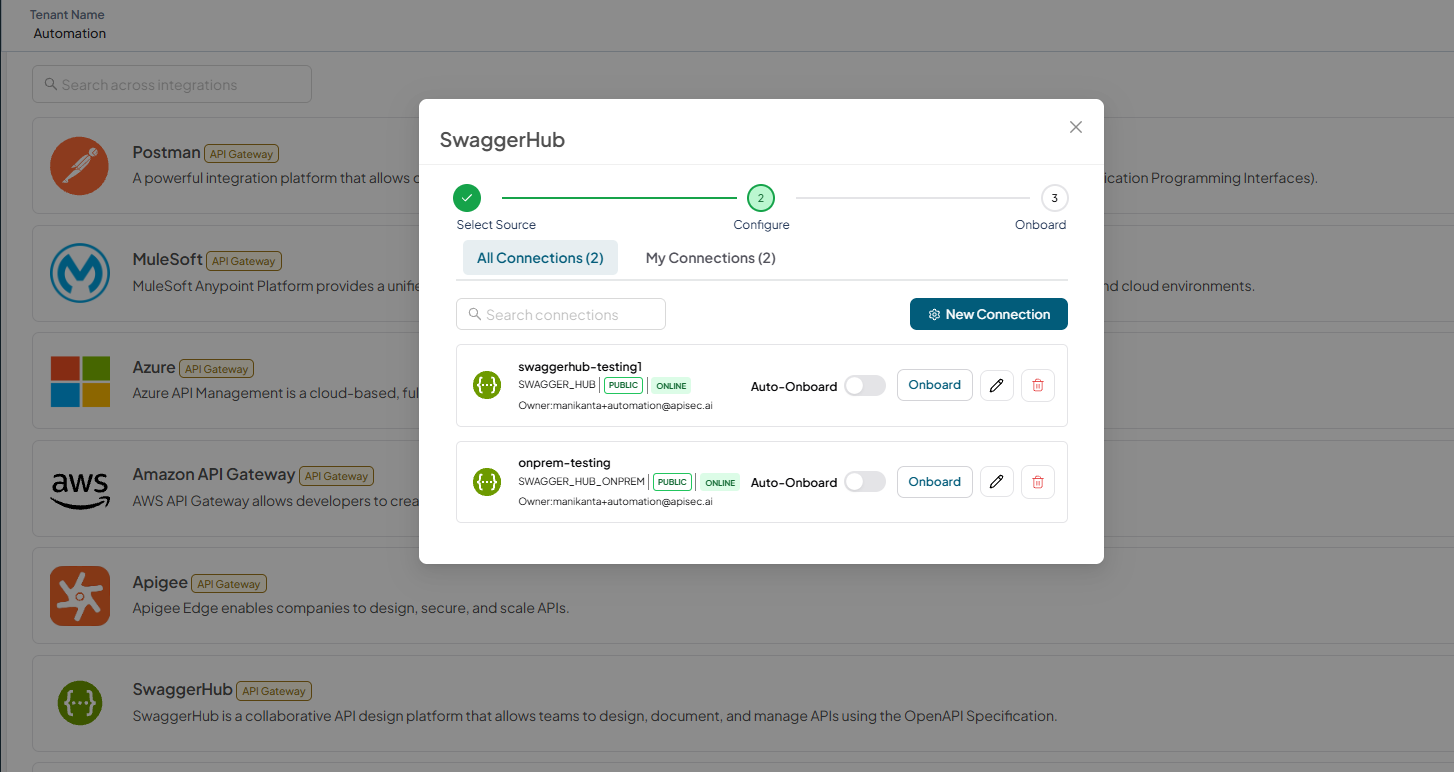
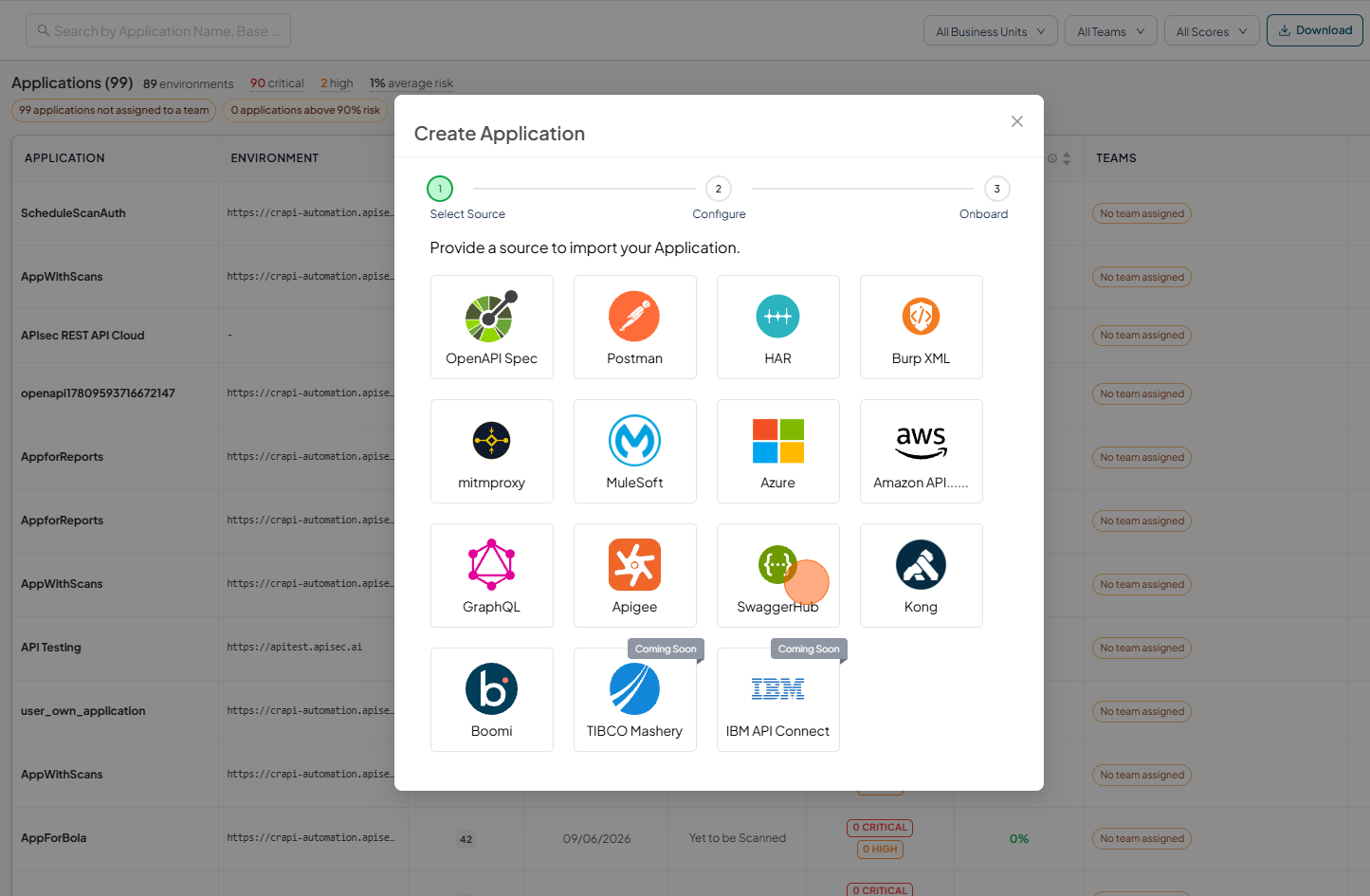
Select SwaggerHub Gateway
-
Choose the "SwaggerHub Gateway" option.
-
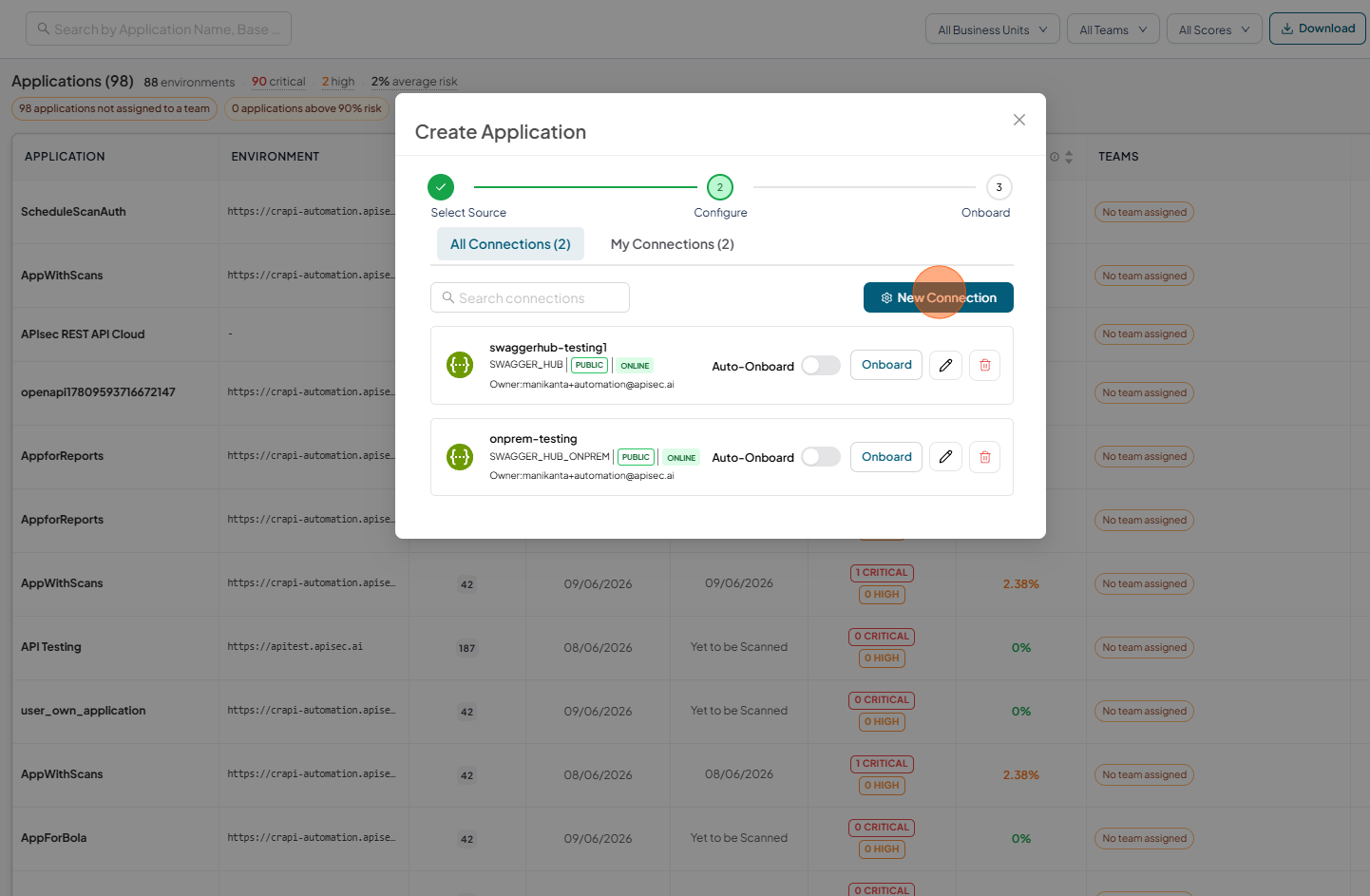
If existing connections are available, they will be displayed in the Connections list. To create a new connection, click New Connection.
-
If no connections exist, a connection form is displayed, allowing you to enter the required details and create a connection.
Enter Application Details
There are Two Deployment types through which we can onboard
- Cloud
- On-premises
-
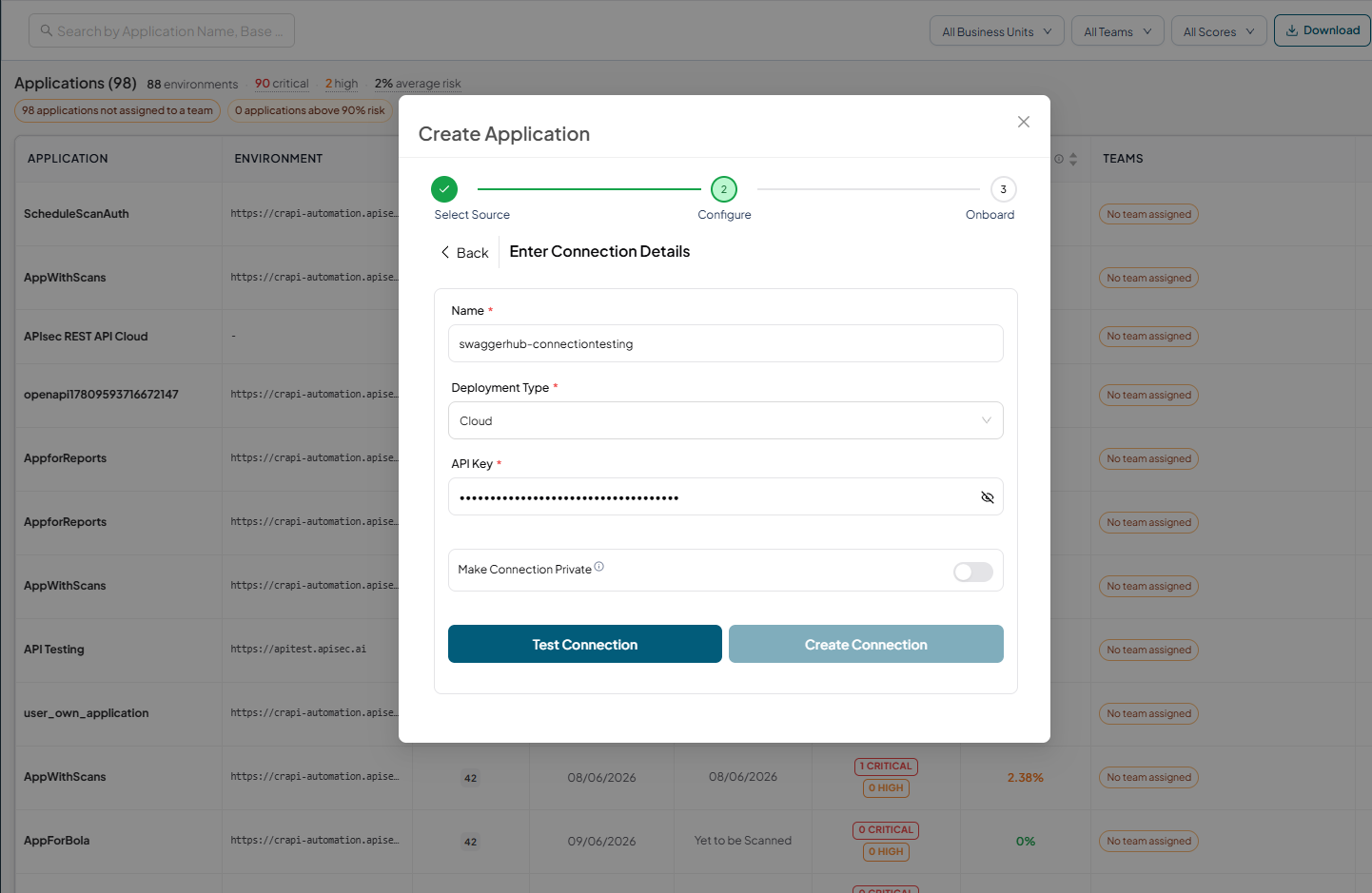
Enter the following details for Cloud
-
Name, Deployment Type, and API Key.
-
-
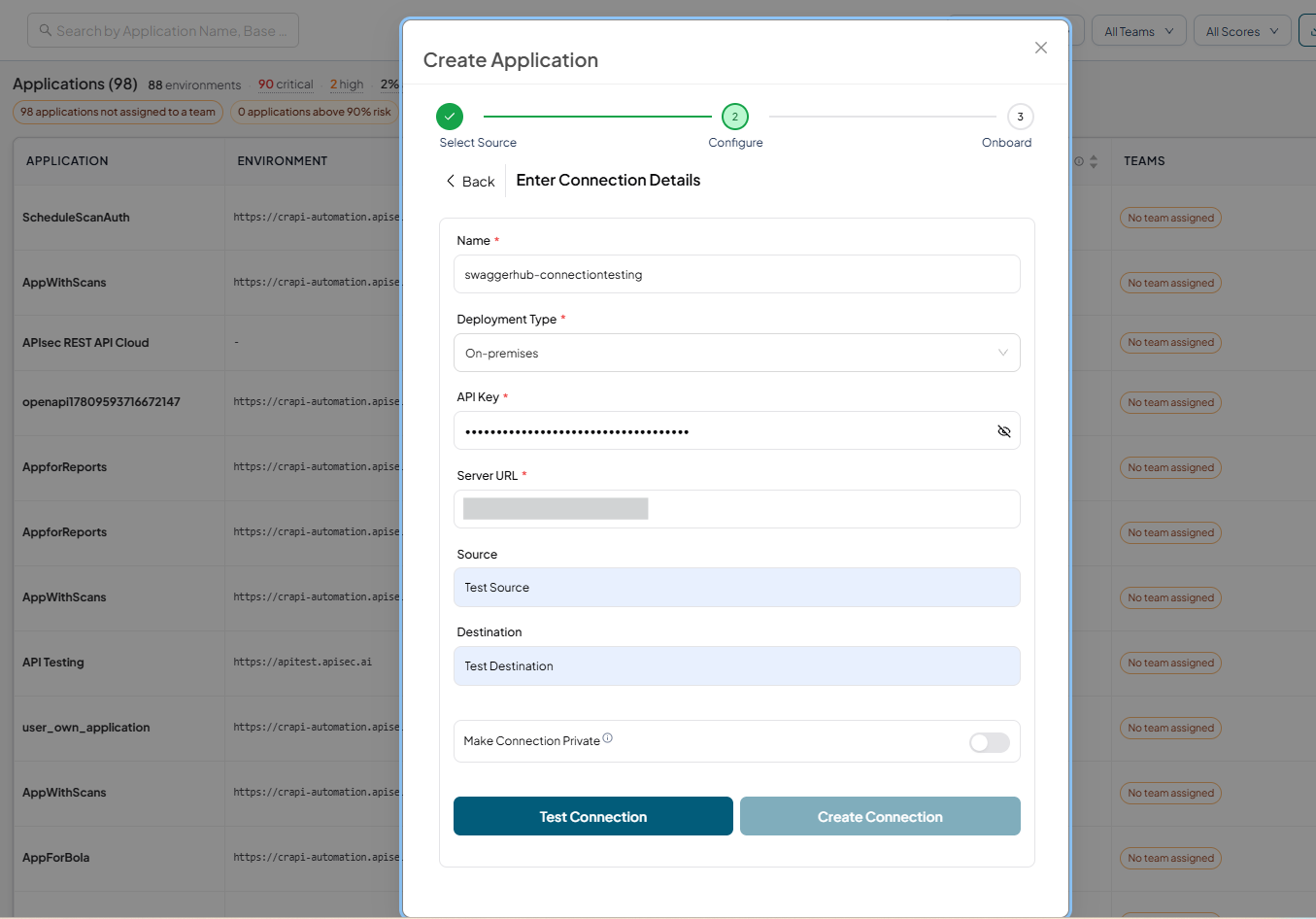
Enter the following details for On-premises
-
Name, API Key, Server URL, Source and Destination
-
-
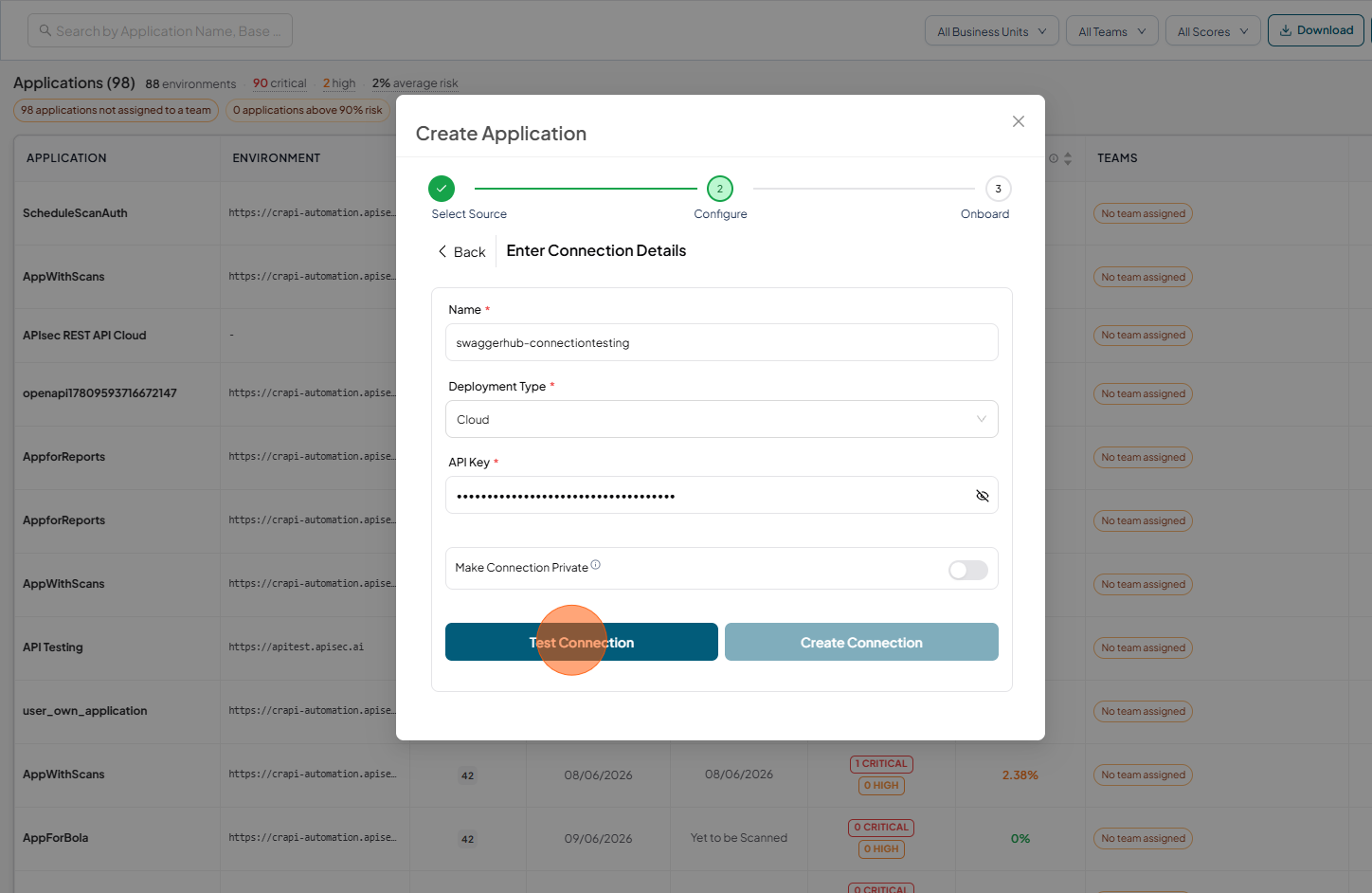
Click "Test Connection"
-
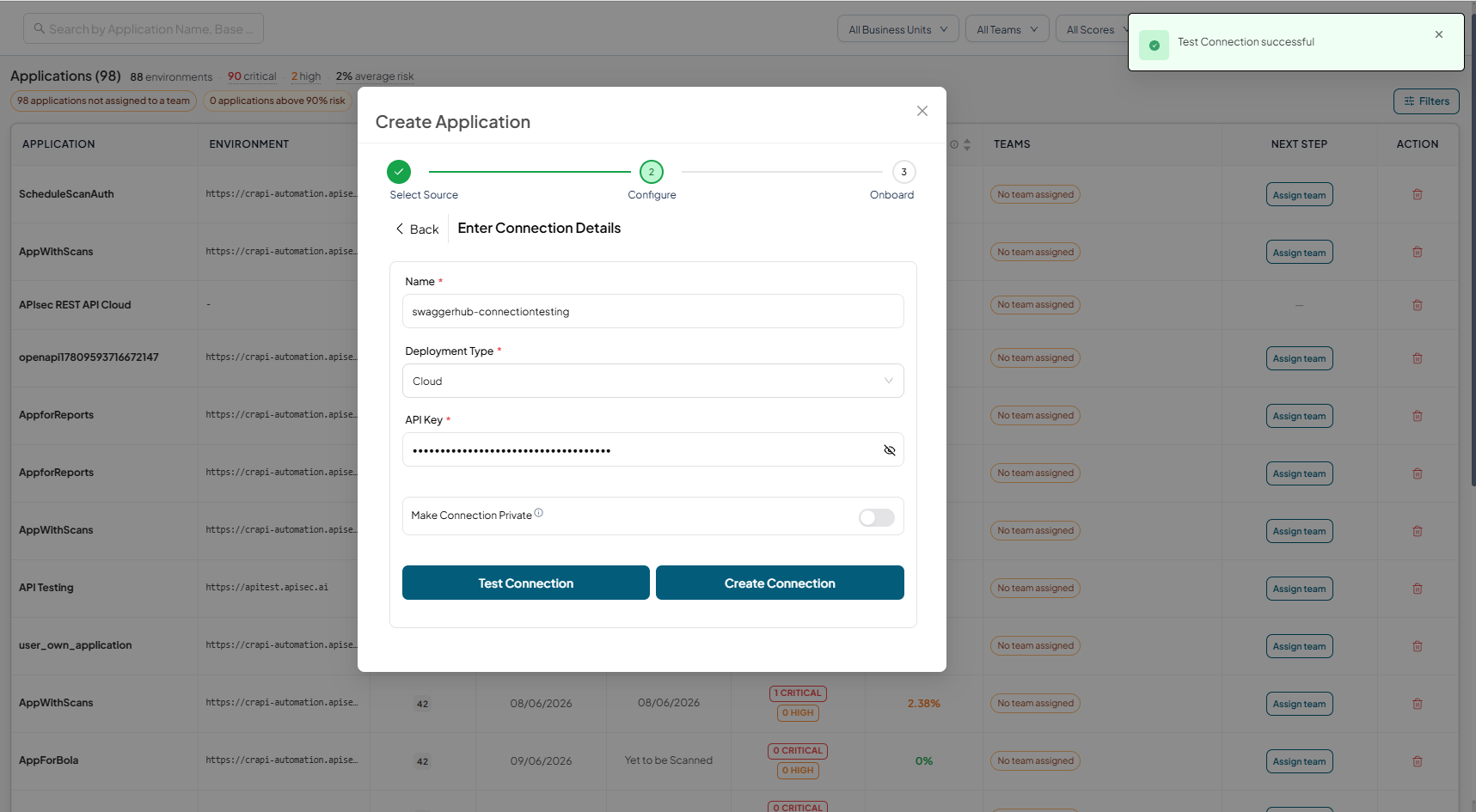
Test Connection Success
-
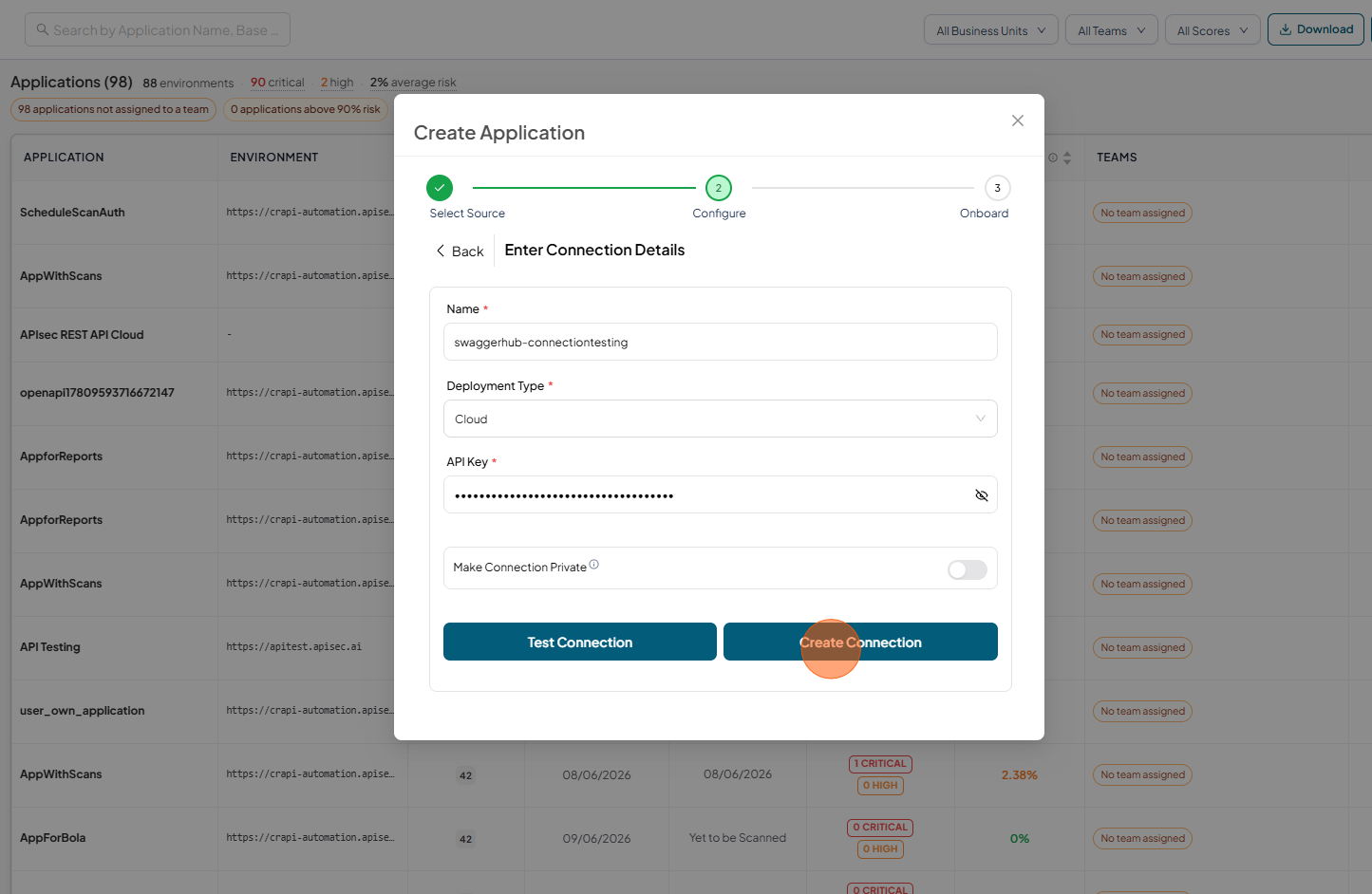
Click Create Connection
-
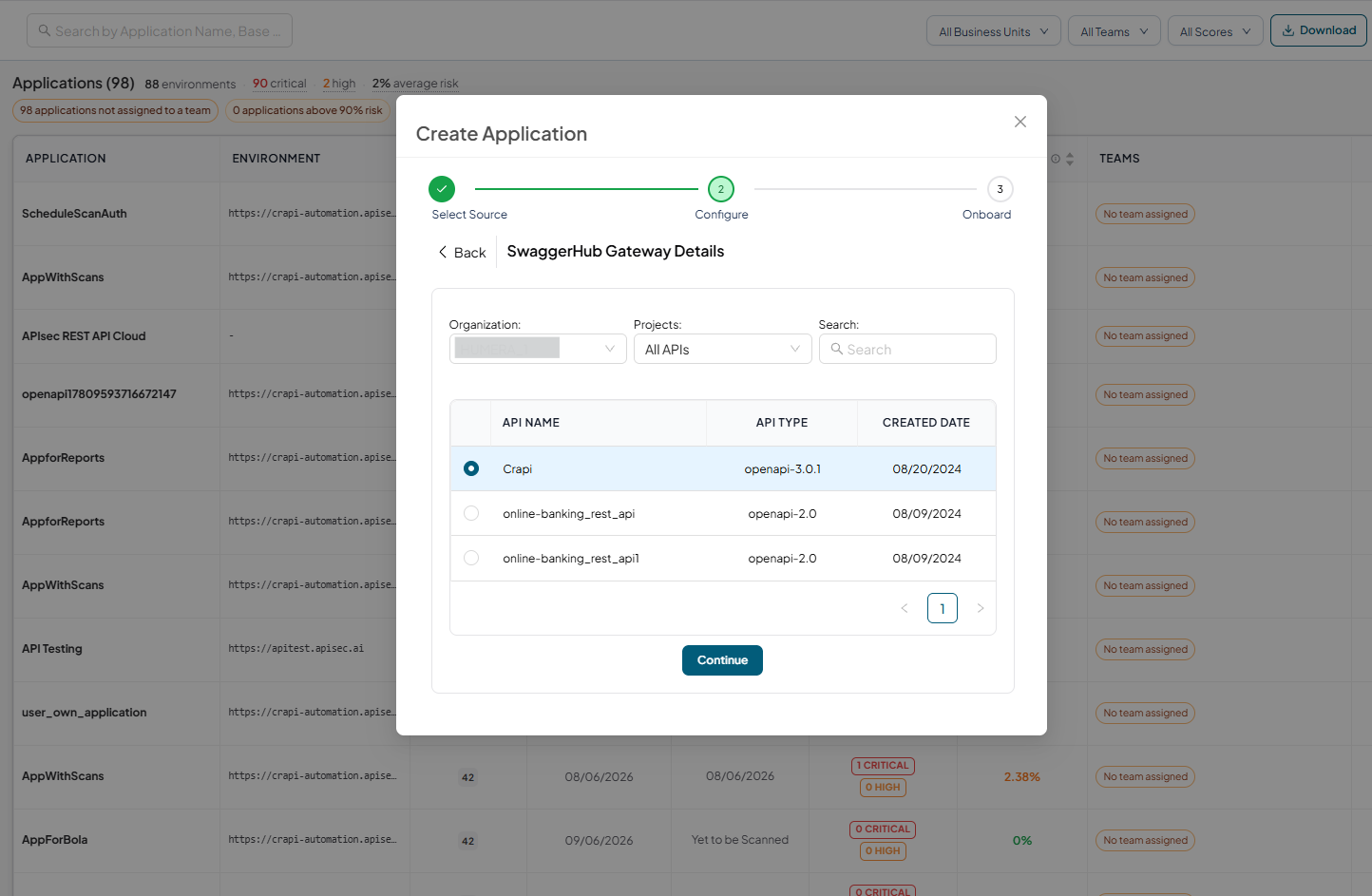
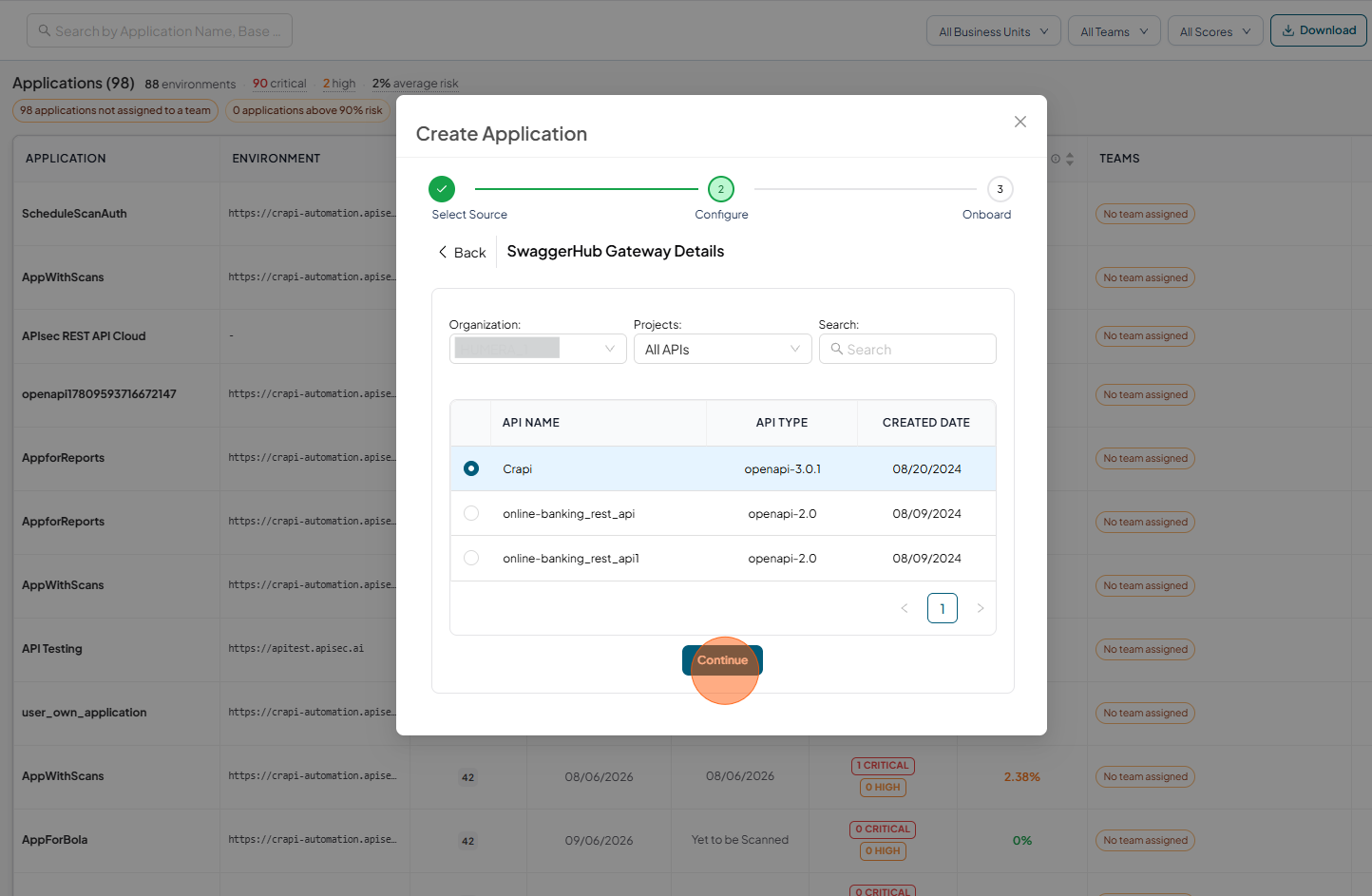
Select Organization and Project and select API
-
Click Continue
-
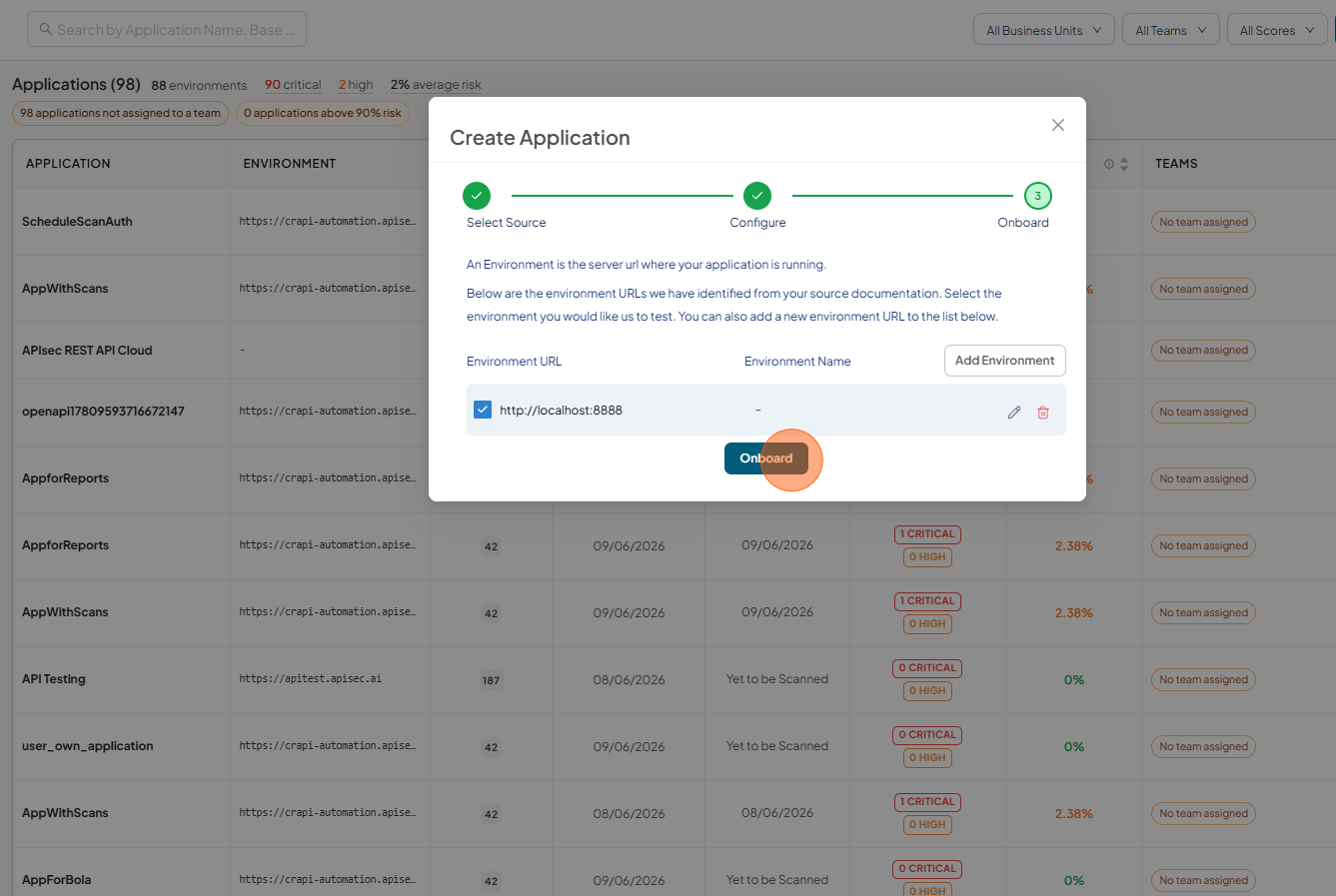
Click "Onboard"
-
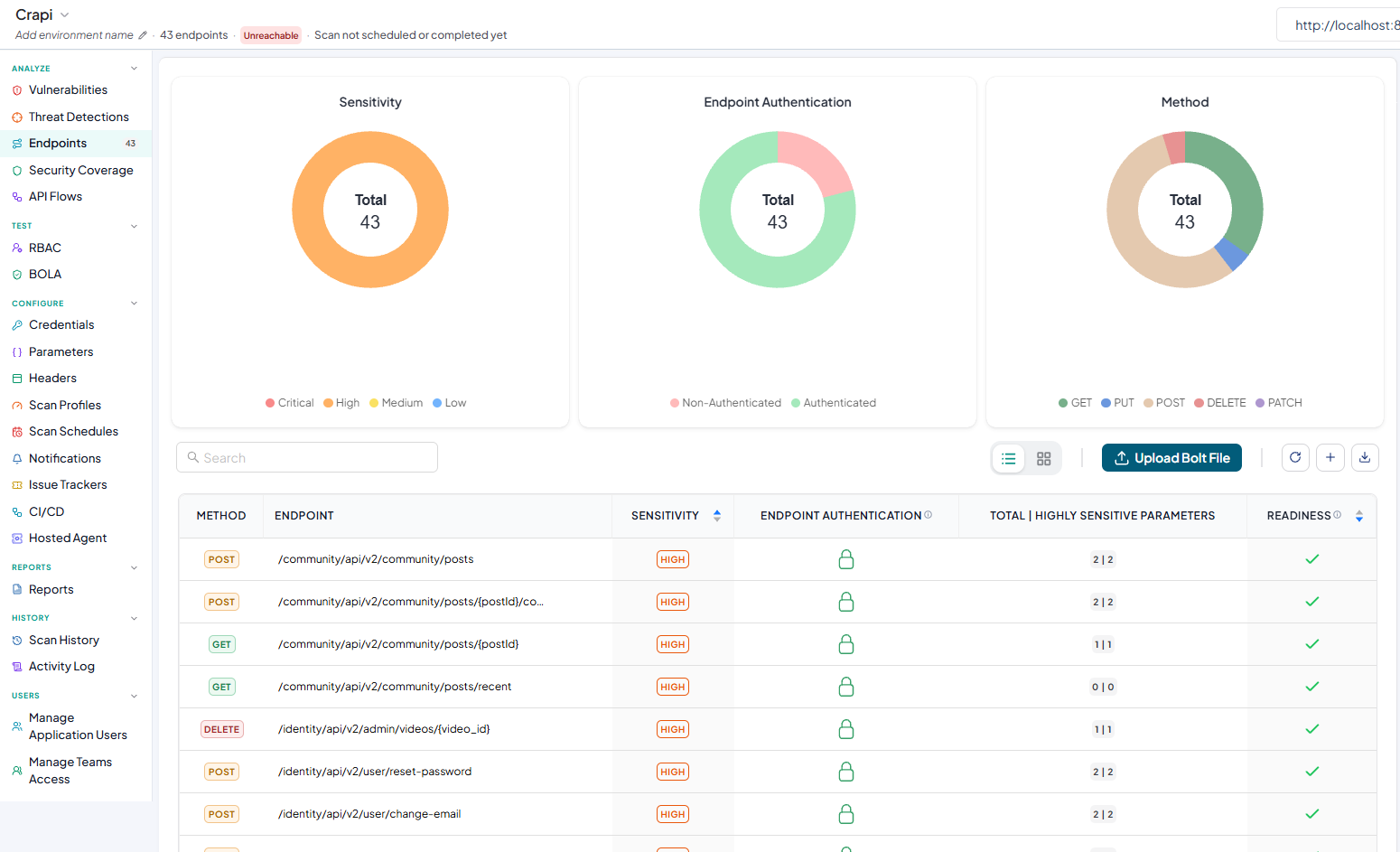
SwaggerHub application dashboard
Auto-Onboard
The Auto-Onboard feature streamlines API onboarding by automatically detecting and registering unregistered APIs from SwaggerHub Gateway. This ensures that all APIs, including newly published ones, are consistently onboarded and tested for vulnerabilities with minimal manual effort.
Enable Auto-onboard
-
Open your browser and visit: https://<your-tenant>.apisecapps.com
-
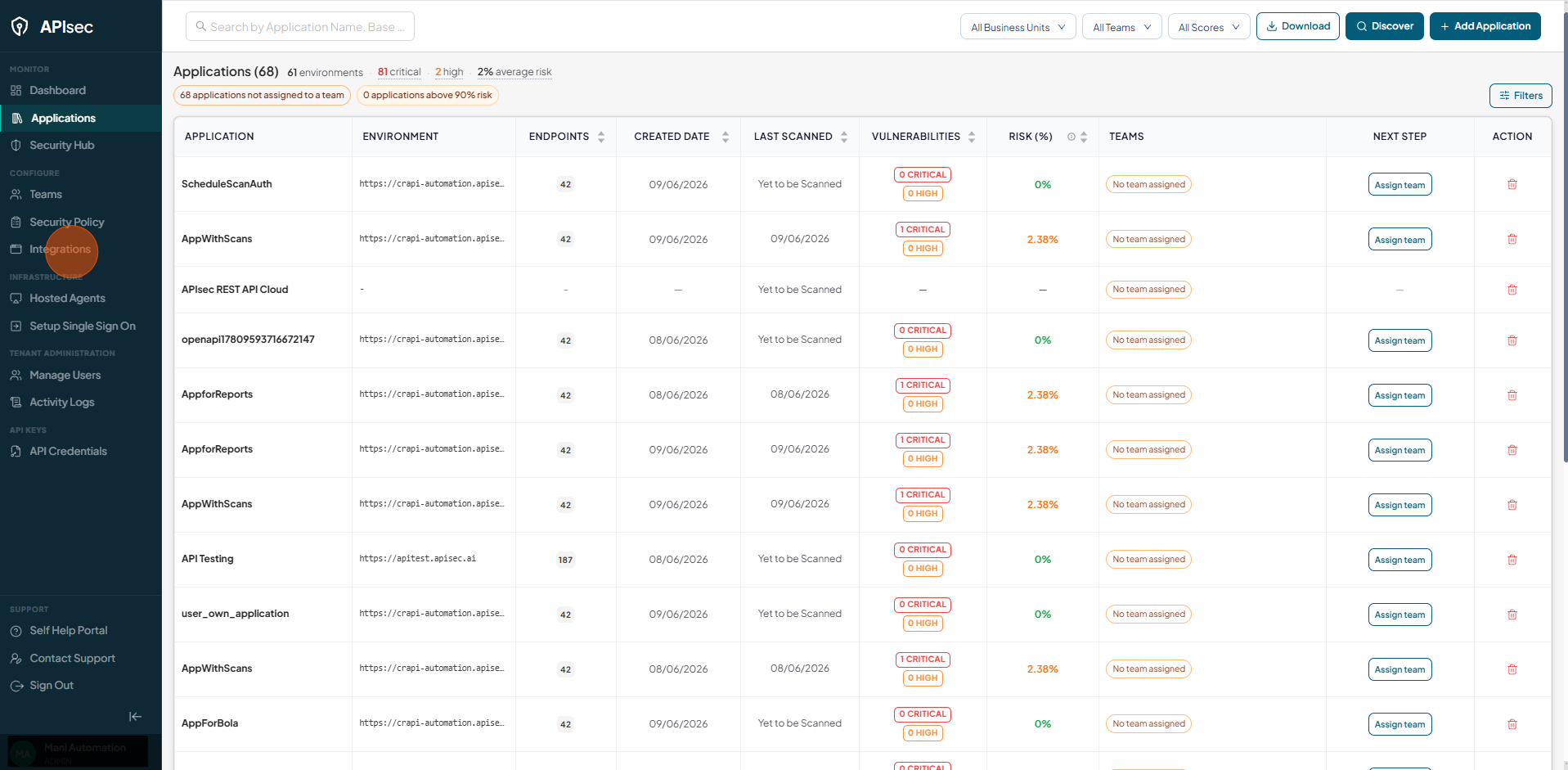
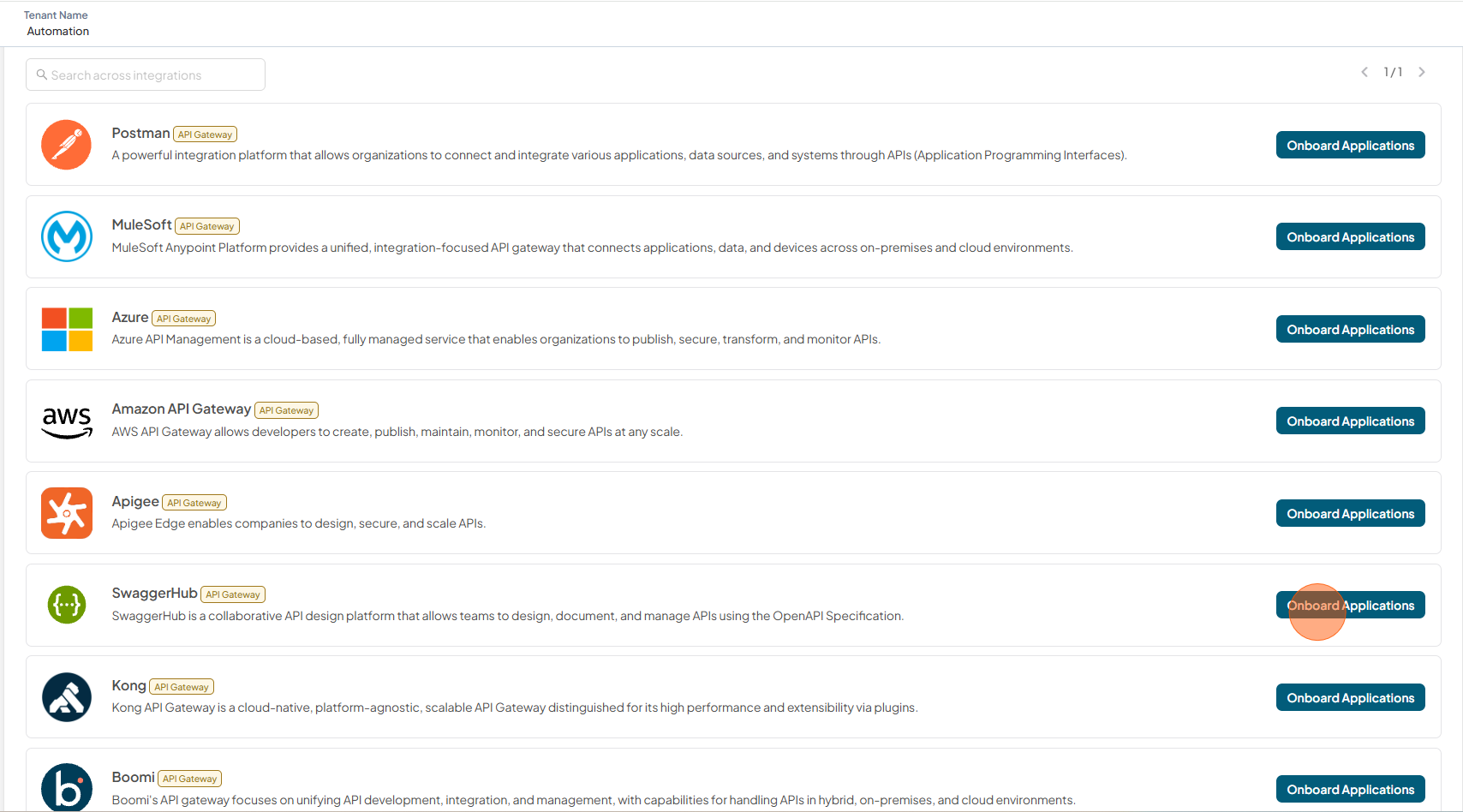
Click Integrations tab
-
Click Onboard Applications adjacent to the SwaggerHub
-
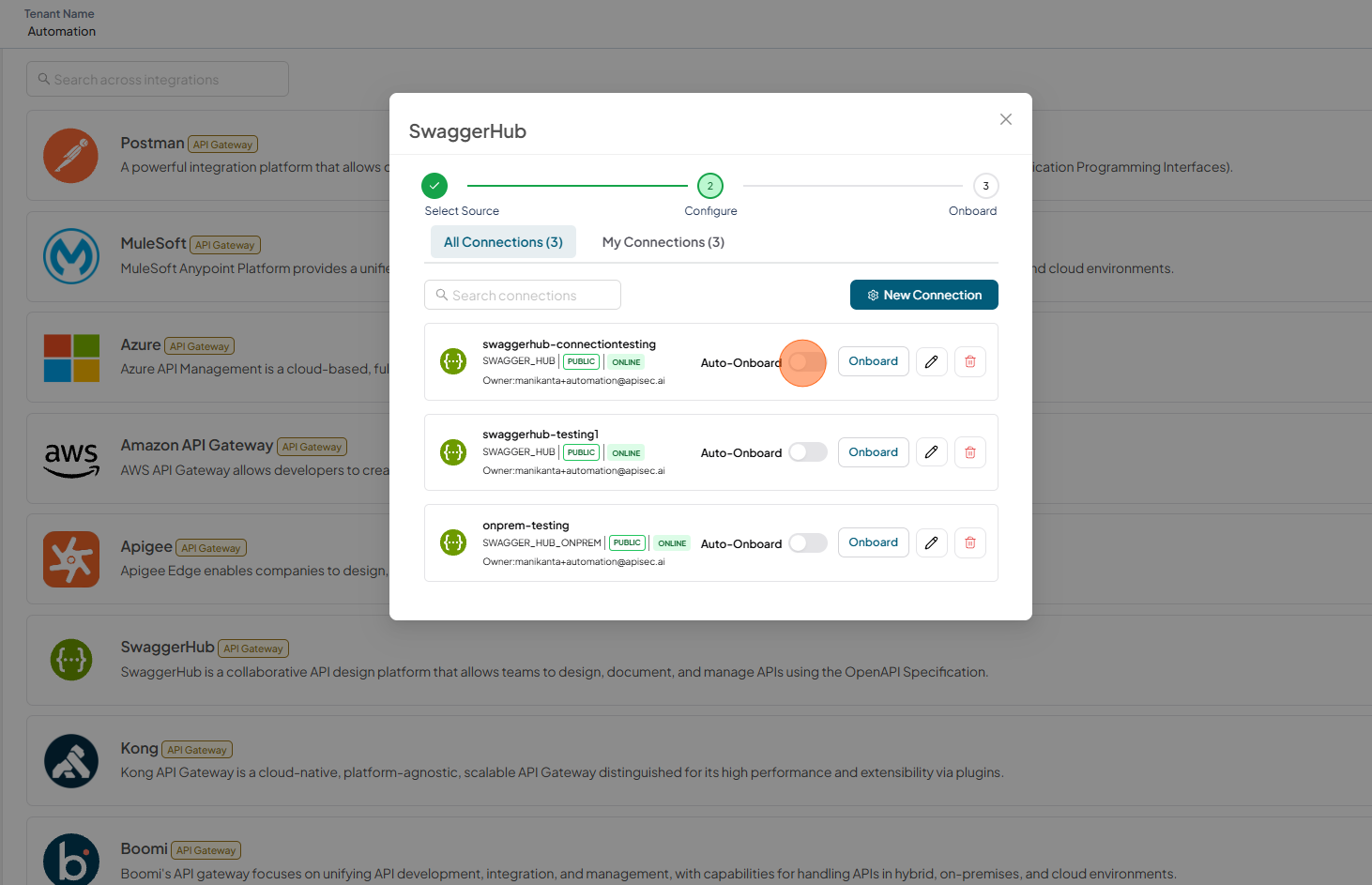
Enable Auto-Onboard of any existing SwaggerHub connection.
-
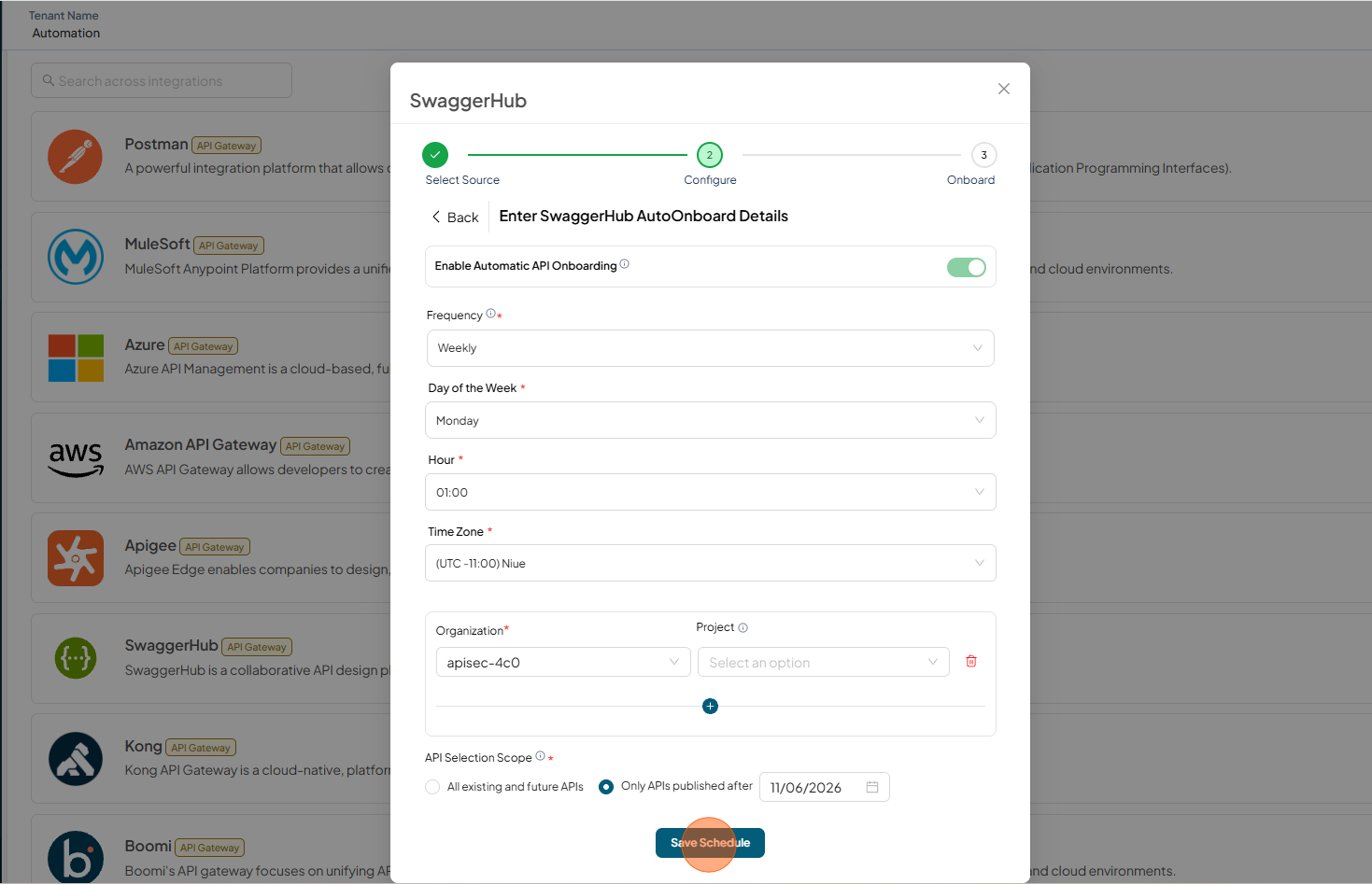
Fill the AWS AutoOnboard Details and click on Save Schedule
- Frequency – How often the onboarding should occur. By default it is weekly.
- Day of the Week – Select the specific day for onboarding.
- Hour – The exact time (in hours and minutes) when the onboarding should start.
- Timezone – The timezone in which the schedule should be applied
- Organization - Select Organization. If the selected organization has no projects then all APIs from that organization will be automatically selected for auto-onboarding
- API Selection Scope - Select whether to auto-onboard all available APIs or limit onboarding to only those published after the specified date.
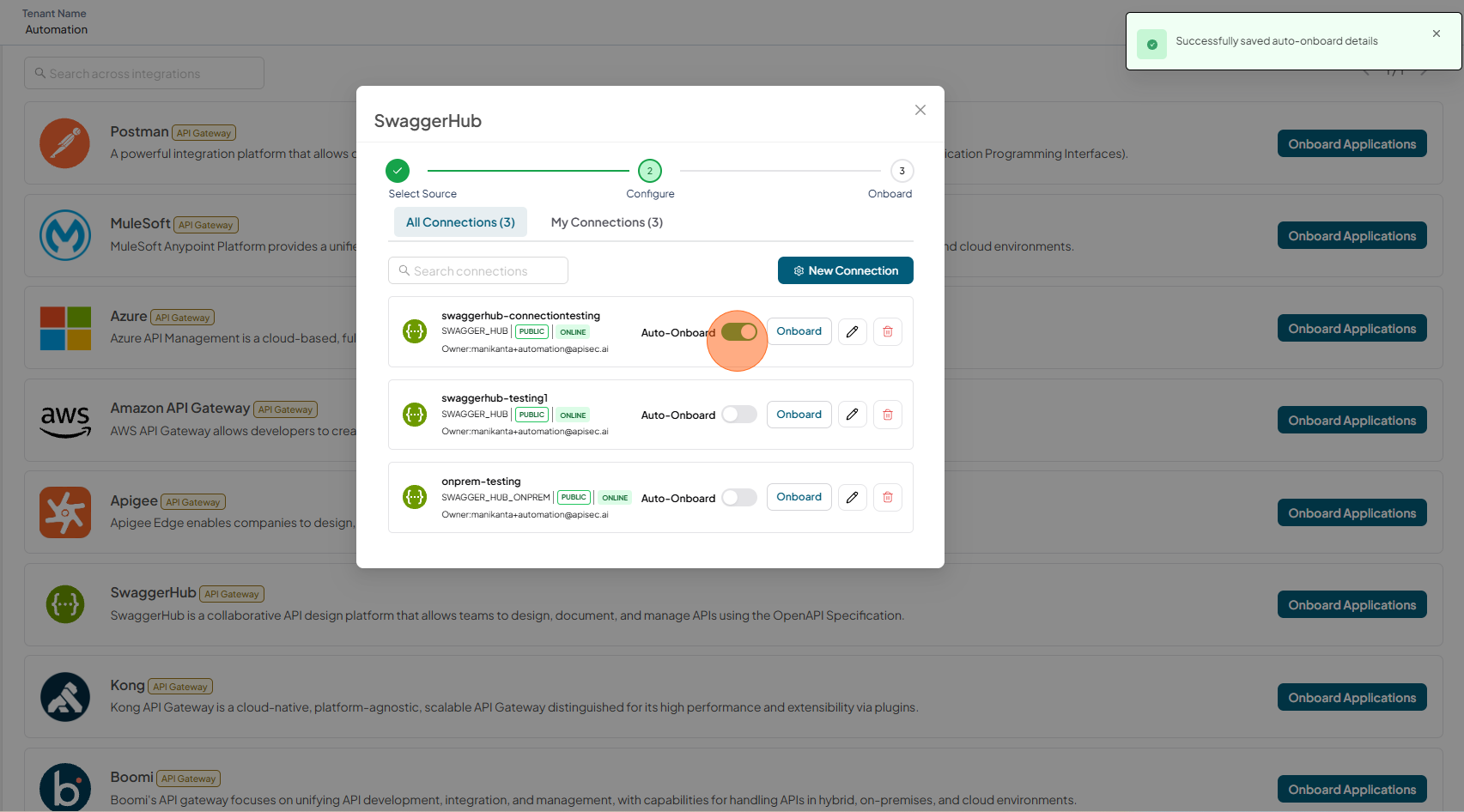
- Successfully saved auto-onboard details
Update Schedule
-
Open your browser and visit: https://<your-tenant>.apisecapps.com
-
Click Integrations tab
-
Click Onboard Applications adjacent to the SwaggerHub
-
Click Auto-Onboard enabled toggle
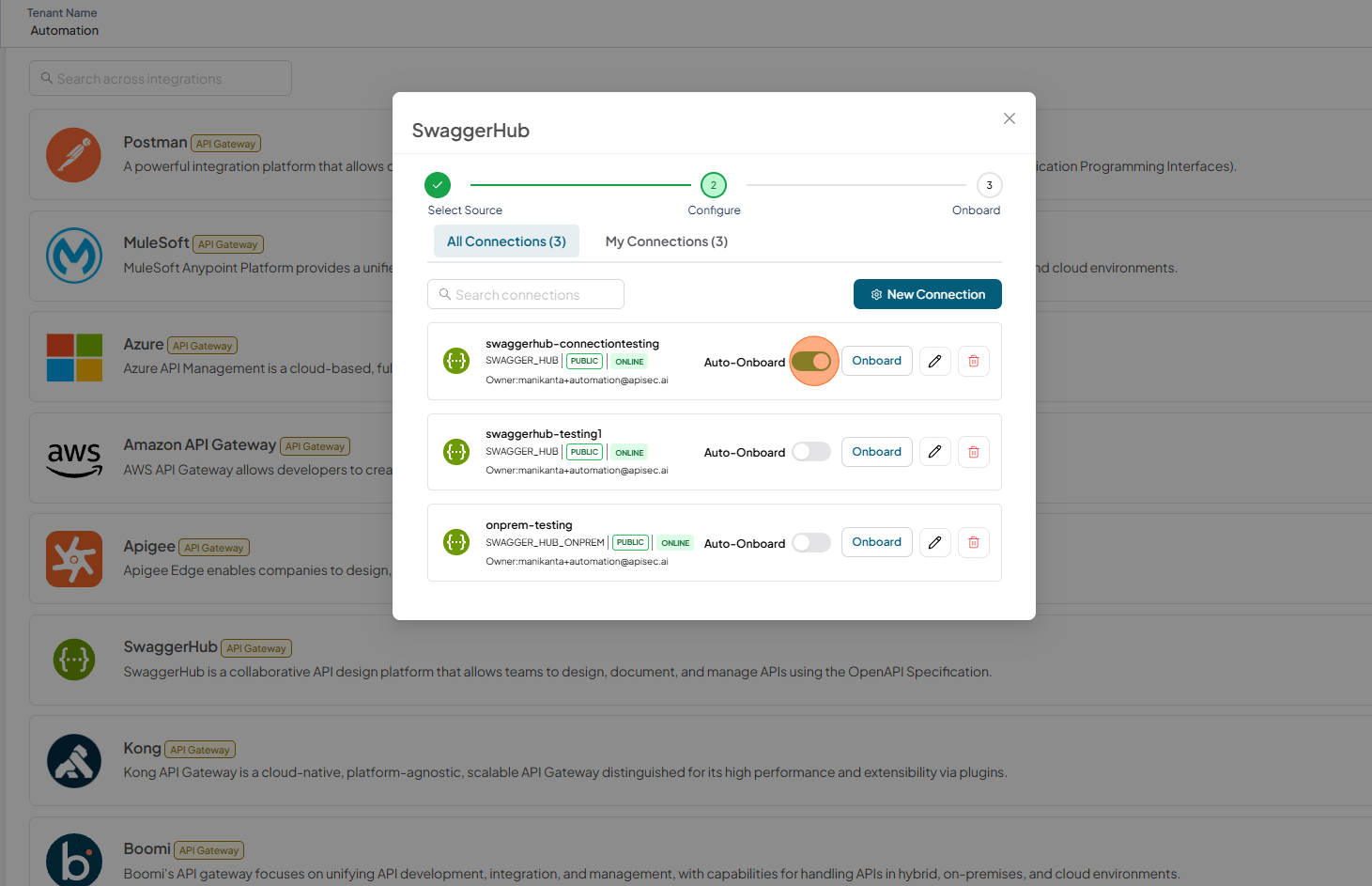
-
Update the details and Click on Update Schedule
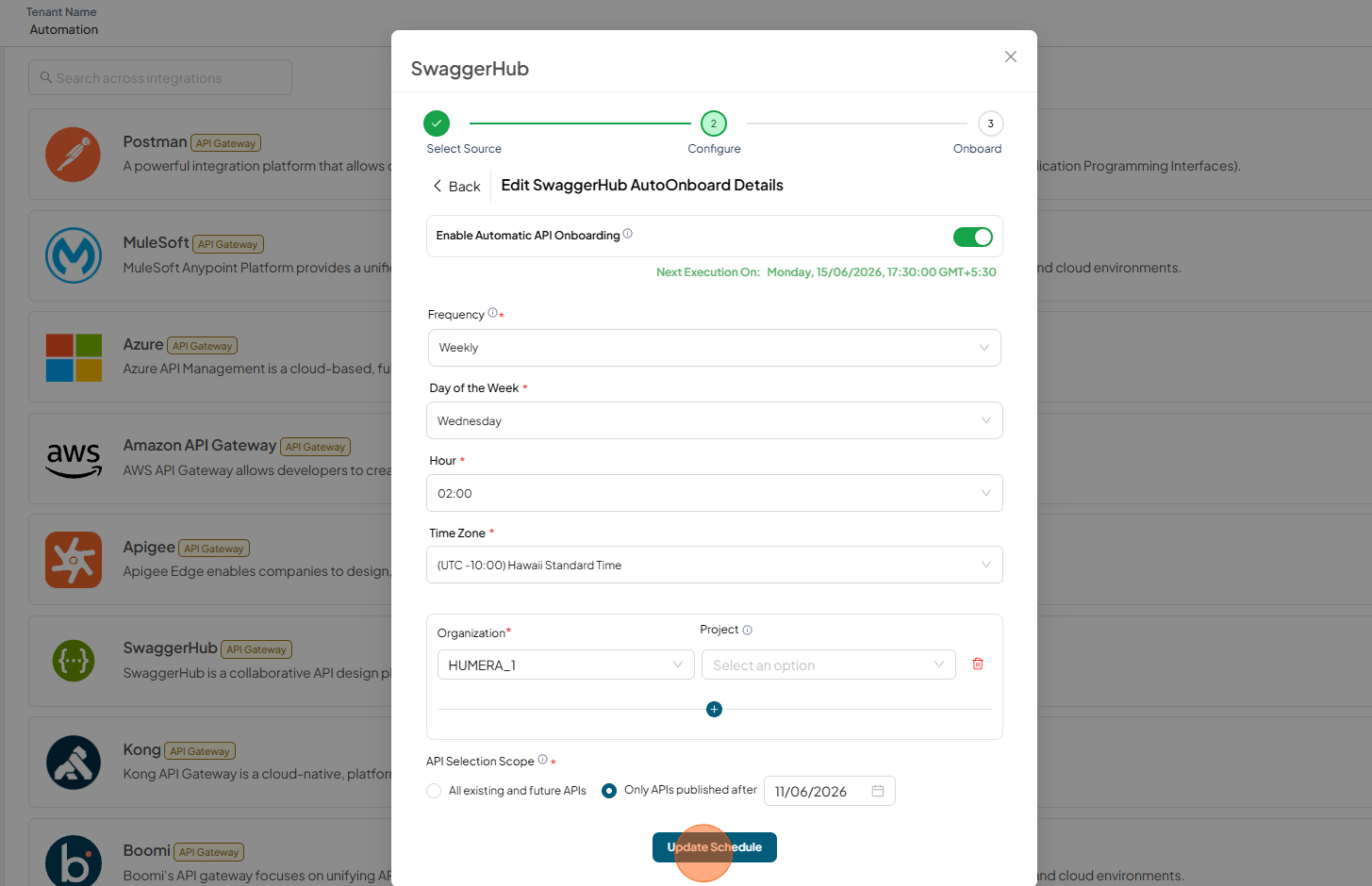
Disable Auto-Onboard
-
Open your browser and visit: https://<your-tenant>.apisecapps.com
-
Click Integrations tab
-
Click Onboard Applications adjacent to the SwaggerHub
-
Click Auto-Onboard enabled toggle
-
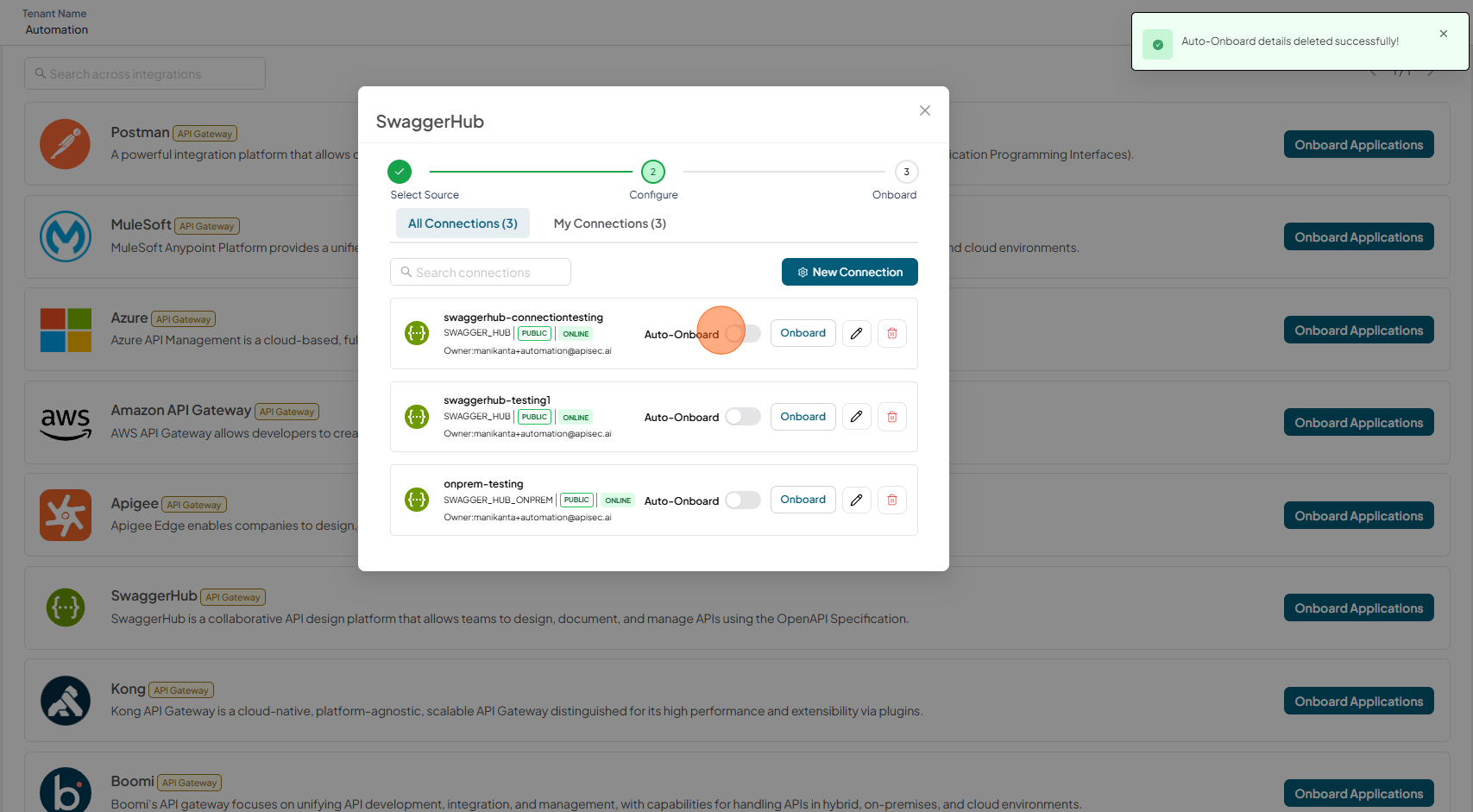
In Edit SwaggerHub AutoOnboard Details, disable the Enable Automatic API Onboarding.
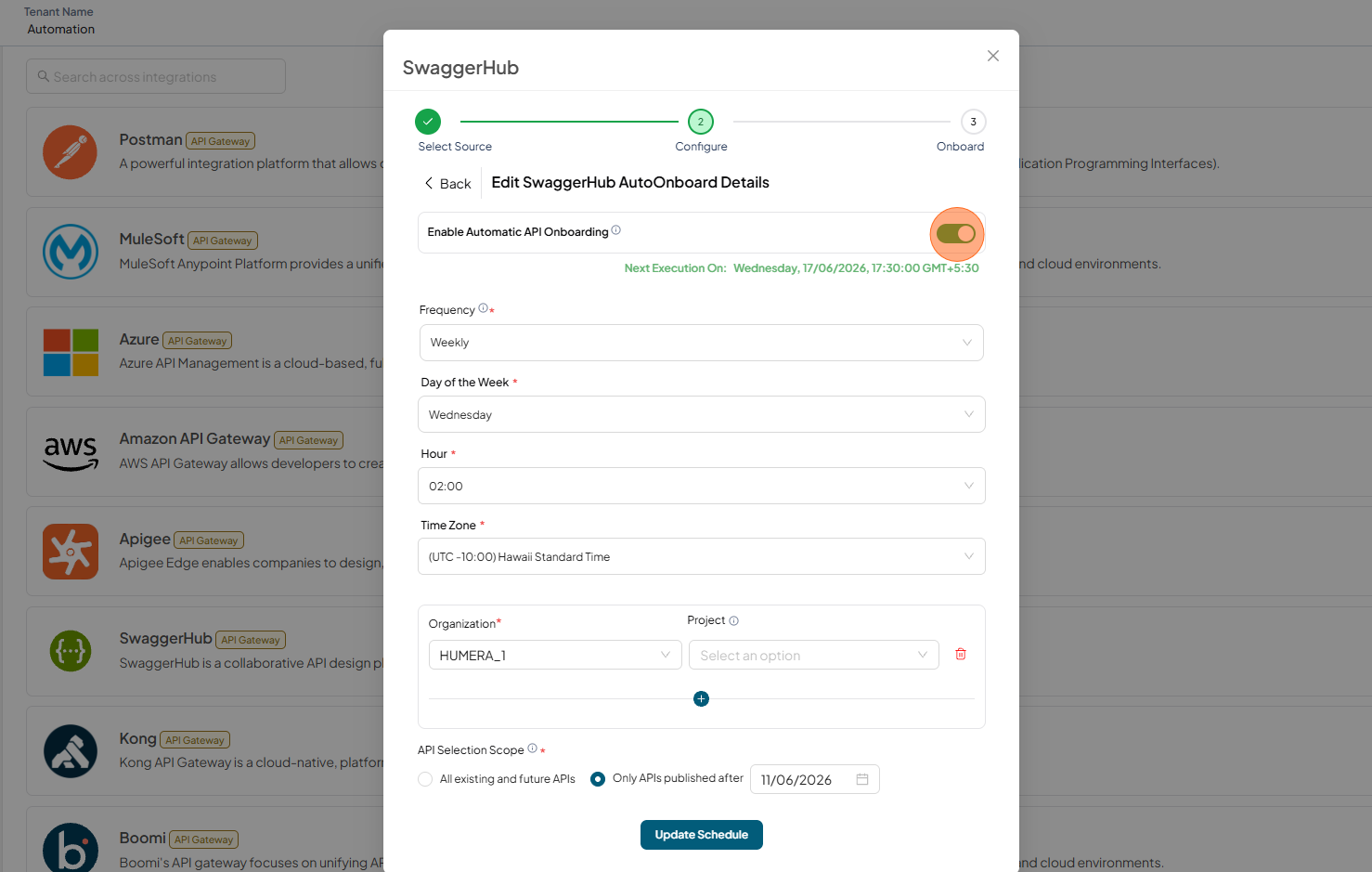
-
Click Yes to confirm
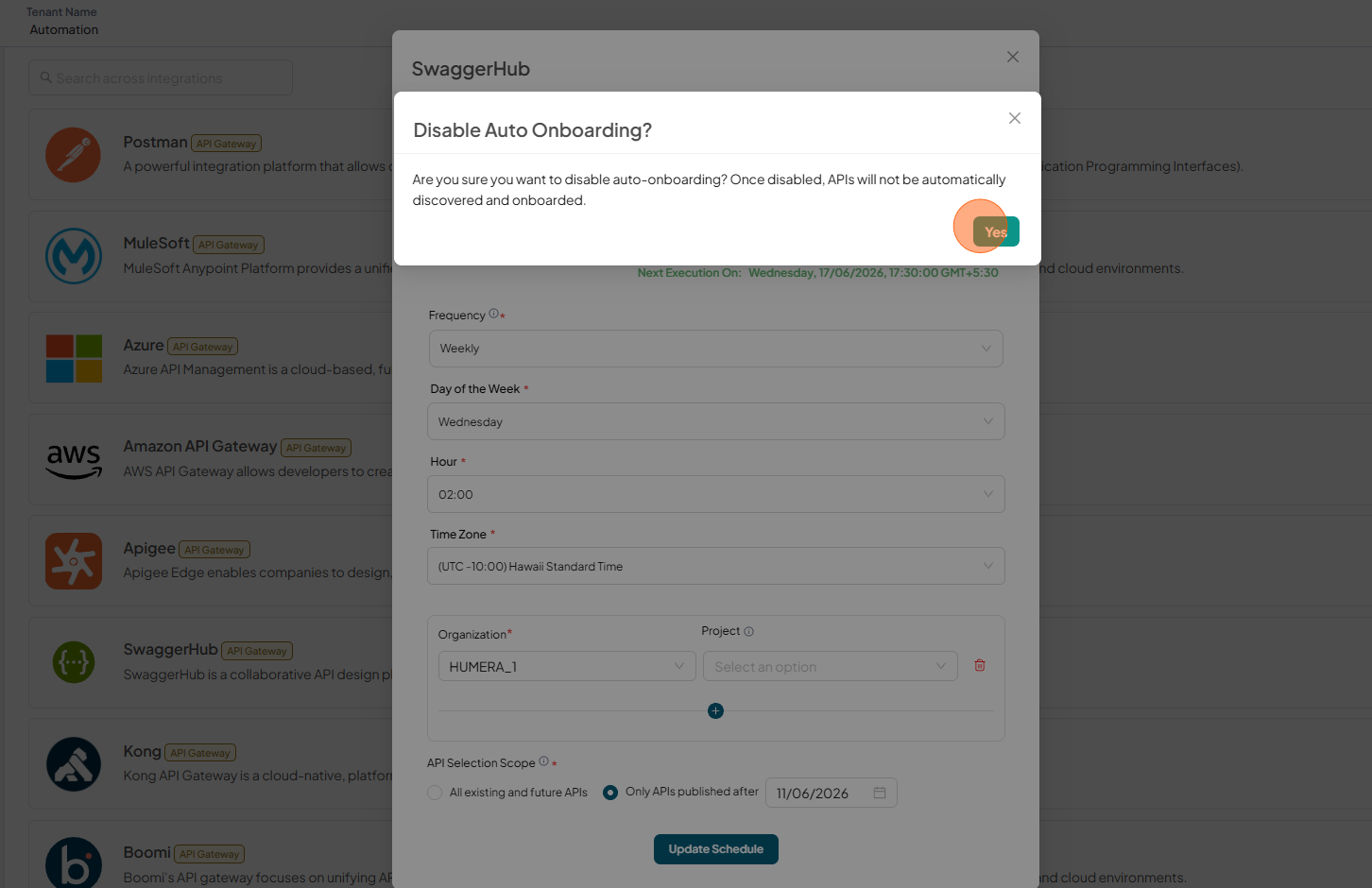
-
Auto-Onboard details deleted successfully!
Edit SwaggerHub Connection
-
Open your browser and visit: https://<your-tenant>.apisecapps.com
-
Click Integrations tab
-
Click Onboard Applications adjacent to the SwaggerHub
-
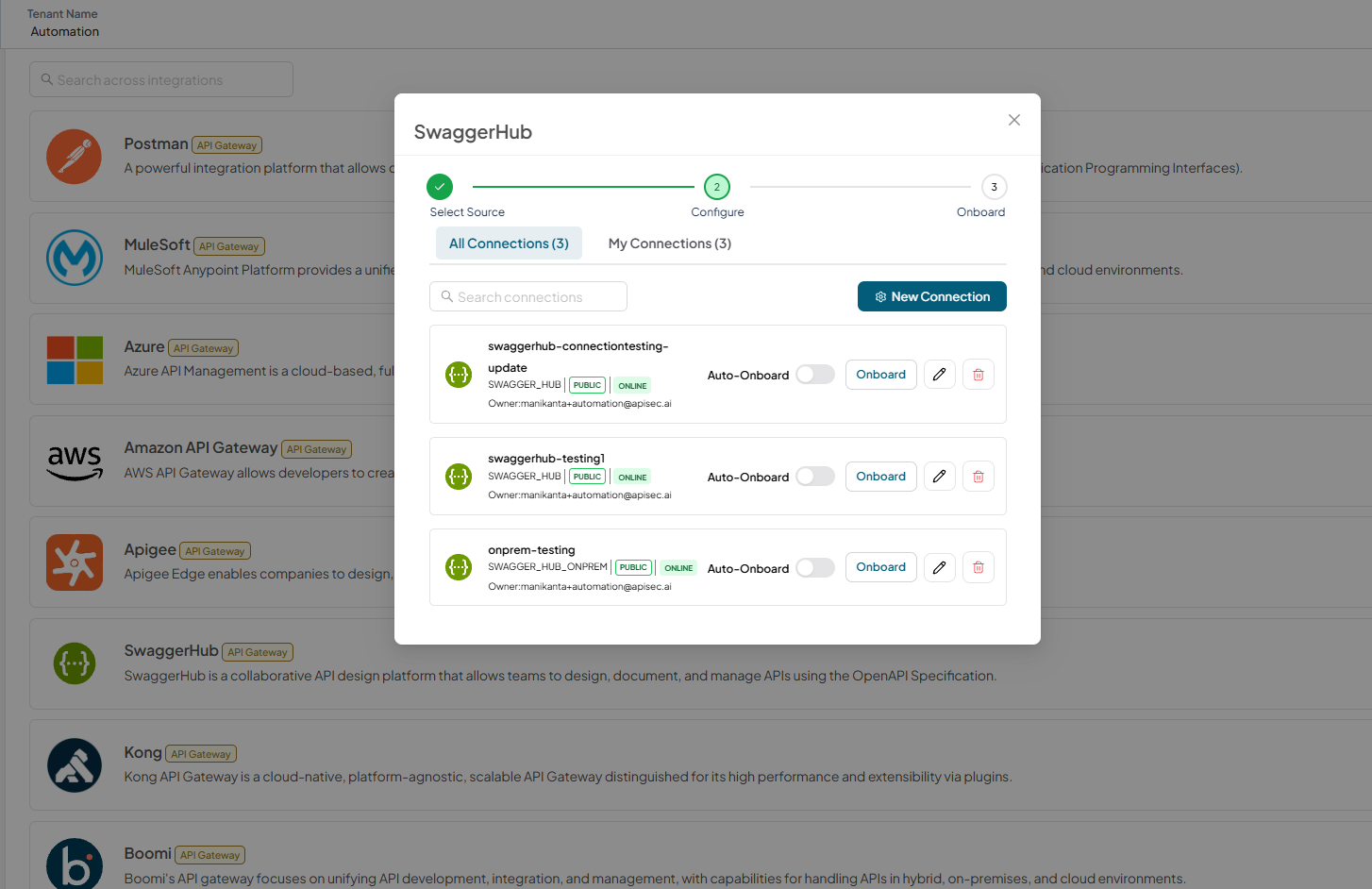
A list of existing SwaggerHub connections is displayed.
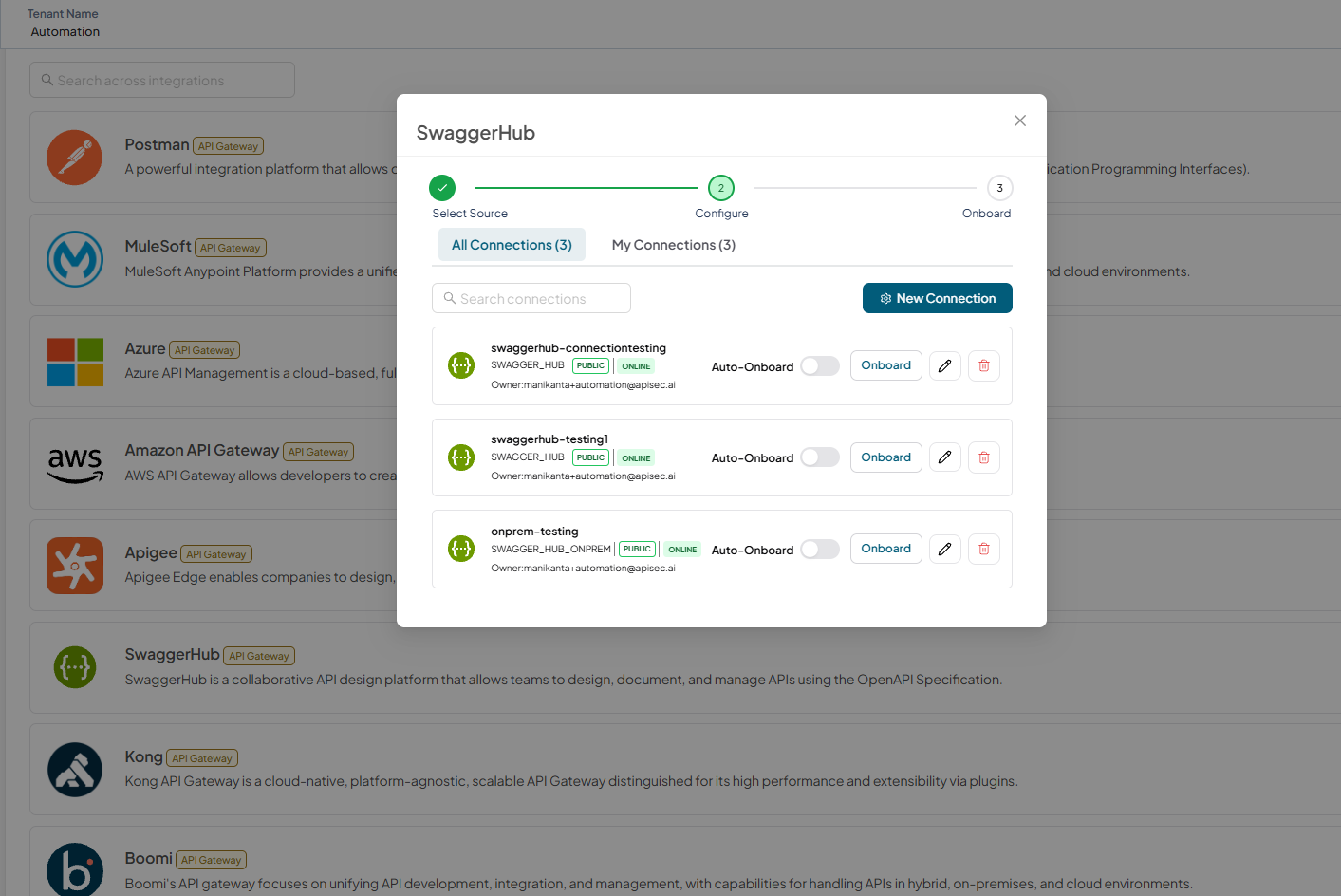
-
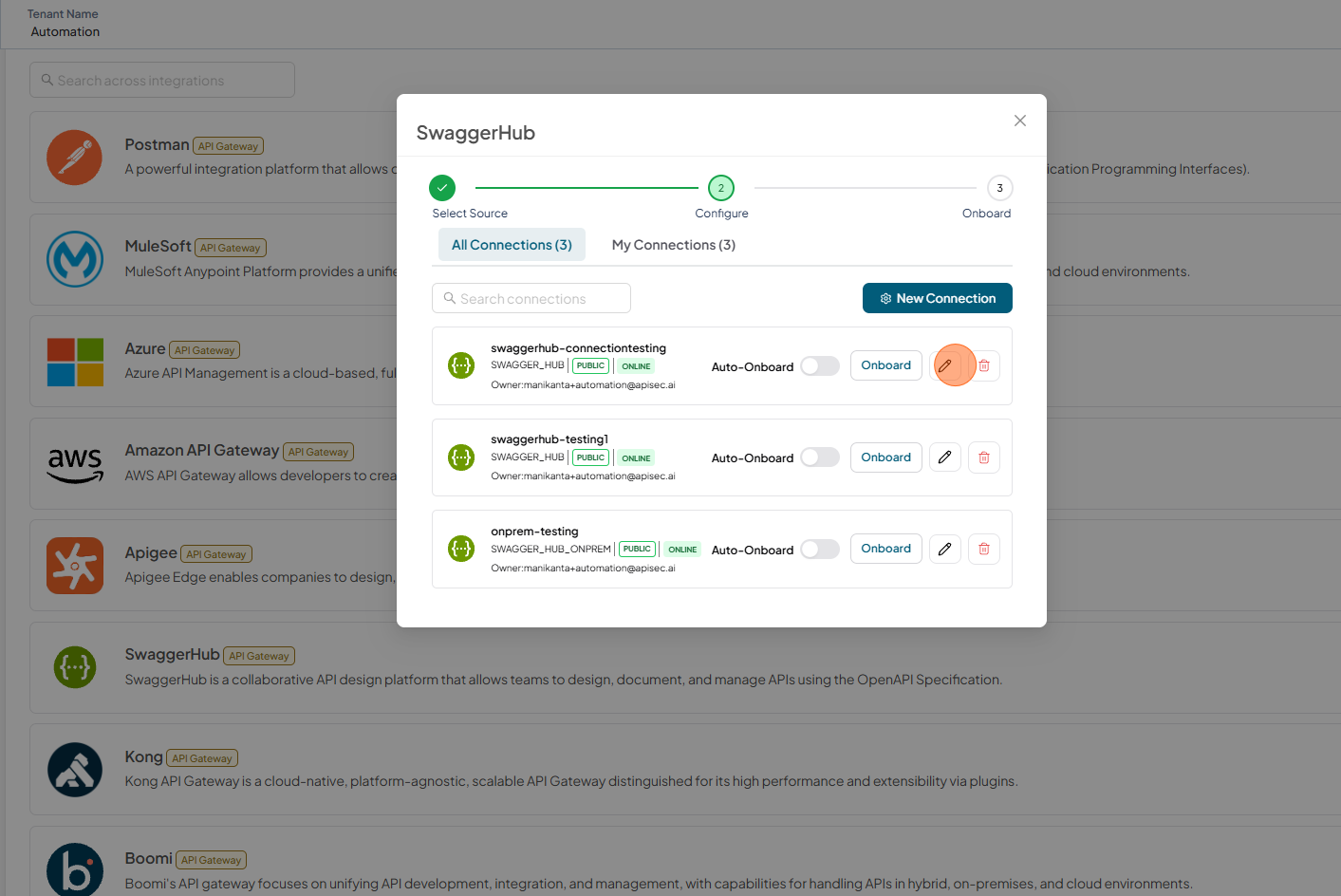
Select the Pencil icon next to the connection you want to edit.
-
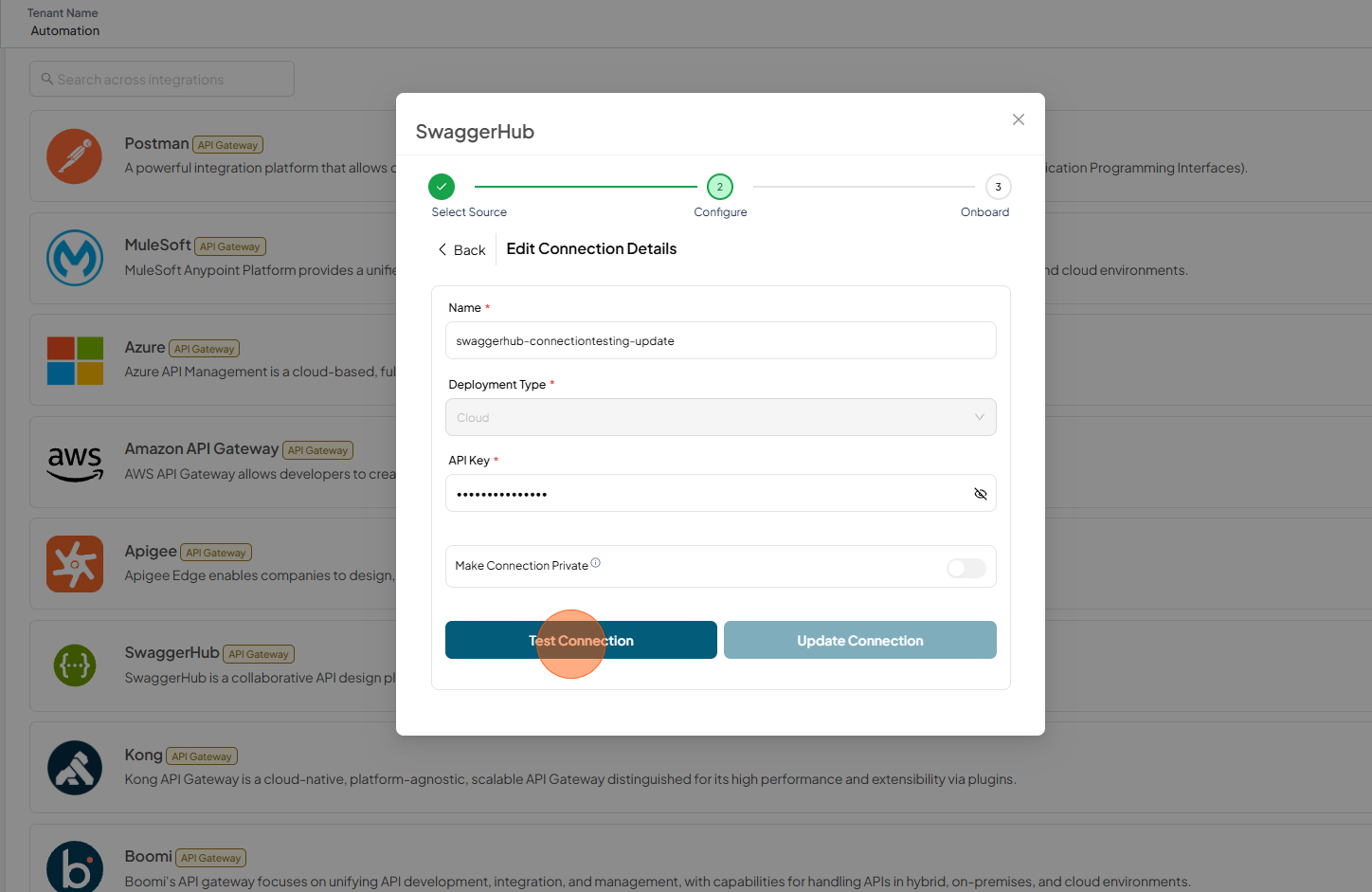
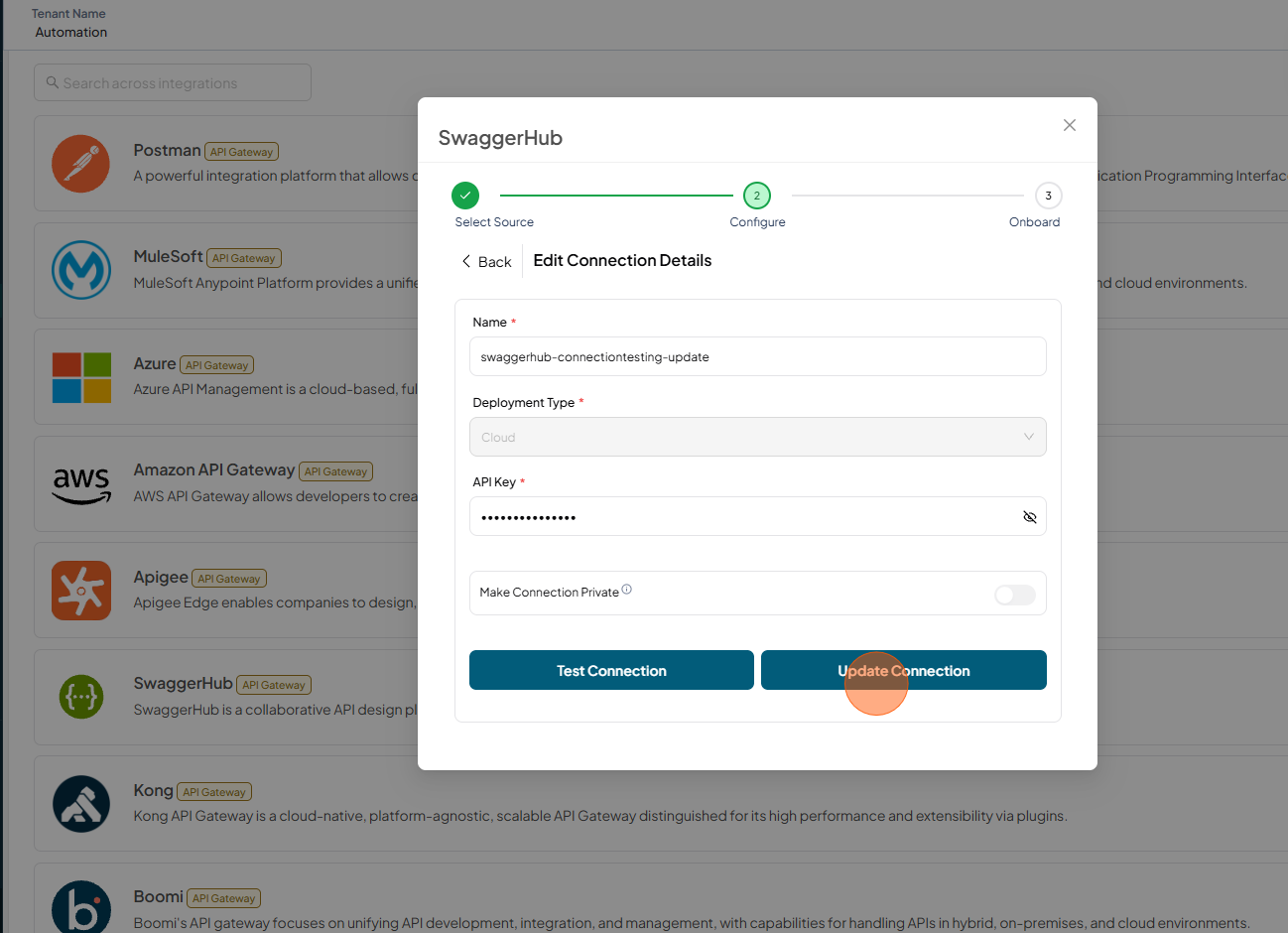
Update the required details and Click on Test Connection
-
once Test connection successfull then Click on Update Connection
-
The updated connection is now displayed in the connections list.
Delete SwaggerHub Connection
-
Open your browser and visit: https://<your-tenant>.apisecapps.com
-
Click Integrations tab
-
Click Onboard Applications adjacent to the SwaggerHub
-
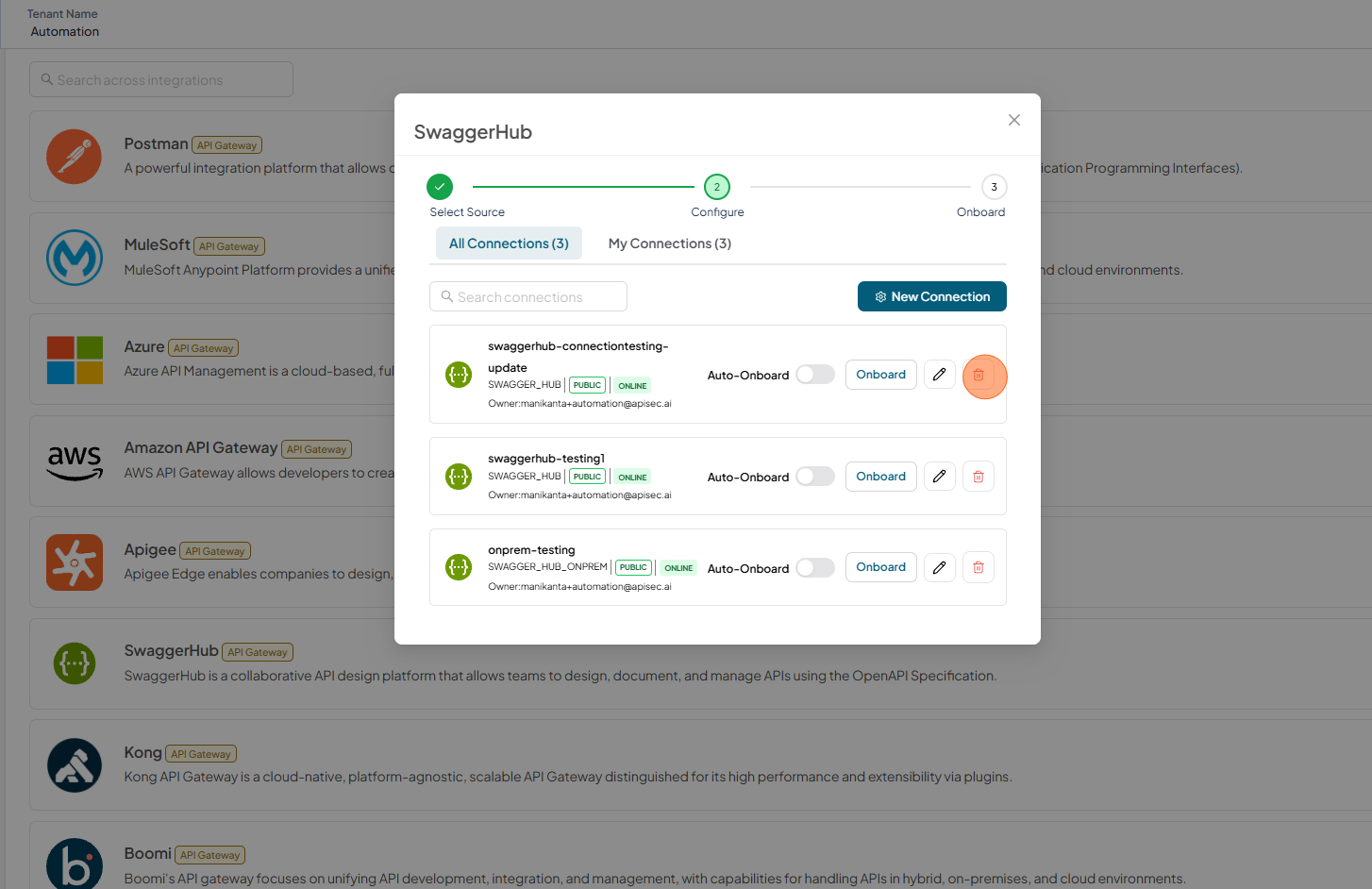
A list of existing SwaggerHub connections is displayed.
-
Select the Delete icon next to the connection you want to delete.
-
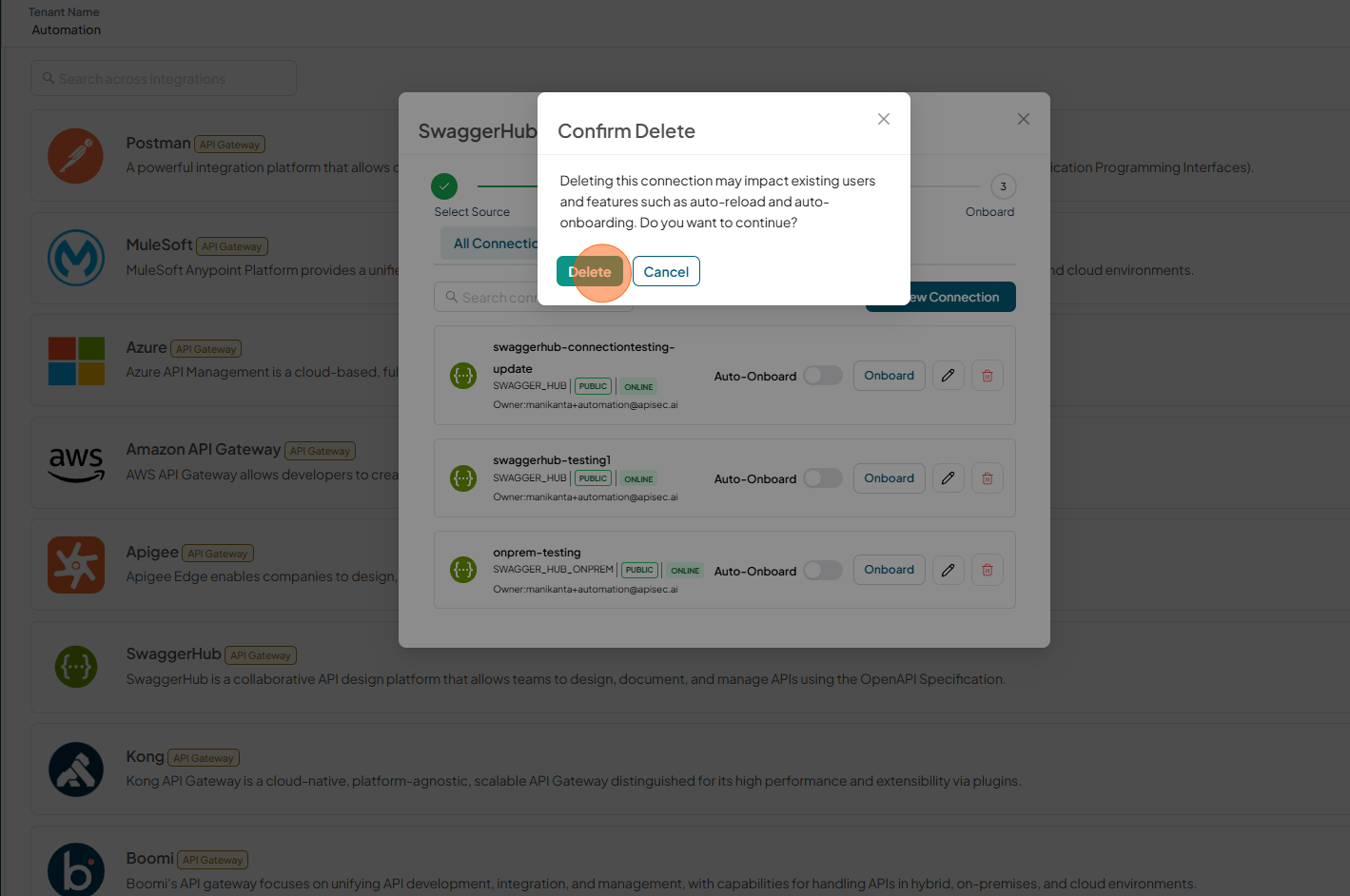
Click Delete to confirm
-
The deleted connection is no longer displayed in the connections list.